
Manifestation miracle


5 Reasons Why You Must Find Some Alone Time Every Day

Do you spend some time alone everyday, without interacting with another human being or animal?
We have two types of people; those who love having time for themselves and those who fear being alone.
For me, and I guess for most people of the introvert type, time alone with oneself is the recipe for joy. Nothing can make me happier than the news that I have a whole day for myself, to do my reading, dreaming and writing.
I can never understand why someone might not want to spend time with oneself, much the same way that it might be hard for a person of the extrovert type to understand the joy that this alone time gives.
Yet, I believe that having some time alone with yourself everyday can be good for anybody, even for an extrovert.
Here are 5 reasons why:
1. You get to know yourself
It is in those moments with your own self that you get to know yourself best. When in the company of others, we are always wearing one or more of the hats that life makes us wear, be that of a husband, a father, a boss, a subordinate, a friend, a lover.
But when you are alone with yourself, you don’t have to wear any of those hats and can really get to meet the real you.
You’ll discover a whole lot more about yourself this way, which leads us to point no.2.
2. Being alone can bring clarity to your purpose.
As I said earlier, out with other people, you are always wearing one of those hats and playing out those roles. Even those who have thought about and found a purpose for their life often forget that in the daily role plays.
Some alone time can make you rise above the haze and give you clarity on what your purpose is. If you already have found one, it can help to remind you of it. This will help you re-assess your priorities and make the necessary changes to the direction in which your life is going.
3. You can get your creative juices flowing
More often than not, it is during those moments of being with yourself that your muse comes down to you.
That is when you get your best ideas, your best words and your best strokes of the brush.
Your muse is your personal genie and prefers to come down to you when you can give it all the attention.
4. You can find your way within
I believe that beyond all what the world tells us our goal in life should be, the ultimate goal of every human soul is to find the divine within.
And as anyone who does meditation will tell you, the way within starts with being alone for some time.
Find your own way within through meditation. Even if not for finding the divine in you, meditation can help you relieve all the stress, the pains and turbulence caused by living your daily life and can make you cheerful, and content.
5.Reading can be much more fun when alone
As a prolific reader myself, I do not necessarily need to be alone to read. I read whenever I can, wherever I am. Yet, I have found that reading can be best enjoyed when I’m alone.
Whether it is fiction or non-fiction, reading without the faintest concern for what is going around me is the deepest form of reading and that is when you really get into a sort of conversation with the author.
What is your idea of spending time alone? Do you enjoy it?
Letting Go of the Past, of Attachments and of Fears

I am sure you have heard the phrase ‘let go’, more than a few times.
What do these words mean? What do you let go?
This phrase is often said, when someone is having pain for something that happened in the past. Most people are unable to quit the past and go on. They keep thinking about it, causing themselves suffer.
The problem is people don’t know how to let go.
There is attachment, and there is the fear of letting go.
People fear they might lose something in this process, but losing what is causing pain is a blessing. It is not a loss.
Too much involvement past memories, suffering, unhappy thoughts and negative people, take too much of your time, energy and health. This involvement agitates your mind and feelings, obstructs common sense, and prevents you from enjoying inner peace. Letting go is the answer.
What Is Letting Go?
- It is stopping the attachment to the past, especially to painful past memories, and focusing on the present. When you release the past you can start accepting the present.
- It is non-attachment to results. This means that you do your best in every situation, but if things do not turn well or as planned, you don’t dwell on them and don’t get disappointed or discouraged.
- Letting go is like lifting the anchor of your ship, so that it can sail away. In order to move on, you need to release thoughts, habits, fears and worries. These are you anchor, your shackles that tie you down to the same habits, circumstances and a certain way of life.
- Letting go requires a certain degree of emotional detachment. This leads to non-attachment, about which all the spiritual traditions speak about.
If you don’t let go, you remain tied and not free. You limit your perception, cause yourself stress and tension. If you cannot detach yourself from painful memories, envy, jealousy, bad relations, you suffer. It is like being in a swamp, doing nothing to get out.
On the other hand, letting go, detaching yourself from the causes of suffering, brings relief, ease, joy, and love.
Letting go is so valuable, but few people do something about it. It might seem strange, but they prefer to stay where they are, emotionally, mentally and physically, even this hurts them.
People love the familiar and unknown, and feel more comfortable and safer in familiar situations, even if this causes suffering. They fear of the unknown, and therefore, don’t want to let go. They also don’t know how to let go. No one has ever taught them.
Learning to let go requires more than a short article. It requires, guidance inner work and training, and that’s why I wrote a book about it.
Simple Guidelines for Letting Go
1. Make peace with the past. What happened belongs to the past. Don’t let it tie you down. It is time to go on and live. Will thoughts about the past help you? Absolutely not!
Yes, the mind keeps returning to thoughts and memories you would be glad to forget. That’s okay. Be smarter, and use the same technique the mind is using.
Whenever you catch yourself thinking about painful memories, immediately replace them with opposite thoughts. Replace them with positive and happy thoughts. In time, this will turn into a habit.
2. Did you love somebody and you separated?
If you want to get back, and there is such a chance, keep on trying. However, if you see no chance, let go and move on.
Thinking about him or her and suffering is useless. No one gains anything from this situation. It might be easier said than done, but you should move on with your life and meet other people. Don’t stay stuck.
3. Sometimes goals change. Sometimes priorities change. Learn to change with them and take another course, another direction.
4. Fear might be holding you back. Letting go also means facing the fears and disappointments of the past, and then severing you connection with them. Try it, and you will see that it is not so difficult.
5. Are you holding on to old grudges? Do you play in your mind something someone said that hurt you? You are hurting yourself, not the one who hurt you. You are the one suffering and that’s foolish.
Don’t hold on to grudges and hurt feelings. It is like pouring fuel into the fire. Holding on to anger, resentment and hatred will hold you back. It will make you unhappy. Throw away these feelings. Yes, you can. Refuse to have anything to do with them. That might not be easy, but that’s the direct way.
6. If some people discourage you and stand in your way, move on. Meet new people.
7. Open your mind to opportunities, new starts, and new things. Do what makes you happy, improves, improves your life, and benefits you and the society where you live. Don’t be afraid to let go what holds you back.
The Pain of Being Mis-Understood
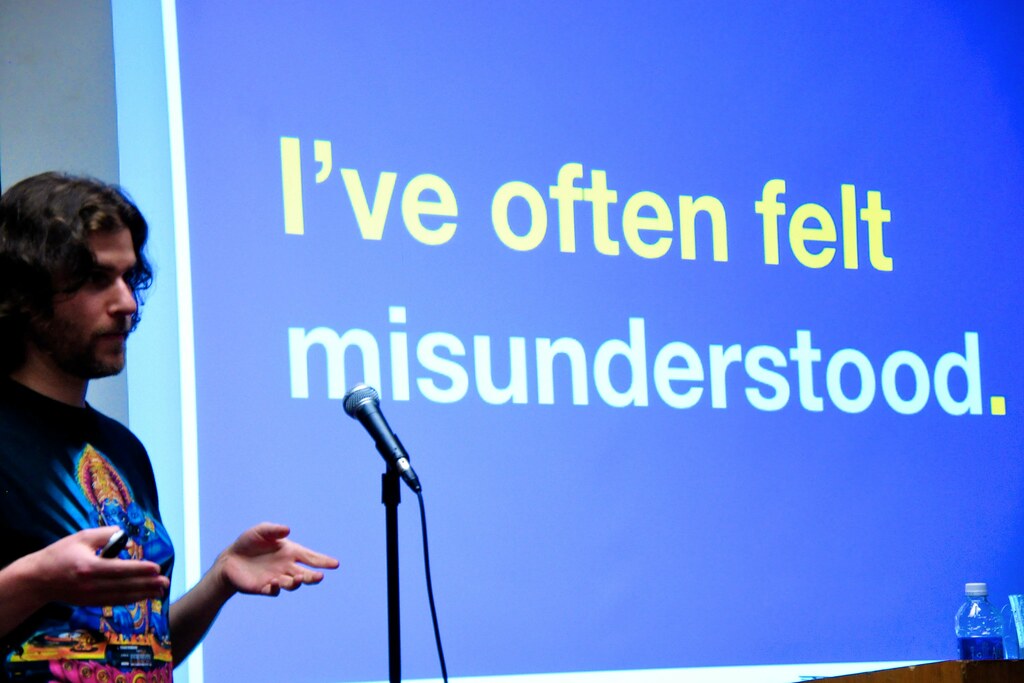
There is a time in all of our lives when we feel discarded, abandoned, lost, unimportant, invisible, cast aside, and basically unwanted and unloved, at least in the way that we want to be or yearn to be. I think we can all recall an event or a situation where we felt unheard. A time when we ached to be acknowledged and validated for WHO we are. I know I have. The pain of being mis-understood was so great that at times it felt unbearable.
About a month ago I came across a video on social media that had gone viral. It was a video of an abandoned/homeless dog named Miley. Miley had been living on a heap of trash, and at first glance you could not even notice her because she “blended in.” How many times has that happened to us? Being in a crowded room yet somehow feeling invisible and alone? Working hard at blending in because the truth is we are petrified to stand out.
I was so moved by the video and Miley’s journey because it resonated with me on a much deeper level. It wasn’t only Miley’s story, it was my story and your story, Miley WAS every man/woman. This thought brought me to tears. I was so compelled that I reached out to “Hope for Paws” with the intention of wanting to adopt Miley. To put an end to her misery, to give her the love that she so deserves, that I deserve, that YOU deserve.
At first it was difficult to even watch the video due to the horrific neglect that she had suffered. So often we are uncomfortable with witnessing struggle and pain. The truth is because we over identify with it. It triggers our own suffering, and our first instinct is to turn the other way, to avoid it. But as I watched the story unfold, I was amazed at Miley’s willingness to receive help. She could’ve have resisted, became aggressive out of fear, like many of us do when there is support to be had. We deny what we really need and want out of fear that we won’t get it or it won’t be how we want it to look.
Miley, however, was receptive, open and grateful. I noticed that when they put the leash on, her initial instinct was to lay back down and stay with what was familiar. Not because she didn’t want the help, but because it is what she had known. The trash pile had become her home.
Staying in what is familiar, even when it is filthy, unhealthy, toxic, and festering with potential disease is common for all of us. We know on some level that we should get out, make a change, acknowledge what isn’t working, but we don’t. We very often CHOOSE to suffer because the fear of the unknown feels greater.
Miley’s wounds were evident, out there for the world to see. Our wounds are not always that easy to notice. We get skilled at hiding them out of fear and shame.
Our appearance can tell an entirely different story, one that is completely incongruent with our inner truth. Internally, we live in darkness. Our brutal inner critic can keep us imprisoned, shutting out any possibility for light. We sabotage relationships and jobs. Our internal landscape begins to define our external reality. We are unable to hold onto peace and joy. We hold ourselves back and stay small even when our hearts desire is longing for more.
What saved Miley was love. She didn’t do it alone. She needed support. She needed those who could give her what she was unable to give herself. They witnessed and validated her wounds. They gave her time to process and heal. They waited patiently for her spirit to shine through. They provided other like-minded companions who had also been wounded. They built trust and together they loved each other out of the darkness and into the light.
I have recently launched a program called The Wilderness Walk, which is a journey into the wilderness to go through the darkness and fear of the inner mind and the pain of the wounded heart in order to integrate all aspects of our being, so we can enjoy full acceptance of who we are. To me, Miley is the epitome of a Wilderness Walker, a courageous being who is open, ready and willing to heal.
As a psychotherapist and coach, I can tell you within one minute who are the individuals who will do whatever it takes to move through their obstacles, challenges, fears, and insecurities as opposed to those who will continue to create excuses and hide out of fear of the unknown. They are both important parts of our journey.
Most of us have been in that place of feeling stuck. It was from that stuck place that I was able to find that twenty seconds of insane courage to begin my own Wilderness Walk. The walk into the darkness of my heart and mind in order to find the freedom that I had spent years yearning for. There is no easy fix, happy pill, or someone else that can do it for you.
It is a deep excavation into all the places that frighten you, so that they no longer have power on you. You stop running and start walking consciously on a new path. A path that holds hidden treasures of insight and awareness. A path that will eventually lead you home.
Are you like Miley?
Are you ready to do what it takes to obtain a happier, healthier, and more fulfilling life?
To be a Wilderness Walker?
Or are you still choosing to stay stuck?
The Secret of Letting Go of Every Fear
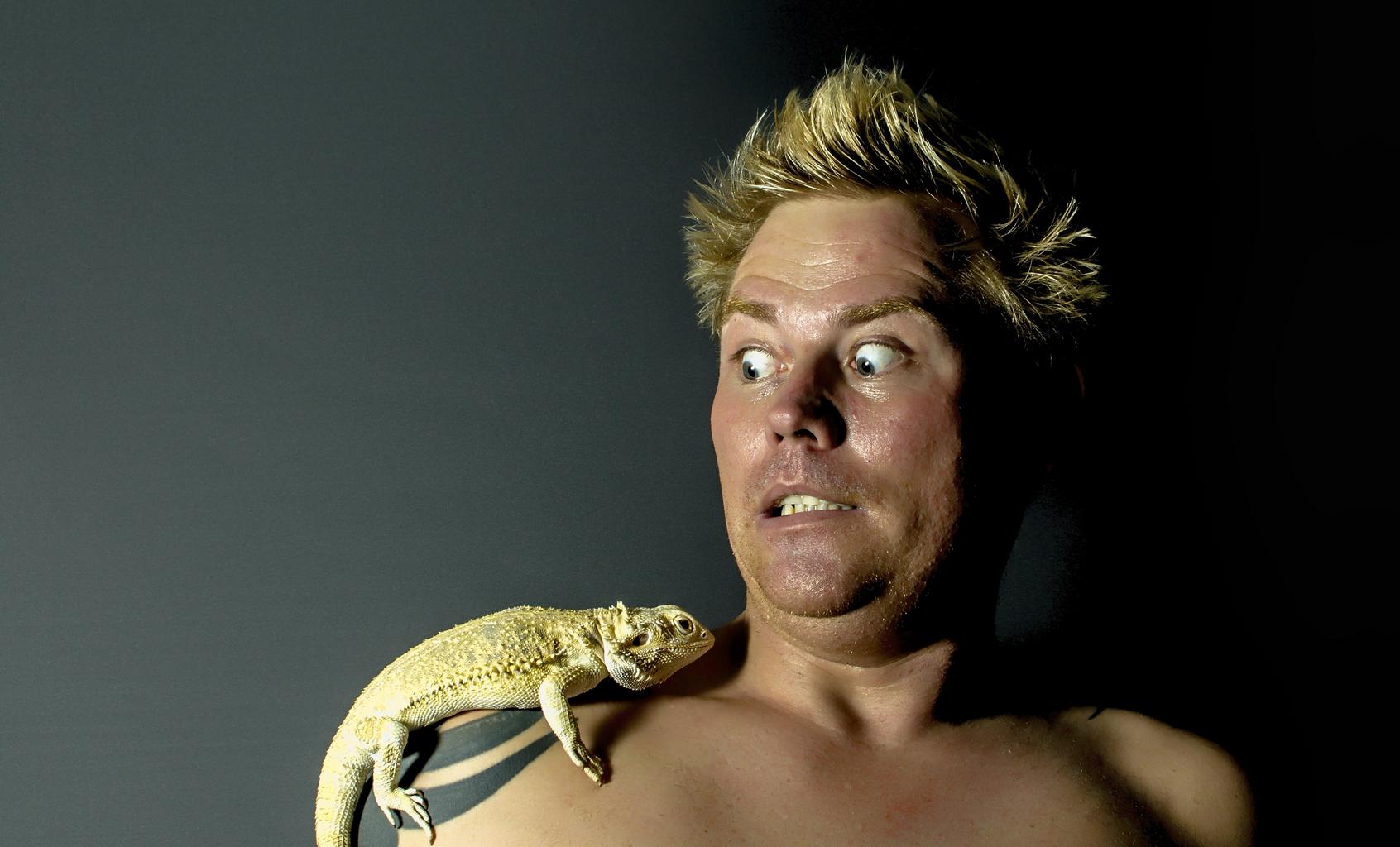
Are you afraid of some condition in your life? Here’s a life-transforming secret: that seemingly scary condition, whatever it may be, is not the problem. It is your reaction that is fearful. This is why if you will become conscious of your condition instead of afraid of it, you will change forever your relationship with fear.
It is only within this special kind of inner-relationship that there is real safety, because now you are interacting with fear in an entirely new way. You are no longer letting it dictate to you how to act or what to do. Instead, you are aware of the fear. You are learning to quietly observe and study it. And, each day, as you discover something new about the strange and shaky nature of your own fearful reactions, they begin to lose their power over you.
Why? Because you are at last seeing them for what they have always been: unintelligent mechanical forces. You are slowly becoming stronger than they are because by seeing them as they are—not as they would have you see them—you have helped yourself to climb above and outside of their influence. This self-insight is the difference between trembling through your life and being in command of it.
To be consciously afraid means that you know you are frightened, but at the same time you know that these very fears, as real as they may seem, are not you. And no wrong reaction can keep you captive once you begin to see it for what it is.
Fear is, and has always been, nothing but a self-limiting reaction that we cling to in the darkness of our present life-level, having mistaken it for a shield of self-protection. But, just as the faintest of early morning sunlight can dispel the night-long darkness, so does the smallest of insights into a persistent fear lead to letting it go.
If you will follow this simple but higher instruction, not only will you start to see these habitual reactions that have been keeping you scared and running, you’ll actually start seeing through them. This is where the real miracle occurs.
Each new insight into the actual nature of these negative reactions removes some of their power over you. And their loss is your gain. You are stronger now and you know it. You also know this new strength will never fail you because it isn’t just the temporary appearance of a bold opposite. This new strength of yours is the absence of an old weakness.
Let’s look at just one of the ways in which this principle of putting self-illumination before psychological self-protection can turn fear into fearlessness.
Do you know someone who you would rather run from than run into? Most of us do! Nevertheless, starting right now, resolve never again to avoid any person that scares you.
In fact, go ahead and walk right up to that critical man or aggressive woman and say or do exactly what you want instead of letting the fear tell you to do what it wants. Have no ideas at all about the way things should or shouldn’t go. You are there to watch and learn about yourself, not to win an ego victory. Let that person see you shake if that is what starts to happen. What do you care? Besides, it is only temporary. That unpleasant person before you can’t know it, but you are shaking yourself awake.
For the first time, you are letting your reactions roll by instead of letting them carry you away. As you stand there, momentarily apart from your usual self and working hard to remain as inwardly watchful as you know how, you can see that this flood of previously unconscious reactions has its own life story; a shaky sort of story that up until now you had embraced as your own. But now you are beginning to see the whole story. The fears do not belong to you. Here is the explanation:
You have never been afraid of another person. The only thing you have ever been frightened by is your own thoughts about that person. Yes, you did feel fear, but it wasn’t yours and it wasn’t towards someone stronger than you. The fear you felt was in what you thought he or she was thinking about you.
Amazing isn’t it? You have been afraid of your own thoughts! And seeing this ends this. Now you can let this thought-self go, because no one holds on to terror.
Visualizing a Better Self-Image

Improving our self-image may seem like a daunting task at first. How do we overcome years of negative reinforcement that has convinced us we are not skinny enough, smart enough, or rich enough? How do we reverse our belief that we don't possess the characteristics needed to become successful? We have to change what we think of ourselves, literally.
Where did our negative self-image come from exactly? Our subconscious minds believe what we tell them. Especially during our formative years, we may have been taught to see ourselves in a negative light. Anyone who has gone through high school knows the pressures our peers put on us with regard to dress, social behavior, and academics. Add to that criticism from teachers and parents, unrealistic portrayals of beauty and success in the media, and it's easy to see why we feel we're not good enough.
But it doesn't stop there, does it? What begins as an external influence then becomes internal as we pick up the trend of negativity and berate ourselves with negative self-talk. We call ourselves stupid, hopeless, or a failure. We try to force ourselves into an impossible cookie-cutter mold of what we think we should be. We berate ourselves for not being good enough, strong enough, beautiful enough, and successful enough.
Over time, this results in a negative self-image that can prove difficult to change. Difficult, but not impossible! There are tools available to help us turn it around, and one of those is creative visualization.
Creative visualization is a process that can replace our negative beliefs with positive ones. This process does not happen overnight, but neither did the development of our negative self-image. The key to creative visualization is to stay consistent with the practice. The goal is to prevent new negative thoughts from entering the subconscious, while eliminating the ones already present.
Implementing creative visualization is simple. First, find a quiet, safe place where you can sit, or lie down, for an uninterrupted period of time. You may choose to create a soothing atmosphere by lighting candles and incense, or putting on some relaxing music.
Take a few minutes to do some slow, deep breathing and release all stress from your body and mind. Close your eyes and visualize your true self, the "you" you are deep down inside. See yourself as a strong, beautiful, vital creation of God, glowing with light, love, and happiness. Really zoom in and see yourself in glorious detail. Don't allow negative thoughts to enter your head and tell you it isn't possible. Simply push those thoughts aside gently and know that if you can see it mentally, you can create it in your physical reality.
Take your time with this exercise, and make an effort to do it at least once daily, preferably twice. At the same time, begin making a concentrated effort to turn your negative self-talk into positive self-talk. Praise yourself, encourage yourself, build yourself up with your thoughts and words.
Be patient! Remember that it took years to build up your negative self-image, so you can expect it to take time to replace it with a more positive one. But because you are going about it in a purposeful, conscious way, your results will be much more powerful.
Consistently imagining yourself as you want to be will create a new "truth" in your subconscious, and as your mind replaces the negative with the positive, you will begin to see the shift in yourself. A new, more confident you will emerge, giving you the courage to succeed at whatever you desire.
Subscribe to:
Posts (Atom)
