Showing posts with label self-conscious. Show all posts

Break Free From Shyness - Live the Life You Deserve (By Fiona Gray)

Did you ever see the film East is East? It is a British Comedy-drama about the Khan family, set in Salford in 1971. The character that stood out for me was the youngest brother Sajid. Sajid is the shy brother who always wore a green Parka Coat. I too use to use hide inside a large thick multi-coloured coat with the green hood pulled up in all weathers. My sister's friends use to laugh at me, they could always see the hood just above the hedges, as I walked past their house to the shops.

So what was going on for me? I was incredibly shy, extremely self-conscious thinking everyone was looking at me, I had zero self-esteem and what I now realise was a certain level of social anxiety. That coat was my protection from what I perceived to be a hostile and dangerous world. What I didn't realise then, is that I was not alone. The royal college of psychiatrist's states 2% of men and 3% of women suffer from shyness. Others say the statistics are higher at 7% to 15% of people but this includes those at the milder end of the spectrum. To me, that is still a lot of people.

Society in general doesn't have a problem with shy people. Often, they find shy children cute. Shy people are generally not perceived as a threat and many find the quality attractive because it brings out the nurturing side in us, such as the "strong silent type". Unfortunately for the shy person the "silence" is our way of containing a range of intense feelings such as fear, anger, embarrassment, shame, anxiety, insecurity, self-hate and other vulnerabilities.

These feelings can lead us to withdraw from taking part in life, such as refusing to attend school, not applying for a job because we can't face the interview, never asking someone we find attractive out on a date, not pursuing the career of our dreams, because we take rejection so personally. It is no longer "cute" when we see the young child finding it emotionally painful to make friends at school. There are middle-aged adults that have never left home because they have been too shy and socially anxious to go out and connect with the world.

It is not easy to spot a shy adult because we have become the masters of disguise, or so we think. I built up such a good wall of defence that some people mistook my shyness for "aloofness" or "quietly confident". When I'm feeling particularly vulnerable I can come across outwardly as angry, when inside I just want to run away. Now we all have a socially acceptable device called the mobile phone, allowing us to hide away in public.

How to break free from shyness and live a fulfilling life? First, find out what you really love to do or what you are good at. For some people, sports could be the way to go. You might have to shop around to find the sport that suits you, it could be a team sport or simply running. What works for one person might not work for another so keep on trying. Your thing might be poetry or singing anything that gets your interest. For me it was Dance, I had a great teacher at school that could see that I really enjoyed the lessons and she told me about the Manchester Youth Dance Theatre, the freedom I felt while dancing changed my life.

I am still shy in some situations, it doesn't necessarily leave you completely. Part of breaking free is accepting your shyness without allowing it to hold you back from the things you really want to do.

Once I found my passion I was able to figuratively pull down the hood of my coat, I realised the world was not as scary as I thought. Gradually I was able to take the coat off completely and walked confidently into my future.


https://ezinearticles.com/?Break-Free-From-Shyness---Live-the-Life-You-Deserve&id=9898589

What a Hippie Taught Me About Feeling Energetic


I like dancing when there's a point to it. For example, I spent many years learning swing dancing. It's great fun and I was always up for a dance or two.

But the dancing you do in nightclubs - where everyone just sort of flails around - isn't for me. I feel awkward and self-conscious. There's only so much bopping and twisting you can take before it gets boring.

I think part of it is the partnership in swing dancing. It's a special language between the lead and follow that combines to create something special.

Anyway, I was at a meditation workshop slash concert slash party. It priced out the dirty hippies, leaving only cool people who were eager to connect with something inside. The guy leading the chanting and instruments was super chill - liquid relaxation in a human-sized bottle. He drew everyone into this calm, focused and awesome state.

He could have left us there.

Oh, no. He had bigger plans.

We're all laying about, getting into the groove like it's the '60s or something. Everyone is flopping about, blitzed out and half-comatose. We're all on the same level: this hippy's level.

So then he starts chanting and playing with a bit more energy. It builds a little at a time. Soon we're all standing around and swaying.

Everyone is still totally chill.

But he doesn't stop. He dials up the energy again. Then a little more.

We're all bouncing around, jumping around, still feeling pretty relaxed about everything.

Like clockwork, his chanting goes up another level. The instruments follow his lead.

Everyone is up, dancing and having a great time. The stamping of 90 people resonates through the wooden floorboards, kicking up dust.

The hippy's volume and energy go up again.

And again.

Everyone is loving this. We're all jumping, flailing, dancing like there's nothing else in the world.

And the music gets louder. And faster. The intensity goes up.

We go mental.

I haven't danced like that before and I doubt I will again. The loud rhythm rips through the crowd. Everyone is MOVING.

And just when I think 'this is it, it can't go any higher', it does. Of course it does. The escalation has its own rhythm and it will not be denied.

That is how I spent the dying hours of 2017. No regrets, would lose myself in the crowd and music again.

Even while it was happening, some part of me was aware of this hippie's genius. The way he worked a crowded room is exactly how you can control your own energy levels.

1) Get in sync.

2) Settle everything to a calm baseline.

3) Crank the volume.

This is why meditation is so powerful: it does the first two things so well and clears your mind for the third. If you think meditation calms you, it does. And it is only through calmness that you can find your energy.

Need help meditating? Sounds like guided meditations are the answer. Like the exclusive ones only Awakened Thought subscribers access, with new ones each month. Each audio uses hypnosis to unlock the powers of your mind in different ways.

Go towards them now.


https://ezinearticles.com/?What-a-Hippie-Taught-Me-About-Feeling-Energetic&id=9903827


Peace of Mind

Peace of mind or inner peace is a state when your brain is free from the thoughts of distress. The state when your feelings and emotions reach the level of existential bummer. You submit yourself to your creator whole-heartedly. You are no longer convinced by the statement that there is no absolution. You find a way to map the radiant thinking process of your brain against the flow states. Inner peace is a feeling of relief and calmness. You are actually close to your Lord and your Lord is close to you. You find yourself emotionally present and no longer lost in some kind of fantasy.

Inner peace is the state when you no longer question about your fate. You finally accept the fact that life is not about victories or losses, but it is all about a continuous process of growth. The situations where you are just not thinking about your future, but try hard to live in present. You are no longer controlled by the horrible incidents of the past. You finally accept the truth that you are the sum of your experiences and each bad experience had made you stronger. There is little goodness in every bad experience.

The state where you connect your soul to something that is beyond this materialistic world, to something that is greater than yourself. You are self-aware and self-conscious. You know your way and where you are heading. You don't need anyone acceptance. You start keeping everyone at arm's length. You accept the truth that everything is in your Allah's hand. HE is all-knowing and all-hearing. HE is there for you even when no one else is. You finally find peace in your prayers. Your heart just throws the burden of all negative thoughts. You just ask your Lord to give you some purpose in life.

Inner peace gives you strength to go beyond your constraints and become selfless. You beg him not to take you back into something he has taken you out from. You become courageous enough to leave the table where respect is no longer served. You become aware of your critical inner voice. You become ready to take risks and dive into the river of future curiosity. You fill the room with your sense of knowingness. You become more stable in your decisions and less judgmental. Inner peace is a state where things like anxiety and depression, cannot control you anymore. You are free in your head and heart. It is not easy to attain this peaceful state of being; it demands a long and continuous struggle. Once you enter into this state of blissful happiness, you become mentally immortal.


ezinearticles.com/?Peace-of-Mind&id=9905201

Guilty Feelings - Mistaken or Helpful?


Health education points out the dangers of over-indulgence in eating and drinking and sitting around. You may take the view that if you really like doing something, you shouldn't feel guilty about it. Or you may think you should moderate your guilty pleasures when they negatively affect others.

Then again you may think you ought to spend less time or money on yourself for the sake of the family. Also remain loyal to your partner despite temptation to carry on behind their back with some other attractive person. Or perhaps you believe that infidelity can be guilt free and harms no one as long as it remains a secret liaison. When you are feeling guilty what should you do? Shrug your shoulders and try to forget the unpleasant feeling? Or deal with it in some other way? Are your guilty feelings mistaken or potentially helpful to you?

Anxiety, shame and guilty feelings
It's difficult to disentangle guilt, anxiety and shame. You may be in charge of a child who has a temper tantrum in a supermarket. Not your fault - but that doesn't prevent you feeling deeply self-conscious and embarrassed by the stares and 'tut tuts' of other shoppers who are assuming it is. It might not even be your child. You've done nothing against your conscience to warrant any guilty feeling.

When the second world-war ended some French women underwent public humiliation by having their heads shaved for sleeping with the enemy. Their conduct had been okay by them as long as it gave them nice things and favours.

Guilt does not apply if only getting exposed to public gaze is the problem. Like the person who has no conscience and thus no guilt about secretly having more than one sexual partner. Only anxiety about being found out.

Mistaken guilt feelings
There seem to be inborn individual differences in conscientiousness. Some people have a tendency towards thoughtfulness and impulse control. They tend to complete tasks. Others are less thoughtful and more inclined towards impulsiveness taking less care of things. The conscientious ones are more prone to guilt feelings.

When you notice a guilty feeling you may be being unfair on yourself. Your guilt may be illogical and mistaken or at any rate exaggerated. But nevertheless you end up going on a guilt trip. So you keep quiet about whatever it is you have a guilty feeling about. You keep it secret because you think you will be judged by it. But you have already judged yourself. You may be afraid to tell the truth as it will be proof that you are unworthy and unlovable.

For many years this was true of Ronda Brittain. She was the middle child of three girls, and was the target of her divorced father's physical and emotional abuse. At the age of 14, she was the only witness to her father shooting and killing her mother and then shooting himself. She tried to commit suicide three times until she realised that she was being unfair on herself.

"I thought the world was going to swallow me whole. But instead, I found that I was the only one who had been judging me." (Ronda Brittain founder of the Fearless Living Institute)

Awakening to a spiritual dimension
But are all guilt feelings based on a mistaken conscience? Those who are starting to awaken to the spiritual dimension of life might well develop a conscience about conspicuous consumption; feeling guilty about spending money on the latest gizmo, a more powerful car, fashionable property, or an expensive foreign holiday.

"Anyone who has a sensible conscience will inevitably feel anxiety of guilt whenever they go against it. It may be going against what deep down one realises is just and fair." (Harry Barnitz, philosopher and Swedenborgian)

Sometimes we act against a heartfelt and deep awareness of what we feel to be right - not acting against a mistaken conscience but against a true one. We rightly feel bad about it even if sometimes we have acted in error on impulse without thinking. Not only feeling guilty about what we have been doing that we know deep down in our hearts is wrong but also what we have failed to do; the so-called sins of omission and unfulfilled potential.

Potential helpfulness of guilt feelings
Sooner or later we all do bad or foolish things that we feel tarnish or taint us.

"Anger, intoxication, obstinacy, bigotry, deceit, envy, grandiloquence, pride and conceit, intimacy with the unjust, this is what defiles one." (Sutta-Nipata, ii, 2,7. - Buddhist tradition)

The existential psychotherapists have pointed out that one cannot reason away those guilt feelings which come from an awareness of actual transgressions. The important thing is to try to disentangle feelings of guilt arising because of a true conscience from feelings of guilt arising from other causes.

No longer can the individual comfortably rely on such alibis as 'I didn't mean it', 'It was an accident', 'I couldn't help it', and 'I followed an irresistible impulse'. Instead, acknowledgment of guilt arising from a true conscience is helpful if it can lead to a change of behaviour. It is easier to feel a sense of forgiveness when we change our actions for the better. Change get rids of that guilty feeling and encourages forward thinking.

"I'm just going to say it: I'm pro-guilt. Guilt is good. Guilt helps us stay on track because it's about our behavior. It occurs when we compare something we've done - or failed to do - with our personal values." (Brene Brown, professor of social work)


http://ezinearticles.com/?Guilty-Feelings---Mistaken-or-Helpful?&id=9826245

How To Increase Confidence In Men

Confidence is the key to dating success. As strange as it might seem to guys, what you do for a living, what your interests are and even how you look are all secondary considerations for women. What women really want is a man who is comfortable in his own skin, a man who's happy, capable and self-assured. Self-confidence is extremely sexy to a woman. So how do you show a woman that you're confident?

Don't show off:

Nothing turns a woman off faster than a man gloating about how much money he makes. Bragging about things you own; cars, houses, clothes, and so on, will make you seem self-conscious.

Clean yourself up:

You don't want to be stressed out about body odor when you're talking to a woman. Try out different body washes, antiperspirants and body sprays until you find the right combination that works for you.
Research has backed up the notion that simply smelling great can make men "look" more attractive to women.

Don't talk too much:

Stop trying to top everyone all the time. Instead, ask a lot of questions. This allows you to remain in control and steer the conversation. Needing to dominate every conversation or present oneself as the authority on every subject is a clear sign of insecurity.

Compliment others:

A lot of guys think projecting confidence means drawing attention to themselves and away from others. complimenting others on their appearance, not only indicates that you're a gentleman, but it also subtly communicates that you are in a position to evaluate others.

Maintain eye contact:

When meeting a new person, your eyes say at least as much as your mouth.

Looking someone in the eye comes naturally when you're feeling comfortable and confident,.

Speak clearly:

Don't talk over people or interrupt them, but whenever you're speaking, speak a little louder than you normally would.

Don't be mean:

The first positive thing people typically say after meeting a new person is, "He seems nice. Nice is the first checkpoint you have to pass on the road to friendship, partnership or romance.

Have a sense of humour:

A great sense of humor is the most instant, obvious, magnetic force that makes a woman sense a man's confidence, and therefore feel the first sparks of attraction for him.

By focusing on these steps, the kind of women you want to meet will start sensing that you just might be "Mr. Right."

http://ezinearticles.com/?How-To-Increase-Confidence-In-Men&id=9453189

How to Get What You Really Want

Changing your outlook and overcoming self-fulfilling prophecies. 


If you are like most people, you want to win the lottery, but you probably don’t buy tickets very often. You don’t need a psychologist to tell you the reason: You don’t expect to win. Given the odds of winning the lottery, that might seem like a reasonable conclusion. What is important to take away from this is that you take action based on what you expect, not what you want. What you want and what you expect are completely different.
An expectation is a belief about whether or not you are going to get what you want.
As a psychologist who studies how people create their futures, one of the things I’ve learned is that having an expectation that differs from what you want isn’t just the reason you don’t buy lottery tickets. It is the reason there are lots of things you want, but you can’t quite seem to attain them—losing that last five to 10 pounds, going for that dream job or relationship. It is the number one reason you stay stuck in life, because:
Expectation + Action = Creation of your life experiences.
I was working with a client recently—I'll call her Amy. She was a gorgeous and successful woman, but she was also sort of shy, very self-deprecating—and she had a history of picking the wrong men.
Amy had recently gotten out of a bad marriage, worked on herself, and was ready to meet someone new, so she decided to try online dating. But she was having one bad date after the next. The men didn’t look like their pictures, they would forget their wallets, some of them didn’t show up at all…
One day, Amy came in and immediately burst into tears. “I had the most awful date of my life.”
How bad was he?
"He was amazing," she said, "absolutely everything I’ve been looking for."
But then she said, "I completely blew it, I was so certain that this was going to be another bad date and a waste of my time that I told him to meet me for coffee after my yoga class. I didn’t have time to shower so I showed up in my gym clothes, hot and sweaty, no make-up…and there he was…Mr. Immaculately Groomed, Tall, and Handsome, with a perfect smile.
"I was so mortified and self-conscious, I couldn’t even make eye contact. I just sat there staring at the floor and laughing nervously, until I told him I had to put more money in the parking meter—and then Ieft—without even saying good-bye."
Amy acted on what she expected—another bad date—not what she wanted, which was to meet a great guy.
I wish I could say this kind of behavior was uncommon, but having been in practice for more than 12 years, one of the most common things I hear from people is: I want to change my life—but I don’t really believe that I can. I’ve seen people give up on marriages, health, and careers—give up on their entire lives—because they didn’t believe they could get what they wanted and so they weren’t willing to try. 
There is probably something you want in your life right now but you are holding back because you don’t think you can attain it.
When you don’t act on what you expect, you take yourself out of the game. Buying the lottery ticket doesn’t guarantee winning, but not buying it guarantees losing.
You might wonder: Why do we do this?
Our brains work on the principle of anticipation.1 We constantly predict what we think is likely to happen before it ever occurs. If you are walking in a park and you hear a dog barking behind you and then turn around to see Bigfoot, you are going to be very surprised. As soon as you start to anticipate an event, you start to act and feel in ways that help you prepare for what you think is going to occur. If anyone has ever said to you, "We need to talk," then you know exactly what I mean. When you prepare for something that hasn’t even happened yet, you participate in creating the outcome. In other words, you create the self-fulfilling prophecy.
Because Amy was feeling anxious and ambivalent before her date, she acted on what she expected, not what she wanted. So she got what she expected—another bad date.
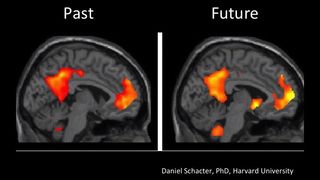
Daniel Schacter, PhD
Source: Daniel Schacter, PhD
One of the reasons our expectations keep us so stuck is that we have the automatic tendency to use the past to predict the future. If you failed once you are likely to think that you might fail again. When you think of the past,2 the same parts of the brain activate as when you think of the future.
However, just because you use the past to make predictions doesn’t mean that your past is what is holding you back.
What was holding Amy back wasn’t her past. It was that she didn’t believe her future was going to be better than the past; and without that belief, she wasn’t able to create something better, even though an opportunity presented itself right in front of her.
If you’re aware of your expectations about a situation, then you have the ability to use your conscious mind to override automatic thinking and plan for a different outcome.
If Amy had planned for her date to go well, things may have turned out differently.
Your expectations about your ability to get what you want have a profound impact on your emotional well-being. A large part of our brain is dedicated to anticipating rewards.3
Rewards, to put it simply, are all the things you want, that make life worth living.
As J.R.R. Tolkien said: “A single dream is more powerful than a thousand realities.”
When you expect to get a reward, you feel positive emotions like happiness and joy. When you don’t think you are going to get what want, you feel disappointment, sadness, maybe even depression.
Istockphoto w/permission
Source: Istockphoto w/permission
The larger the gap between what you expect and what you want, the more distress you feel.
So, what do you do when what you want doesn’t match up with what you expect? There are only two ways to feel good in this situation:
You can give up wanting what you want—you can convince yourself that it isn’t worth the effort, that you didn’t really want it anyway. 
Or, you can change your expectations to match up with what you want so that you can take consistent actions.
How do you do this? There are three steps that can help you begin to shift those expectations. Pause for a moment and imagine a future event that is coming up for you—it can be a goal you are trying to achieve, a work presentation, a holiday get together with your family…now:
1. Ask yourself: How is what I am expecting making me feel? If you are expecting something positive to happen, you will be feeling good about it and you can stop there. No need to fix positive emotions. But if you are expecting something you don’t want, then you are going to feel a negative emotion such as anxiety, fear, dread, or overwhelm. Those are signs you have some negative expectations about the situation.
2. Ask yourself: What would I like to have happen instead? This question identifies what you do want in the situation. What you want is often the very thing that you’re not expecting. Remember, you want to win the lottery, but you don’t expect to.
3. Ask yourself: What do I need to do to make what I want happen? When you are feeling a negative emotion about a situation in the future, it’s because you’re focused on what could go wrong and why it’s not going to turn out the way you want it to. You’re not generating thoughts or ideas about how to make it go right.
When you have a plan in front of you for how to get what you want, your assessment of the situation changes. You begin to see the possibility. This is where the shift happens: Every successful action you take towards that plan starts to change your expectations.
Some of you may be thinking, "I don’t expect this to work for me."
Several years ago, I may not have believed that a simple process could make a difference in people’s lives either. But I was treating a very depressed patient, who I had been seeing for about six months. No matter what we tried, he made very little progress. One day, I asked him: "Where is the light at the end of the tunnel?" He looked at me with the blankest stare I had ever seen.
After that day I started to ask all of my patients this question and I was startled to find that most of them gave me the exact same look. They didn’t dare to dream about how their life could be different, because they didn’t think it was possible.
Istockphoto w/ permission
Source: Istockphoto w/ permission
So I began focusing all of my work on helping my patients change their expectations so that they could find that light at the end of the tunnel.
Five years of research shows that changing your expectations can significantly improve your life,4,5 and I have witnessed some awe-inspiring transformations. The patient I mentioned earlier within a year had quit his dead-end job and started his own successful company. When you motivated yourself by what you want, change is possible.
In the words of Henry Ford, “Whether you think you can or think you can’t, you are right.” 
Your past isn’t what defines who you are or where you are going. It’s your expectations of the future that limit you most. But here’s the good news: You can choose. You can choose to take action based on what you want. And when you do that, you give yourself the opportunity to step out of the past and create the life that you truly want to live.
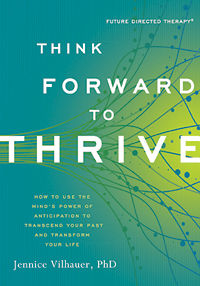
New World Library
Source: New World Library
References
  1. Bar, Moshe. Predictions of the Brain. 2011.Oxford University Press, USA.
  2. Schacter, D and Addis, D. 2007. Thecognitive neuroscience of constructive memory: remembering the past and imagining the future. Philosophical transactions - Royal Society. Biological sciences, 362 (1481), p. 773-786.
  3. Sescousse, G., Caldú, X., Segura, B., and Dreher, J. 2013. Processing of primary and secondary rewards: A quantitative meta-analysis and review of human functional neuroimaging studies. Neuroscience & Biobehavioral Reviews, 37 (4), p. 681–696.
  4. Vilhauer, J., et al. 2012. Treating Major Depression by Creating Positive Expectations for the Future: A pilot study for the effectiveness of Future Directed Therapy (FDT) on Symptom Severity and Quality of Life. CNS Neuroscience and Therapeutics. p. 1-8.
  5. Vilhauer, J.S., et al. 2013. Improving quality of life for patients with major depressive disorder by increasing hope and positive expectations with future directed therapy (FDT). Innovations in clinical neuroscience, 10 (3): p. 12.
Dr. Jennice Vilhauer is the director of the Outpatient Psychotherapy Treatme

Overcoming Shyness and Social Anxieties

Successfully combat social tensions by stepping out of character


You want to stop feeling self-conscious, insecure, and socially inhibited. You want to stop worrying about making social blunders and looking like a jerk. You’re tired of receding into the background at social gatherings hoping no one will see or approach you.
Social anxieties and shyness often coexist. Each has its peculiarities, but also significant similarities. Some corrective techniques apply to both.
Knowing what to do and then doing it can help you to get past trepidations about going to weddings, joining colleagues at a restaurant, or meeting an attractive person whom you’d like to date.
You could put off this challenging work until you felt comfortable. Waiting until you feel ready to face your social fears is an excuse for procrastinating. However, if you are sincere about conquering your social anxieties and fears, there are many ways to conquer self-defeating social inhibitions. I’ll describe exposure techniques. These are the gold standard for addressing needless phobias and fears.
Dialing Down Anxieties
Use the following three exercises to overcome feeling conspicuous and awkward in social situations. Following these desensitization exercises, we’ll look at confident composure that can grow from effective actions.
Observational learning. We learn vicariously. If you watch someone you know engage a social fear, you may imitate the best of what you saw. You may keep adding to what you observe until you routinely do better. However, these observational experiences may not be readily available.
You may still benefit by substituting visualization for observation.
To set the stage for a visualization exercise, I’ll describe an activity that took place in a shyness and social anxiety workshop. Join the group in your imagination.
Immediately after the members introduced themselves and said what they’d like to get out of the workshop, I started a Shy Away dance exercise. Here were the instructions: Pantomime shyness through dancing and gestures. Symbolically show what it is like to be shy.  I started the dance. Within seconds, the entire group was doing the Shy Away.
I ended the exercise. We talked about whether anyone would ever consider doing a solo dance at a party. No one would. Some said that if they had enough time to think about it, they might have bolted for the door.
What did each learn from the experience? As you might guess, I heard many perspectives. “I didn’t think I could do that.” "Once I got into it, the exercise was fun.” Even the most anxious said that this was not bad.  A few said the exercise was too easy. Most felt neither judged nor threatened.
The Shy Away was a break through exercise. It demonstrated that when you don’t have time to think yourself into an anxious tizzy, actively engaging a fear could lead to new positive expressions.
Here is an experiment for you to try.  Imagine you are doing the Shy Away with the workshop group. Imagine that the most kindly people you know are part of the group. In your mind’s eye, pantomime your social anxiety and shyness experiences. Next, reverse the scene. If you imagined yourself looking down at the ground, imagine yourself maintaining eye contact with others (without staring).  This is your social confidence dance.
If you are part of the sub-group with trouble conjuring visual images, put yourself through the movements of doing the dance.  Do this when you are by yourself and continue doing it until you feel comfortable with your version of the dance.
Now you’re ready for a real-life stepping out of character exercise.
Stepping out of Character Exercises are for developing functional new behaviors and fact-based beliefs. You experiment with low risk activities that open options for moving from anxious apprehensions bout what others may think of you to fact-based understandings. 
Wear mismatched socks for a day.  At first, you may feel conspicuous. After a while, you may no longer worry what others may think about the socks. In fact, few will notice or care. Ask yourself, “What did I learn from the experience?”
Here is one of my favorites. Go to a mall at a busy time of day. Take off your watch.  Ask twenty people for the time of day. Use three minutes between requests. This is a great exercise for addressing fears of stranger rejection. Statistically, a small percentage will ignore you. Some may be people with their own self-consciousness problems. Can you emotionally survive a stranger passing on your request for the time?
You may find that you start nervous. You give yourself excuses to delay. Nevertheless, you push yourself to do the exercise. You log the results of each encounter. You later look at your findings. Here is what you are likely to find. Most will give you the time of day. Some will walk past you as though you didn’t exist. A few may engage you in a brief and pleasant conversation.
If you feared rejection before you began the experiment, what might the results tell you about how a sample of strangers responded to a simple request?
Build Confident Composure
By engaging what you know or suspect is a foolish social fear, you put yourself on the path to confident composure. With confident composure, you recognize that you can directly command only yourself, and you choose to do so. You don't demand that the world change for you, and you don't need it to. With this softer but stronger view, you can better influence the controllable events that take place around you. Free of needless anxieties, your psychological resources are more fully available to engage yourself socially.

How to Feel Comfortable in Your Own Skin


“To be beautiful means to be yourself. You don’t need to be accepted by others. You need to accept yourself.” ~Thich Nhat Hanh
From the time I was a little girl, people told me I was pretty, but I never believed them.  Instead, I scrutinized myself in the mirror searching for ways to look better, not realizing that what I was really looking for was a way to be me and feel good about myself.
As I focused even more on my looks throughout my twenties, I became increasingly self-conscious and dependent on how others perceived me.  If someone complimented me and gave me attention, I would feel confident, but if I went unflattered or unnoticed, I would return to the mirror in an effort to figure out why.
I had often heard the expression “what you are inside shows on your face.” However, I didn’t know what these words truly meant until one day at the age of 35.
That day, I took another long look in the mirror, and suddenly something clicked: My looks were not the problem—they never were.
Somehow I understood that what I didn’t like about my face had nothing to do with my physical features. It was something else; something within myself that was reflecting out and causing me to feel unattractive, ill at ease, and unconfident.
At that moment, I knew there were two things I needed to do. The first was to stop staring in the mirror. The second was to look at what was going on inside.
Soon, a friend recommended meditation, so I gave that a try. I sat, breathed, quieted my thoughts, and shared my feelings in a nine-hour course, which I soon followed with a two-day silent meditation retreat.
It’s possible that a silent retreat may not be for everyone, but, for me, it was one of the most valuable experiences of my life. The two days forced me to meditate, reflect, and “be” with myself in an environment that did not permit social interaction, not even eye contact.
There were also no distractions, such as telephone, TV, books, or computers.
Was the experience disagreeable? Initially, yes. Was it painful? Sometimes, but it allowed me to bring forth a lot of valuable self-information and one remarkable realization: I became conscious of how unnatural I felt.
In the time I was there, I recognized that I was not uncomfortable in that setting because I didn’t know how to be with myself. I was uncomfortable because I didn’t know how to be myself.
This was also why I often felt unattractive and ill at ease with others.
I was frequently projecting someone who didn’t feel “like me,” and that projection habitually depended on who I was interacting with.
It was this realization that launched my journey to authenticity and the discovery of a beautiful me.
Slowly, I started to learn about myself and the things that make me happy, and I found that I had a rhythm. I could hardly believe it, but I actually had my own beautiful flow, and as soon as I began to follow it, my authenticity started to build on itself.
I gradually began to feel less self-conscious around others and much more comfortable with myself.
For the first time in my life I started to feel well and beautiful—and it showed. I saw it in the mirror. My husband noticed it in my body language. He said I carried myself differently, like I had more confidence and ease.
Of course, many practices assisted me in my journey, but the ones that helped the most are the ones that keep me grounded in myself today.
If you’re also looking to feel more at ease with yourself, I recommend:

Honor your body

I can never say enough about how important it is to celebrate my body. Every day, I thank it for all that it does, and honor its needs through 30-40 minute runs, long showers, flossing my teeth, and drinking lots of water.
Make a list of the things you need to do to take care of yourself so you feel healthy and grounded, and then schedule them into your day. It’s easier to feel good about who you are when you make your needs priorities.

Maintain a healthy, positive mind

Along with running, creative writing has contributed greatly to my journey. It keeps my mind filled with positive thoughts, and so much of who I am comes out in the characters I write about.
I also love to read, learn new things, and travel to different places, even if just new areas or neighborhoods near my home.
What practices make you feel passionate and positive about the way you’re living your life? Doing what you love is an important step in loving who you are.

Maintain a happy, healthy spirit

Without inner peace, authenticity is fleeting. Consequently, I meditate daily and do my best to live where peace is found—in the present moment. I also make a point of watching a couple of funny movies every week.
Nothing helps my spirit soar as much as laughter. It helps me see the world through younger eyes and reminds me that, no matter what, every moment contains hope and possibilities.
Take time out to nurture your spirit, whether that means practicing yoga, walking on the beach, or simply relaxing. In order to be comfortable with yourself, you first need to be comfortable just being.
And always keep in mind…
Finding your authenticity—finding yourself—will help you feel your beauty. When you endeavor to be who you are and be true to yourself, you will automatically feel attractive and unique.
Also, it is important to remind yourself that beauty is never dependent upon the approval of others. Quite the contrary, beauty is very much self-defined and self-created. The only person who can ever truthfully tell you “you are beautiful” is also the only person who can “make you beautiful.”
You are the only person who can do this.
The power to be beautiful lies not in the eyes of others.  It comes from deep within you.