Showing posts with label Sleep deprivation. Show all posts

Small Gains Help When It Comes to Sleep Deprivation


Getting enough sleep is among the greatest challenges that many people face in today's busy world.

Are you chronically short on rest?

If so, you're not alone, AND your energy, productivity, health, and enjoyment of your moments are all suffering for it. And for children, the impact of inadequate rest time is even more debilitating and disturbing.

According to Po Bronson, author of NurtureShock: New Thinking About Children, children today are sleeping about an hour less than they did 30 years ago. This is a change that has a profound negative impact on young people's performance in all areas.

What particularly caught my attention about this was the impact of losing or gaining even a relatively small increment of restorative rest.

Small amounts count
You know how we talk about the big difference that 5, 10, 15 minutes of exercise can make? Well, the same goes for sleep, especially with young people. Here is Mr. Bronson:

You know, the surprise is not that sleep matters, it's how much it matters and how little bits of difference can matter as well. Data shows that "A" students average 15 more minutes of sleep than "B" students, who average 15 more minutes sleep than "C "students, and so on. Every 15 minutes can count.

That is a very telling statistic illustrating the extremely significant impact of your rest on your performance.


Another study
In another study Dr. Avi Sadeh of Tel Aviv University had sixth graders and fourth graders get a little more or less rest than they usually get, for three nights. He then gave them intelligence tests. The sleepy sixth graders were testing out like the fourth graders.

So, a loss of even three nights of rest time for a half hour each night was quite significant.

More information?
Interested in more on this topic? Take a look at the website of the National Sleep Foundation. Here's just one more tidbit - from their section on Myths and Facts About Sleep. No matter what developmental stage you are in, your rest time matters.

Myth: The older you get, the fewer hours of rest you need. 
Fact: Sleep experts recommend a range of seven to nine hours of sleep for the average adult. While sleep patterns change as we age, the amount we need generally does not. Older people may wake more frequently through the night and may actually get less nighttime sleep, but their need is no less than younger adults. Because they may sleep less during the night, older people tend to sleep more during the day. Naps planned as part of a regular daily routine can be useful in promoting wakefulness after the person awakens.

So find time to get the rest you need. Do it for yourself, for your kids, for energy, productivity, and health.


https://ezinearticles.com/?Small-Gains-Help-When-It-Comes-to-Sleep-Deprivation&id=9835015

6 Ways To Read Someone’s Mind Easily


Many of us think of reading somebody else’s mind as a sort of control mechanism. If you can figure out their next move, you can manipulate them or anticipate their future actions.  In reality, it can be far more practical and personal.
Reading someone else’s mind allows you to be there for them, understand their point of view, and relate to them on a deeper level.  Here are 6 easy ways to read someone’s mind easily:

1) Body Language


Body language is another clear indication as to what somebody is thinking. If their forehead is creased they are stressed. How are they sitting or standing; what is their posture?

When primates in the wild show strength, they open up, arms out wide. They stretch out and pound their chests. In fact, their cortisol horome levels decrease, reducing stress. Like wise, if you bunch up nervously your cortisol levels increase. When cortisol levels increase, sleep deprivation, weight gain and a host of other issues can result. Caffeine has many medicinal properties but when abused, it can lead to cortisol spikes, thus weight gain and sleep deprivation may follow.
Thus, you can learn a lot about a person’s mental state from their body language, posture, and energy levels.

2) Watch their breath


How are they breathing? If somebody breathes through the base of their spine it means they are relaxed. If ones breathe is shallow, they are tense. If you want to know someone’s mental state, observe their breath.
If their breathing is choppy, they are most likely nervous which means they don’t want you to know something.  They may be shy, anxious, or hiding something from you.  If someone has a relaxed breath, you know that their mental state is calm which typically means they are being truthful.

3) Read their eyes


The eyes can also be revealing. The pupil is said to be a portal to the mind. Some studies have shown that when one thinks hard, pupils dilate.  Interestingly, when the brain is overloaded the pupils will constrict.
Also with pupils, when you first meet someone they widen. If they widen but then constrict, it means they are not really interested in you. If the remain dilated, it means they are excited to be with you.

4) Listen to their tone of voice. Not the words, their tone.


The tone of voice can also tell everything. The speed of somebodies voice. Slow is calm, fast in nervous. The words are not as important as the energy behind them. This does not even need to be explained because you know what a certain tone means. But sometimes we must really tune in and listen to get answers.

5) Spend Time With Them

If you want to know what makes somebody tick, spend time with them. Spend an afternoon and you’ll learn a lot. Spend a week, month and year and you might both be reading each others minds.
When spending time with someone, it will become obvious how they will react to certain situations. No matter if the thoughts and feelings are nervous, brave, happy or sad it is won’t be difficult to notice when you know the person well.
This is why it amazes me when a parent claims they did not realize anything might be wrong with their child if the child does something wrong. “Everything was normal” they might say. This is usually an indication that the parent was not spending enough time with their child. If they were, no words would need to be spoken for the parent to know something is wrong.
Other times we might be in a relationship with somebody for a couple of years and still not know what they are thinking. This can create stress in a relationship because it’s hard to know how to act when you don’t know what your lover or friend is thinking or feeling. But still, generally speaking time is a device that allows one to tap into the brain of another.

6) Make sure you aren’t fueling their mind with your energy


Everything depends on you. If you approach a situation nervously, your friend will reflect that tension. Approaching a situation in a relaxed state, we can absorb the other persons energy and recognize it for what it truly is without much guessing.
It is important to note that we all have the ability to ask how somebody feels. Beyond the polite “how’s it going” throwaway question (which is always answered with “good” type response) it is ok to dig a little deeper. Maybe you can try to read their mind and ask a more specific question such as, “you seem relaxed and in a good mood…?”
Open ended observations like that can open up real dialog as opposed to simple customary banter.  As a little exercise, if somebody does ask “how’s it going” feel free to offer up something real. Stop and examine your own feelings for a couple seconds, then tell them. Self awareness is critical when attempting to be more aware of others around you.  The less aware and centered you are, the less you will be able to read another person’s mind.


Sleep Deprivation Is Killing You and Your Career


The next time you tell yourself that you’ll sleep when you’re dead, realize that you’re making a decision that can make that day come much sooner. In this article, originally posted on LinkedIn Pulse, I explain why pushing late into the night is a health and productivity killer.
According to the Division of Sleep Medicine at the Harvard Medical School, the short-term productivity gains from skipping sleep to work are quickly washed away by the detrimental effects of sleep deprivation on your mood, ability to focus and access to higher-level brain functions for days to come. The negative effects of sleep deprivation are so great that people who are drunk outperform those lacking sleep.

Why You Need Adequate Sleep to Perform

We've always known that sleep is good for your brain, but new research from the University of Rochester provides the first direct evidence for why your brain cells need you to sleep (and sleep the right way—more on that later). The study found that when you sleep, your brain removes toxic proteins from its neurons that are by-products of neural activity when you're awake. Unfortunately, your brain can remove them adequately only while you're asleep. So when you don't get enough sleep, the toxic proteins remain in your brain cells, wreaking havoc by impairing your ability to think—something no amount of caffeine can fix.
Skipping sleep impairs your brain function across the board. It slows your ability to process information and problem solve, kills your creativity, and catapults your stress levels and emotional reactivity.

What Sleep Deprivation Does to Your Health

Sleep deprivation is linked to a variety of serious health problems, including heart attack, stroke, type 2 diabetes and obesity. It stresses you out because your body overproduces the stress hormone cortisol when it's sleep deprived. While excess cortisol has a host of negative health effects that come from the havoc it wreaks on your immune system, it also makes you look older, because cortisol breaks down skin collagen, the protein that keeps skin smooth and elastic. In men specifically, not sleeping enough reduces testosterone levels and lowers sperm count.
Too many studies to list have shown that people who get enough sleep live longer, healthier lives, but I understand that sometimes this isn't motivation enough. So consider this—not sleeping enough makes you fat. Sleep deprivation compromises your body's ability to metabolize carbohydrates and control food intake. When you sleep less, you eat more and have more difficulty burning the calories you consume. Sleep deprivation makes you hungrier by increasing the appetite-stimulating hormone ghrelin and makes it harder for you to get full by reducing levels of the satiety-inducing hormone leptin. People who sleep less than six hours a night are 30 percent more likely to become obese than those who sleep seven to nine hours a night.

How Much Sleep Is Enough?
Most people need seven to nine hours of sleep a night to feel sufficiently rested. Few people are at their best with less than seven hours, and few require more than nine without an underlying health condition. And that’s a major problem, since more than half of Americans get less than the necessary seven hours of sleep each night, according to the National Sleep Foundation.
For go-getters, it's even worse.
A recent survey of Inc. 500 CEOs found that half of them are sleeping less than six hours a night. And the problem doesn't stop at the top. According to the Centers for Disease Control and Prevention, a third of U.S. workers get less than six hours of sleep each night, and sleep deprivation costs U.S. businesses more than $63 billion annually in lost productivity.

Doing Something About It

Beyond the obvious sleep benefits of thinking clearly and staying healthy, the ability to manage your emotions and remain calm under pressure has a direct link to your performance. TalentSmart has conducted research with more than a million people, and we’ve found that 90 percent of top performers are high in emotional intelligence (EQ). These individuals are skilled at understanding and using emotions to their benefit, and good sleep hygiene is one of the greatest tools at their disposal.
High-EQ individuals know it's not just how much you sleep that matters, but also how you sleep. When life gets in the way of getting the amount of sleep you need, it's absolutely essential that you increase the quality of your sleep through good sleep hygiene. There are many hidden killers of quality sleep. The 10 strategies that follow will help you identify these killers and clean up your sleep hygiene. Follow them, and you'll reap the performance and health benefits that come with getting the right quantity and quality of sleep.
1. Stay away from sleeping pills.
When I say sleeping pills, I mean anything you take that sedates you so that you can sleep. Whether it's alcohol, Nyquil, Benadryl, Valium, Ambien, or what have you, these substances greatly disrupt your brain's natural sleep process. Have you ever noticed that sedatives can give you some really strange dreams? As you sleep and your brain removes harmful toxins, it cycles through an elaborate series of stages, at times shuffling through the day’s memories and storing or discarding them (which causes dreams). Sedation interferes with these cycles, altering the brain's natural process.
Anything that interferes with the brain's natural sleep process has dire consequences for the quality of your sleep. Many of the strategies that follow eliminate factors that disrupt this recovery process. If getting off sleeping pills proves difficult, make certain you try some of the other strategies (such as cutting down on caffeine) that will make it easier for you to fall asleep naturally and reduce your dependence upon sedatives.
2. Stop drinking caffeine (at least after lunch).
You can sleep more and vastly improve the quality of the sleep you get by reducing your caffeine intake. Caffeine is a powerful stimulant that interferes with sleep by increasing adrenaline production and blocking sleep-inducing chemicals in the brain. Caffeine has a six-hour half-life, which means it takes a full 24 hours to work its way out of your system. Have a cup of joe at 8 a.m., and you’ll still have 25 percent of the caffeine in your body at 8 p.m. Anything you drink after noon will still be near 50 percent strength at bedtime. Any caffeine in your bloodstream—the negative effects increasing with the dose—makes it harder to fall and stay asleep.
When you do finally fall asleep, the worst is yet to come. Caffeine disrupts the quality of your sleep by reducing rapid eye movement (REM) sleep, the deep sleep when your body recuperates most. When caffeine disrupts your sleep, you wake up the next day with a cognitive and emotional handicap. You’ll be naturally inclined to grab a cup of coffee or an energy drink to try to make yourself feel more alert, which very quickly creates a vicious cycle.
3. Avoid blue light at night.

This is a big one—most people don't even realize it impacts their sleep. Short-wavelength blue light plays an important role in your mood, energy level and sleep quality. In the morning, sunlight contains high concentrations of this "blue" light. When your eyes are exposed to it directly (not through a window or while wearing sunglasses), the blue light halts production of the sleep-inducing hormone melatonin and makes you feel more alert. This is great, and exposure to a.m. sunlight can improve your mood and energy levels. If the sun isn't an option for you, try a blue light device.
In the afternoon, the sun's rays lose their blue light, which allows your body to produce melatonin and start making you sleepy. By the evening, your brain does not expect any blue light exposure and is very sensitive to it. The problem this creates for sleep is that most of our favorite evening devices—laptops, tablets, TVs and mobile phones—emit short-wavelength blue light. And in the case of your laptop, tablet and phone, they do so brightly and right in your face. This exposure impairs melatonin production and interferes with your ability to fall asleep as well as with the quality of your sleep once you do nod off. Remember, the sleep cycle is a daylong process for your brain. When you confuse your brain by exposing it in the evening to what it thinks is a.m. sunlight, this derails the entire process with effects that linger long after you power down. The best thing you can do is avoid these devices after dinner (TV is OK for most people as long as they sit far enough away from the set). If you must use one of these devices in the evening, you can limit your exposure with a filter or protective eye wear.
4. Wake up at the same time every day.
Consistency is key to a good night's sleep, especially when it comes to waking up. Waking up at the same time every day improves your mood and sleep quality by regulating your circadian rhythm. When you have a consistent wake-up time, your brain acclimates to this and moves through the sleep cycle in preparation for you to feel rested and alert at your wake-up time. Roughly an hour before you wake, hormone levels increase gradually (along with your body temperature and blood pressure), causing you to become more alert. This is why you'll often find yourself waking up right before your alarm goes off.
When you don't wake up at the same time every day, your brain doesn't know when to complete the sleep process and when it should prepare you to be awake. Long ago, sunlight ensured a consistent wake-up time. These days, an alarm is the only way most people can pull this off, and doing this successfully requires resisting the temptation to sleep in when you're feeling tired because you know you'll actually feel better by keeping your wake-up time intact.
5. No binge sleeping (in) on the weekend.
Sleeping in on the weekend is a counterproductive way to catch up on your sleep. It messes with your circadian rhythm by giving you an inconsistent wake-up time. When you wake up at the same time during the work week but sleep past this time on the weekend, you end up feeling groggy and tired because your brain hasn't prepared your body to be awake. This isn't a big deal on your day off, but it makes you less productive on Monday because it throws your cycle off and makes it hard to get going again on your regular schedule.
6. Learn how much sleep you really need.
The amount of sleep you need is something that you can't control, and scientists are beginning to discover the genes that dictate it. The problem is, most people sleep much less than they really need and are under-performing because they think they're getting enough. Some discover this the hard way. Ariana Huffington was one of those frantic types who underslept and overworked, until she collapsed unexpectedly from exhaustion one afternoon. She credits her success and well-being since then to the changes she's made to her sleep habits. "I began getting 30 minutes more sleep a night, until gradually I got to seven to eight hours. The result has been transformational," Huffington says, adding that, "all the science now demonstrates unequivocally that when we get enough sleep, everything is better: our health; our mental capacity and clarity; our joy at life; and our ability to live life without reacting to every bad thing that happens."
Huffington isn't the only one. Jeff Bezos, Warren Buffet, and Sheryl Sandberg have all touted the virtues of getting enough sleep. Even Bill Gates, an infamous night owl, has affirmed the benefits of figuring out how much sleep you really need: “I like to get seven hours of sleep a night because that’s what I need to stay sharp and creative and upbeat.” It's time to bite the bullet and start going to bed earlier until you find the magic number that enables you to perform at your best.
7. Stop working.
When you work in the evening, it puts you into a stimulated, alert state when you should be winding down and relaxing in preparation for sleep. Recent surveys show that roughly 60 percent of people monitor their smartphones for work emails until they go to sleep. Staying off blue light-emitting devices (discussed above) after a certain time each evening is also a great way to avoid working so you can relax and prepare for sleep, but any type of work before bed should be avoided if you want quality sleep.
8. Eliminate interruptions.
Unfortunately for those with small children, the quality of your sleep does suffer when it is interrupted. The key here is to eliminate all the interruptions that are under your control. If you have loud neighbors, wear earplugs to bed. If your mother likes to call at all hours of the night, make certain you silence your ringer before you go to bed. If you had to wake up extra early in the morning, make sure your alarm clock is back on its regular time when you go to bed. Don't drink too much water in the evening to avoid a bathroom trip in the middle of the night. If your partner snores…. Well, you get the idea. If you think hard enough, there are lots of little things you can do to eliminate unnecessary interruptions to your sleep.
9. Learn to meditate.


Many people who learn to meditate report that it improves the quality of their sleep and that they can get the rest they need even if they aren't able to significantly increase the number of hours they sleep. At the Stanford Medical Center, insomniacs participated in a six-week mindfulness meditation and cognitive-behavioral therapy course. At the end of the study, participants' average time to fall asleep was cut in half (from 40 to 20 minutes), and 60 percent of subjects no longer qualified as insomniacs. The subjects retained these gains upon follow-up a full year later. A similar study at the University of Massachusetts Medical School found that 91 percent of participants either reduced the amount of medication they needed to sleep or stopped taking medication entirely after a mindfulness and sleep therapy course. Give mindfulness a try. At minimum, you'll fall asleep faster, as it will teach you how to relax and quiet your mind once you hit the pillow.
10. When all else fails, take naps.
One of the biggest peaks in melatonin production happens during the 1 to 3 p.m. time frame, which explains why most people feel sleepy in the afternoon. Companies like Google and Zappos are capitalizing on this need by giving employees the opportunity to take short afternoon naps. If you aren't getting enough sleep at night, you're likely going to feel an overwhelming desire to sleep in the afternoon. When this happens, you're better off taking a short nap (even as short as 15 minutes) than resorting to caffeine to keep you awake. A short nap will give you the rest you need to get through the rest of the afternoon, and you'll sleep much better in the evening than if you drink caffeine or take a long afternoon nap.
Bringing It All Together
I know many of you reading this piece are thinking something along the lines of "but I know a guy (or gal) who is always up at all hours of the night working or socializing, and he's the number one performer at our branch." My answer for you is simple: This guy is underperforming. We all have innate abilities that we must maximize to reach our full potential. My job is to help people do that—to help the good become great by removing unseen performance barriers. Being number one in your branch is an accomplishment, but I guarantee that this guy has his sights set on bigger things that he isn't achieving because sleep deprivation has him performing at a fraction of his full potential. You should send him this article. It just might shake something loose.
After all, the only thing worth catching up on at night is your sleep.
http://www.success.com/blog/sleep-deprivation-is-killing-you-and-your-career

Why You're Tired All The Time + How To Feel Better


Are you chronically tired for no reason? Do you feel rundown and overwhelmed? It could be adrenal fatigue.
Adrenal fatigue occurs when your adrenal glands cannot adequately meet the demands of stress. From the demands of work, to family obligations, to the hurried pace of the city and our technology-driven society, many of us feel like we’re under a constant siege of stress.
While the “fight or flight” stress response mobilized by the adrenal glands is a key to our survival as a species, prolonged stress, whether it’s physical, emotional, or psychological, exhausts the adrenal glands, leads to sleeplessness, irritability, and fatigue. When our adrenal glands are constantly required to pump out cortisol, they eventually become impaired. Your body does its best to compensate for under-functioning adrenal glands, but it comes at the price of your metabolism, heart and cardiovascular system, sex drive, and even your sleep.
Research has found that sleep disturbances are directly related to increased sensitivity to the arousal-producing stress hormone cortisol. Cortisol is excitatory, which means it arouses us, wakes us up, and leaves us primed for action long after the stressor is gone. Unfortunately, when we’re under prolonged periods of stress, our cortisol levels remain elevated and our adrenal glands, small pyramid-shaped glands that sit atop each kidney, never get a chance to recharge.
When we consistently don’t get a good night’s sleep, our circadian rhythm becomes disrupted. This negatively affects our serotonin and melatonin, hormones which govern appetite and mood. In other words, not only does stress keep us in an agitated state by agitating our cortisol levels, but it can lead to cravings, obesity, and blood sugar imbalances which have been shown to negatively impact mood.
While it may feel like you’re caught in a vicious cycle of stress, sleep deprivation, poor nutrition and mood swings, it’s possible to break free by incorporating these six tips in your daily routine:
1. Eat breakfast.
Make a point of eating a high-fiber, high-protein breakfast every morning to stabilize blood sugar and improve mental alertness.
2. Eat regularly.
It’s important to keep up the momentum after a nutritious breakfast. Skipping meals leads to irritability and mood swings because our mood rises and falls alongside the dips in our blood sugar. Try eating four or five small, well-balanced meals per day.
3. Ditch the junk.
Remove refined, highly-processed food from your diet. This includes sugary snacks, deep-fried food, processed lunch meats, and pre-packaged items with additives, preservatives, dyes, and flavouring agents. These food-like items rob your body of the nutrients it needs to support healthy adrenal function. Our adrenal glands thrive on zinc, manganese, vitamin C, and the B vitamins found in dark leafy greens.
4. Skip the stimulants.
Say goodbye to caffeine that leaves you feeling wired, yet tired! Propping yourself up with coffee, tea, soda, and energy drinks will inevitably lead to a crash. These unsustainable forms of energy over-stimulate your adrenal glands and they’re also unnecessary sources of sugar and calories.
5. Supplement with herbs.
Adaptogenic herbs like maca, ashwaganda, and rhodiola can help the body cope with stress and fatigue. For specific doses of these super supplements, consult your health care practitioner.
6. Wind down.
If you have a habit of watching the news before bed or mindlessly browsing the internet, consider a new routine. Unplug and opt for a relaxing bath or a series of yoga stretches to help your mind and body relax.

National Sleep Foundation Releases New Guidelines For A Good Night's Rest

           
If you're like the majority of the population, you need to get more sleep. But no matter how groggy you felt after hitting the snooze button for the fifth time this morning, you'll probably go to bed at the same time tonight. Sleep is an easy thing to slap a big "I'll get to that later" onto.
But it's something you really shouldn't neglect — if you want to be your best mental, emotional, physical, most productive self. You know that. Everyone knows that. Yet somehow, 50 to 70 million Americans still suffer from sleep deprivation. The CDC actually labels it a national epidemic.
With the problem only worsening, the National Sleep Foundation (NSF) decided to take action. For the first time, the foundation has released a year-long multidisciplinary review of current literature on the field. The 18-member expert panel, comprised of six members appointed by the NSF and 12 selected by groups including the American Academy of Pediatrics and the American Neurological Association, announced new sleep recommendations.
Along with adjusting their previous recommendations for 14- to 17-year-olds, the panel also added two new categories: younger adults, ages 18-25, and older adults, over the age of 65.
They focused on sleep's impact on a range of factors, including memory, mood, performance, and also health conditions like diabetes and high blood pressure.
And while the study authors acknowledge there will always be outliers, they urge Americans to consider these "rules of thumb":
  • Newborns (0-3 months): 14-17 hours each day (previously 12-18)
  • Infants (4-11 months): 12-15 hours (previously 14-15)
  • Toddlers (1-2 years): 11-14 hours (previously 12-14)
  • Preschoolers (3-5): 10-13 hours (previously 11-13)
  • School-age children (6-13): 9-11 hours (previously 10-11)
  • Teenagers (14-17): 8-10 hours (previously 8.5-9.5)
  • Younger adults (18-25): 7-9 hours (new age category)
  • Adults (26-64): Sleep range did not change and remains 7-9 hours
  • Older adults (65+): 7-8 hours (new age category)


Keep in mind, too, that too much sleep may be just as detrimental to your health as too little sleep, and that it's important to do more than just adhere to these guidelines. The panel also reminds people of the benefits of avoiding caffeine and alcohol in the hours before bed, exercising as a way to get more restful sleep, and the dangers of using your phone in bed.

And if your issue isn't getting into bed earlier but actually falling asleep, you might need to introduce a little Jeff Bridges into your life.

Time to Get Serious About Sleep

...Or face health consequences.
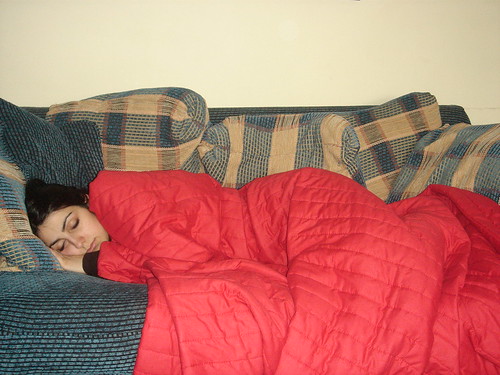
Woman, Asleep, Girl, Sleep, Dreams, Face, Young Woman


We’ve all heard and perhaps admired overachievers who need only four hours sleep per night (Yahoo CEO Marissa Mayer comes to mind). But these folks aren’t doing their health any favors: Research indicates that inadequate sleep disrupts the body’s ability to process sugar, causing metabolic disorders such as type 2 diabetes and obesity.
Wendy, who asked that her last name not be published, provides a startling example. Wendy didn’t believe a co-worker who said she’d fallen asleep during a conversation until the co-worker recorded a video. “My head was rolled back and I was snoring,” Wendy says.
She saw her doctor, who recommended a sleep study, which revealed she had sleep apnea, a disorder characterized by pauses in breathing. Aside from her obesity, which she had fought with diet and exercise for years, her blood pressure was high and oxygen in her blood was dangerously low. She also confided to her doctor that she had started experiencing hallucinations. He said all her symptoms were classic.
Six months after she started using a prescribed BiPAP machine to help with breathing at night, Wendy had lost 60 pounds—without any additional dieting or exercise—and her oxygen level and blood pressure had improved.
Although sleep apnea patients and night-shift workers immediately come to mind as targets for sleep-related health issues, a report in The Lancet Diabetes & Endocrinology identified lifestyle—in other words, personal choice—as the most important contributor to sleep deprivation. Which means anyone who skimps on sleep is at risk.
The report predicted that improved sleep quality and duration could stem “the present epidemic of metabolic disorders” to lengthen lives and reduce chronic illnesses.