Showing posts with label listening. Show all posts

An Ounce Of Help Is Better Than A Pound Of Preaching

It's very difficult to console someone who is down. Criticism won't help but a listening heart can. Feeling what someone else is going through is already a comfort. Understanding and empathy is better than a pound of preaching because of a mistake. Blaming won't help either. Though, it's easier to find fault with other people but it's different when your compassion is what they needed.

Acknowledge that you understand the person's feelings. Sometimes people want to seek advice or a solution to their problem. But as seen, they usually want to vent their feelings. This is especially true for women. So, just listen. Let that the other person to talk, so that they can sort their feelings themselves; they may not even be able to articulate why they're feeling down, unless you draw it out of them.

Never minimize their pain or try to cheer them up. When faced with tears, sometimes we insist that whatever they're upset about is no big deal. Don't trivialize their experience, but walk through it with them. Put yourself on their shoes so that you can easily understand what they've been through. Words may not be that trivial but the way you respond to a situation matters.

Sometimes people don't want to talk and just want to be held in silence. They also just want to feel that they are not alone. So, your presence is already enough to comfort them. Even if you won't offer consoling words, the mere fact that you stay with them is already a relief.

In such circumstance, the person typically feels better after having shared the burden in their heart, and the pain fades eventually. Having someone who is willing to listen and will never judge you despite your flaws is a gift. How on earth I survive life's struggle if I don't have a friend whom I can lean on especially when I am so down and depressed.

Money is nothing compared to a friend who can help you without extending any monetary budget to you. If a problem is not resolve yet, she can offer you a solution to improve the situation without pressuring you to do it. She always listens. Even if she also has problems of her own.

With someone who's sad not because of an isolated event, but because they suffer from disappointments, just talk to her and listen. Excess rumination is not only ineffective in alleviating depressed feelings, it can also worsen them.

Scolding and preaching won't help a person who is in pain. Just let the person know that you understand what they're going through, that you're sorry they're going through it, and that your shoulder is always available for them to cry one and that's enough.


https://ezinearticles.com/?An-Ounce-Of-Help-Is-Better-Than-A-Pound-Of-Preaching&id=9774780

Do You Hear What I Hear?

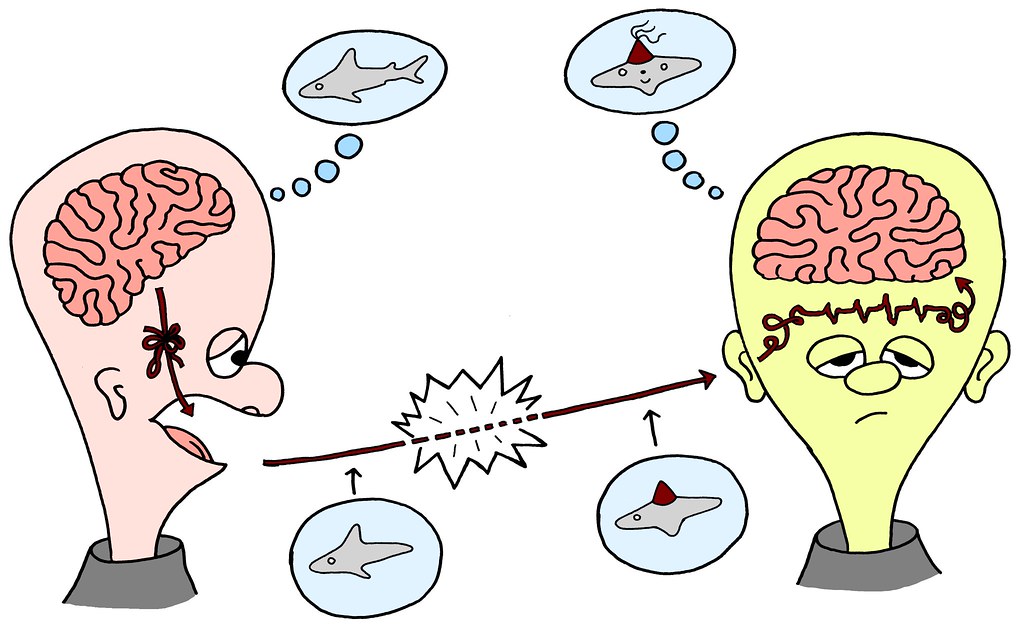
Have you ever attempted to read jumbled letter paragraphs and wondered why they seemed simple to some and challenging to others? Or listened to an eye-witness accounting of conversations that left you wondering where the truth may lie because they were so different? Even more perplexing is being present yourself and feeling certain that you heard everything correctly only to hear many differing accounts of the same event. How is this possible? Do others see what you see or hear what you hear? If not, how is effective communication even possible?

The human brain is remarkable for a multitude of reasons but auto correct may be the best teacher in understanding what is happening when another persons recounting goes awry. The human brain anticipates, just like auto correct, what is coming next. As it is engaged it anticipates what seems to fit the sentence or scenario and fills in the blanks. For the same reason that auto correct is great for some it is a nightmare for others. The brain anticipates based on the filters, biases and experiences it has recorded in its own private reference library. We stop really listening when we think we can 'fill in the blanks.' Life experience now enters the equation.

A newborn baby may be born into a large family of door slammers who are accustomed to loud noises and verbal shouting. The first time it hears these sounds the baby cries loudly in fear. Each time someone comforts them they grow more and more accepting that the loud environment is normal. A baby born into a household where music plays quietly and visitors murmur to allow the sleeping baby to rest develops completely different filters. While one may hear normal in loud noises the other will be terrified. It only takes a few weeks to develop their normal. Children who live in abusive households lose the ability to draw the line and establish barriers for themselves in relationships because they were not permitted to do so as a child. Theirs is a different normal. People relate, judge and interact through what they identify as normal.

What you have personally experienced in life largely determines what you hear and see; the blanks are filled in by your anticipation of what is coming. One person's anticipation can be diametrically opposed to the next persons based on what they have lived, learned to accept and what they believe is the anticipated outcome of a sentence, a paragraph, a thought or a relationship. Many times people do not hear or see what you do. Their blanks were filled in from a different set of circumstances.

When communications become completely skewered, try tuning in to the person by listening. If you find yourself in a situation where you simply cannot understand why another person believes in something you think is unimaginable or expects an outcome that seems impossible to you take a moment to tune in to them. Listen as they describe their life experiences. Words and phrases can tell you how they are accustomed to communicating in life, or what they have learned to accept as normal.

Is there an air of expectation or resignation? Are they expecting to encounter the worst case or anticipating a miracle? Our expectations in life are developed when we are very young and totally under the control of authority figures around us. It takes a determined effort to alter the course and see or hear things differently. But we can; and when we do we can come together and find common ground. We can understand.


https://ezinearticles.com/?Do-You-Hear-What-I-Hear?&id=9952141

Metaphors Gone Wild: Attics and Brain Boosts

man and woman beside vehicle

Sir Arthur Conan Doyle consider the brain as an "empty attic." He recognized the need to stock it with metaphoric furniture, the choices of which are left up to each individual. Two important cognitive functions occurring up in that attic of yours are listening and being creative. Here are tips for polishing both these metaphoric pieces of furniture.

LISTENING
"The essence of genius," according to William James, "is to know what to overlook." And, author Mitchell Posner urges us to be "ecologists" as far as information is concerned. Here are exercises to help you be " as far as listening is concerned, to help you avoid verbal pollution.

In the center of a clean sheet of paper, draw a circle. Ask a friend to find a dense paragraph from an article. (Or, to simply go on and on about some topic for a few minutes.) Then extract three key words from the verbally- inflated paragraph that he or she spoke aloud. Write those words in the circle. Now that you have the essence of what you heard, use the three words to prompt your memory about the most important things you heard. Check with your friend to see if you have captured the main points.

This exercises not only sharpens your listening skills, but your verbal fluidity skills as well. Ask a friend to talk about an enjoyable experience and to stop unexpectedly after a few minutes. You are to take one word from the last sentence uttered and use it to begin speaking about something you enjoy doing. Stop unexpectedly and have the other person continue the conversation using one word from the last sentence you spoke.

Next, give some thought to barriers that can impede the listening process. Can you list 20 of them? Then consider which of these you can control. Finally, engage in a dialog that refutes Dr. Leo Buscagli, who said, "Most conversations are just alternating monologues-the question is, is there any real listening going on?"

CREATIVITY
Creativity is the result, in very large measure, of the belief that we are creative. To develop your creativity muscles, periodically ask yourself: "What if... ?" and "What could this be used for?" questions.

Convergent responses are typical, expected, logical. For example, asked how one gets to Heaven, you'd probably say something like "Follow the Golden Rule." Ask this question of a divergently-oriented child, though, and you might hear, "Go to Hell and take a left!" Or, "You need the God elevator." Or, "You need to buy a really big trampoline."

Think divergently about these questions:

What number does not belong with the others?
3810 6024 4816 1452

What letter belongs in the blank? FMAMJJASO ____

What letter belongs in the blank? OTTFFSSE ____

What national holiday do these letters represent?
ABCDEFGHIJKMNOPQRSTUVWXYZ

CHALLENGE YOURSELF
Think of the symbolism associated with causes and colors. For example, we tied yellow ribbons on trees to show support for hostages in Iran. If the head of your organization asked you to create a new ribbon design, what would it look like? What message would it express? What initials would be meaningful? What color?

One of the best ways to engender creative possibilities is to put things together that normally are not aligned. (Anne Geddes did this with babies and vegetables.) List ten disparate items: "peacock" and "eraser," for example. Then search among those items for a solution to a workplace problem or for an improvement to an existing situation.

Remember that Einstein regarded imagination as more important than knowledge. Try creating some unique metaphors to describe your workplace or your neighborhood or your life.

A PLACE FOR NONSENSE
Building those brain cells can be hard work. To offset the ardors of cognitive development, it's okay to indulge in mental "junk food" occasionally. Be heartened by Dr. Seuss, who admitting to this indulgence. "I like nonsense," he admitted. "It wakes up the brain cells."

Answer: 1-,4816, (If you add the digits in the other three numbers, they add up to 12. 4816 adds up to 19.) 2-N. (The other letters are the first letters in the twelve months of the year.), 3-N, again. (The other letters represent the first letters in a counting sequence from One to Eight.), 4- Christmas, because there is no "L" in the list.


https://ezinearticles.com/?Metaphors-Gone-Wild:-Attics-and-Brain-Boosts&id=9876565

I'm Not Angry, It's You, It's Your Fault!


I'm guessing that many of us will have, at some time, been in the presence of someone who seems angry, even hostile, for no apparent reason. They may even claim not to be angry; it's your fault, you who's imagining it, who's projecting your own issues and emotions into the situation. We may even find ourselves wondering what happened, could it really be our fault? We may be unclear as to how to proceed.

Some people have a tendency to blow up at the slightest opportunity, for the most trivial of reasons and then claim that they were not angry, that we provoked them, it's our fault and we're to blame! They may twist our words and actions, manipulate situations, 'gas light' us.

When we know there's no obvious reason for such an outburst we may wish to dig deeper and find clues to help us address the underlying issues behind such anger. If we can't simply walk away from the relationship how do we persuade a person to acknowledge the inappropriateness of their behaviour or help them accept that there are issues that need resolving?

What do you do if you suspect you're becoming that person?

- Notice if other people are starting to back away from you. Everyone can't be wrong! A big clue that you're the angry one who's behaving unreasonably is when you realise that people have stopped discussing sensitive matters with you. A shrug and a 'there's no point discussing it, you never listen', may be fine at busy or stressful times, but gradually others may start to form closer relationships whilst you become relegated to the role of outsider. Noticing this can provoke an increase of anger and frustration, but it can be the cue to start taking more responsibility for your alienating behaviour.

- Do people claim that you're not interested or don't understand? Relationships are not all about you and are meant to be a two-way exchange, even if you don't like or agree with the other person's point of view. Practise constructive listening. This means calmly reflecting back what you've heard so that the speaker is reassured that you've understood. It can be tough at first to resist the temptation to be mentally preparing your response before they've even finished speaking, but giving others respect and understanding will help to improve your relationships.

- A victim mentality can result in angry responses to any perceived criticism or rejection. This may be caused by unresolved issues, sometimes going back many years. That sneaking suspicion that we're not good enough, that we've succeeded by accident, that we'll be found out at any moment can cause defensive, angry responses in a bid to fend off further comments or investigation.

- 'Stop telling me what to do' is a common expression in households where young people are growing up and starting to flex their wings. Over time though, some people may seem incapable of phrasing requests in an acceptable way and so are seen as bossy, ego-driven and dominant, whereas others may be resistant to taking instruction well. This can be problematical in work-related situations. Learning to discuss matters respectfully can help avoid an escalation of tensions.

- Unresolved issues may be caused through an inability to properly communicate our feelings, ask for help or discuss what's going on. We may have learned to keep quiet and not express ourselves well or expect others to be psychic and intuit our true thoughts and feelings. Maybe we hate risking feeling vulnerable and anticipate that others won't understand. All these are our own issues that can prompt an angry response. It may be that a few counselling and hypnotherapy sessions can help us work through any unhelpful patterns of behaviour.

- Too much going on, where we're loathe to decline requests and continually accept more commitments can result in a stress overload and burnout. We may agree to requests out of concern or fear, perhaps of missing out, of appearing that we're not coping, that we're not up to the job. However, it's often better to explain what else is going on in our lives, to ask for extra training and discuss our situation. Sometimes other people issue requests without fully realising what other commitments we have.

- Counselling and hypnotherapy can help in resolving underlying issues of rejection, low self-esteem and confidence. It can be important to appreciate that perspective has a significant role too in our experience of anger. How we look at things, how we interpret what's going on is frequently done from how they impact on us and our lives. Getting to grips with the fact that others may be better than us in some areas, right in what they're saying, entitled to their point of view, can make a massive difference to the way we react to experiences. Accepting that we have to 'get over ourselves' can be a big step in the right direction.

- Learn to laugh at yourself when you see how uptight, foolish or wrong you're being. Self-awareness can deliver a much more relaxed, less stressed way of responding to things that happen and can enable everyone to ease up too and be more creative and supportive of each other.

- Finding a code word or effective way of recognising and calling 'time out' can be a valuable way of intercepting tense situations before they escalate. All parties need to agree in advance, but taking a break before anger erupts can give time to calm, recognise the triggers and maybe discuss them before too much harm is caused.

And don't forget, once said, things cannot be unsaid. They may be understood, excused, even forgiven, but it's less easy to forget harsh words spoken in anger.


https://ezinearticles.com/?Im-Not-Angry,-Its-You,-Its-Your-Fault!&id=10043786

An Ounce Of Help Is Better Than A Pound Of Preaching


It's very difficult to console someone who is down. Criticism won't help but a listening heart can. Feeling what someone else is going through is already a comfort. Understanding and empathy is better than a pound of preaching because of a mistake. Blaming won't help either. Though, it's easier to find fault with other people but it's different when your compassion is what they needed.

Acknowledge that you understand the person's feelings. Sometimes people want to seek advice or a solution to their problem. But as seen, they usually want to vent their feelings. This is especially true for women. So, just listen. Let that the other person to talk, so that they can sort their feelings themselves; they may not even be able to articulate why they're feeling down, unless you draw it out of them.

Never minimize their pain or try to cheer them up. When faced with tears, sometimes we insist that whatever they're upset about is no big deal. Don't trivialize their experience, but walk through it with them. Put yourself on their shoes so that you can easily understand what they've been through. Words may not be that trivial but the way you respond to a situation matters.

Sometimes people don't want to talk and just want to be held in silence. They also just want to feel that they are not alone. So, your presence is already enough to comfort them. Even if you won't offer consoling words, the mere fact that you stay with them is already a relief.

In such circumstance, the person typically feels better after having shared the burden in their heart, and the pain fades eventually. Having someone who is willing to listen and will never judge you despite your flaws is a gift. How on earth I survive life's struggle if I don't have a friend whom I can lean on especially when I am so down and depressed.

Money is nothing compared to a friend who can help you without extending any monetary budget to you. If a problem is not resolve yet, she can offer you a solution to improve the situation without pressuring you to do it. She always listens. Even if she also has problems of her own.

With someone who's sad not because of an isolated event, but because they suffer from disappointments, just talk to her and listen. Excess rumination is not only ineffective in alleviating depressed feelings, it can also worsen them.

Scolding and preaching won't help a person who is in pain. Just let the person know that you understand what they're going through, that you're sorry they're going through it, and that your shoulder is always available for them to cry one and that's enough.


http://ezinearticles.com/?An-Ounce-Of-Help-Is-Better-Than-A-Pound-Of-Preaching&id=9774780

Is Anybody Listening? The Universe Is Always Listening


Sometimes, in spite of your best efforts, beautiful prayers, and endless study, life appears to betray you, forcing you into a "battlefield state of consciousness." You find you must ready yourself to deal with your worst fears.

Conceivably, it can appear in the form of unemployment, homelessness, divorce, the death of a loved one, etc. Just maybe, this nightmare is a combination many things. It could even be all of the above. Even though you have made your spiritual quest a priority, it does not take long to see the cold hard facts. This leaves you thinking you are not going to make it. To keep this feeling of dying a painful death at bay takes all of your energy, leaving you without the strength to forge ahead.

Like a good steward, you quickly pop in the tape of your favorite motivational speaker, pull out your favorite prayer vigil, open a journal and start to grapple with these unwelcome visitors. About sixty days later, you realize you do not seem to be winning.

You have followed all of the advice given by ministers and motivators alike. Yes, all seems in vain. Even God seems to be hiding. So you cry out, "Is ANYBODY listening?"

Abruptly my meditation was broken by the sounds of people jet skiing. Instead of being annoyed, I remembered that "everything is temporary" and I was grateful for the blessing of this real moment, no matter how short.

As you are forced to battle and slay the negative forces and circumstances that are occurring in your life, remember this promise- this too shall pass. Just keep on keeping on. This wonderful universe is listening and the mere fact you are alive is a testament to the fact you are winning in spite of how it appears.

Chimamanda Ngozi Adichie warns of the danger of a single story and it is at times like these that we find ourselves focusing on the 20% of what is wrong in our lives and giving it our attention while ignoring and deflating the 80% of our lives that is working. Life does not give us problems or challenges, it gives us opportunities that are designed to help us to continue to step into our greatness.

When life presents you with a seemingly impossible opportunity make it an adventure - do the following: Look at your life six months from now. What must have happened for you to believe a miracle had occurred? As the answers are revealed to you, it is now time to start your new adventure today.

Live the life you've imagined. Dream Big!

Remember life is too short to drink cheap champagne!


http://ezinearticles.com/?Is-Anybody-Listening?-The-Universe-Is-Always-Listening&id=9667230

Career Advice: Improve Your Communication Skills


The ability to communicate effectively is the most important skill for building your career. As you interact with your clients and colleagues, the way you communicate speaks volumes about your professionalism, and it allows you to forge powerful connections that will take your career to the next level. It is important to remember, however, that good communication involves more than just the ability to speak eloquently. Keep these strategies in mind as you work on your communication skills, and you will notice improvements in every area of your career.

Focus on Listening

Too often, communication breaks down because people are too distracted to listen. Although it's tempting to try to guess what the other speaker is going to say next or plan your response, it is important to stay focused throughout the other person's speech. Avoid staring out the window or glancing at your phone. Instead, look directly at the other person and make it your goal to hear every word they say.

Show Interest

People enjoy talking to people who give them a favorable response and showing interest in the other person is essential for building relationships with clients. In fact, a simple smile or nod as they talk can prompt them to provide you with more insight into their preferred style of financial management. While you do not have to agree with everything a person says, it does help to show that you are genuinely trying to understand their perspective.

Pay Attention to Nonverbal Cues

Body language can often reveal far more than a person's words. Yet, you can also give off the wrong signals if your body language does not match the impression you want to convey. Make sure to maintain a calm, relaxed posture. Avoid crossing your arms or leaning back casually in your chair. Instead, lean toward the person who is speaking and make eye contact so they know you are fully involved in the conversation.

Ask for a Preferred Method of Communication

Everyone has a preferred way to communicate and tapping into a person's preferences will show you care while also getting you faster responses. During your initial meeting with someone, ask how they prefer to communicate. You may also notice when a client ignores your voicemails but quickly responds to an email. When this happens, switch your main method of communication to reflect their preference.

Provide Feedback

Misunderstandings are one of the biggest breakdowns in communication that can occur. For this reason, it is best to end every conversation with clarification of what has been discussed. Rephrase what the other person has said and ask questions about anything you do not understand. This gives the other person an opportunity to correct anything that may have been misinterpreted.

Improving your communication skills will bolster your career by eliminating misunderstandings and allowing you to build stronger professional relationships. As you work on this critical career skill, remember that communication strategies are always a work in progress. Treat each new contact as an opportunity to continue improving your ability to communicate and you will see results in the favorable responses you receive from your clients and colleagues.


http://ezinearticles.com/?Career-Advice:-Improve-Your-Communication-Skills&id=9480410

The Messy Multitasker

Woman Holding Smartphone Sitting in Front of Laptop on Table

There are a plethora of articles that support or condemn multitasking. Some say it takes 23% longer to finish one item when you multitask. Others say the brain is evolving and could potentially compartmentalize tasks simultaneously, like a computer. While both comments may have merit, there is an aspect of multitasking that is almost never discussed. That is the conversational multitasker.

The conversational multitasker is one who listens to another person as they reference their experience and knowledge to understand or validate what the speaker is saying. This is multitasking because the listener is actually listening to two conversations simultaneously. They are listening to what the speaker is saying and they are listening to their interpretation, which is a conversation about what the speaker is saying.

While many may acknowledge this process, it is difficult to distinguish the amount of conversations happening in the mind of the listener. For example, if the speaker talks about the color blue, the listener may have flashbacks of the midnight blue car their dad drove when they were young. The memory could evoke great feelings of their dad driving and the fascinating views the listener saw while in the car.

Furthermore, when the listener is listening to their experience in their mind about their dad's blue car, they are living in the past. As they relive the past, they are not present to the present - the speaker. This form of multitasking causes the listener to miss part of what the speaker is saying. As a result, the outcome can often be miscommunication. In the worst case, it can turn into an argument.

At the same time, the listener may not be very interested in what the speaker has to say. He or she may only be interested in what they agree or disagree with. Therefore, they may not be listening to the words of the speaker. They are simply listening to a representation of what the speaker is saying. In other words, if the speaker says things that match the listeners past experience or education, it is likely the listener will agree with the speaker. The opposite holds true for disagreement.

In the event the listener has no point of reference for what is being said to him, he may not know if he can agree or disagree. He may elect to ignore it. Or he may go into a state of confusion. One way to defend being in a state of confusion is to disagree with the speaker and insist the speaker is incompetent on the subject. To do this, the listener must run a list of conversations in his or her mind to determine how to respond to the confusion, all the while not fully listening to what is being communicated by speaker.

As you can see, the conversational multitasker can be a messy job. He can ruin great relationships simply because he tries to understand everything through that which he already understands. This is problematic because no one knows everything. If he encounters something that is outside of his experience or knowledge, he may try to make it fit what he already knows. Or she may invalidate it.

Some of you may be thinking to yourself: "that's just your point of view". The moment you have that conversation with yourself, you have engaged in conversational multitasking. Any comment you make is predicated on what you already know, the past.

Perhaps children have an advantage. They do not have an extensive past. In some cases, they have no past to reference. Instead, children take every experience as an opportunity to learn something new. They don't compare new information to the past. They simply understand what is occurring in front of them for what it is.

As for adults, the power comes when you can distinguish your conversational multitasking. The moment you do you will have the power of choice. You can continue to choose to listen to your past. Or you can hear what is being communicated to you with nothing added.


http://ezinearticles.com/?The-Messy-Multitasker&id=9494263

7 Golden Keys to Listening

Image result for communication

At Me or To Me?

All too often we are far more enthusiastic about talking than we are listening. Yet listening is vital if we are to communicate effectively. Most breakdowns in relationships are caused because people talk at each other not to each other. How does such a little word cause so much damage?!

When we are actively listened to, we feel valued and are far more likely to engage in negotiation and compromise.

Listening is about far more than words. Watching facial expression and body language is often a far more accurate barometer of what's going on than the words that are being used. An example is you hearing nice things being said but the smile doesn't reach the eyes.

Make Eye Contact - Then Relax

Read the body language of the talker. Are they relaxed, anxious, angry? Extremes are easy to recognize but often the message is much more subtle.

Mirror the talker's body language

Subtle and small motions here work best. This is a gentle dance rather than a caricature. Show that you are listening by a nod or ask a better question, or ask them to clarify if you are not clear about their meaning such as, 'So what you are saying is... '

Ask a better question

Start with who, what, where, or when. This will help you to form a question. Be careful of the tone of your voice when you respond or ask questions. It is all too easy to come across as judgmental or as an interrogator from the Spanish Inquisition if you're not present and in the moment.

Be Empathetic

If you feel sad when the person with whom you are talking expresses sadness, joyful when she expresses joy, fearful when she describes her fears-and convey those feelings through your facial expressions and words-then your effectiveness as a listener is assured. Empathy is the heart and soul of good listening.

To experience empathy, you have to put yourself in the other person's place and allow yourself to feel what it is like to be her/him at that moment. This is not an easy thing to do. It takes energy and concentration. But it is a generous and helpful thing to do, and it facilitates communication like nothing else does. Acknowledge the person by saying- 'oh I'm sorry to hear that.' Be careful not to fall into the trap of going into anecdotes from your experience, though. Say "I get the feeling that you're upset, how I can help?' rather than "Oh I know how you feel because the same thing happened to me! But wow mine was bigger, more difficult etc.'

Take a genuine interest

If you're simply going through the motions the lack of sincerity will be obvious to others. Leave your ego behind and have your full attention on the other person.

Don't interrupt or offer Solutions

When I was growing up I was taught that it's rude to interrupt. I'm not sure that message is getting across anymore! Certainly the opposite is being modeled on the majority of talk shows and reality programs, where loud, aggressive, in-your-face behavior is condoned, if not encouraged.

Interrupting sends a variety of messages. It says:

· "I'm more important than you are."

· "What I have to say is more interesting, accurate or relevant."

· "I don't really care what you think."

· "I don't have time for your opinion."

· "This isn't a conversation, it's a contest, and I'm going to win."

We all think and speak at different rates. If you are a quick thinker and an agile talker, the burden is on you to relax your pace for the slower, more thoughtful communicator-or for the employee who has trouble expressing himself.

When listening to someone talk about a problem, refrain from suggesting solutions. Most of us don't want your advice anyway! If we do, we'll ask for it. Most of us prefer to figure out our own solutions. We need you to listen and help us do that. Somewhere way down the line, if you're absolutely bursting with a brilliant solution, at least get the speaker's permission. Ask, "Would you like to hear my ideas?"

http://ezinearticles.com/?7-Golden-Keys-to-Listening&id=9368253

Self Explanatory


People just keep on hurrying along. From one project to the next, to a new house, a new relationship, a new job, another vacation; to 'something different'. People are forever busy organizing, planning, making sure that everything keeps going well. This juggling act continues day-in, day-out... and again, another season, another year has passed. Many people have long since activated next year's calendar. The next summer vacation has already been booked! People quite often don't talk about their hurried lifestyles. It just keeps piling up and their calendar gets filled to overflowing. The very young are especially prone to having full activity planners. There is definitely a need to express oneself, to just talk, open up to someone and unwind, but there doesn't seem be any time for that.

Do you still have time for a talk? There is always something, an activity, in other words, a reason why that's not possible... busy, busy. Fortunately, it will soon be Christmas again, 'good times'!

People talk to me about their experiences: "When I talk about 'it', I have lost, or will lose, my balance. Then I will no longer be able to control myself and lose my grip."

Or: 'I have given off all kinds of signals but I'm not being heard. I did actually say it, but it wasn't heard. Nobody listens to me. I probably haven't been clear enough. These feelings tend to grow over time and come to control me, which turns these feelings into fixed images and so appear to become exclusive. It's like a barrier is being thrown up and then I don't know how to break through anymore. It is a weird vicious circle that somehow or other I do know, also from experience, can be broken, but right now I don't know how or when. It is becoming a pattern in my life. I really would want to be invited for it, or that someone creates a circumstance, a climate. There should be somebody there who listens to me. Who listens in a way that makes me speak. Because there are always reasons not to express myself, not to approach, call or mail the other person, or (I know, really old-fashioned) to simply write a letter." Many people find it much easier to deliver a positive message, to just casually remark that you have experienced, bought or done something nice, funny, or enjoyable, rather than to give voice to a sad or impressive feeling.

When you are not satisfied about how you experience yourself there is often something that holds you back. Something that throws you back on your individuality, on yourself, into your own environment, into isolation. It would appear like you don't feel the need for other people and you begin to withdraw into yourself. Shutting yourself in, turning inward, while the need to be 'together' is actually quite strong. This need, however, is dismissed as 'Oh well, the seasons are changing, it's a period in which I'm vulnerable and sensitive.' Or: 'Leave me be, this is just the way I am.' Or 'just take me as I am.'


It is precisely the people who say that, who make these statements, who don't want to be left alone. They want to sit quietly together and somebody to 'really' listen to them. They want to think and talk together about their experiences without the need to solve absolutely anything. Just reflection in moments of cherishing, realisation and silence.

Strange, isn't it, to speak in silence! 
Many, many people speak in silence. Just listen to yourself. You hold many, long conversations with yourself in your 'internal language', in your musings. The conversation with yourself is worthy of being shared with others. With people who really and sincerely want to be with you. With those people who want to talk with you without imposing themselves or wanting to shoulder your thoughts. There are people who really take an interest.

These conversations are often moments of insight and growth. Really personal, intimate and precious moments. Experiences that you later look back on and feel warmly about. Those kinds of evenings that seem to fly past; "is it this late already... ?'

Then you will find the words, know why and when, and it will make no difference what is being said. Then it will come from within and it will feel just right. Everything that comes spontaneously from within yourself is good, is of value. Then it will come naturally. To not yet fully know but still, somehow, know inside. The other person fosters that knowledge through listening and the conversation, which gives you space. Space to speak and be heard at multiple levels. Then you will automatically speak your own language. This also applies to entrepreneurs, managers and executives. But also to doctors and relief workers. That is the language that many others would also like to hear from you. Real words are self-explanatory.

Article Source: http://EzineArticles.com/9511225

http://ezinearticles.com/?Self-Explanatory&id=9511225

The Story of My Kind Friend


My friend and I were about to board a bus home but as a rule, we were supposed to wait for all alighting from the bus to get off before we boarded. With an anxious look on almost all faces, people were patient to wait for their turn to alight or board the bus. We patiently waited as those who had reached their destination gave room for each other to alight. In the midst of the hustle, one particular man caught my attention and my friend's. He was elderly probably in his 70s, had a walking stick on his right hand, stooped posture directed to one side and involuntary movements. He obviously needed help in a lighting from the bus since he had reached his destination,but you know, lending a helping hand could be refused. Nevertheless, my friend extended her hand and reached for his. He held it and climbed down safely. He returned the gesture with a 'thank you' and a smile that warmed my heart. My friend smiled back to him and the moment that will forever be registered in my mind was over.

Then I pondered, how many people have I denied help just because I fear the rejection of hearing 'no', 'It's OK', 'never mind', 'I'm fine', 'I can handle this' and so many similar expressions. Well if I were to count, I'm sure it will be too numerous to put a definite number on it. Nevertheless, should that be an excuse to be less kind? I feel it should not. We all need a shoulder to lean on at some point in our lives.

So, the new normal is, show some love to others, honor them and show some kindness in any little way you can. It could be a smile, it could be a kind word, it could be meeting their most pressing need at that time, it could be as simple as a pat or a hug, it could be a listening ear, it could be a piece of advice, it could be carrying stuffs for them or running an errand. Yet it could be lending a helping hand just as my friend did. Be it small or be it large, just show someone some love, you don't know the last time they received some, show someone some kindness. Don't wait till tomorrow to help when you can actually be of help today. You don't know whose day you will make with just a little act of kindness.

Be intentional about it.

Simply put, be intentionally kind.

http://ezinearticles.com/?The-Story-of-My-Kind-Friend&id=9514123

How to Build Your Best Ideas From Your Mistakes


When we make mistakes, new ideas emerge. We need to learn from our mistakes. There are always good ideas and bad ideas. The ideas that actually lead us to innovation don't appear yet. We need to work on it. When it does come (best ideas that lead to innovation) we hardly remember the dead ones. Such is life.

The Example of Wright Brothers

As an example, we have taken the case of Wright brothers who have invented the aeroplane in 1903. The brothers drew from the power of collaboration. It is indicated that, the brothers constantly exchanged new ideas, discussed and thought together. They even played together when they were kids.

We need to understand here that everything they did was a result of conversations and discussions between them. Through this collaboration they made several alterations and modifications to their invention and finally it all pieced together in 1903.


"They didn't experience a single moment of insight. Rather it was the culmination of many successive ideas over many months and years that resulted in their invention. One spark led to another and so on." 
There are many such examples. We need to understand and listen to the moments of interaction that we have with ourselves, our environment and with the world. The secret lies in the unraveling of such moments.

The 5 essential features

We have highlighted 5 essentials that any person or a group need to follow to unravel the best ideas from the worldly interactions and from our own past mistakes.

  1. Innovation emerges over time - Great innovation happens over time. We need to give it sufficient time for it to unfold itself. Small incremental ideas will eventually lead to bigger ideas.
  2. Practice observing and listening to others ideas - We need to have the patience and listen to others ideas and at the same time come up with our own ideas.
  3. Allow your ideas to be reinterpreted and re-applied - When you allow your ideas to be reinterpreted and re-applied that's when the ideas get full importance. They get importance only after they are taken up.
  4. Recognize that everybody has a role to play - Apply the approach of going bottoms up. Giving equal importance to everybody in the team serves the purpose. When an innovation does happen, it is always surprising that no one individual would have thought about it.
  5. Improvise, make many hits and errors - When we improvise there are always many hits and errors. The hits are amazing and astonishing. The hits (best ideas) would have never been noticed earlier.

When we collaborate and share, the whole is greater than the sum of parts. Creative groups are formed spontaneously and we started looking at the old problem in a new frame. Sparks fly.

http://ezinearticles.com/?How-to-Build-Your-Best-Ideas-From-Your-Mistakes&id=9421153

The Absolutely Vital Importance of Listening

3 ways to just let another person's story be, without trying to fix it.


I received an outpouring of feedback on my recent blog, “What We Really Want and Almost Never Get,” about the profound importance of listening in relationships. The comments confirm that what men and women alike most desire in our relationships is  to be heard without judgment and understood where we are. So many have poignantly voiced their longing to be known—not fixed (even for the "better"), not interpreted, and not changed—but just allowed to be. It is clear that human beings share a craving for the full attention and presence of another person, specifically one who can listen without defending, blaming, or arguing about who is right and wrong.  
I also received a number of responses about the difficulties that arise when trying to listen in the manner we crave. Some readers reported feeling like a doormat, abused, when they listened openly and without defending themselves, as their partner or friends spoke about matters that felt damaging to their own identity, and also untrue.  And the question arose: What good could come from listening (and acknowledging) another’s experience that you know is untrue or perhaps caused by something they are not acknowledging?
These are important questions, and precisely what makes true listening such a challenge.
For years I had a dear friend who always talked to me about who had abandoned and mistreated her. What she never included in the dialogue was what she had done to create or contribute to these fractured relationships, some of whom were with people I also cared about, whose “story” of my friend’s behavior I also knew. When I listened to my friend openly and acknowledged her where she was, I felt as if I was supporting an aspect of her that was damaging not just to the way I felt about her, but also to her own ability to build different and more lasting relationships going forward.
Just listening to her, without correcting her view or telling her what was “true,” made me feel as if I was supporting her belief that she was the victim, and contributing to her inability to take responsibility for what she was creating in her relationships.  I believed that her refusal to take ownership for her own behavior by playing the victim was unhealthy and unlikable, and precisely what kept her so unhappy and stuck. And while I wasn’t aware at the time, some part of me also believed that it was my responsibility to change her into someone who could do relationships differently; I wanted that for her. And so for years I essentially rejected my friend’s experience, refused to listen to her empathically, and “educated” her on her responsibility in these broken relationships—why it wasn’t just about what others had done to her but also about what she was doing. And truly, I thought that by doing so I was helping her change for the better—so that she could ultimately have a different experience of life. Also, in attempting to correct her experience, I was trying to hold onto a relationship that felt authentic to me, one in which my truth was also being voiced, not just hers.
My friend has since passed away and I miss her. I also know that I never really gave her what she needed, which was someone who cared about her enough to hold a non-judgmental space for the way she experienced her life, regardless of what I thought about it or whether it was the way she “should” experience it. Interestingly, all my educating, correcting, and, to some degree, blaming, never really made a difference in how she experienced her life. Knowing that her experience of being victimized was wrong, or at least caused by her, never made her feel any less rejected. If anything, it only added to it, as I was also rejecting her through my interpretations and well-intentioned self-improvement plans. 
Sometimes I wonder: Had I been able to listen compassionately and not judge my friend for feeling victimized, would she have felt supported enough, or loved enough, to look at her own behavior? I’ll never know the answer, but what I do know is that endlessly trying to correct her experience into something I considered “true” did not give her what she needed to change.
In a smaller example, I now have a friend who is always complaining that the world is a terrible place. It’s his experience. I hate that aspect of him, and hate hearing about all the terrible things that have happened and are to come. I am a fundamentally optimistic person, and I suppose have some investment in that aspect of myself, as it keeps me feeling safe. So when I really listen to him about how the world is doomed, and simply let his experience be, without trying to convince him of something different, it can feel like I am supporting an aspect of him that I don’t enjoy, and that feels threatening to my own wellbeing. Listening without changing is no small affair, even when it is about a small affair. It is excruciatingly difficult to just listen and not try to change in situations where what we are loving through our compassionate presence is threatening to our own identity and/or the relationship itself.   
The three biggest obstacles to deep listening:
  1. We believe that truly listening to another’s experience, letting it be without interjecting our opinion or trying to change it, is the same as acknowledging that their experience is true—and not just true for them, but in a universal sense.  
  2. We listen not for how the other’s experience is for them, but rather for what their experience means about who we are, and how we are perceived.
  3. We believe that we need to change or control the other’s experience in order to maintain our own identity.
If you aspire to become a better listener, or to create more intimacy in your life, try the following practices:
  1. Try on the idea that acknowledging another’s experience does not mean that you share their experience, nor that you consider their experience to be universally true. You might play with phrases like, “I hear that it’s like that for you,” or, "The experience you are having sounds…” This allows you to set boundaries  between your experience and theirs, and between what’s true for everyone and what they are feeling.
  2. Set the intention to listen to the other without you in the way. Drop the lens of what their experience means to or about you. Set aside your opinions about their experience as you listen. Intend to simply understand what the other is experiencing.
  3. Give yourself permission to “just” listen, and not do anything with what you are hearing. Set the goal to not change the other person in any way. Approach the communication as an opportunity to simply be curious and meet that person, where they are, with the aspiration to specifically not improve their experience or make them into someone else (more like you).
Listening deeply doesn’t just benefit the one being heard; it is also profoundly nourishing to the one who's listening. Listening creates a circle in which two separate egos can dissolve into one love. When we can truly listen, we can truly love. And we can only feel loved to the degree that we feel listened to. If you want more and deeper love in your life, aspire to listen better, and then practice.


Your Field Guide to Body Language


You speak as much with your gestures as your voice. You use your hands to express a variety of culturally understood gestures, some rude and offensive. Some of us also have very idiosyncratic gestures particular to ourselves. We "leak" what we are really thinking by foot-tapping or perhaps changing our posture.
Hands, heads and feet can be used to produce a very wide range of signals, signs and other movements. Hand movements accompany speech and can be used to:
  1. point to people, objects, or yourself;
  2. show spatial relationships (inside/outside; up/down);
  3. show spatial movements (round-and-round);
  4. beat time by showing rhythm and tempo;
  5. show particular movement (punching or kicking);
  6. draw a visual picture (spiral slide, odd-shaped room).
Traditionally, it is argued that most culturally recognized gestures have relatively specific meanings. Nodding your head means that you are listening or that you agree, while shaking your fist often means anger. In most cultures, palm rubbing means anticipation, and hand-clapping, approval. Thumbs down is about disapproval and shrugging soldiers a lack of interest. A pat on the back can mean encouragement. Some use pretending to shoot oneself (hand in the shape of a pistol to the head) to indicate that one has done something stupid.
The Anglo-Saxon world is surprisingly gesture-poor, possibly because of the richness of the English language. The "teeth flick" (meaning anger), the "cheek screw" (meaning "good") or the "eyelid-pull" (meaning "I am alert") are unknown in the English-speaking world. (Go to southern Europe if you really want to see people using gestures to communicate.)
How frequently people gesture is a function of many things—whether others can see them (though many gesture a lot while on the phone); how excited, involved and enthusiastic they are; when the topic is complex; when the listener seems not to be paying attention; when the speaker wants to dominate the listener; when the topic is concrete and about manual activities (pitching a tent, tying a tie) rather than abstract; and when the speaker has limited verbal skills.
It is possible to distinguish between many different types of gestures. Paul Ekman, one of the most important living psychologists, long ago distinguished between:
  • Emblems—sign language, often rude, sometimes part of a task- or occupation-specific culture. They are a shorthand (pun intended) substitute for words.
  • Illustrators—movements that accompany and amplify speech. The size of the fish that got away and the place of the pain in the body are both illustrators.
  • Regulators—gesture movements like those of an orchestral conductor. They attempt to regulate conversation: to shut someone up, bring others in, or encourage them to continue.
  • Adaptors—anxiety or displacement movements that may reveal emotions.
  • Displays—often ritual gestures of powerful emotions or symbolic quality, such as the clenched fist, the Nazi salute, or the laying on of hands.
If a person taps his or her temple with a forefinger it can mean "crazy" or intelligent—opposite meanings for an identical gesture. This hand-to-brain contact could mean a "bad brain" (a fool) or a "good brain" (very bright or clever). The context and the culture determine the meaning of gestures, yet many extend well beyond specific or national boundaries.
Gestures can say something of the emotional state of others, particularly their level of excitement or anxiety. Self-touching, the neck-scratch, a collar-tug, or fingers in the mouth gestures are often particularly telling of shame, doubt, and presentational anxiety. 
Gestures also give information about personality. Extroverts tend to be more expansive, while people with depression have fewer, slower, more hesitant and non-emphatic gestures. Neurotics touch their faces and hair often, scratching and pulling; they indulge in the wringing and interlocking of their hands and the opening and closing of their fists.
There are many gestures which are easily interpreted in Anglo-Saxon culture. These include rubbing hands together (excited expectation, or simply being cold). Clenching hands (in front of the face, on a desk or in front of the crotch) may signal confidence or frustration while steepling hands (up or down) is usually a positive gesture of confidence; thumb displays (holding your jacket lapels, sticking your thumbs out of a pocket) are thought to show superiority, pomposity, and possibly ridicule.
Hand-to-face gestures are particularly intriguing and nicely characterized by the three monkey states of "Hear no evil, see no evil, speak no evil." The mouth guard, possibly disguised as a fake cough or used to conceal a yawn, is often associated with lying, as is the nose touch. It has been suggested that if a speaker touches his or her mouth he or she may be lying, while if the listener does it, it suggests that he or she believes the speaker is lying.
The eye-rub (see no evil), the ear-rub (hear no evil), and the neck-scratch, collar-tug or fingers in mouth (not nail-biting) are often seen as signs of deceit or uncertainty—or simply anxiety. It may be that anxiety, or anxiety about lying, causes physical tension, which leads to the gesture, rather than it being the manifestation of an unconscious idea.
Touching the chin, cheek, or jaw is usually associated with thinking (evaluating what is being said or making a decision) and occasionally with boredom. Rubbing the back of the neck is often interpreted as a sign of frustration ("pain in the neck"). Folded arms or using bags, flowers, or books as a barrier is usually interpreted as defensiveness or nervousness. Equally, leg or foot crossing with ankle locks is usually interpreted as coldness or defensiveness. Precisely when these gestures are adopted or changed (particularly in terms of what is being said at the same time) is an important clue to their interpretation.
The popular author of many body-language books, Allan Pease, has noted various other sorts of known gestures:
  • Straddling a chair (sitting backwards)—using the back of the chair as a defense because of aggression.
  • Fluff-picking (picking imaginary fluff off clothes)—approval or deliberately withholding evidence.
  • Both hands behind the head—controlled, dominant, and confident.
  • Hands on hip or in belt—sexual aggressiveness or sizing one another up.
  • Tie-straightening—preening in males as a courtship gesture.
Equally, one can use various props like cigars, pipes, and glasses to send gestures. How and where smoke is blown, how cigarettes are held, and when glasses are put in the mouth are all interpreted as meaning something whether the actor meant it or not. Film actors deliberately use certain actions to convey the motives and mood of their character. Anything put in the mouth may be thought of as a gesture of reassurance or possible aggression.
Gestures are important at work. Leaders sometimes choose symbolic gestures like V for victory. They become recognized by the way they do things—point, adjust their glasses, fiddle with their cufflinks. Some leaders are coached in gesturing, to avoid some gestures that they seem to use too much while learning others which are thought to indicate things like their sincerity and power.
Watch a political speech without the sound and see how much you can understand, and you begin to understand the power of gestures.
Clearly it is not only what you say, but the way you say it that is important.

5 Communication Mistakes That Kill Relationships


Communication problems often lead to relationship issues, which is no great surprise. If you can't communicate with your partner, how can you cultivate a sense of closeness and love?
Still, basic communication challenges often lead to broken relationships. It makes you wonder what everyone's doing wrong. We're going to cover five common communication omissions that threaten relationships.
1. Not asking unique, personal questions
"How was your day?"
There's nothing implicitly wrong with the above question. But, if repeated frequently, it lacks sincerity and shows a lack of effort. Many couples go through the motions of social platitudes because they don't know what else to say, but this kind of filler talk can be surprisingly devastating. Why?
When you say something canned, it implies you're doing it out of social duty, like nodding your head when you accidentally lock eyes with someone. "Oh, I guess I'm supposed to ask how your day was now.” This is not the message you want to send to someone you love.
When you say something unique, however, it's not only more engaging, it communicates: "I care about you." Try asking things like, "Did you learn anything new today?" or, "What made you smile today?"
The latter question is especially poignant because it shows that you're taking an active interest in their emotional well-being, and they'll get to relive the happiest part of their day. It's a better way to get a real conversation started, too.
2. Not stating the obvious
"I love you. Your beauty is what makes the birds sing (obviously)."
Sometimes, we need to hear the obvious. It's not enough to tell someone you love them once, because later they'll wonder, "But how about now?" The same goes for compliments. When our needs aren't being met, we'll look for it in other places, which can be a slippery slope.
3. Not communicating a problem or harsh truth
Strong relationships are built on the foundation of being able to talk about and talk through anything. The more difficult, awkward conversations you have, the more you'll trust each other.
4. Not communicating at all (or being passive aggressive)
Passive aggressiveness might be the most effective way to end a relationship. The very first rule of communication — the one that overrides any communication tip you hear — is that you have to DO IT. Not speaking to each other, only speaking defensively, and hiding behind thoughtless platitudes are all ways of shutting down communication channels. And when communication stops, whether literally or practically, that relationship will begin to die. Think about that the next time you're about to teach someone a lesson with silence.
Communication is the true life source of relationships. Keep it going and do it effectively, and you will overcome the obstacles all couples face, and after each victory, you'll be even closer. If you find that you never fight or argue, that's great, but be careful, because it may be a sign that you're not fully communicating with each other in order to "keep the peace."
5. Not listening and empathizing
When you hear the word "communication," do you imagine someone speaking or silently listening? Most of us would imagine speaking, but the key to communication is in understanding the other person. When both people seek to understand the other person, communication just works better. When both people are focused on communicating their own thoughts, who is there to listen?
Empathizing is another key component of relational communication. Empathy is understanding and joining in your partner's emotional state. And think about how important that is: if you don't show empathy, they will feel alone in their hardships. Many people, myself included, often jump into advice mode too quickly. But when people share their problems, they often don't need advice; they need emotional support.
Make the choice right now to commit to healthy communication practices in your relationship, and work together to improve as a team.
The first step: Share this with your significant other, and tell them which area(s) you personally intend to improve upon for them.

Ways of Listening


When others speak to us there are several ways of listening that we implement. There is some reasoning behind each mode, when to implement each and why you might do this. Sometimes others truly seek advice and feedback. They really care about what you have to say. At other times you recognize that it is foolish to even imagine that the speaker has any intent of absorbing what you have to say.

For example, when Uncle Bob chatters endlessly and there is never a chance to add a comment or to intervene to stop his never-ending diatribe, listening is rarely full. This is what I call pretend listening. Pretend listening includes occasional head nods and sighs. This indicates to the speaker that you are engaged while to you it is simply a means of keeping yourself awake. The best part of pretend listening is that really the speaker is not interested in your ideas or reactions so the fact that you are not listening is never a problem. You will not be asked for insight or opinion as the speaker is replete with ideas and so no one else's thoughts are of value. The biggest problem with pretend listening is being able to disengage your body from the clutches of the blabbermouth. It seems these folks do not pause but rather somehow breath in and out as words pour forth. Sometimes the only way to end pretend listening is to slowly inch away. Yes, you may run but this draws attention while a dawdling exit may go completely unnoticed.

A second type of listening is that with half-an-ear. Half-an-ear entails listening, nodding, and sighing but with a tad bit more attention. A good example of this type of listening is when you are multi-tasking - unloading the dishwasher while young daughter complains about her math teacher or continuing an Internet search while a co-worker runs over the agenda for an upcoming meeting. You have half of that ear operational and ideas do flow in but because the opening is one-sided the true understanding of the conversation is tiny so many gaps occur when it comes to action and reaction. But at least you possess an inkling of the information shared and can answer questions or fill pauses with fairly adequate feedback.

One-ear listening pulls you further into the depths of a conversation. You hear, you respond, you offer advice but you are never fully engaged in the conversation. This may be because you are busy with other projects as in half-an-ear listening, but to differentiate it from that mode, with one ear you are listening only to the extent that you can insert your own ideas, adventures, advice, and knowledge. One-ear of the listener means the other ear is free to mull and roll and then prepare an onslaught of interesting, pertinent, and valuable comment and personal views. This listening is typical of an office boss where s/he is the boss and the rest of the employees are simply a part of the mob. They are important and their opinions matter but only as they work in accordance with the wishes of the boss. "I want your opinion" translates to "Glad you are thinking, however,... " This may be discouraging, but you can often fool yourself into thinking that your ideas do matter.

The final type of listening is complete, full-on, attentive, and compassionate. You listen (nodding and sighing are optional) without interruption or offering unsolicited advice. Even when you are asked an opinion, you respond in such a way that the deliverer of the speech is in charge of his or her own choices. Your lead-ins include words such as "What would happen if... ?" or "What do you think about... ?" enabling the speaker to reflect on what s/he has said, pick up nuances of wisdom from you, and then intertwine these to formulate a decision. You may have terrific ideas but you hold them close and release snippets as the speaker is ready to hear and each dose is small enough that thoughts and ideas can be integrated into the picture as they fit and are needed.

This fourth type of listening is exhausting. It is extremely difficult to withhold feedback as the speaker wanders through anxiety and trepidation. This person came to you because of your intelligence and astuteness and you could just spout off at will (sending you into half-an-ear/one-ear listening) but the recipient of your advice would then not be forced to fit your feedback into a package that solves issues with deep understanding. This whole-hearted listening also moves you out of the position of "fall guy" as you shared insight but you did not demand action. The speaker took his/her thoughts and mixed them to form a satisfying answer.

Of course, the degree of listening may vary throughout a conversation. Sometimes the pretend listening mode advances and your advice, once the speaker has worn out his/her voice, actually does want to know what you think and feel. The same is true with complete listening. Sometimes your frustration at another's lack of focus and direction may force you to blurt and assert to end a muddle of confusion. The most important information here is to be aware of your personal listening behaviors and note when and how you apply these. Also pay attention to how your listening is perceived. When the speaker actually notices your attentiveness and adjusts and manipulates your advice to become his/her own, you have accomplished something wonderful.