Showing posts with label investment. Show all posts

A Little Change Makes a Big Investment


As I wander through life there are many interesting conversations to overhear and participate in. One that's caught my attention lately is how hard change is. You can resist change and stay stuck in your situation, or you can grow through change and create a different reality.

There's no denying that change is hard, at first. The benefit of sticking with the effort to make a change is that you emerge a better person. The effort you put in is rewarded by the results you get. The path along the way can be a bit messy, even disappointing some days, but you still owe it to yourself to persevere. And you learn and grow from even the messy stuff in the middle.

Another objection to some making change is that it feel like deprivation. You gotta change that mindset. If doing things that are hard creates a feeling of deprivation, not a feeling of challenge and growth, you owe it to yourself to switch your thinking. Growth isn't a sacrifice. When you lose bad habits you are growing. You lose a bad habit by replacing it with a good habit. When you change from a bad habit to a good habit, you haven't lost a thing, you haven't sacrificed anything - you have grown and improved. There's no deprivation in growth.

In my observations and experience, deciding to change some aspect of your life - diet, physique, addiction, meditation practice... any habit you perform - is energizing. That decision is taking the first step. Taking action is the next step, and subsequent steps, until you reach your goal. That's how change is accomplished, one decision and step at a time.

Each step along the way is a chance to learn. You learn about yourself and the world. Exciting! Empowering. That's part of an Energize Me attitude. That's part of the growth that keeps life interesting and valuable.

Are you tired of at least some aspects of your life? What are you doing about it? Action versus non-action is the difference between someone living up to their potential and someone stuck in the past.

Maybe you don't strive to grow and change because it feels like too much work. That's one of the comments I hear. Consider this: you are working toward the wrong goal, you aren't passionate about the change you are avoiding. That is stressful. Altering your attitude or goal will turn hard work into passion.

Another possibility is that you haven't found the right attitude about the change you want, or are told you must make. Can you wrap your head around the idea of accepting that the change is important and taking the first step, even if it's a little one? Can you tiptoe into the change? Some people prefer jumping in with both feet - or diving in head first. Regardless, you have to move toward your goal or your desired change won't happen. What's your style?

A friend of mine has learned to live his life like a video game or movie script. By turning a challenge into a game goal - complete with points, levels, and rewards - he has been living the life of his dreams for over six years now. Now that's energizing! That's the path to success for him, and lots of his tribe.

The reality, is by taking on change you are investing in yourself. You invest in yourself in other ways, like education, saving for a goal, health, or the friends you keep; why not invest in yourself when it comes to your habits and attitudes?

You'll find your life more satisfying and gratifying as you accept that change can be hard, but that you can make it easier. You'll be energized by the action you take with that first step. You'll live a better life.


https://ezinearticles.com/?A-Little-Change-Makes-a-Big-Investment&id=9386687

5 Easy Ways To Simplify Your Finances Today

Many people ignore their finances as much as possible because thinking or talking about money can be confusing and embarrassing. But getting a handle on your financial situation is a smart and necessary part of a simplified lifestyle. Below are 5 easy ways on how to get your finances in shape and streamlined so you can be a smart money manager without a lot of hassle.

#1 Consolidate accounts
Lots of people have accounts here, there and everywhere due to moving jobs or locations. If you have your banking or retirement savings at a few different locations, consolidate them to one bank or investment firm.

This not only helps you keep better track of where you stand, but you will avoid fees that each institution implements for services or balance restrictions.

#2 Use one credit card 
If you want to keep several cards active to improve your credit score, that's fine. But it's tough to pay down debt or even just keep mental track of payments when you use multiple cards. Store the other ones in a safe place and only use one card for everything.

That means only one statement and one payment a month. Since it will be easier to keep track of, you are also less likely to incur late fees and will notice any suspicious card activity faster.

#3 Go paperless
Gone are the days when everyone needed a filing cabinet, and I say good riddance! Make all of your bills paperless and then keep one file in your email system just for bills and receipts.

It's unlikely you will ever need a copy of a statement, but if you do, they will be all right there in one place, safe and sound. Plus, what could you do with that extra space where your filing cabinet now is?

#4 Set up bank auto-pay
Most bills recur monthly with a consistent payment amount. For these bills, set up auto-payments through your bank, not through individual websites. That way you can go to one place to get a snapshot of your financial situation at any given time.

Taking a little time to set this up will save you hours later, and you will never accidentally forget a payment and be charged a hefty fee.

#5 Tickler file
While most bills are the same amount each month, some fluctuate. To deal with these more easily, set up a tickler system in your e-Calendar to remind you a few days before each bill is due. If possible, make it even easier and set up level billing for these accounts.

For example, many gas, electric and water companies offer level billing options based on previous use, so you pay the same amount each month. Then you can add these bills to your bank auto-pay system and forget about it.


http://ezinearticles.com/?5-Easy-Ways-To-Simplify-Your-Finances-Today&id=9583203

Message From the Universe: Not All Money Grow on Trees


"The trick with spending money lies in knowing, with every fiber of your being, that it will return.

And so it must.

As if on wings,
The Universe"

We are hear that money do not grow on trees. Besides the Federal reserve and the illegal underground market, NO one is legally aloud to print money whenever they need it. It's unfortunate for many of us to not have that privilege to have a printer and just print out money at our convenience. However, there is somehow, laying deep into your subconscious mind, a little printer that is compose of neurotransmitters that can somehow bring in the money that you need at the right opportunistic time in your life. It is what we call: "Belief". Many fortune 500 magazine authors will write articles about living frugally to obtain wealth and invest the saved money to grow your portfolio and retire with no financial stress. It's in our mindset that we should invest today and live frugally to enjoy our future in luxury. Are these articles written by financial advisers working for banks and investments firms so they can make more in brokerage fees from you, the investor of the future? Is there any guarantee for you to enjoy the fruit of your hard work and investments? The ingredient that is missing in many people's mind is the belief that spending today means that you will suffer tomorrow and regret your purchases. You need to change this mind set. Of course, it is necessary to spend the money that you have, and not in credit cards. You can't go and spend more than what you have or earn. However, if you save to buy a big screen TV and have the attitude that you are capable of making the money that you will spend on that purchase, you will be exposed to opportunities to recoup that money and not feel like it will never come back. If you have the discipline to save for the things you want and have the belief that the money will always come back, do not deprive yourself and get what you want and enjoy your life TODAY.

We save and save and save for tomorrow and forget to live for today. We work hard for the things we would love to have but fear that if we spend the money, we won't be able to have money for emergency days. We live for today to only anticipate the worst for tomorrow. We live in FEAR of what can happen and not in the belief that we can control many outcomes of our lives if we believe in ourselves and our skills. When you learn to understand how life works, how you can work around many things that you can somewhat predict the outcome of some of your decisions, whatever else comes through your life journey should be welcomed and dealt in a mature and responsible way. Life will throw you a few jabs here and there and there is NO way you can avoid them all. However, if you truly believe in yourself and how to overcome uncertainties, your life should go smoother from this point forward. Always believe that the Universe is NEVER against you, it ONLY listens to your thoughts and actions. The belief part is all up to you.


http://ezinearticles.com/?Message-From-the-Universe:-Not-All-Money-Grow-on-Trees&id=9585135

How Do You Keep Up In A Changing World?


The amazing pace of change affects all of us, both at work and at home.

At work, changes in technology, globalization and demographics can cost us our jobs but also create new amazing opportunities.

Heraclitus said, "The only thing that is constant is change"... and he lived 500 years BC!

What should be clear to all of us is that constant change requires a constant investment in learning.

So... what do YOU do to stay up to date in your field? What do you do to try and understand how change might impact your life? Are you taking advantage of new technology, new services and other innovations to enrich your life?

There are a few ways that you can stay up to date on what is going on, and I believe the trick is to have the right mix of:

(a) Breadth of understanding... that gives you a high level understanding of the coming potential changes; and

(b) A focus on what really matters to you... which means a more in depth understanding of the changes that will be important to you.

Here are three things you can do to take charge of your career in a changing world:

1. READ... A Lot! Too many people don't read enough.


  • Read the newspapers, at least weekly to understand trends and what is happening in the world... online newspapers are just fine, but the paper ones still work!
  • Read industry publications.
  • Read blogs by thought leaders and experts in your industry.
  • Read articles on specialist websites that focus on trends, on your industry.

2. STUDY.


  • Take courses related to your field of expertise. Upgrade your skills continuously.
  • Take course on the soft skills... communications, presentations, writing, selling, time management etc.
  • Take advantage of the free courseware online, available through many credible sites today.

3. TALK to PEOPLE.


  • Network with people that know what is going on in your industry.
  • Join groups online in places like LinkedIn and other sites that promote collaboration.
  • Go to events that focus on your industry and listen to the speakers, engage them in conversation and talk to the other attendees.
  • Talk to the experts in your company, in your supplier companies and in your client companies.

In addition to taking charge of your career, you can use a similar approach to understand innovation in the world around you. It is only in the last "relatively few" years that we have been able to shop online, find and book a restaurant online and been able to order groceries online that get delivered to your door. We have one device that fits in our pocket which is capable of being a GPS, Calendar, email, instant messenger and a phone! This is just scratching the surface of recent changes.

Your world at home is changing as quick as or even more quickly than your job!

Most people will NOT put in the effort to keep up with change, so if YOU decide to put in the work you will be ahead of the game!

"It is not necessary to change. Survival is not mandatory." W. Edwards Deming

http://ezinearticles.com/?How-Do-You-Keep-Up-In-A-Changing-World?&id=8477035

A Little Change Makes a Big Investment

As I wander through life there are many interesting conversations to overhear and participate in. One that's caught my attention lately is how hard change is. You can resist change and stay stuck in your situation, or you can grow through change and create a different reality.

There's no denying that change is hard, at first. The benefit of sticking with the effort to make a change is that you emerge a better person. The effort you put in is rewarded by the results you get. The path along the way can be a bit messy, even disappointing some days, but you still owe it to yourself to persevere. And you learn and grow from even the messy stuff in the middle.

Another objection to some making change is that it feel like deprivation. You gotta change that mindset. If doing things that are hard creates a feeling of deprivation, not a feeling of challenge and growth, you owe it to yourself to switch your thinking. Growth isn't a sacrifice. When you lose bad habits you are growing. You lose a bad habit by replacing it with a good habit. When you change from a bad habit to a good habit, you haven't lost a thing, you haven't sacrificed anything - you have grown and improved. There's no deprivation in growth.

In my observations and experience, deciding to change some aspect of your life - diet, physique, addiction, meditation practice... any habit you perform - is energizing. That decision is taking the first step. Taking action is the next step, and subsequent steps, until you reach your goal. That's how change is accomplished, one decision and step at a time.

Each step along the way is a chance to learn. You learn about yourself and the world. Exciting! Empowering. That's part of an Energize Me attitude. That's part of the growth that keeps life interesting and valuable.

Are you tired of at least some aspects of your life? What are you doing about it? Action versus non-action is the difference between someone living up to their potential and someone stuck in the past.

Maybe you don't strive to grow and change because it feels like too much work. That's one of the comments I hear. Consider this: you are working toward the wrong goal, you aren't passionate about the change you are avoiding. That is stressful. Altering your attitude or goal will turn hard work into passion.

Another possibility is that you haven't found the right attitude about the change you want, or are told you must make. Can you wrap your head around the idea of accepting that the change is important and taking the first step, even if it's a little one? Can you tiptoe into the change? Some people prefer jumping in with both feet - or diving in head first. Regardless, you have to move toward your goal or your desired change won't happen. What's your style?

A friend of mine has learned to live his life like a video game or movie script. By turning a challenge into a game goal - complete with points, levels, and rewards - he has been living the life of his dreams for over six years now. Now that's energizing! That's the path to success for him, and lots of his tribe.

The reality, is by taking on change you are investing in yourself. You invest in yourself in other ways, like education, saving for a goal, health, or the friends you keep; why not invest in yourself when it comes to your habits and attitudes?

You'll find your life more satisfying and gratifying as you accept that change can be hard, but that you can make it easier. You'll be energized by the action you take with that first step. You'll live a better life.

http://ezinearticles.com/?A-Little-Change-Makes-a-Big-Investment&id=9386687

3 Daily Habits That Will Make You More Successful

The most important investment you will ever make is you. Follow these tips to take your career to the next level.


You are your biggest investment. Don't be cheap when it comes to education, health and self-improvement. Continuous improvement is of paramount importance when it comes to your success in business or in life in general.
The best way to invest in you is to always spend more than you think you can afford on education, including degrees, online education, books, audio books, podcasts etc (whatever it takes). You do have time to read. Yes you do; you can listen to audio books during your commute to work or at the gym.

1. Watch, Read, Listen and Learn: 

Most online lectures are free and my favorites are inspiring Ted Talks. If you have Wi-Fi and a stationary bike at home you can watch online courses on Udemy or even on YouTube.
Be a voracious reader. Read as many books as you can on successful business people and humanitarians. What are their secrets? Learn from them and watch your career take off.
Invest in a subscription to Audible.com for $15 per month and listen to biographies of successful entrepreneurs. I recently listened to audible books from Marc Benioff, Warren Buffett, Steve Jobs, Elon Musk and many more.
I have always been a voracious reader of biographies of successful people. I love learning from them. What are their recipes for success? How did they do it? Did they lead a well-balanced life on the road to their success?

2. Follow Your Heroes:

Use Twitter to follow your business heroes. They often tweet incredibly motivational quotes that resonate well with me. I love their short snippets of optimism, hope and best practices.
I find it incredibly motivating to know as much as I can about these successful people as most of them came from very uncompromising backgrounds. I love the poor, smart and hungry rags to riches stories. I feel empowered when thinking about them; there are no limits to what you can achieve. These people are no smarter than you are.

I Have Never Met a Successful Person With...

You will never meet a successful person with a negative attitude. If they didn't believe in themselves and in their goals, then they would never have been successful; the quintessential example of this is Richard Branson. I just finished his latest audio book and my goodness does he ever have an amazing positive attitude.
What I have learned from most of the audio books that I have completed on successful people is that the secret of their success is that they all believe that there are no limits to what you can achieve! Keep a journal and write down what made them successful.

3. Write Down Your Goals

The probability of you being incredibly successful rises materially if you simply write down your goals. I write mine in my calendar application on my iPhone as a 6am repeatable calendar entry. When I wake up every day, the first thing I see on my iPhone is that 6am goal calendar entry which makes me want to jump out of bed and have fun working towards achieving my goals.
Successful entrepreneurs have their partners and employees also document all of their goals. A great example of this is Jeff Bezos as he has all of his product managers write a press release that will not be published for at least a year. This way his product managers can focus on filling the gap and making the press release and their goals a reality.
There are countless other amazing examples of simple goal setting strategies from successful people; my favorite one is from Derek Jeter. My son is a huge Derek Jeter fan (I love the Blue Jays but heck Jeter is a great role model). My son read Jeter's book called "The Contract." In the book he wrote that the reason for his success was that his parents made him write a simple one page contract every year from a young age.
Jeter's Contracts with his parents included basic goals, like "I will do well in school, I will do my chores, I will practice baseball, etc." My son has his goals on his wall now. My wife was even cool with the scotch tape he used on the wall!
The most important investment you will ever make is you! Write down your goals, be a voracious reader of published works, watch online videos and follow twitter feeds written by or written on your business and humanitarian heroes. Follow their success blueprints and one day others will follow and read about you as part of the most important investment they ever make.

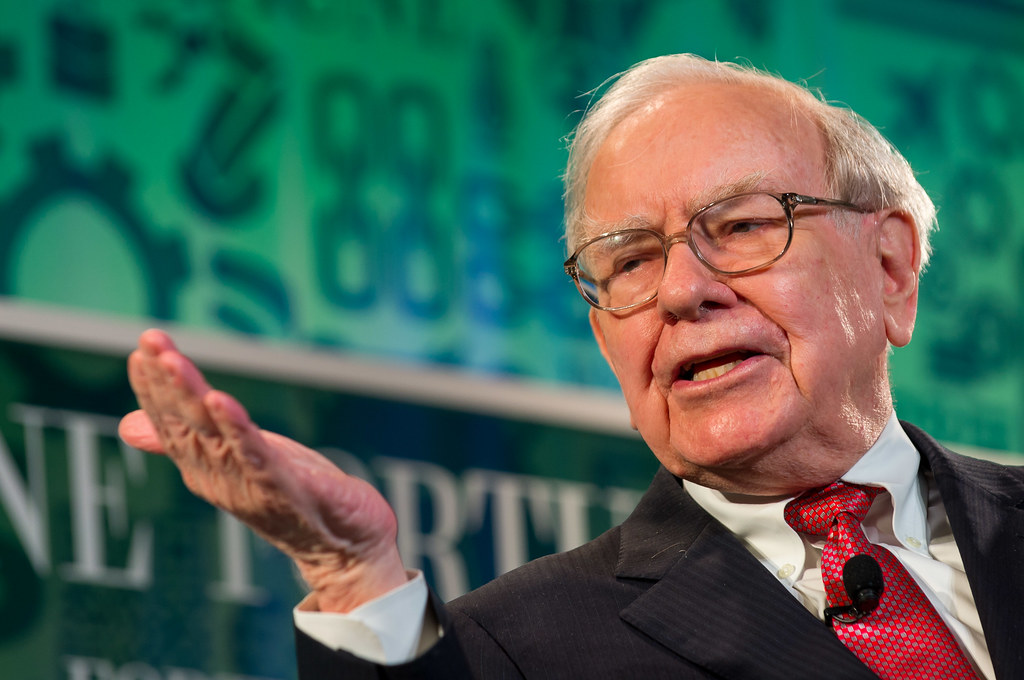
Warren Buffett's Remarkably Simple Mantra for Success

Warren Buffett is wealthy, to the tune of $72.2 billion. To put this in perspective, only 67 of the 200 wealthiest countries listed by the United Nations generate a GDP greater than the value of his holdings.
He is also by many accounts one of the hardest-working people in business. According to his biographer, his "vaguely autistic aura" provides him with a keen ability to see and analyze numbers. And when most of us might question the validity of an undervalued company, he sees it for what it really is -- an opportunity.
Buffett is also an incredibly humble, honest and pretty funny fellow.
In 2002, I had the opportunity to hear The Oracle of Omaha speak at Georgetown University. Our small group of aspiring business leaders sat patiently hoping to hear sage investment advice or catch a hint of an upcoming acquisition. The jovial Buffett, however, lamented about his surprisingly humble rise to wealth and provided us with a few simple rules to live by.
Buffett quipping that the only difference between us young business students and him was that while we probably arrived to the venue by foot or in crappy old cars (given the costly tuition at Georgetown), he came on his cushy private jet.
That is hardly a small difference, Mr. Buffett.
He was quick to point out that we had all in fact started off poor, scared and naked. He dismissed the attributes of luck, though he acknowledged the fact that he was fortunate to have been born to supporting parents with means, or as he called it, "winning the fallopian tube lottery."
His career success and wealth, however, was not achieved through chance circumstance. Hard work, conviction and an enormous helping of common sense is what he attributes to success.
But that was not the secret.
Instead, Buffett emphasized that the true secret to success was to live a righteous life, because dishonesty, cruelty and immorality follow you throughout your career, and it is far more difficult to shed than any failure we will ever have.
He suggested that by adopting one simple mantra, all other parts of your personal and professional lives would fall into place:
Never do anything in life if you would be ashamed of seeing it printed on the front page of your hometown newspaper for your family and friends to see.
It is that simple.
There was no top-secret formula for valuing businesses or stock tips. Just be good, do right and treat others fairly.
Of course, Buffett has acquired ownership in a few small newspapers over the past years, so perhaps his goal is to control the front page content of his hometown newspaper.
Alas, I am certain his investment reasoning is far more sophisticated than that.

This Strategy Could Make A Millionaire Out Of Almost Anyone

        
Have you ever wondered why some people are so wealthy, even though they’re not any smarter or harder working than most other people are?
Seems unfair, right?
How did they get there? Do they have better connections? Did their parents give them money? Did they take out a huge loan and gamble on starting a business? Is it from illegal or shady activity?
While these situations may be true for some wealthy people, for the most part, getting wealthy is pretty simple. It comes from having the right “strategy.”
What is this secret strategy, you ask?
Diversified Investing + Small Deposits of Money + Time = Wealth
I’m calling it the “six-year stretch,” and it relies on your ability to find ways to earn money while you sleep. It’s this little kernel of knowledge that forms the strategy that the wealthy use to get richer and richer. Let me explain.
You see, most people work for money. Wealthy people have their money work for them.
Most people go to a job and trade their time for money. They go to a job, sit at a desk, take orders from a boss, and then on Friday go home for the weekend with a paycheck. No more worries until Monday. No investment is required. The owner of the business they work for is fine with this, too. He uses the worker to grow his business, and he’s willing to pay for that service in cash. He takes the financial risk, but he gets to keep all the reward.
Rich people don’t think like employees. Rich people don’t trade time for money. They invest money to get a return without having to do any of the work. They find a good investment, put their cash in, and, if they’ve chosen well, they get more money back than what they’ve invested. They keep doing this over and over, until they wind up with A LOT of money.
The Employee Strategy requires lots of time and effort, and you don’t get to decide the rules. The Investor Strategy requires little time and effort and often you get to make the rules up. Sounds pretty cool, right?
So, if getting rich is so simple and obvious, why doesn’t everybody do it?
Your beliefs in money are passed down from generation to generation or inherited from your friends or culture. If your parents were poor, chances are you’ll be poor, too. If your parents were rich, chances are you’ll be rich, too. People tend to stick to the beliefs and strategies they were raised with.
So, if your dad worked construction all his life for someone else, chances are you’ll end up working for someone else your whole life, too. If your mom owned a furniture store, chances are you’ll grow up to own a business, too. We tend to do what we’re familiar with, without even thinking about it.
But take a minute and go to the Forbes Richest List. It doesn’t matter what year you look at. Just go look. You’ll see one thing in common with all of them — there are no employees! Not even a world-renowned heart surgeon or a top-paid, super lawyer! All of the richest people in the world invest to make their money work for them, because they know their earnings are capped, if they just trade time for money.
So, which group do you want to be in?
http://www.businessinsider.com/wealth-strategy-2014-8

How to Make a Really Tough Business Decision

Follow these few questions to help you make a tough business decision. Each one is a hurdle. Jump over each one and you have a clearer path to success.


Souffles or pancakes? The green Mercedes or the white one? Vacation in Tahoe or swing out to Las Vegas and play golf instead? OK, some decisions in life are not that hard. You get to pick from two good options. What if you are faced with firing your accountant who also happens to be your best friend from college? Or how do you decide if you should make a big splash at a local startup accelerator or play things closer to the chest?
As many of us learned from the Freakonomics guys in their last book, the pro/con list doesn't always work. We tend to favour one side or the other and stack the deck. (With apologies to my dad who told me to use this method, it's also a little too simplistic.)
Instead, I'd ask yourself a series of tough questions and spend some time thinking about the actual outcome. Does your friend need to be fired? Does going public mean you can find investment dollars faster? With any tough business decision, start by sitting down, shutting out distractions, and really diving into the issue full bore.
Here are a few questions to get you started...

1. Is it practical?

In my experience, most business decisions you make have to pass the most crucial litmus test of all: you have to decide if the decision is practical or not. Keep in mind that you should pursue some ideas that are not practical, and it's even a good idea to think outside of the box, but it's always (always!) a good idea to think about whether something makes practical sense or could be considered frivolous. And, you have to start by defining what "practical" even means: it's the actual "use or doing" of something as opposed to a theory. It has to make sense. It has to be workable.

2. Is it achievable?

Maybe you've decided this new business decision does fit within the scope of your business. Good! Now you have to decide if it is achievable. Remember, you probably don't have the resources of Elon Musk (unless you actually are Elon Musk). You have to decide, given the resources if the decision is even within the realm of possibility.

3. Is it measurable?

In college, I learned the MAP concept. Is the idea Measurable, Attainable, and Practical? We covered the last two already (practical and attainable), but that first one can be a bugger. Let's say you want to expand overseas. OK, that seems nice. Company paid trips to France! Air five on that one, right? But hold on for a second. If you do expand, can you measure the success? Is there a way to crunch the numbers and really determine if things panned out? Expansion is fairly easy to measure, but how about firing that accountant? If you keep him or her on the payroll, will it be easier to measure the results? If you stay in stealth mode, can you control your product easier? Do a sanity check on any decision to make sure you can measure it.

4. Will it require a major time investment?

I usually like to evaluate a decision based on the time involved. It's a precious commodity. Honestly, business dollars come and go. You might be rich one day and poor the next. But time? Once you use it up, it's gone forever. Make sure you know how much you have to spend. If the decision will consume too much time, skip it.

5. Will the decision help others? Will it harm others?

A decision might be good for the company, not take too much of your time, and meet the other criteria I've listed here, but it's also important to decide if this is something that will benefit society. Is it good for you and good for others? I've read about many entrepreneurs who ultimately decided to make a big decision not for the financial rewards but mostly because it was going to help society. When I profiles Cruise Automation recently, I came to the conclusion that the company really is motivated to do something profound for society. It wasn't all about money. In the end, money doesn't really give you lasting satisfaction anyway, it just helps you buy a nicer car.

6. Will you be able to maintain your integrity?

That's right, some decisions might seem practical and even necessary but they might be morally suspect. You know what? The decision will come back to bite you anyway. When you maintain your integrity and decide against something that most people would say is objectionable, even if it seems like you might get away with it and benefit somehow, you'll be happier. You can live with yourself. And, by the way, so can everyone around you. No one likes to be around someone who lacks integrity.

6. What is the stress factor?

There's one last criterion to keep in mind. Maybe you have made it this far through the questions and decided to pursue that new widget or launch a new marketing campaign. Before you pull the lever, ask one final question about how much stress the decision will cause. As a writer, I deal with this last question quite often because I know stress takes time and zaps my mental energy. When I go ahead with a decision that will cause stress, I always try to find a way to drop out of other responsibilities and prepare for the eventual mental fallout. You can check off every question on this list and feel like you have a green light, and then realize you can't handle the stress. That's a good time to head to a local coffee shop, stretch out, and postpone the decision for a while. Go buy the white Mercedes instead.