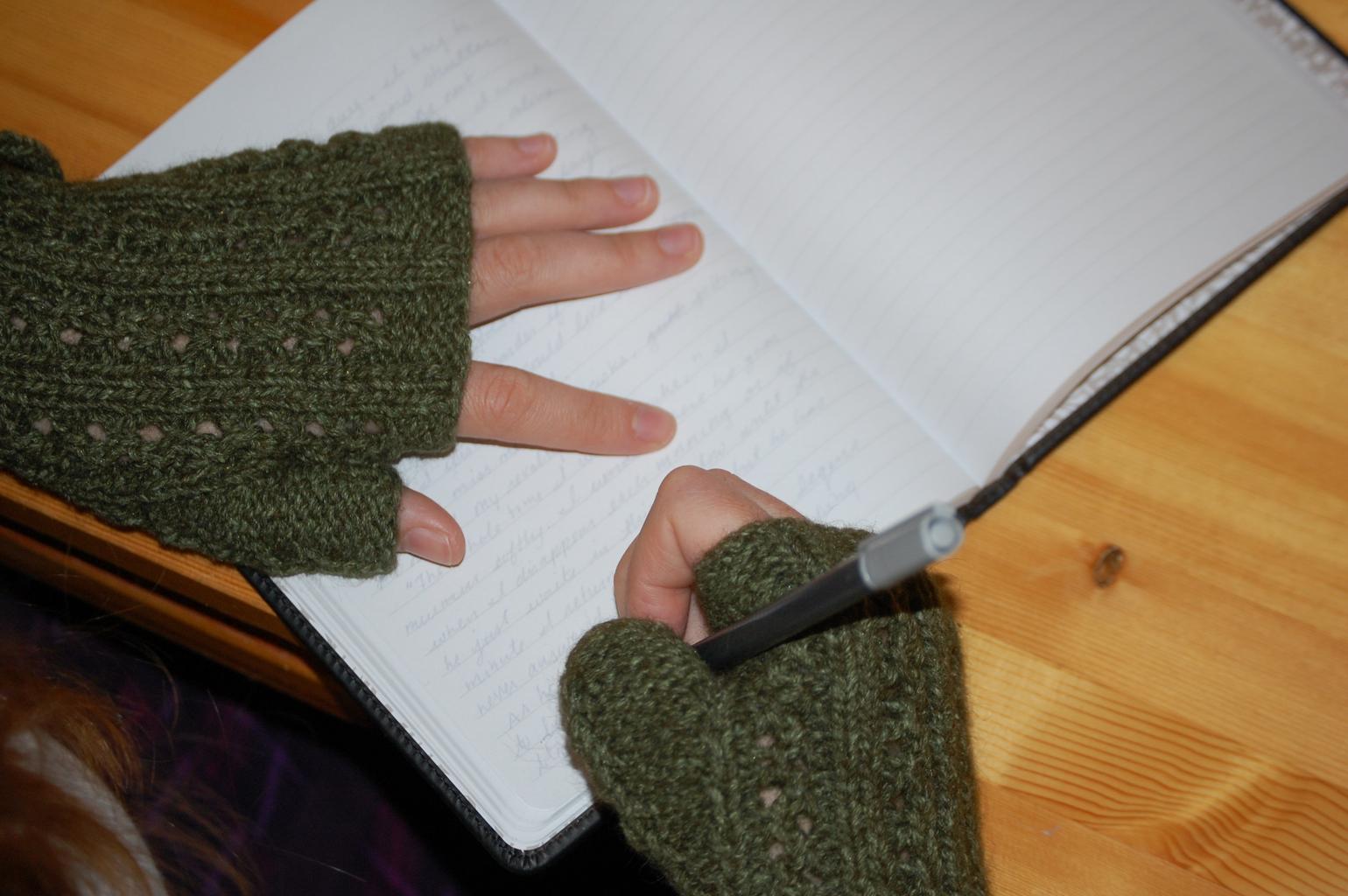
Showing posts with label gratitude journal. Show all posts

Do You Appreciate The Little Things Everyday?

Woman in Black and White Bikini Standing in Front of Sea Wave

For the past year, I kept a gratitude journal and whenever life takes a hit on a bump in the roads I've paved, I look back and re-read some of the entries I have made inside and it feels like someone else secretly wrote my experience down in my place.

That's because it is so easy to forget small moments of gratitude more than anything else.

Funny thing is, why are we are able to bear grudges and hold certain amounts of resentment for someone or circumstances over really long periods of time and allow it recur in our minds over and over so easily?

Your brain overrides every single good thing in your life in that instant, like a malfunctioning CPU system that took a hit on a virus and starts a raging war within. It becomes a battle you feel the need to fight and resist every day.

And if you actually keep a diary and have your worst nightmares documented in gruesome details, it'll probably continue to stay in your life and stick around in your experience with you starring as the main lead in the horror movie of your life.

(Well, at least up to the point & moment you burn those journals.)

Gratitude, on the other hand is such a gradual and subtle process in the beginning that it is so easy to overlook and miss, it's almost as if you turn away for a split second and that opportunity slips right through your fingers.

The thing about gratitude is, you need to first of all learn appreciation.

Without the "ability" to appreciate, you wouldn't even begin to know where to start to find the feeling of gratefulness. You start with the things you already have and then begin to appreciate the unfolding of the things you don't have but know is coming and on its way.

Being able to direct your thoughts is the wonderful start of having control of your life, to have the freedom to think your thoughts with deliberate intent and choose what you would like to be feeling in that moment and not have to constantly look to someone else's behavior and action to feel good.

Taking the time to practice feeling appreciation is merely a tool to help sculpt yourself a better stronger mind. There may not be huge explosive great things happening every single day to be jumping and punching the air for joy, but there are always things around you to appreciate in this instant right here and now.

That is the beauty of this practice.

Sometimes it takes something big to happen before it grabs your focus and attention making you learn to appreciate things the hard way, but it really doesn't have to be this way.

You can start anytime and any day.

Woman in Blue White Cold Shoulder Shirt

A healthy person wouldn't start appreciating their ability to breathe with ease until they lose it one day or they wouldn't appreciate the ability to feel hungry to taste & savor food until their appetite was taken away from a dis-ease or illness.

We take for granted the smallest things around us every day.

If we take the time and a little effort to find 1 more thing to add to our list and let it grow, soon enough, it becomes second nature to you.

Soon enough, you will truly take possession and ownership of a new found appreciation for yourself, for the people around you, for all the things that were invented to make you go through your daily activities with ease and comfort.

You will appreciate your ability to listen to soothing music and wonderful conversations, your ability to feel the warm running water soaking through your skin and hug your favorite Egyptian cotton pillow, the ability to see every sunrise in the morning & catch the sun setting in the evenings when you are out on your walks, the ability to smell food coming out from the kitchen and your fridge to be surprised and delighted, the ability to taste what's sitting on your plate to nourish your body and mind that day.

Here are some simple (but not easy at first) methods/ways to start practicing for your well-being:

1) Keep a Gratitude Journal

Start with just 3 things a day and gradually increase it to 5, then 10 and so on so forth.

But 3 is a good start.

2) Express your gratitude

Take the time to really recount on the specific positive feeling of the things you felt grateful for etc, were you excited? Hopeful? Delighted? Inspired?

Learn to increase your A-Z vocabulary of positive feelings and words and you'll soon find that your conversations, sentences you construct and attitude makes a shift etc, A for Appreciation.. B for Beautiful.. C for Carefree.. D for Delight...

3) Self-direct your thoughts & be the architect of your own mind

When something "bad" happens, always be quick to nit-pick for positive aspects. Say, someone was unkind to you that day, you would soothe yourself to find reasons to love them anyway. etc, maybe the person had a bad day, be thankful you are having a much better one and slowly you redirect your focus back to yourself and not let other people's issues or problems be the reason for your bad day.

4) Practice it everyday

Find every possible chance to practice the feeling of it. Whether it's the water you drink that quenched your thirst, the food you bless before your meals, the efficient people you work around with, the kind people you meet on the streets, use it as a tool and shine a spotlight on it.

Put a magnifying glass over every small detail and soon enough, you acclimate to the high feeling energy place and the state of mind of pure appreciation.

When your body & mind dominates the constant feeling of gratitude, nothing else that contradicts it will ever come near your experience.

Basically, we are like walking giant magnets of energy.

What we put out there for the world to receive, we get hit back (hard) with the same one. What goes around comes around, remember? What it is really referring to is not karma. Even though it might feel like it is there and then, if it was a negative bounce.

It has always been about your personal energy you carry with you 24/7. That "vibe" people give off? That's energy. You can't see it, but you can absolutely feel it.

So would you be more careful with what you hold in your thoughts if you knew this law? As sure as the law of gravity, this attraction exists and it is happening all the time even if you can't see it with your naked eye. So make small effort to shift that energy if you want only to engage with the best. And let the respective islands group itself accordingly to energy.

Be a force to be reckoned with & spread only the things you would want to have on your plate and in your life.


http://ezinearticles.com/?Do-You-Appreciate-The-Little-Things-Everyday?&id=9414138

How to Stay Positive When You're Unemployed


1) Keep a gratitude journal

When you're faced with the fear of not being able to support yourself, or potentially your family, it's easy to get caught up in looking at what you don't have: you don't have an income, you don't have quality food, you can't pay the bills and you're drinking lemonade instead of champagne.

It's entirely understandable, but lethal, to focus on what you are without. You'll feel like a failure, which will prevent you from selling yourself as a winner on application forms and in interviews. You can spin this.

A wealth of psychological research shows that gratitude and happiness go hand in hand. Billionaire Oprah Winfrey has famously kept a gratitude journal since she was young. It's a simple, but transformational concept.

At the end of every day, you write down what happened to make you thankful. Did somebody hold a door open for you? Was your bill a little less expensive than you anticipated? Did your child do something beautiful?

No matter how tough your day was, you can always find something to appreciate. In your bleakest moments, you might find yourself simply writing "I am grateful that my sister let me use her shower" or even "I am still alive." It's in those moments that you'll truly understand the value of gratitude.

2) Treat it like it's your job

You're not unemployed. Your job is to get a job. It's probably the worst pay you've ever had, but if you work hard you'll be rewarded with skills in patience, persistence and, eventually, employment.

Imagine your new boss in a sleek suit, shaking your hand firmly and looking down at you. Would that boss be okay with you, pyjama-clad, strolling into the office at 11am, getting comfortable in front of the computer and opening YouTube?

Right now, you are your own boss. That means you have to get to the office at 9am every day. It means you have to work at polishing your CV, get advice from recruitment agencies, apply for jobs, maybe even practise your special skills or read up on how to improve your application forms and interview techniques.

Take an hour for your lunch, if you would do at work. Finish at the same time as you would do at work. Take weekends off.

This not only helps you get into a routine, but it stops you from feeling lazy and helps you keep track of how much effort you are putting into the job hunt.

3) Take breaks

I don't just mean take fifteen minutes to have a cup of tea (although I don't know what a cup of tea can't cure). I mean take a mental break. When you're faced with constant rejection and a lack of feedback, your motivation can plummet. You only have your own voice to listen to and, after a while, it might start saying "You can't do it", "You keep failing", "You're not as good as the other candidates" or worst of all "You'll never get a job."

What would your best friend say if they heard you talking about yourself like that? If they would say, "Your amazing because you keep trying" or "You're getting closer to the goal with each day, each application form and each interview so don't worry", you've chosen a good friend. Catch yourself when you are mentally beating yourself up. Take a break. Breathe. Tell yourself exactly what that good friend would tell you. Then say it out loud.

Self-motivation is incredibly important for success. It's the spark that will get that application started, that phone call made or that CV written.

4) Talk about it.

Bear in mind, 'talk' doesn't mean 'whine.' Moping is okay in small, infrequent doses but it's also something you just have to break through.

Share your experience with someone you trust. Have your friends or family members ever been unemployed? Ask them about it. How did they feel? What did they do to overcome it? Absorb all the advice you can and use it for yourself. You might (or might not) be surprised by how many people have been in a position similar to yours. This is not only the age of redundancy, but the age of people who feel freer to regularly change jobs and chase dream careers.

5) The Golden Rule: Never Give Up

You are not going to remain unemployed for ten years. It's not going to happen unless you work exceptionally hard at being unemployed or have unresolved psychological or physical issues blocking your way.

It might take months, it might take longer than a year, it might not be your dream job, but you are inevitably going to be employed. You are going to be financially supported somehow during your unemployment whether that be by savings, a parent, the government, a spouse or friend. There is always a way for you to get help. It can be agonisingly difficult and you might learn lessons about your pride, but it can be done.

I recently met a successful, vibrantly happy man who has a history of unemployment. When he was homeless, he had every right to dwell on this pain and fear. Instead, he used the golden rule to weather him through his storm. He had been employed before and knew he could do it again. He had recovered from an addiction and, because of that, knew he was strong enough to recover from homelessness. He had many more years of life ahead so he could try again. And again. And again.

You'll only get there if you try. Be gentle with yourself and never give up.


http://ezinearticles.com/?How-to-Stay-Positive-When-Youre-Unemployed&id=9910628

Why You Should Keep A Gratitude Journal

Very often we have been told to be thankful for what we have even when something unfortunate happens. Research has shown that being thankful is a beneficial habit to your long-term health and wellbeing. In recent years, keeping a gratitude journal has also become a popular tool used by those seeking to improve themselves.

I'm not sure if you're already doing it, but if not, here are five reasons on why you should keep a gratitude journal. I am using one already and you probably should consider it too.

#1 Changing Thought Patterns 
Studies have shown a strong mind-body connection. When we are feeling stressed, anxious or another negative emotion it can have a negative effect on our physical health. By considering those circumstances, events or people you are thankful for, you are creating positive thoughts and feelings which will help reduce stress levels. It will also remind you that whatever happens to you there is always something to feel thankful for.

Your commitment to your gratitude journal refocuses your mind on positive events, conversations and relationships. This enables you to see more than just those negative ones that tend to fill your mind and dominate your thoughts when they happen.

Another way your thought patterns will change is that you will find that you start pushing boundaries and removing limiting beliefs. This will happen as you not only keep your gratitude journal but also review it. You will find that your mind opens to new possibilities and you gain in self-confidence and knowledge.

#2 Improve Your Health 
The fact that there is a mind-body connection means that by focusing on positive thoughts and feelings in your gratitude journal you are helping to improve your physical and mental health. Studies have shown that regular gratitude journaling can relieve stress and anxiety, improve sleep, increase creativity and gain new insights.

#3 Create Optimism 
Some days it's just too hard to see the wood for the trees. You'll find yourself focusing on something that has upset you and that troublesome thought will nag away at you constantly. Taking some time to sit quietly and think about something you are grateful for will help reduce the negative thoughts and feelings and replace them with positive ones.

#4 Improved Sleep 
Whether you feel the need for eight hours sleep each night, your body and mind do require a regular amount of sleep each night for optimal mental and physical health. Keeping a gratitude journal is fun, calming and a positive activity that promotes happy thoughts and feelings. By replacing worry and stress, you can sleep more peacefully and have happier dreams.

#5 It's Fun To Do It! 
Keeping a gratitude journal should be a fun enjoyable experience; something you look forward to. It doesn't matter whether you use a plain notebook or a really fancy one, you can jazz it up by using different colored pens or pencils, or even decorating the pages.

If you want to create a positive change in yourself and your life, keeping a gratitude journal may just be the tool you are looking for. It's cheap, easy and very beneficial to your physical and mental health.


http://ezinearticles.com/?Why-You-Should-Keep-A-Gratitude-Journal&id=9574273

10 Reasons to Keep a Gratitude Journal (By Mujiba Salaam Parker )


Below are 10 reasons why you should keep a gratitude journal:

1. Positive attitude and happier

When you are grateful you feel more optimistic about life in general because you are naturally looking for the good in every experience. Also, research by Robert A. Emmons, Ph.D., a leading expert on gratitude, shows that gratitude reduces toxic emotions, such as envy, resentment, frustration, and regret. This results in less depression and thereby increases happiness and joy.

According to HappierHuman.com, in a study of participants who kept a gratitude journal over time, the percentage of increase in happiness rose by 150% in only 5 months. The Greater Good: The Science of a Meaningful Life project conducted by researchers at the University of California at Berkley and Davis discovered that grateful people feel less lonely and isolated. Lastly, according to Time.com, a 2003 study found that people who wrote about things they were grateful for were more optimistic and reported feeling better about themselves.

2. Good for your health

A team of researchers, led by Deepak Chopra and Alex Wood, examined a group of individuals with Stage B asymptomatic heart failure and determined that gratitude has an important role in spiritual well-being. More specifically, the researchers documented that an attitude of gratitude related to better mood and sleep, less fatigue, more self-efficacy, and lower cellular inflammation. In 2012, a study published in Personality and Individual Differences indicated that grateful people are more likely to take care of their health, exercise more often, and are more likely to attend regular check-ups with their doctors.

3. Helps advance your career

Expressing gratitude has been found to improve work performance. Researchers at the Wharton School at the University of Pennsylvania conducted a study on how workers who received a pep talk and gratitude from their manager did more work than those who did not. So treating employees nicely with appreciation is not only a good thing to do, it will increase productivity. Gratitude helps people network, increases decision-making capabilities, and helps in getting new mentors and protégés. As such, being grateful helps you achieve your career goals and makes your workplace more friendly and enjoyable. Another study found that expressing thanks to your employees fosters a strong sense of self-worth and confidence. The same study further revealed a ripple effect of gratitude leading to increased trust amongst colleagues and more initiative to help each other at work.


4. Strengthens your relationship with God


In research done by Robert A. Emmons, Ph.D. and his colleagues, those who regularly attend religious services and engage in religious activities such as prayer or reading religious materials were found to be grateful. As I have researched, multiple religions have numerous scriptures indicating how we should be more grateful to God for everything and by doing so, we will have a more rewarding life. The fact that so many scriptures are written about gratitude in relation to God suggests that being grateful must be very important. Being more grateful to God, draws us closer to Him as we understand that He is the source of our blessings. This causes God to reciprocate, as stated in the Bible in James 4:8, "Draw near to God, and He will draw near to you." By acknowledging and thanking Him for His gifts and mercy, we strengthen our relationship with God.

5. Enhances empathy

A 2006 study in the journal Psychological Science found that people who expressed more gratitude were also more likely to help out others. A 2012 study by the University of Kentucky linked gratitude to greater empathy and lower aggression. In fact, the study participants with higher levels of gratitude behaved in a pro-social manner even when others behaved less kind.

6. You make friends more easily


Keeping a gratitude journal has been found to make you more likely to help others and to offer them emotional support. A 2014 study published in the journal Emotion revealed that students showing gratitude by writing and sending a note to a new mentor resulted in the mentor sharing their personal information with the students. These studies support that being grateful makes you more friendly and open to receive new friendships.

7. Improves self-esteem

In 2014, researchers who published a study in the Journal of Applied Sports Psychology found that gratitude increased self-esteem in athletes, which is key to optimal performance. Also, other studies have found that gratitude reduces social comparisons, and that grateful people appreciate the success of others. As mentioned earlier, gratitude reduces envy and resentment. Therefore, it correlates that grateful people would tend to not compare themselves to others.


8. Helps you recover from trauma


Gratitude has been shown to play a major role in overcoming trauma. For example, a 2006 study found that Vietnam War Veterans with high gratitude levels had lower rates of Post-Traumatic Stress Disorder. Another study linked gratitude with fostering resilience for survivors of the September 11, 2001 terrorist attacks. Being grateful for surviving the negative experiences helps you to move forward with a positive attitude.


9. You have better memories


The very nature of gratitude instills positivity in how we interpret various life experiences. As we keep a gratitude journal, we are creating a written record of these reflections. According to Robert A. Emmons, Ph.D., one reason to keep a gratitude journal is to have a legacy gift for someone or yourself, to be able to look back at the source of the goodness in your life many years later.


10. You have better romantic relationships


A 2015 University of Georgia study found that saying thank you more often to and feeling appreciated by your spouse causes partners to feel closer, more committed, and have a greater mutual relationship satisfaction. And for couples who had financial and other problems, gratitude can actually reverse negative effects of conflict and promote positive marital outcomes. The study also discovered that having gratitude for a partner and receiving gratitude from one's partner results in better romantic relationships. A different study also reported that gratitude has lasting effects as the partners were more responsive to the other's needs, even up to nine months later.

WANT TO USE THIS ARTICLE IN YOUR EZINE OR WEBSITE?
You can, as long as you include this complete blurb with it:

The Thank God Gratitude Journal is the perfect gift and tool to use to dramatically improve your life! Research has proven that gratitude is good for you in several ways. Also, holy scriptures guarantee that God rewards those who are grateful for His blessings. Go to http://www.ThankGodGratitudeJournal.com to receive your free video: "3 Keys to Abundance: How to Use a Gratitude Journal to Dramatically Improve Your Life!


http://ezinearticles.com/?10-Reasons-to-Keep-a-Gratitude-Journal&id=9583590