Showing posts with label resilient. Show all posts

3 Things We Cannot Change In Life And How To Deal With Them


An Inconvenience Or A Real Problem?

There are many things in life we cannot change or control, which can be seen as a problem or an opportunity. We've seen this recently with the Coronavirus pandemic that showed how powerless we are. At the time of writing this, many countries throughout Europe and India are facing difficulties, with a growing number of cases and deaths. I don't wish to emphasise the problems in the world but help you make sense of them. Change weaves itself throughout life, and sometimes it can improve our life or disrupt it. I'm certain you've experienced changes throughout your life to know how unsettling it can be.

But how do we deal with situations we cannot change? It lies in our ability to adapt to it rather than control conditions. For example, if you've been laid off work because of the pandemic, you might be upset and angry. You have every right to feel this way, and you mustn't deny your emotions. But if we think on a larger scale, losing one's job is a minor trouble compared to someone losing a loved one due to Covid-19.

By reassessing our situation, we can zoom out of our life and understand that whilst our situation is difficult, it is not the end of the world. We may decide to upskill through further education and find work in other areas. But losing a loved one to an illness is tragic and there is nothing we can do. So, when we think we cannot change a situation, we ought to ask ourselves whether it is an inconvenience or a real problem? This helps us gain perspective, knowing there are others in the world experiencing more difficulties. With this in mind, here are three things we cannot change in life but deal with more effectively.

Change Your Perspective

1.  How Other People Treat You

We cannot control how other people treat us, and sometimes bad things happen to good people. If we judge life based on whether it is fair or unfair, we set ourselves up for disappointment. Life is doing its job of expanding, based on universal laws and principles. If others treat us unfairly, it is an opportunity to look within ourselves and change our response. In this context, response means whether we feel victimised or whether we use the experience to become more resilient.

It's a given, people will mistreat us intentionally or sometimes unintentionally. It is my professional experience that how a person treats you is not indicative of you, but what is going on inside of them. You've probably heard the saying: "hurt people, hurt people?" Meaning those who are wounded or suffer trauma cast their wounds onto others because of the pain associated in dealing with it.

If a person treats you unfairly, they are likely suffering a deep pain themselves. So how do you deal with people like this? It involves knowing your true worth and standing in your own power. It means recognising the other person's motives and to the degree you are ready and willing, forgive them for their wrongs. Similarly, it helps to set up boundaries and distance yourself from them, if you can. Is this something you're willing to try? Yes, I agree it is difficult but you're not doing it for them but to ease your pain and suffering, which is more important.

2.  Sometimes, Things Go Wrong

Sometimes, life takes an unexpected turn when we least expect it. People let us down. We lose possessions or people of importance to us. Our lives change suddenly, and we experience frustration, anger, and disappointment. It's natural to feel this way, but when things go wrong, rather than follow your problems, try to look for a solution. If we focus on our problems, they become expanded in our consciousness and we cannot find a solution. This is what Albert Einstein meant when he said: "We cannot solve a problem with the same level of thinking that created it in the first instance." Our problems cannot be solved with the same mind that created them.

So, when things go wrong, avoid dwelling on your problems, but change your perspective and look for the opportunity contained within it. For example, I'm re-reading a wonderful book called: The Art of Learning by the American chess champion, Josh Waitzkin. In one chapter, he tells a story of when he was playing international chess against the Russians. They would repeatedly disrupt his concentration during matches, such as kicking him under the table, making noises or leaving the playing table unexpectedly. Eventually, he learned to harness the distractions and improve his resiliency and become an unstoppable champion. It's about using your problems to your advantage, instead of getting swept up by them.

3.  Life Is Not Personal But Predictable

I've written in earlier articles that life is not personal but predictable. It doesn't have an agenda to hurt anyone because life is not separate from us. We are the embodiment of life and when we understand this, we gain the power to improve our circumstances. Life is predictable to the degree that our experiences hold pivotal lessons for our growth. Things will happen that you did not expect or cannot control. Naturally, you will get upset, angry and feel powerless. But this is when your unseen power emerges to respond to what is taking place. It is your response that determines whether you suffer or change your perspective.

No one wants to suffer because pain is difficult. Therefore, we have choices, and sometimes they aren't necessarily obvious. Naturally, we want to remove the problem causing us pain, but it may not always be possible. The only thing we can control is our attitude and our response. So, when difficulties show up and you cannot control or change it, see if you can change your perspective. It won't be easy and will require exploring deep within you to change your perspective. It will require stepping out of your comfort to change how you respond to what is taking place.


https://ezinearticles.com/?3-Things-We-Cannot-Change-In-Life-And-How-To-Deal-With-Them&id=10460413

Emotional Health - Eight Effective Strategies For Improving It

Emotional health means being able to regulate emotions and behavior under different circumstances. People, who are emotionally healthy, are able to handle life's challenges well, build strong relationships and recover quickly from setbacks.

Emotional health refers to overall psychological wellbeing of a person. It implies how we feel about ourselves. It is about being happy, self-confident, self-aware, and resilient. It greatly influences our ability to manage our feelings and emotions. And, therefore, it helps deal more efficiently with difficulties.

Anyone can suffer from emotional health problems and over a lifetime most of us will. Majority of us ignore the emotional messages that tell us something is wrong with us. But we try to tough out our emotional issues by distracting ourselves or self-medicating with alcohol, drugs, and other destructive behaviors. We bottle things up in the hope that others don't notice. But it is difficult to hide our emotional problems from others, especially when they become serious.

So, it is of utmost importance to protect our emotional health because it will not only give rise to many physical and mental illnesses in us but will also adversely affect those close to us.

Improving emotional health -

Below are enumerated some effective strategies for improving emotional health -

Connect with people - We humans are social creatures having overriding emotional need for positive connection with others. We are not meant to survive in isolation, let alone thrive. Interacting with another person can quickly put the brakes on stress and relax us. Find a supportive relationship with someone, who is a good listener. A good listener will listen to the feelings behind your words, and won't interrupt, judge, or criticize you. Such supportive relationships help you strengthen emotionally. Don't neglect your real-world relationships in favor of virtual interaction on TV or computer screens.

Get moving - The mind and the body are intrinsically linked. When you improve your physical health, you'll automatically experience greater emotional well-being. Regular exercise also releases endorphins -- powerful chemicals that lift your mood and provide added energy. Exercise also relieves stress, improves memory, and helps you to sleep better. You don't have to be a fitness fanatic to reap the benefits. Even modest amounts of exercise can make a big difference to your emotional health.

Manage stress- We are mostly not aware how our daily life feels stressful unless stress becomes overwhelming, thereby affecting quality of our life. While social interaction and exercise are excellent ways to relieve stress, other stress management strategies can help you bring things back into emotional balance. Techniques such as mindfulness meditation, deep breathing, or progressive muscle relaxation can put the brakes on stress and bring your mind and body back into a state of balance.

Eat healthy diet - What you eat has a direct impact on how you feel. Wholesome meals give you more energy and help you look better, resulting in a boost to physical and emotional health, while unhealthy food can take a toll on your brain and mood.

Give joyously - There is an undisputed connection between social relationships and greater mental and emotional health. The greatest benefit of social connection stems from the acts of giving to others. By measuring hormones and brain activity when people are being helpful to others, the researchers have discovered that being generous delivers immense pleasure to the giver. Just as we're hard-wired to be social, we're also hard-wired to give to others.

Invest in self-care - Investing in self-care is as much about caring for others as it is for you. Go to a funny movie, take a walk on the beach, read a good book, or talk to a friend. Fun and play is not an indulgence but a necessity for emotional and mental health. Enjoy the beauty of nature. Simply walking through a garden can lower blood pressure and reduce stress. The same goes for strolling through an art gallery, hiking, or sitting on a beach. Spend some money and time in buying some good clothes and items for grooming. As a matter of fact, an investment in self-care will pay good dividends in terms of happiness.

Develop mindfulness - Mindfulness is a mental state achieved by focusing one's awareness on the present moment. Simultaneously, we maintain a moment-by-moment awareness of our thoughts, feelings, bodily sensations and the surrounding environment. We do so non-judgmentally without attaching labels to anything. In fact, the practice of mindfulness in our daily activities gives us power to regulate our emotions, thereby enhancing emotional resilience.

Do meditations regularly - A new study from Michigan State University says that meditation can help tame your emotions even if you're not a mindful person. Those, who practice meditations regularly, recover quickly after a disturbing event because they have developed the ability to regulate their emotions. But there is a caveat that one should practice meditations regularly for emotional health benefits.

The bottom line -

Our emotional health is of paramount importance because our physical and mental health is closely associated with it. The above strategies are quite effective in improving our emotional health, if we employ them prudently in life.

Emotional health is of paramount importance as it is directly linked to our physical and mental health. Above effective strategies are likely to improve it if they are followed prudently.

                                 Download 25 Most Powerful Motivational Quotes

http://ezinearticles.com/?Emotional-Health---Eight-Effective-Strategies-For-Improving-It&id=9561140

The Curious Thing About Resilience

Esperance, a small city on Western Australia's south coast, suffered horrendous bush fires in November 2015. Four people died as a result, and several hundred-thousand hectares of land were burned. Asked if the people of the shire had grown in resilience because of the adversity they'd suffered, the shire president said, "No! We were already resilient." Councillor Victoria Brown is right. Resilience is not primarily something that grows.

The curious thing about resilience is we do not develop it as much as we display it.

Resilience stands as its own testimony of the strength of faith we exemplified in facing an extraneous hardship.

Resilience is nothing without a test. But suddenly, in the presence of a test, it appears or it's lacking. It all depends on our response at the time, and, if factors within the situation coalesce, an unpredicted strength comes to the fore. Therefore, we should never write anyone off when life turns against them; they may well rise to the occasion, making that rock bottom incident the catalyst for something incredibly inspiring.

Resilience is a gift given in the heat of the blaze itself. As much as God's enemy cranks up the heat, God supplies strength through faith to endure it.

This 'resilience' is the gospel in play in a person's life, whether they attribute it to Jesus' resurrection power or not.

The amazing thing about faith is this: through the power of the Holy Spirit we no longer have to accept that our failed efforts for change are wasted. We can impact anything in our lives that we find unacceptable if we have sufficient belief; through accepting resilience's offer - a self-imposed exile of sacrifice to display resilience - we can change.

Believe for resilience. When life turns upside down, you're in prime position to show what you're made of: resilience. But don't be fooled that resilience is strength in you being strong; it's simply a strength that continues to believe in the goodness of God when life is at its worst; a robust strength in unparalleled weakness.

Until a bushfire crisis sweeps through our lives we do not know what resilience we have; how that very event will burn off cowardice for courage amid change.

Only in the moment of challenge is the catalyst for change truly revealed.

One thing we can do when life turns south: trust God despite our instinct to run or repel.

Download 25 Most Powerful Motivational Quotes


http://ezinearticles.com/?The-Curious-Thing-About-Resilience&id=9576052

Expect Life to Be Hard and It Gets Easier


The easiest way of making life easier is to redefine what we presently think is hard.

If we think something is hard we won't enjoy that thing, unless we see the purpose or benefit in doing or enduring the hard thing.

If we expect life to be easy, we're soon disappointed. Expecting life to be easy is the commonest insanity. But, where we anticipate life to be tough, life is suddenly made much easier because our expectations are right-sized to reality. For life is easy for nobody.

Yet reality is an authentic friend to all who ply courage and humility; who love truth.

Life is tough, always has been, always will be. But when we accept life is tough, it gets easier.

Surely a purpose of life is to endure hardship better so we're able to experience more joy. The opportunity we all have is to recalibrate how we perceive difficulty. The more prepared we are for a range of difficulty, the more resilient we will in fact be.

Recalibrating our perception of difficulty has got to be about faith, even for the irreligious.

Faith has this direct benefit. It trusts that enduring hardship makes us stronger, more resilient, mature persons. There's a payoff for our sacrifice of endurance. When we believe something good compensates us for enduring something hard, our actual experience of life is made easier, because we see the purpose.

We can do anything if we see the purpose and agree it's worthwhile. And in faith there is purpose in enduring misfortune well... to struggle well.

That's faith. It trusts that enduring adversity is good, for it knows that there's no other sane option. And when faith is vindicated, we redeem what goodness and growth would not be ours otherwise.

When immersed in the sea of difficulty we either sink or swim. Because there's no point in sinking we choose to swim.

http://ezinearticles.com/?Expect-Life-to-Be-Hard-and-It-Gets-Easier&id=9637272

Make Time to Smell the Flowers - The Power of a Flower


Making time to notice a beautiful flower is a great way to notice the simple things in life that can impact self-perception or aid in understanding differences in flowers that have different qualities or compare to people with different personalities. I'll bet you,I know what you are thinking? NO, I am not a crossover from the sixties, I enjoy nature and take advantage of what is given by nature. After a long, uneventful or overly loquacious week, I take the time to smell the flowers that let me live in their yards and on their turf. I realize that society can be compared to beautiful flowers. Making time to notice flowers is like taking the time to notice people and the beauty and power that we recognize in ourselves and in everyone else as well.

There are countless wild flowers, cultured or cultivated flowers that abound around city streets, walkways and yards everywhere. That's not even the beginning of what I can say about flowers. They abound and I am happy when that they surround me; to say that they offer fragrant scents, beautiful views and make endearing gifts is simply only the beginning. For generations we have taken flowers for granted and offered them as sacrifices, gifts and have even borrowed them to demonstrate our condolences.

A flower will never fail to present it's healthy beautiful best appearance, especially if it has been well fed, watered or kept in temperatures conducive to its natural environment. We can all learn a lesson from the flowers. Are you satisfied with the type of flower that your life represents?

Flowers are more resilient in their form and appearance than what is perceived at first glance. The same can be said for me and for you. We may sometimes, appear weak or easily upset, though we are resilient and attractive when we smile; are well rested; properly nourished; and in an environment that is conducive to our soul's mission, while living in a healthy environment.

Take the time to smell the flowers;notice new or pleasant, inviting, smells and scents. The time for waiting is over. The time for action is overdue. Take your cue from the flowers in your yard or garden and make your strong work ethic pay dividends for your hard work and input, strive to achieve your lifelong goals, make a plan and follow through.

Flowers never stop trying to be beautiful from the inside out and they always display their personal best assets for the world to enjoy. We are all flowers in different phases of existence. As a flower, you require peace, rest, and an appropriate vase to display your countenance. You decide if you are a beautiful red rose, romantic and expensive to maintain, a yellow rose, friendly, captivating and engaging, or an amazing daffodil, eager to please and learn from mentors or other flowers, the tulip that sings to its own tune, the sunflower, although a loner, very competent and willing to grow with every lesson; excelling amid excessive amounts of heat or competition.

Take the time to smell as many flowers as you can and heed a lesson from the flowers that surround your life. Some flowers, although brighter than others, are all different, unique and part of our environment. Flowers bring beautiful scents, views and when hard work is accomplished can easily blend well,or decorate any home, office, or garden or give its personal best effort as a gift, a sign of hope,or a symbol of sincere sorrow. Symbols of love or strength, much like me and you, only, we can
choose the tone and it's not too late to demonstrate your ability to expand and grow into a strong red rose or dainty daffodil.

If you call me, and I don't answer by the first ring, that's because I am probably outside picking flowers or admiring the scenic view; imagining what type of flower I will emulate for the day! We can all learn a lesson or two from the flowers in our view. Maybe to slow down, or to speed up, it's you who knows your best timing, like the way a flower decides when to blossom or when to relax..

Take the time to notice every flower in your day, whether literally or figuratively, there are a lot of great people and flowers with remarkable attributes and personalities for you to engage!

I enjoy learning from you offering me knowledge continuously!

http://ezinearticles.com/?Make-Time-to-Smell-the-Flowers---The-Power-of-a-Flower&id=9465077

Instead of Cursing Darkness, Light a Candle


Some People Are More Resilient

Contemplate on the following important questions: Elaborate on your answers. Know Yourself!

• When faced with difficulties, why do some people fall apart more often than others? Do you fall apart often?

When faced with difficulties some people 'bleed all over the place.' Instead of dealing with problems related to work at work, they carry the problem with them everywhere.

They may fight with everyone at home, they stop exercising, they don't eat well or they sleep too much or they take their frustrations out on their dog.

• Do you know someone who behaves like that? 
• Do you carry your problem everywhere? 
• How is it that, often such people make sure everyone else around them gets a negative charge, too? 
• Do you give a negative charge to others around? 
• Now your task is to help such a person. What would you say?

Self-pity and whining are energy vampires!

Rather than feeling defeated and depleted, bring positive change in others and in you. When faced with challenges, focus on finding as many Solution Oriented Options as you possibly can.

You will become a creative individual on the way to staying upbeat. You will feel energized when faced with problems knowing that each challenge boosts your resilience muscles.

Be a 'can do' person.

Practice Exercise:

Moving towards what you want instead of away from what you don't want.

Read the following examples. Do the practice exercises. You will focus your attention towards what your goals are. It is energizing and empowering when you move towards what you want instead of away from what you do not want.

Moving Towards What You Want

It is better to say: 
"I want to keep active and learn continuously" 
Instead of: 
"I do not want my brain to become lazy and rot away."

It is better to say: 
"I like it so much when we find quality time together like this." 
Instead of: 
"I don't want you to ignore me."

It is better to say: 
"At 130 lbs. this bathing suit will look great on me" 
Instead of: 
"I am so fat, I need to lose weight."

= CHECKPOINT =

Overall, what do you think others hear when you talk?

• A person who reacts reasonably, with justice, enthusiasm, empathy, fairness? 
• Someone who over reacts to things, is excessive, obsessive, and has no sense of humour? 
• Someone who is disinterested, negative, finding faults with everything and everyone around? 
• While you are discharging your problems, are you aware that you are giving the listener a negative charge. Just like batteries! 
• Are you on automatic pilot? When with others usually do you talk mostly about problems? 
• Do you think a poster "Save Your Energy - Stop Complaining - Focus on Solutions" will be useful for you to have? 
• If so, it is very easy for you to make your own. Make several and place them in strategic locations, i.e. inside the medicine cabinet, close to your desk, on the fridge door, etc.

Pass the good word around. Imagine the energy savings for all concerned.

It is certainly better to budget your energy while you become a Solution Oriented Person.

http://ezinearticles.com/?Instead-of-Cursing-Darkness,-Light-a-Candle&id=9331743

Learning how to fall is a big part of Success

Would you agree with this?
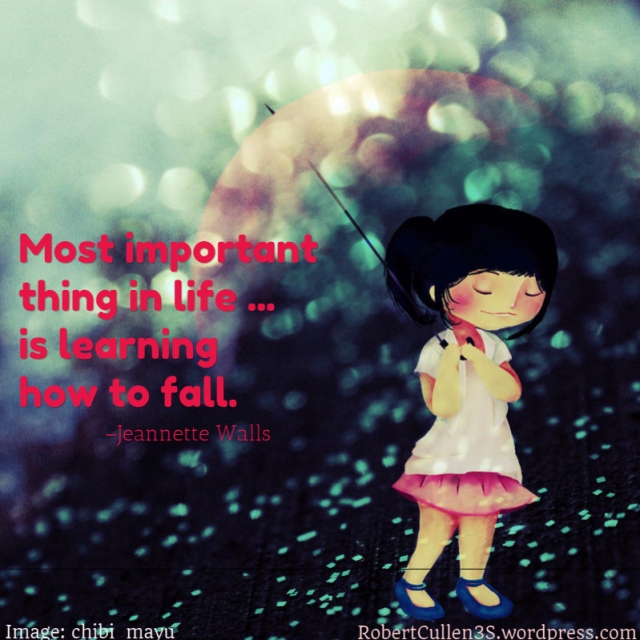
The most important thing in life… is learning how to fall.
~Jeannette Walls
3S 2015 09 Jeannette Walls quote Learning how to fall life
Most of us know that, on our road to Success, we’ve failed more often than we have succeeded. We’ve had to face a lot of pain, but we’ve put up with it for the eventual gain.
When we were learning to walk, we took so many falls that it became natural to us. Babies and toddlers think nothing of falling. But as we grow older, we begin to fear falls, both physical and metaphorical.
From the school yard to the Board Room or in the wide arena of life, failure has a stigma attached to it. But it should not be that way. Anyone who has become an expert at anything, achieved great things, done great deeds or become famous in their professional sphere knows failure is part of success. It is an essential part of success.

It is dangerous to shun failure or to never have experienced it

In fact, it is dangerous to shun failure or to never have experienced it. Children and young people who have everything going for them, and have yet to experience setbacks or failures are referred to as ‘fragile thoroughbreds’. This is because failures early in life make children more resilient. They learn to easily pick up and carry on after setbacks. But facing major setbacks after an ‘easy’ life lacking challenges can make young people fragile.
Knowing how to handle failure, and having a positive mindset about it it also important for success.
Those with a fixed mindset, who believe they have to “be good” as they are, rather than in their own potential for improvement,  are the ones who take failures most to heart. And as a result, minor setbacks make them stop trying. And that is bad. It prevents them from reaching their full potential.
Whether they are 8, 18 or 80, people with a fixed mindset are prone to limit themselves to only activities and efforts that have a high degree of success. How limiting can that be, whether in sports, arts, in a profession or vocation?

Great success comes from failures

It is no secret that great success comes from failures. Those who can learn from failures, those who believe we can improve with effort are the real winners in life. Ability to overcome fear of failure is a key component of success.
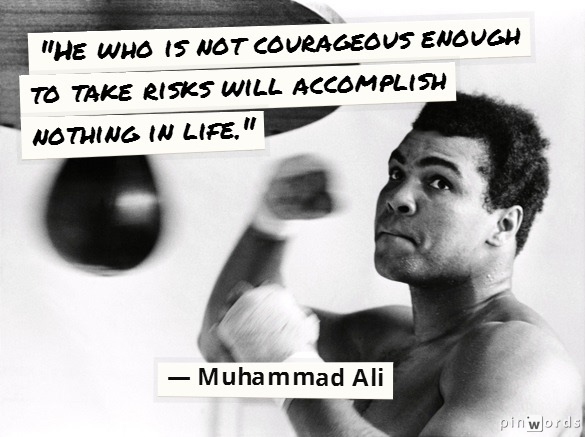
He who is not courageous enough to take risks will accomplish nothing in life.
slide_336585_3402082_free
In sports, in academics, in business, in any sphere of life or business you wish to consider, the real winners are those who have tasted bitter failure, not just once, but many times over.

A growth mindset is necessary for success

This is especially so where continuous effort is necessary to keep winning. Anyone can be a winner once in a while. But you need a good attitude towards success to be a ‘real’ winner.
Let us look at a few examples of those who have what psychologist Carol Dweck calls a growth mindset.
Not only do they believe in “becoming better”–as opposed to “being good”–they actually welcome failures and setbacks because they know there is much to learn from such experiences.

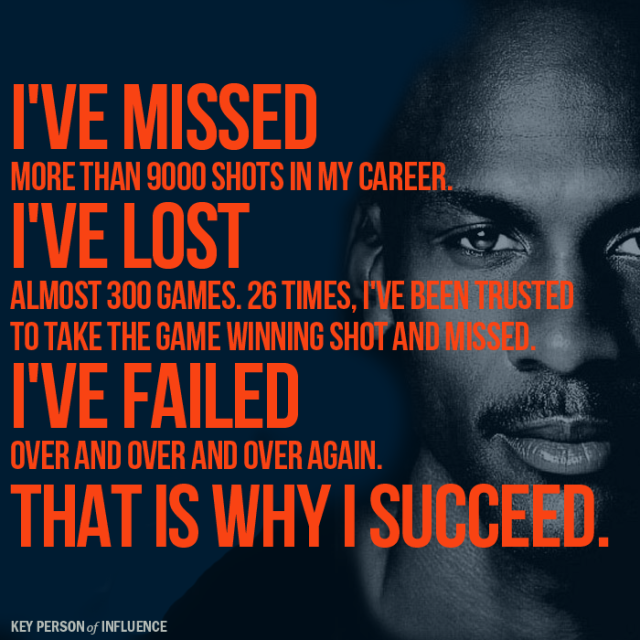
Michael Jordan

I’ve failed over and over and over again. That is why I succeed.
2014-01-michael-jordan-quotes-97

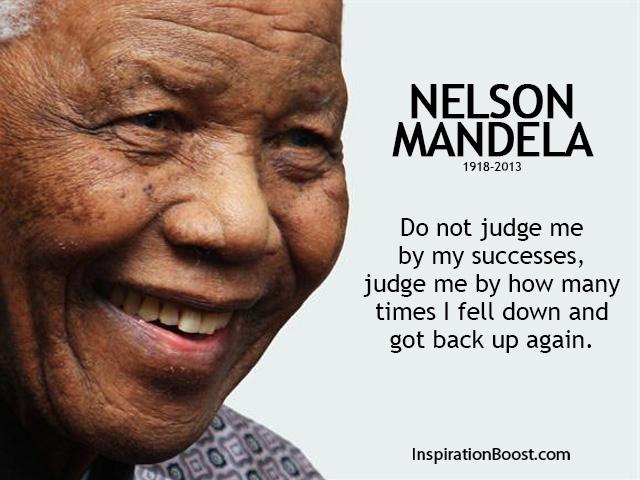
Nelson Mandela

Do not judge me by my successes, judge me by how many times I fell down and got back up again.
nelson-mandela-famous-success-quotes

J.K. Rowling

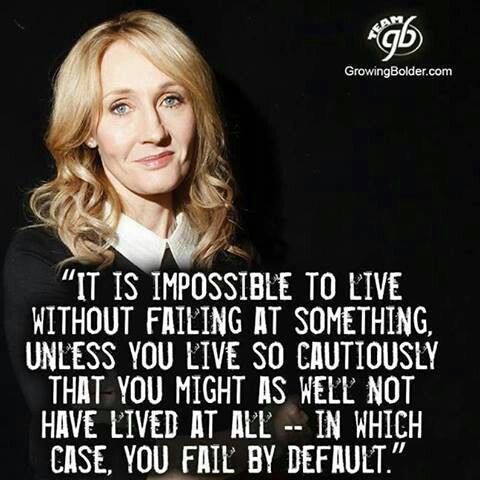
J.K. Rowling knows about failure and rejection. Twelve publishers rejected her manuscript. One year later, one publisher gave her a chance but told her to get a day job since she had little change of making money in children’s books.
It is impossible to live without failing at something, unless you live so cautiously that you might as well not have lived at all–in which case, you fail by default.
54ac9a05a04724904c99b82dc3e6f7ad

Thomas Alva Edison

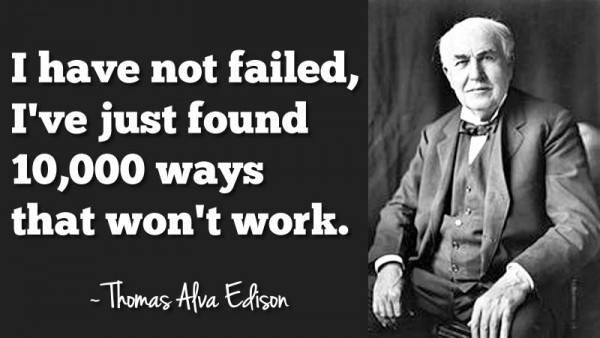
And we cannot forget the classic quote on failure and success from the inventor of the light bulb about his invention  process.
I have not failed, I’ve just found 10,000 ways that won’t work.
10000-ways-that-wont-work1

Bill Gates

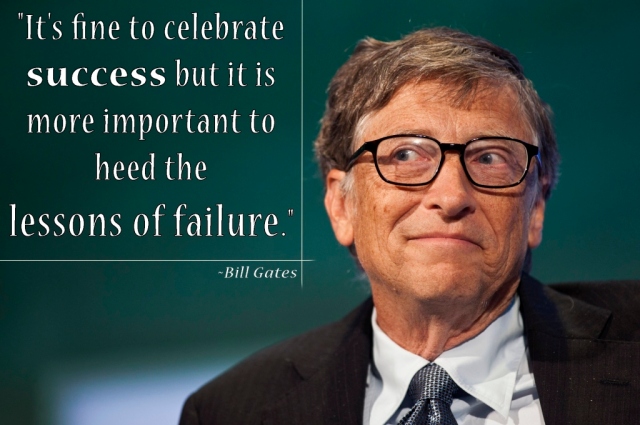
It’s fine to celebrate success but it is more important to heed the lessons of failure.
Clinton Global Initiative Annual Meeting In New York

The lesson is clear: Try to learn from failures

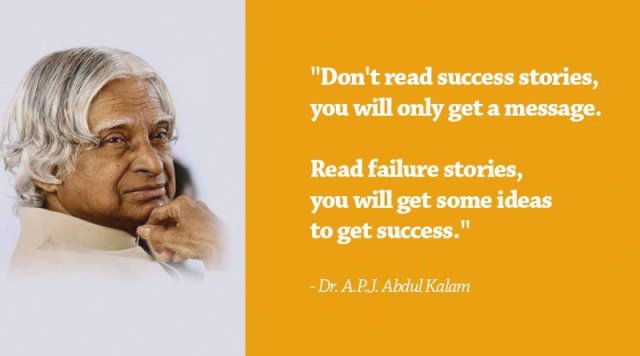
We, in America, are obsessed with success stories. But in the words of Dr. A.P.J. Abdul Kalam:
Don’t read success stories, you will only get a message.
Read failure stories, you will get some ideas to get success.
dont-read-success-stories-abdul-kalam-daily-quotes-sayings-pictures
In other words…
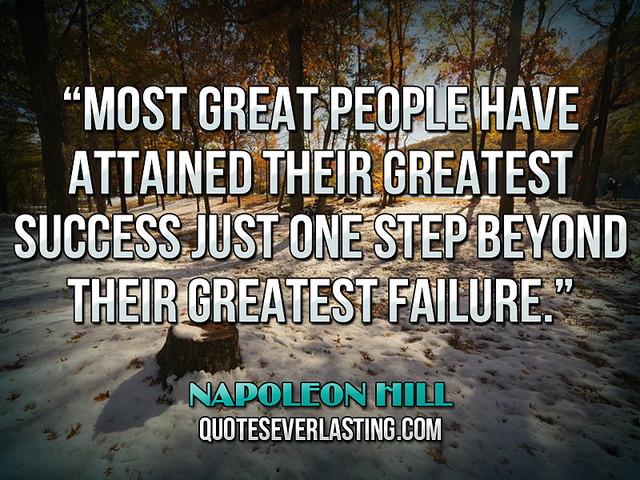
Most great people have attained their greatest success just one step beyond their greatest failure.~Napoleon Hill
34944__8640231159_b17759a12b_z
Find ways to overcome failure and the fear of failure.
If fear paralyzes you, you will not try anything.

5 Silver Linings You Can Find in Hard Times

Finding strength, clarity, and joy even in the most unlikely places.


Major negative life events, such as the death of a loved one, the dissolution of an important relationship, or the diagnosis of a serious illness, can be painful and isolating. But these experiences can also sometimes bring about unexpected positive changes. Here are 5 of them:
1. You become more compassionate and less judgemental.
Experiencing suffering yourself can make you more compassionate towards others who are suffering. Often, when witnessing others’ hardships, people look for reasons to blame the victim for their plight (e.g., “He’s struggling financially because he doesn't work hard enough," or, "She’s sick because she worked too hard and didn't take care of herself’), thereby reducing their own sense of vulnerability. But when you've suffered deeply, you’re more likely to recognize that everyone is vulnerable, and that bad things happen to good people all the time. Someone else’s suffering no longer represents a threat, but rather can be a source of connection and kinship.
2. You discover that you’re stronger than you thought you were.
In the early stages of a negative life event, you may think to yourself, “There’s no way I can get through this.” But somehow, day by day, you manage to put one foot in front of the other, despite the pain you may feel. One of the things that hardship does is show you your true strength—the strength you didn’t know you had until it was really tested. Supporting this idea, research on affective forecasting suggests that we tend to overestimate how devastated we’ll be by negative life events and how long the pain will last—in other words, we’re more resilient than we think. 
3. You learn who your true friends are.
In difficult times, certain relationships are likely to deepen, while others may fade away. Discovering that some people are fair-weather friends, disappearing when you need them most, can be painful, but it’s also an opportunity to develop a new appreciation for the people who do stick around, and to focus your energy on those relationships. Research suggests that sometimes even weaker social ties--people you weren’t very close with to begin with—can rise to the occasion and prove to be very supportive in high stress situations.
4. You get greater clarity on what you want in life.
Sometimes a crisis can jolt you into re-evaluating your life in a major way. It can force you to ask yourself if you’re really doing what makes you happy and spending your time how you want to, or with the people you want to spend it with. Jarring as these re-evaluations can be, they can push you to make positive changes that may not have seemed like realistic possibilities before, for one reason or another—fear of failure, concerns about what other people would think, or just the inertia of the status quo. But these factors just don’t carry as much weight when the reality that life is fragile and unpredictable takes hold.
5. You find joy in unexpected places.
When your world is shaken up, it can cast a dark cloud over everything, making it difficult to enjoy what you once enjoyed. But sometimes joy can sneak up on you in the most unexpected ways and remind you that there is still beauty in the world, despite all the suffering.

How to Be More Resilient When Things Get Tough


The choices we make every day determine how resilient we can be when things go wrong. Discover the secret to thriving in challenging times.


It's human nature to resist change--particularly when it comes in the form of adversity or challenges. But change is inevitable, and developing the trait of resilience helps us not only survive change, but also learn, grow, and thrive in it.
Resilience is the capacity to cope with stress and adversity. It comes from believing in yourself and, at the same time, in something bigger than yourself.
Resilience is not a trait that people are born with; it involves behaviors, thoughts, and actions that can be learned and developed in anyone.
Here are 10 ways to develop your resilience so you're ready when you need your strength the most:

1. Don't try to solve problems with the same thinking that created them.

Resilient people do not make the same mistake again and again. They're willing to be honest about why they failed at and they take the time to think about what didn't work.

2. Master your emotions before they manage you.

Resilient people have a positive outlook. They remind themselves that much of what they're facing is temporary, and that they've overcome setbacks before and can do it again. Resilient people focus on what they can learn from the experience.

3. Stay tough.

Resilient people face their fears and have an adaptive attitude that lets them focus on the possibilities even in the worst of times. The tougher the situation, the tougher they become.

4. Keep growing.

Life does not get easier or more forgiving; we get stronger and more resilient.Resilient people are constantly becoming braver and more courageous. They know that life is not what happens to us but what happens within us.

5. Stay prepared.

Resilient people work on solving a problem rather than letting themselves become paralyzed by negativity. They keep planning for the future even when things aren't working out.

6 Pick yourself up, as many times as it takes.

Resilient people understand that failure is not falling down but refusing to get up. They have the capacity to adapt successfully and the tenacity to never ever ever quit.

7.Reward the small wins.

Resilient people believe in themselves. They work hard and take joy in the small wins that give them strength.

8. Keep giving.

Even in the toughest of times resilient people find a way to care for others, because sometimes being selfless is the best way to discover your own strength.

9. Build relationships.

Resilient people maintain strong and supportive relationships, both personal and professional. As a result, they have caring, supportive people around them in times of crisis.

10. Create your own meaning.

Resilient people search for meaning. They develop a "personal why" that helps them have a clear sense of purpose, which helps them view setbacks from a broader perspective.
To make it through the tough times takes resilience. It requires that we pay attention to the complexities of our own experiences, listen to our emotions, and be willing to learn from disappointment and failure as well as success and motivation.