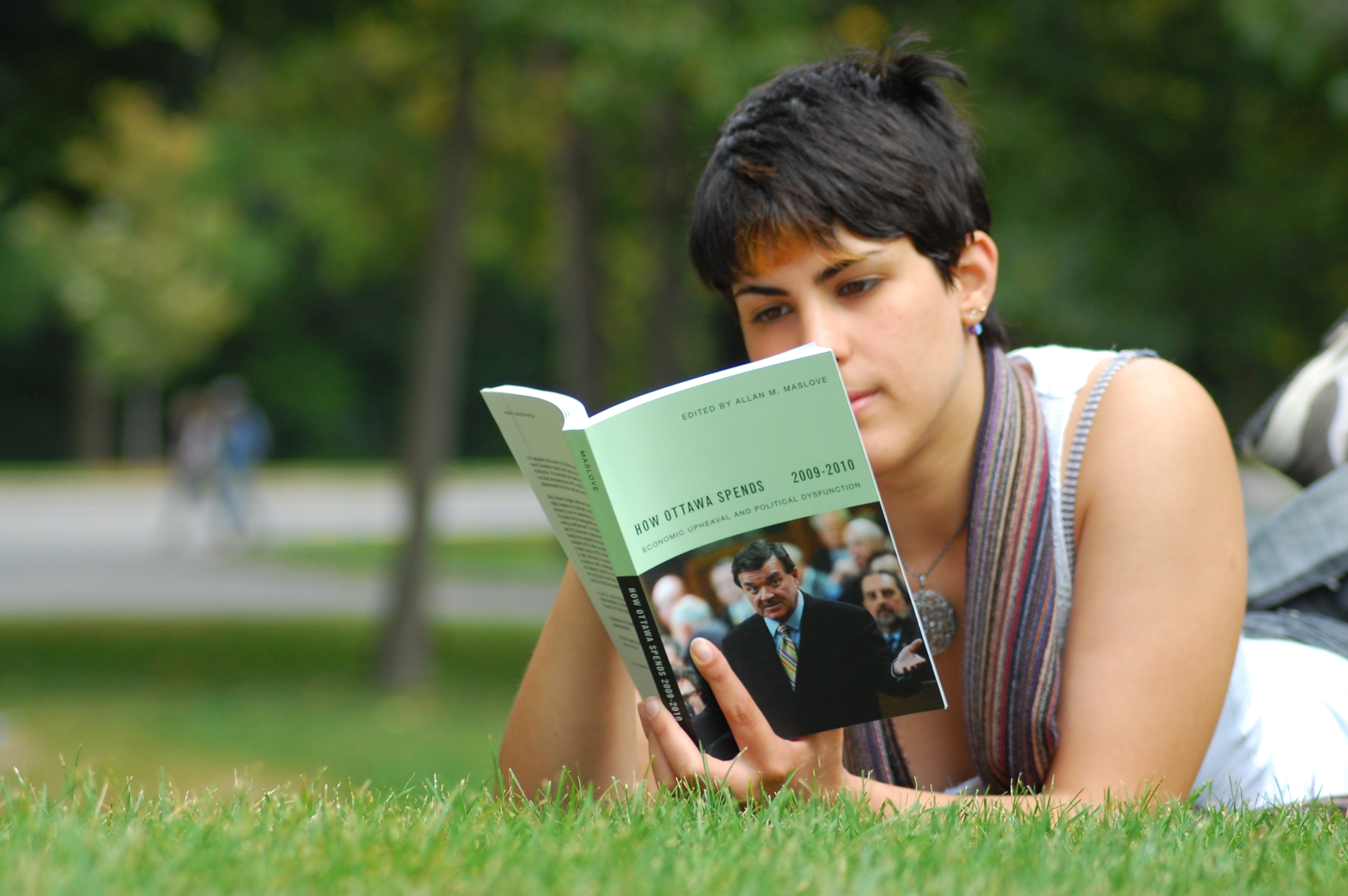
Showing posts with label reading. Show all posts

Reading Benefits

Woman Reading a Book Beside the Window

Reading is not only informative and entertaining but extremely educational. Much of the things we learn are "absorbed" through our subconscious mind. It "registers" information by constant reading like proper word usage, correct spelling, and correct punctuation while the reading matter entertains us, and we are not much "aware" of our lessons learned! But we begin to wonder when we write ourselves, where our certainty about the right spelling of a word, the insertion of a comma and the usage of a word originates.

Our subconscious mind "has registered" most of these things without much of our "conscious awareness" and instructs our "conscious mind" of correct applications here and there which otherwise we did not learn, but are suddenly aware of, quite often to the point of even understanding the grammatical or only logical reasons for it being so!

And look at our reading matter! It not only entertains but imprints or informs us of the subject we wanted to know. Books read in proper order and sequence can make up quite knowledgeable on specific topics! We may not become lecturers or experts, but we can call ourselves reasonably educated.

Let's not forget all enlightenment and comprehending of new and "improved" ways based on "prior knowledge" faithfully written down and recorded as things were at the time. Thus bringing about that our latest findings and improvements are "built up" "brick by brick" into the "proud edifices" of knowledge we have today.

Likewise, can every single person improve or add to their knowledge of whatever subject they wish! Piece by piece of information added together through one book or more and became quite knowledgeable.

Reading is great news! The best there is in improving one's state of mind, educational limitations and one's general awareness. It gives one more topic to talk about then the experiences of one's daily routine.

For instance acquiring another language such as English, reading comic books and children's books because it is in a more simplified English. Repetition over a period of months made foreigners more confident to attend night classes to further their education in reading, writing and speaking.

Reading does benefit the human being who has no knowledge, accessing a computer to search for information according to their interests. Audio books are available to a person who does not know how to read and they can use their imagination, while hearing the story being told.


https://ezinearticles.com/?Reading-Benefits&id=6006240

Something I Can't Resist


Is there something in your life that you can't resist? Others may say that they want all the things that money could buy. But for me, reading is something I cannot ignore. I find joy in simply reading pocketbooks, newspapers or any kind of book that capture my interest. No matter how busy I am, I really find time for reading.

There are some people who wonder why reading from time to time is important. Actually, reading is a vital skill to become a good communicator. If we have good communication skills, we can easily establish rapport with people we would like to talk to. Poor reading skills increases the amount of time it takes to absorb and react in the workplace.

Communication is very important in our day-to-day lives. Reading is one of the four macro-skills that we need to learn aside from writing, listening and speaking. Great learning tools include books, magazines and even the Internet. A person who loves to read can educate himself/herself in any area he/she is interested in.

Reading develops the creative side of people. Reading exposes us to a world of imagination. It shows us that nothing is impossible in this world. We are able to see things in a different viewpoint.

Reading develops our minds. It helps us comprehend things beyond its literary meaning. Reading with understanding not only develop our self-efficacy but also our self-confidence. When we know something, we are not afraid to share what we have. Our knowledge is our wealth.

When we have a high self-efficacy, we are confident to be motivated to achieve our goals. Efficacious people consider difficult tasks as challenges especially when we are knowledgeable enough to perform the tasks. Reading is a good tool to achieve this skill.

Reading stimulates our artistic mind. Reading also improves our positive self-concept. It adds confidence especially when we are able to meet and encounter different types of people. There's a saying that goes this way, "We cannot share what we don't have." It's true, but if we are equipped with the knowledge and skills, nothing is impossible for us.

Reading is also a sort of entertainment because when we feel lonely, we just read humorous stories to pacify us. By doing that we are able to relax our body and mind which is an important point because these days most people seem to forget how to relax.

That's why reading is something that I can't resist. It helps me become a better me. All of these self-improvements start from my passion in reading.

http://ezinearticles.com/?Something-I-Cant-Resist&id=9428464

Five Suggestions to Double Your Reading Speed


Many people would like to read more, but don't have the time. Then there are those who have the time, but don't like to read. Reading is a fundamental skill that everyone needs, and the better one is at this skill, the more enhanced life tends to be. Most people learn how to read in school, and after they leave school, their reading skills tend to stay about the same. Some are more ambitious, and look to take their reading skills to a different level. Here are five things that, if practiced, can help you double your reading speed.


1. Don't sound out each word
This is probably the most important thing to do to read faster, and it is the most difficult thing to overcome. When we first learned to read, we were taught to sound out each word. That also helped to spell the word correctly, as well as to pronounce the word properly. It takes much longer to pronounce each word than it does to look at the word, and just understand what it means. If you look at the word, and move right to the next one, the mind will remember what the word was, as it links the current word back to the first one. When you look at 2, 3, or more words at a time, this will get easier, which leads to our next suggestion.

2. Read 2 or 3 words at a time
Looking at each word and sounding it out is a long way to get through a sentence. After you have mastered looking at the word and not sounding it out, then try doing it with two words, then three words. When you are reading multiple words at a time, the brain is able to pick up the meaning more rapidly, and you can go to the next phrase, or group of words. It is quicker to read phrases than just reading each word. With practice, this will become second nature.

3. Have good eye span. 
Don't dwell on each word or phrase. Move your eyes at a good pace, but don't move so fast that you do not understand what you are looking at. When you look at the last word in the sentence, move your eyes rapidly to the next line, and look and move along the sentence.

4. Do not regress
One of the biggest obstacles to reading fast is regressing. It is natural to want to have a clear understanding of what is being read. As your reading speed increases, the tendency to regress will be less and less. You have to make a conscious effort to move along and not go back. As you move along, the word you may miss should not interfere with the meaning.

5.Vary the speed
Everything that is read does not have to be read at the same speed. Some things that are more technical will be read slower. The mind will pick up some things very quickly and others not as quickly. Move along at a pace that is comfortable. Move as fast as you can while still understanding what is being read.
With practice, the above steps will help you become a faster reader with better comprehension, and you will enjoy reading more books.

Instant NLP Help for Slow Reading


The student said:

"I'm a first year college student and I often struggle with slow reading. I started reading when I was 4 and always loved it. I started to become more affected by the speed at which I read when I was in the 4th grade. I read really slowly, but I comprehended everything I read. Going through middle school I started figuring out how my brain processed stuff. I do really well with memorizing things because I picture them in my mind. Colors and shapes come to mind for every word, date, or number I confront. Then when I go to recall the thing, it's a color sequence, not an actual word. This, I realized, was the cause for my slow reading. I had to read every word and turn it into a color/shape. Now I'm in college and my professors have little sympathy for slow reading. I struggle a lot because the only way I can memorize things is by picturing them, converting them, and processing the information, but by the time I do that I'm way behind. I want to know if there's something wrong with me, or if it's just how I learn best. Is there anything I can do to convert things faster or some way I can make the synapses more efficient?"


And I advised her:

What can you do to convert things faster? You must use your visualisation to see words as pictures = words instead of colors or shapes [which will, no wonder, slow you down!].


Start with seeing shapes as you normally do. This is familiar and you're good at it.


Now start teaching yourself to see the shapes of words = what they look like when written.


To do this you must observe a lot and carefully. Observe what letters and then words look like. Start with simple 3-letter words like cat, dog, fox, bed, pen, etc. Write each word on a separate A4 blank paper, put the paper in front of your face at or slightly above your eye level, and look at the written word for 15 seconds. Then close your eyes. Do you see the word? Or has it quickly faded? Or do you see something else? If you see the word, how do you see it? Are the letters big enough to see them comfortably but not so big that you don't see the whole word? Are they on a background of a contrasting color? Are they in upper case or lower case? And if you tried seeing the letters in the other case, would that be less or more comfortable? Experiment with this.


Can you spell the word forwards and backwards while seeing it? If you can, you definitely see the word, which is important!


Is there something actually wrong with you? Yes! You have developed the wrong habit of visualising for seeing words. For seeing words you need to see words. Seeing shapes or colors is the wrong tool for this job. This is the only thing that's wrong with you. Absolutely nothing else. And you can change the ways your brain works! Being present in the moment and really conscientious in working with yourself is the only way forward. Once you start seeing words as words instead of as colors or shapes, your reading speed will rapidly improve! Fast readers recognize whole words as blocks at the back of their brains, not letter by letter. Slow readers read slowly, because if they can see letters at all, they look at them letter by letter. You need to see whole words and once you get good at this with practice, your brain will automatically send them to its back part.


Your fantastic memory is another superb asset that you can use here. Photographic memory is the best type of memory one can have - especially for seeing words! So when you write a word on a blank A4 paper, take it up to your eye level, look at it, take a picture of that word in your imagination. Teach yourself to see the word as if it was a photo in your head. When you see the word as a photo, you see it as a block which I mentioned above.


Practice. All these exercises here are to be done only initially until seeing words as blocks becomes automatic for you. Once it does, you'll be reading so fast anyway that you won't have time for all this. This will get you started on the right track - teach the brain a new way of thinking.


And remember these tips:

Always hold any page you're reading in front of your face at or slightly above your eye level. That's where your visual field is. Never hold your reading material in your lap so that you have to be looking down to read it! Never! Because there you'd be in your feelings which is the wrong tool for a visual job as is reading!


Whenever you read, sit with your both feet firmly on the ground. This will give you grounding and extra sense of calm, safety, and security.


When reading, do your best not to subvocalize, i.e. not to pronounce the words in your head. This would also slow you down. If you don't do it, great. If you do, gradually teach yourself not to do it.