Showing posts with label judgements. Show all posts

Why Can't We Keep Things Simple?


White and Beige Monkey

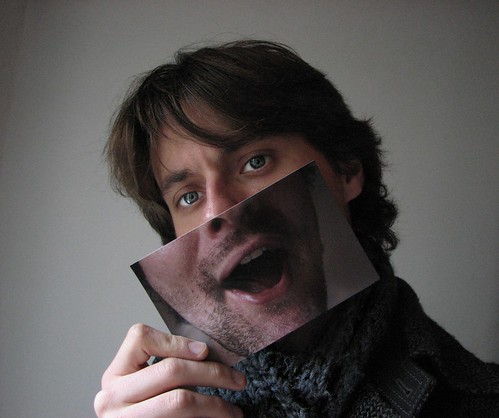
I love this funny yet wise quote: Monkeys are superior to men in this - When a monkey looks into a mirror, he sees a monkey. ~Malcolm de Chazal.

Interpret it in whatever way you want. But you can't deny that this quote is saying that a monkey only sees a monkey in the mirror. But if you give a man/woman a mirror, he/she would see more than a man/woman.

We have judgments, pre-conceived ideas, interpretations of what if/what is supposed to be and so on. We make it so complicated for ourselves that we become the cause of our misery, granted on some days we allow ourselves to be happy. More often than not, we gravitate towards the negative, and for no good reason.

In our grandparents' time or even great-grandparents' time, things were less complicated. I do not mean that they do not have to deal with their mindsets, but they had less of a challenge because their world was larger than life and anything else. Now, we live in a reality where the world is so much smaller. Speaking to someone thousands of miles away is no longer an issue, our letters sent electronically is received within a second.

With the fast pace, it just means we have become far more impatient for our own good. This adds to our stress levels and in turn, cause our bodies to react, AND in the long-term -- health challenges.

So having a human experience means, we have difficulty keeping things simple. Notice that I did not say "being human means we have difficulty keeping things simple"? This is where many fall into a big misconception that being humans means that we are forever fated for failure and craziness.

Whenever we falter, people will give us an excuse and say, you are just being human. I find no fault in this; however, the issue is that it binds us to this human-ness and we often fall back into this as an excuse not to do better.

Of course, on the other end of the spectrum, we do have perfectionists, who will not allow themselves to make mistakes. And this inevitably translates into misery and disappointment with self and other people.

So what am I saying? Swinging on either side of the spectrum makes us stuck on this idea that being human means we can never reach there. Where is there?

This is not a place, but a state of mind.

While having human experiences means we find difficulty keeping things simple, but being human means something else altogether. I personally believe that this whole thing about the human experience from drama to enlightenment is a pathway for us to become our highest potential.

I read this about two decades ago, and I really like it: the sound HU in ancient Egyptian times was the sound of divinity, and when sounded, it allows us to connect to the inner core of our beings, bringing us back to the essence of our power and to where/when we were created within our hearts.

When combined with the word MAN -- HU-MAN, it means we are mortal beings with our core connected to the sound of divinity.

Isn't this interpretation so divine? I like it a lot. I love to think that all these dramas that we experience will eventually bring us to enlightenment, and this is what being human is all about. The human experiences are merely opportunities for us to find our way. There is no other way to learn and grow except to experience the lessons.

We are not our experiences. They are methods for us to get there.

So when we say we are just being human -- we need to remember this: in all the complications we experience it is our inner urge and desire to become more enlightened.

An enlightened mind simplifies and comes to a full circle of their human experiences and becomes a HU-MAN BEING, in the most real sense.

(Does it mean the monkey is more enlightened than the human? I imagine some of you asking, the answer is of course no. The monkey is simple, but not enlightened because it doesn't have all the human experiences of drama)

So, the next step, how do we simplify and uncomplicate things, and become less affected by drama?


https://ezinearticles.com/?Why-Cant-We-Keep-Things-Simple?&id=9986017

How To Become Wise


Wisdom is the ability to make sound judgments and choices based on experience. It's possible to be quick on our feet and skilled in processing complex information without reaching sensible solutions to problems. Cultivating wisdom is a deliberate choice that people can make regardless of age and intelligence.

We need to think before we speak. It's something we possibly know we ought to do, but may find difficult because once we say it, we can't take it back. Before we open our mouth to say something, make sure it's something we would be proud to post everywhere on social media. If it's something we might regret later, then maybe it's better if we kept it to ourselves.

Moreover, wisdom is the ability to look beyond our personal desires. People who have gotten where they are by not taking other people's interests into account or even by actively thwarting the interests of others cannot not be viewed as wise. However, it doesn't mean that wise people are self-sacrificing. Well-being and success both suffer if we're too focused on others or on ourselves. We don't have to be selfish just to get what we want. People who pursue personal gains at the expense of others ended up destroying their relationships and reputations.

Wise people are willing to question rules, instead of accepting things as they have always been. They are willing to understand than judge. However, many people are judgmental. They judge the actions of others. But wise people resist this impulse. Over time, this emphasis on understanding rather than evaluating yields an advantage in predicting others' actions, enabling wise people to offer better advice to others and make better choices themselves.

Put things in perspective before jumping to conclusions. Emotions always soar high when people are upset. But problems can occur when we engage in conflict with another person before we calm down because if we're too caught up in our anger, we're not going to think clearly. Wise people realize that they are always in control of their thoughts, feelings, and actions. Most people let others' behavior affect them negatively without realizing that they let that negativity permeate their lives and make them miserable.

Wise people have purpose and a goal. Acting on impulse can lead to regrets. If we don't take the time to think things through, we might create problems. Wise people use a combination of logic and instinct to come up with the best decisions possible.

Wise people don't get blinded by charm, personality, or looks right away. In defiance, they are also not turned off by anyone who is not beautiful or charming on first impression, either. Meaning, they take the time to get to know people and judge them based on their inner self, not who they appear to be. Physical appearance is just temporary. What's more important is the beauty inside out. Wise people never judge rudely. They practice empathy by putting themselves in another shoes and trying to see the situation from their point of view.

Indeed! Thinking like a wise person is very difficult. But with constant training and control of our emotions, we can do it even if it is easier said than done for many people, but it is really possible to think wisely.


http://ezinearticles.com/?How-To-Become-Wise&id=9553159

The 10-Second Take

When it comes to reading people, a glance can tell us some personality basics, but don’t count on it if you’re looking for love.


Randall Colvin is a social psychologist at Northeastern University who has spent a good chunk of his career looking at the accuracy of the personality judgments we all make, often rapidly, of others. He might be his own best case study. 
In 2002, following a divorce, he was looking for a new life partner. A friend suggested he conduct his search online at Match.com. Browsing through the profiles, one in particular turned him off: a woman so glamorous looking she seemed to have popped off the set of Sex in the City, a far cry from the more scholarly, down-to-earth women he preferred. 
“She looked superficial,” he recalls. About a month after he posted his profile, an email from the glamour girl arrived in his inbox. But instead of seeming narcissistic and full of herself, she was sweet and communicative, and when they met, she appeared attractive but hardly an aspiring diva. In a single, kind email, the woman counteracted an unfortunate first impression. She is now Colvin’s wife.
Photo by Peter Yang


Colvin’s experience attests to the dozens of nuanced judgments we make, usually without our awareness, when we glimpse or meet someone new—about their trust worthiness,intelligence, competence, beauty, and ability to get close, all in a minute or less. We typically use our inner radar to guide our decisions about whom to hire, whom to love, even whom to elect. Conventional thinking holds that such first impressions are highly accurate, distilling the wisdom of the unconscious honed over eons of human history. 
“We look at a person and immediately a certain impression of his character forms itself in us. A glance, a few spoken words are sufficient to tell us a story about a highly complex matter,” pioneering social psychologist Solomon Asch, the archaeologist of impression formation, explained in 1946. “Subsequent observations may enrich or upset our view, but we can no more prevent its rapid growth than we can avoid perceiving a given visual object or hearing a melody.” 
First impressions, Colvin says, are most reliable for the broadest outlines of personality, the Big Five traits of extraversion, neuroticism, openness, agreeableness, and conscientiousness. Colvin, in slicing impression formation chronologically and scrutinizing its sequences, has shown that judgments about the Big Five made after knowing someone for a minute are usually as accurate as those made after knowing the person for years. Typically, he videotapes meetings between test subjects, including “judges” and targets. 
In five seconds, judges can easily pick up on extraversion and conscientiousness as well as intelligence and any negative affect. It takes only several seconds longer for judges to accurately home in on openness, agreeableness, and neuroticism, as well as on positive affect. 
Conscientiousness leaps out, Colvin says, because one of its most significant features is obvious: “These are people who stay on task.” Neuroticism and openness take longer to discern, presumably because there are few or conflicting clues in behavior.
Not every part of the encounter is equally revealing. The middle of the conversation, Colvin says, is most diagnostic of what people are like, because people need time to rev up and then they tend to wind down. “If two people are talking on a couch at a party for 30 minutes,” Colvin adds, “the sweet spot of the discussion, the part where you really see who the people are, will be at the 15-minute point.” 
However correct the impressions may be, they are just skin deep. “We learn the person is an extrovert,” says Colvin, “but not how many parties she attends. We learn he is depressed, but not why—not what happened in his life to make him feel so bad.”
Overall, Colvin finds, first impressions are spot-on about 30 percent of the time. If you cross the street every time you see a person with a scary face, he says, seven out of 10 times you’re just sidestepping a good person having a bad day. But three times out of 10, you’re avoiding someone who really is dangerous. 
Reading people is, in the grand scheme of things, brand new to humanity, a skill acquired only in the last 13,000 years, explains Alexander Todorov, professor of psychology at Princeton University. Before the agricultural revolution, everyone was known to one another in the small bands of hunter-gatherers in which people lived. Reputation, not impression, was how we assessed others. As a new tool, says Todorov, impression formation is still pretty crude.
Photo by Peter Yang


Ongoing research by others suggests that where stakes are highest—our choice of mate—first impressions may have the least utility. They count less for love than is commonly thought, reports psychologist Paul Eastwick of Northwestern University. 
A series of studies he has conducted over the past few years challenges the deeply entrenched belief that individuals tend to pair themselves with people who are overwhelmingly similar to them on a host of physical and other characteristics, especially attractiveness, that, taken together, sum up their so-called “mate value.” 
Throw a bunch of people into a bar and everyone will pretty much agree immediately on who is most attractive; there’s evidence we’re hard-wired to notice. Similarly attractive people may indeed wind up together. But in a study published in Psychological Science, Eastwick found that the longer partners know each other before becoming romantically involved, the fewer external characteristics they share. 
The more opportunity you are afforded to get to know someone over time, the more you wind up appreciating his or her unique characteristics. “We meet people through work and friends, and most romantic relationships start that way,” Eastwick points out. “There will be many cases where an initial attraction is strong and it goes away—and many other instances where the qualities you really care about create an attraction over time.” 
Time effectively dilutes the power of the first impression. In one set of studies, when Eastwick asked students in a small class to rate each other on mate value at the beginning of the semester, there was great consensus on who was “hot.” But when asked to rate their classmates again at the end of the semester, ratings were all over the map. 
“On the surface, this seems counterintuitive,” says Eastwick. “As people acquire more information about a person, it seems plausible that they would come closer to discovering the ‘truth’ and thus achieve more consensus.” When it comes to judging major personality traits, that may be the case. 
“But people’s romantic interpretations of a target’s behaviors are highly idiosyncratic—far more idiosyncratic than personality judgments,” he says. “So it makes sense that agreement about romantic partners should decrease as information accumulates over time. The longer people know each other at work or school, the less those first impressions count.” 
In addition, the researcher found, the longer couples know each other, the more their attraction grows—even when the relationship is just the product of a prearranged experiment in the lab.
Still other research shows that first impressions are surprisingly conditional on an array of contextual elements. For starters, like much of human cognition, our judgments of others are embodied; their formation is shaped—quite literally unwittingly—by aspects of our body beyond the brain. Hold a cup of hot tea or coffee in your hands and you’re likely to regard the next person you meet as unusually warm. Sit at a wobbly table, ride a shaky subway, or set sail on a choppy bay and you may judge your date unreliable.
Photo by Peter Yang


In one set of studies, University of Pittsburgh psychologists Amanda Forest and David Kille placed test subjects at wobbly work stations or on unstable seat cushions, or had them stand on one foot while considering possible new romantic partners. The qualities they desired in a mate varied with the stability of their perch. 
What’s more, the less stable their stance, the less confident they felt that a relationship would last. “If you meet someone on a roller coaster, you may literally perceive that person as lacking stable traits—even while craving stability more than ever,” Forest explains. 
The finding that subtle body experiences affect not only your perception of others but also your preferences in others is all the more significant, Kille says, because “mate selection is often viewed as a process that reflects long-term goals, not in-the-moment psychological needs.” 
Further, he finds, mate preferences can shift with transient states created by physical surroundings. For instance, meeting someone in a dirty environment can persuade you to see him or her as morally impure. 
Kille points to a study published in Personality and Social Psychology Bulletin in which participants judged the moral transgressions of others while siting in a clean room, a messy room, or a room “enhanced” by foul-smelling spray, or watched a video that involved a dirty toilet. The toilet viewers expressed greater moral condemnation than the others.
The presence or absence of physical warmth similarly sways first impressions. Psychologists Lawrence Williams of the University of Colorado and John Bargh of Yale found that subjects holding a cup of hot coffee, as opposed to iced coffee, rated a target individual as especially warm and generous. 
The findings reinforce the enduring impact of early attachment experiences, the researchers believe. Attachment theory holds that warm physical contact between infants and caregivers is crucial to healthy development and lays the foundation for trusting relationships in adulthood. 
As Bargh and Williams pointed out in the journal Science, neuroscientists had already shown that the brain’s insula, a region deep in the cerebral cortex, processes both physical temperature and interpersonal warmth and trust. 
“The warm-cold assessment” is “the social perceiver’s immediate ‘first pass’” to evaluating whether the target individual could be “trusted as a friend or at least as a ‘non-foe.’” The embodied sense of temperature works at the very deepest level, activating memories of other feelings associated with warmth, like trust and comfort, “because of early experiences with caretakers who provide warmth, shelter, safety, and nourishment.”
First impressions are not only highly contingent on quirks of the environment and prior experiences, they are surprisingly shallow. Even as a graduate student at New York University, Alexander Todorov was fascinated by the social psychology of faces. Other researchers had shown that just a glimpse of a face would strike a strong impression, often based on no more than the shape of the person’s features. 
Thin lips and wrinkles at the eye corners elicited judgments of distinguished, intelligent, and determined. Persons who were baby-faced were perceived as physically weak, naïve, and submissive, although also honest, kind, and warm. 
The research showed that attractiveness was equated with perceptions of competence and intelligence—and masculinity with dominance. And the more a face resembled the viewer’s face, the more the viewer was predisposed to like it. 
After moving on to Princeton, Todorov, by then an expert in the psychology of public affairs, conducted one of his first major studies on the outcome of elections. Given the intensity of our media climate, he wondered, could images— prompting “quick, unreflective judgments based solely on facial appearance”—be more responsible for votes than what a candidate believes or says, despite the many millions of campaign dollars spent on disseminating such information?
Volunteers were asked to rate photos of previous congressional candidates for the trait of competence. Candidates perceived as more competent turned out to have won 71.6 percent of the Senate races and 66.8 percent of the House races—far more than chance alone would decree. Single-handedly, the trait of competence projected by an image had vastly more influence in determining the winner than all other traits combined.
Photo by Peter Yang
“There is no good evidence that trait inferences from facial appearance are accurate,” Todorov reported in Science. “As Darwin recollected in his autobiography, he was almost denied the chance to take the historic Beagle voyage—the one that enabled the main observations of his theory of evolution—on account of his nose. Apparently, the captain did not believe that a person with such a nose would possess sufficient energy and determination.”
In subsequent studies Todorov has parsed the first impression by having his computer generate faces that vary randomly in their parts. Working with hundreds of images of faces and altering them incrementally in length, width, and other dimensions, he can create differing impressions of trustworthiness, aggressiveness, dominance, attractiveness, and likeability.
Impressions of a single individual, Todorov finds, also vary by context. As he recently reported in Psychological Science, judgments of competence and even attractiveness varied more among very similar but not identical headshots of one individual than between different individuals. Change the camera angle, the mood of the person, or whether he or she slept the night before, and you change the impression. 
Most of the psychology world treats face images as truthful representations of individuals, Todorov observes, but “what we have shown is something that people in the business of image manipulation have known for a long time.”
First impressions are most unreliable when there’s a narcissist in the room. Narcissists are just plain hard to read. They make incredibly good first impressions. The glow, however, doesn’t last, says psychologist Delroy Paulhus of the University of British Columbia.    
In a much-cited study, Paulhus had groups of four to six students meet seven times for 20 minutes each. In the first session, the psychologists determined which of the participants were self-aggrandizing, a sure sign of narcissism, while group members rated each other. During the first six sessions, narcissists did well; they were judged agreeable, well adjusted, and competent. 
By session seven, the tide had turned. Almost everyone had come to see the narcissists for what they were—self-boosters who openly overestimated their abilities and skills.
Yet even in the face of the evaporating good impression, narcissism is a double-edged sword: While narcissists find it hard to hold the approval of their peers, they never waver in their own—overblown—opinion of themselves. That capacity carries with it a certain energy and persistence in the face of daunting odds. 
And with each new encounter, the narcissist gets the opportunity to wow people all over again. Narcissism may not be the best trait for sustaining a long-term relationship or ateam, but narcissists do incredibly well in the short-term game—in seducing new lovers or in jobs like sales, where a quick hit can count. 
“The first fundamental impression is broad and superficial—good/bad, approach/avoid,” concludes David Funder, a distinguished professor of psychology at the University of California at Riverside and a grandmaster in the psychology of sizing up. “It isn’t useless, and most of us are pretty good at it. “
In fact, he notes, “those who can’t do it we often label autistic. It could save our lives. It’s far better to base a decision on a first impression than the flip of a coin. But it’s rough.” 
It may not be a matter of life or death, but you can also spare yourself some trouble if you don’t go to job interviews on wobbly stiletto heels, don’t bring ice coffee to your business negotiations, and don’t stroll down a bumpy sidewalk on your first date. 

The Rules of Reversal

Even if they don’t seal your romantic fate, first impressions can affect other elements of your life course—how you fare in job interviews, whether you gain friends at social gatherings. In a well-known series of studies conducted a decade ago, Harvard psychologist Mahzarin Banaji showed that instant judgments can tug at us even after we think we have abandoned them. 
Still, however quickly and unintentionally implicit preferences can assert themselves, we’re not mindless robots. People have some flexibility, says psychologist Melissa Ferguson, who heads the Automaticity Lab at Cornell University. She is especially interested in how people form, and change, their impressions of others. She has a guy named Bob to thank for her findings.
For her studies, Ferguson introduces test subjects to a fictional character named Bob. Sometimes Bob is portrayed as good, with a list of a hundred nice behaviors: He helps a woman carry groceries. He donates time to a soup kitchen. He gives a ride to a friend. Universally, the first impression of Bob is good. When subjects find out he is convicted of a heinous act involving a child, Ferguson says, the good impression of Bob completely flips.
Other times, Bob does a hundred things that make study subjects see him as a moderately nasty guy: He hunts deer out of season, yells at his girlfriend in public, refuses to help a child fix a bike. Then it is revealed that Bob donated a kidney to a stranger. 
Here too, Ferguson’s subjects adjusted their opinion; they thought better of him, but they still did not think well of him. “They did not flip,” she says. “A single piece of extremely negative information undoes a positive first impression, but it doesn’t work the same way in the opposite direction. It takes a lot more to overcome a negative first impression.”
There is one way to overturn a negative first impression: discovering that we were actually mistaken in what we earlier perceived. Ferguson’s point man for this finding is a fictive Frances West. He is walking toward his neighbor’s house, trudging through mud. He opens a door, knocks over furniture and then takes precious items from the house. West, it is assumed, is robbing his neighbor and impressions of him are terrible. But if subjects learn that the house is on fire and the precious items are the children—if West turns out to be a hero saving children’s lives—then the bad opinion can be overcome. In that case, the bad acts were mistaken interpretations and never occurred; new evidence changes the story completely. 
“It isn’t the amount of information,” says Ferguson, “but the strength and diagnostic quality of the information that counts. Yelling at your girlfriend in the street is not as diagnostic, for instance, as mutilating a small animal.” If you inflict injury on an animal, there might be nothing you can do to earn your way back.

People Decide These 8 Things About You in Just Seconds

Your first impression might tell people you're untrustworthy, lacking intelligence, or even promiscuous.


You don't get a second chance to make a first impression.
We all hope that when meeting someone new, we don't make a huge goof, like offending that person or saying something stupid.
But even before you have a chance to wow them with your superior intellect or quick wit--before you even open your mouth--people are already making snap judgments about you.
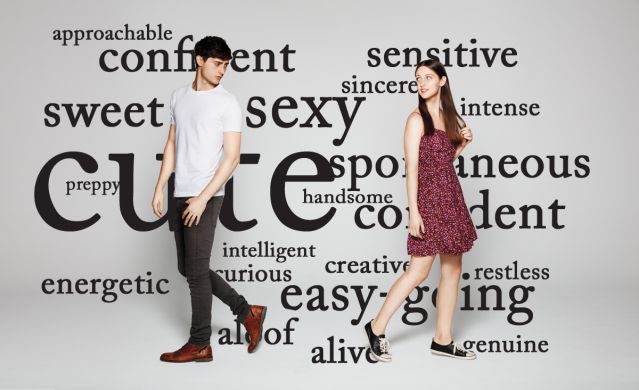
Psychologists call this tendency "thin slicing." Basically, we tend to look for patterns to help us recognize and understand new things. When we meet a new person, it's our natural inclination to make very quick decisions about them with only minimal information. Since we don't have information about that specific person yet, our assessment is based on what we think we know about people we deem to be like them.
For example, it takes people just one-tenth of a second to decide whether they believe a person is trustworthy or not.
See, we have so many decisions to make in a day that if we really thought each one through and assessed all angles and information available to us, we would never get anything done.
So we rely on our past experiences and, yes, our biases to help us make faster decisions.
We tend to believe that wearing thick glasses and speaking in an expressive way are traits of highly intelligent people. When we meet a new person who fits this bill, our first impression is that he or she must be intelligent, too.
Women with visible tattoos are initially perceived as promiscuous and heavy drinkers, even though both of these assessments might be absolutely false.
Even the way you walk into the room gives others the basis for making a decision about you.
And just how important are these snap decisions? Many studies have shown that those initial decisions people make using thin slicing don't change.
This infographic from Business Insider illustrates eight things people decide within seconds of meeting you, based on an analysis of several scientific studies:

http://www.inc.com/larry-kim/people-decide-these-8-things-about-you-in-just-seconds.html

5 Ways Entrepreneurs See Life Differently

Entrepreneurship is more than just a career choice. It’s a way of life. Because it consumes your personal life as well as your professional one, it typically changes you as a human being. Your approach to problem solving will change, you’ll learn new skills and become more familiar with new industries and markets. You’ll undergo a personality change -- for better or for worse. But perhaps most importantly, during your course as an entrepreneur, your perspective on life will undergo a dramatic shift.
Within a year or two of being an entrepreneur, you’ll more than likely find your world views changing in one or more of the following ways:

1. Everything becomes subject to evaluation.

Entrepreneurs are business commanders. They’re responsible for overseeing everything, from operations to management to accounting to sales and marketing. As a result, you learn to see things from a high-level perspective, and become adept at making flash judgments and fast evaluations in demanding circumstances. In the course of a given day, you’ll be forced to evaluate the strength of your financial models, the productivity of your team and the feasibility of your latest deadline projections.
As a result, you’ll start evaluating everything in your life. When deciding which restaurant to eat at, you’ll make a mental pro/con list. When you go see a movie, you’ll think about all the strengths and weaknesses of the picture, and evaluating each situation in terms of its risk and reward in the context of the film. It will feel so natural, you may not even notice it.

2. Decisions seem less consequential.

Everyone makes dozens of decisions each day, ranging from what color socks to wear to whether or not to move to a new city. As an entrepreneur, you’ll be making even more decisions, and most of them will seem more significant than “ordinary” decisions, yet you’ll come to realize that bed decisions can sometimes yield decent results and good decisions don’t guarantee victory.
After several months of helming your business, you’ll see decisions as essential, but less consequential. You’ll no longer be intimidated by the potential fallout of a bad decision; instead, you’ll make the best decision you can as quickly as you can, and you’ll move on.

3. Problems are less intimidating.

In startups, problems seem to arise out of nowhere. Every day, there’s at least one new fire that needs put out and at least one major change you never saw coming. Throughout your stay as an entrepreneur, you’ll become better at handling these problems as they come up, and all the other problems in your life will become less intimidating, too. Rather than seeing them as show-stoppers, you’ll see them as simple puzzles that are unavoidable and demand to be solved.
4. People become more important.
Entrepreneurship helps you see the importance of other people in your life. Your family and friends will be there to support you during your most stressful times. Your investors and mentors will help guide you to making the right decisions. Your partners and team mates will help you see your vision through to success. Your clients will make or break your business. Human relationships will dictate your success, and as such, you’ll learn to value them more.

5. Ideas are no longer fleeting.

During the course of a given day, I’d wager the majority of ordinary people come up with at least a half dozen ideas. Those ideas may be large, like an idea for a new business, or small, like an idea for a new dinner dish. They may be good or they may be bad. Regardless of the quality or scope of these ideas, the majority of them are released, never to be thought of again.
As an entrepreneur, you see first hand the value of an idea. Even bad ideas, if worked on, can become good ideas, and even ideas that never manifest in reality can be learned from if they are properly explored. After your course as an entrepreneur, you’ll never let another of your ideas go immediately. You’ll hold onto each one, explore it and consider it for application. Similarly, you’ll be more willing to hear and explore the ideas of others. You never know when or how your next great venture will begin.
Don’t let these perspective changes intimidate you. It’s true that entrepreneurship changes you, but in most ways, it changes you for the better. Besides, if you aren’t prepared to take a risk for a potentially monumental gain, you might not be cut out to be an entrepreneur in the first place. Your time as a business owner will be a challenging, rewarding and exciting journey. Whether you fail hard or become a massive success, you’ll be grateful you took it.

7 Attitudes You Need To Give Up To Experience Self-Love


Self-love was something I thought I would obtain someday in the future when everything in my life was going the way I wanted it to. Soon I realized I was never going to experience self-love with that mentality because there was always something in the future to chase. It turns out love works the other way around. Life seems to work out when you have self-love first. 

Below is a list of potential blocks you may have put up against self-love and how to remove them.

1. Un-forgiveness

Forgiveness is the key that opens the box containing everything you've ever wanted. Are you still beating yourself up for the things that happened when you were in first grade? If so, it’s time to forgive. How do you forgive, you may be asking? You release the judgements you made about yourself and the situation (see number 5 below). It really is that easy. We love to make things seem complicated so we don’t do them. 

2. Fear

Fear can be sneaky at times because it takes many forms, such as jealousy, anxiety, anger, and impatience. How do you move through this? You choose love instead. Every moment of every day provides you with an opportunity to perceive a situation differently. You are always choosing between fear and love. That’s it. Set the intention to see yourself as loving and powerful, and the unloving fearful thoughts will fall away.   

3. Comparisons

Stop comparing yourself to how you were five years, five days, or five minutes ago. Comparisons keep you in a fearful state of mind and out of the present moment. When you compare yourself, you are giving away your power because all your power is in this instant, not in the past or the future.   

4. Negative Self-Talk

Every day I make a conscious effort to be aware of all the thoughts I let roll around in my head. When I first started doing this exercise, I immediately noticed the amount of negative self-talk I was allowing. I was shocked because I always considered myself to be a “positive” person. Once I noticed how much I beat myself up for every little thing, I decided I was going to replace every negative thought with an uplifting thought instead. Eventually, the positive thoughts became habit. 

5. Judgements Towards Yourself

Unforgiving thoughts are judgements about yourself you are unwilling to question. For example, “I am a horrible unlovable person because I ate that piece of cake." That is a judgement, and my guess is that it makes you feel like crap. It definitely doesn’t come from a place of love and therefore must be released. 

6. Expectations

Do you put a lot of pressure on yourself, and set expectations for how things should go? This again, takes you right out of the present moment. What I learned over the years is that I will be fine no matter what happens because everything happens for me, not to me. I will always be exactly where I am supposed to be, so I will be at peace no matter what the outcome of the situation is. 

7. The Belief You Are Just A Body 

The truth is, you are not a body -- you just have one. Saying that you will love yourself more when you are skinnier (or experience any other body change) is just a way to block the infinite amount of love that is already present within you. Trust me, I spent many years of my life chasing skinny. What I learned for sure is that skinny does not, and never will, equal happy. Self-love comes from seeing yourself as you truly are. When you truly see yourself, the beauty that emanates from you is magnetizing. There will be no doubt in your mind that this has nothing to do with your physical body.  

Now that you are aware of these possible blocks in your life, do you want to know how to remove all of them at once? Turns out it’s extremely simple; you just set the intention to live in the present moment. That means stop judging and attacking yourself based on your past fearful experiences. Forgiveness is the name of the game. You will then feel and experience something completely new in this moment. That feeling is deep self-love. Enjoy it. 

7 Ways To Make A Killer First Impression

  
"We judge books by their covers, and we can't help but do it," according to University of Toronto psychology professor Nicholas Rule.
Not only do we make snap judgements, but we also make them incredibly quickly (in 100 milliseconds, according to one Princeton study), and we find them very difficult to change.
First impressions, in other words, are fast, firm, and very, very sticky. So how do you make a great one when meeting a new business contact? Thankfully, science hasn't just investigated the power of first impressions but also uncovered plenty of tips and advice for those looking to improve theirs. Here are a few of these insights:

Attend to the basics

Hopefully this doesn't need too much stressing: looking polished, professional, and not overdone in your appearance is the foundation for any good first impression. Whether we like it or not, looks matter a great deal. "Appearance is our first filter, and it's happening all the time," cautions Sylvia Ann Hewlett, author of "Executive Presence," in a recent Business Insider post that lays out all the basics you've probably already heard about grooming to impress new contacts.
Do you have special issues when it comes to first impressions, such as multiple tattoos, piercings, or a shaved head? Psychology has looked into how these issues affect people's perceptions. In short, tattoos make women seem more promiscuous, facial piercings don't exactly help you come across as smart, and (as you'd expect from watching any Vin Diesel movie), for men, shaved heads convey dominance.

Set an intention

Goals matter in meeting new people as much as they matter in other areas of life. Take a moment before you attend an event to ponder what image exactly you hope to project and whom you'd like to meet. "The most important thing to do for giving a good impression is to set your intention," suggests Vanessa Van Petten, CEO of Science of People, in Forbes. "As you get ready, or when you are driving over, think about what kind of people you want to meet and what kind of interactions you want to have. This can be an incredibly grounding experience and works very well to focus on what kind of energy you want to have for your event."

Let them talk first

Want the person you're meeting to trust you? (Of course you do!) Then fight that impulse to chatter away about your expertise and accomplishments. Ironically, one of the best ways to win people's confidence is simply to let them talk first. If you want to establish trust, "let the other person speak first or have the floor first," social psychologist Ann Cuddy recommends in a Wired interview.
"I think people make the mistake, especially in business settings, of thinking that everything is negotiation. They think, 'I better get the floor first so that I can be in charge of what happens,'" she adds. "The problem with this is that you don't make the other person feel warmth toward you. Warmth is really about making the other person feel understood. They want to know that you understand them. And doing that is incredibly disarming. You can also establish trust by collecting information about the other person's interests — get them to share things about themselves. Just making small talk helps enormously."

Don't skimp on the eye contact

You've probably been told somewhere along the line that making eye contact is a signal of sincerity, but according to the latest research it also makes you seem smarter. "People who make more eye contact are perceived as more intelligent," reports the British Psychological Society Research Digest blog, but the post also warns against overdoing it on the basis of yet more research. "Don't go too far with the eye contact though — if you lock on and don't let go, people will likely assume you're psychopathic," the post explains.

Pay attention to how fast you're speaking (and watch your 'ums' and 'ahs')

What else do recent studies have to teach us about making a killer first impression? The BPS post offers one more useful set of findings. "Back in the '70s, researchers created over fifty synthetic voices and played them to participants at various speeds. Increasing speech rate led participants to assume the owner of the voice was more competent," it reports. "The participants who were played the slowed-down tapes rated the interviewees as less truthful, less fluent, and less persuasive. Other research has shown that people who 'um' and 'ah' a lot are assumed to not know what they're talking about."

Reveal your flaws

You'd think that with first impressions it pays to be as polished and perfect as possible, but experts actually insist that showing your vulnerabilities and weaknesses can actually be both endearing and empowering.
Here's Lucila McElroy, the founder of life-coaching company WeAreMomentum.com, explaining just how powerful this approach can be (if you can stomach it): "Not long ago, I had a business meeting scheduled with a woman whom I found intimidating. I expected to pull out all the stops to impress her. But as it happened, I was just not in the mood that day, so I found myself acting differently: I was raw, vulnerable, and honest — and she responded in kind. Ultimately we had an amazing conversation, which came about because we had both let our guard down."

Do it in person

When meeting an important new contact for the first time, if at all possible try to do it face to face rather than over the phone or a video chat, science suggests. "A series of University of British Columbia studies found that first impressions are formed differently in person versus online or by video. The research on over 1,000 participants found that in-person and video impressions were similarly accurate in judging various personality measures such as extraversion and likeability. However, passive video-based impressions were overwhelmingly more negative than impressions made based on meeting in-person," reports the Huffington Post.