Showing posts with label present moment. Show all posts

Dare to Be Average

Most of us are always trying to be the best that we can be. Others are always trying to be perfect. But can we be perfect, given our frail human nature? Is it even healthy to try and be perfect or are we aiming for an impossibly high ideal that won't take us anywhere anyways?

Perfection is a plague for all of us. Advertisers are always encouraging us to buy their products because we are not good enough just as we are. But is this really true? Do we have to fall prey to such undermining negative attitudes which will make us feel worse about ourselves?

I believe that we must strive to get off the perfection ban wagon and become who we were meant to be when we were born, perfect and without blemish. However, to do so, we must become more aware of all the negative messages that are hurled against us by our culture and especially advertisers.

However, with practise and self-awareness, it is possible for us to like, and perhaps even love, every aspect of ourselves. We are not only good enough just as we are. We are great just as we are. We don't need any gimmicks to be perfect. That is something that we don't believe, regardless of who tells us so.

What does it mean to be average? Well, here are a few things that it does mean:

• Accepting ourselves in our own skins.

• Accepting our flaws, be they character flaws or physical disabilities.

• Acknowledging where we are, without worrying about anything else.

• Not comparing ourselves to others because it is a waste of time, energy and inevitably it can make your life miserable.

• Honouring who you are right now, without worrying about anything else.

• Becoming more aware of what the media is telling us to be and to avoid being those things.

• Loving ourselves and knowing deep in our hearts that we are unique just as we are.

• Not wanting to be anyone that we are not but celebrating who we are now.

• Celebrating our unique talents, because we have a lot of them.

• Realizing that we are all average, and we can all be great by how we lead our lives.

• Living joyfully in the present moment, celebrating all the little and not so little experiences in our lives.

• Living a more aware life one that is grounded in the present.

By accepting where you are in life and daring to be the best version of who you are now, you can live the best life that possible.

People who exude this kind of self-confidence look pretty perfect. They hold their heads up high and they celebrate this moment right now because it is the very moment where they are meant to live and be their best version of ordinary. Are you ready to be average?


https://ezinearticles.com/?Dare-to-Be-Average&id=9956488

Why Healing Requires Integrating Our Unconscious Experiences Into The Wholeness Of Our Being

 Nurture The Deepest Part Of Your Core Nature

Healing involves integrating our fragmented parts into the entirety of our being. However, the paradox is: we are not broken but merely disassociated from our wholeness. The term healing denotes restoring what is not functioning as it is intended. When we are caught up in the distorted beliefs about ourselves, it leads to separation or what we consider being broken. In fact, it is merely being separated from the completeness of our true nature. Think in terms of a hologram where the whole is contained in every part. This was an idea espoused by the late theoretical physicist David Bohm who believed the universe is a solid and brilliant hologram. He recognised how each part of our physical reality contained information about the whole. Therefore, our thoughts, emotions, soul and physical body are composed of our soul nature.

How does this idea appeal to you? Are you comfortable knowing whilst you were born whole and pure, through your beliefs, thoughts and experiences it leads to separation? I'm not suggesting it is entirely your fault because we are all bound to experience this. It is said, while our painful experiences are not our fault, healing the pain is our responsibility. Although there's an element of truth to it, we ought to remember there is nothing to heal other than to attend to our unconscious memories in order to return to wholeness. By attending to these aspects, we integrate our known sense of separateness. Release and Renew is a mantra I often repeat in my writing when I discuss healing and emotions. In doing so, we release that which is not conducive to the present moment. Similarly, we renew our commitment to nurture ourselves by connecting with our core emotions. The integration I speak of is an association with our soul nature, which at its essence is pure, whole and knows nothing of separateness or brokenness. It is the egoic mind which disconnects us from our spiritual self to create two identities i.e. the darkness and the light.

How To Heal Your Fragmented Parts

I am drawn to a passage by the South African author Michael Brown, who writes in The Presence Process: "I dropped my use of the word "heal" because of its connotation that something was wrong and had to be fixed. Instead, I began using the word "integrate," which to me meant there was a part of my experience that was unconscious-a part of my experience that I resisted, controlled, and sedated-which was asking to be incorporated into the whole. Whereas healing felt like I was excluding something from my experience, integration felt like I was embracing everything I experienced." I believe Brown makes two important points here: we mustn't resist nor control the past, but perceive them as the whole of our life's experience. Second, integration means to embrace or at the very least acknowledge everything that happened to us. Perhaps not right away, but when we are ready to make peace with the past.

What are your thoughts about this? I realise you may have questions related to your personal experiences. Whilst I am not present to answer them, I assure you trying to make sense of them consciously is a healing process rather than an integration process. It is what author Dr. Mario Martinez means when he writes in The MindBody Code: How to Change the Beliefs that Limit Your Health, Longevity, and Success: "The true agents of change are elevated cognitions and exalted emotions. These agents of change provide sustained transformation; in fact, they have triumphed over the greatest infamies and darkest periods in our human journey." It does little good to dwell on why the past took place as it did. Instead, we ought to turn the tables and consider the following questions as a basis for self-enquiry. Instead of trying to make sense of the past which keeps us trapped replaying painful memories, we identify how the experiences served us.

  1. How can I use the past to facilitate my greater growth?
  2. In what ways can I use my emotional wounds to bring peace and love to the part of me that is pure and whole?
  3. How can I integrate my sense of separateness into the wholeness of my being?
  4. Whom do I need to become and let go of to achieve this inner state?

Once we can perceive the pain of the past through the lens of: compassion, forgiveness, peace and love we heal our fragmented parts. It may involve deep exploration into ourselves with or without the guidance of a trained therapist. Considering this, I'd like you to spend the following week journaling your answers to the four questions above. Call it a remote coaching session if you like. Write what comes to mind even if it involves images or symbols. Similarly, pay attention to your dreams via the symbols that appear. Note how you feel within the dream and upon waking. Look for messages in your waking life in the form of people, places and situations that cause you unrest. This is your soul guiding you towards integration. Ultimately, to heal ourselves we must be willing to integrate the pain of the past, so healing happens naturally as nature intended it to.


https://ezinearticles.com/?Why-Healing-Requires-Integrating-Our-Unconscious-Experiences-Into-The-Wholeness-Of-Our-Being&id=10081489

You've Got To Stop Living In The Place Of Fear And Doubt


Be Careful What You Give Your Attention To

Fear and doubt are like uninvited guests, who show up for the night and overstay their welcome. They have nothing to impart other than a distorted reality. We fear what we don't understand and then doubt ourselves. This steals away the preciousness of the present moment because we succumb to a fictitious reality. Have you experienced something like this, whereby fear and doubt convinced you of something that wasn't true? You wouldn't be wrong in succumbing to this scenario because they collaborate to pull us into a pit of despair.

But it needn't be this way, since we can choose to see things differently. For example, when the Coronavirus pandemic started, there was a lot of fear and negativity perpetuated by the mainstream media. They hijack our attention by reporting bits and pieces of the actual story. I immediately turned my attention to the health professionals, such as infectious disease experts, epidemiologists, virologists and senior health experts. As time went on, I was reassured that what the media was depicting was not reality but a false narrative to sell a story. I'm not suggesting the virus is anything to ignore, but we must be careful what we give our attention to because it may not be serving our best interests.

Think about the areas of your life where fear and doubt have gained a foothold? Perhaps it is your relationships, finances, career, your dreams and highest ambitions? If I asked you to journal the narrative fear and doubt promote, what would you write? Is it lack of choice? Self worthiness or self-esteem? It's important we understand what we're up against, so we can deal with it effectively. To overcome fear and doubt, we must first understand how they operate in our life. They try to undermine us, like a virus weaving its way through our thoughts. Either way, we must confront our limiting beliefs and analyse them for what they are; an unrealistic plan to sabotage us.

We've Got To Show Up Fully For Our Dreams

Fear and doubt offer nothing in return, other than to steal our joy and happiness. In contrast, confidence and encouragement are allies that work together to support our goals. We ought to sow the seeds of these virtues in our psyche and extract fear and doubt from our minds. Fear is the enemy of confidence because it tries to convince us of an unfavourable future. However, confidence moves towards tomorrow armed with conviction to achieve excellence. This doesn't mean we must eradicate fear from our lives but acknowledge it for what it is. As the self-help author Susan Jeffers once wrote: Feel The Fear And Do It Anyway.

That is, we walk towards our fears and take inspired action, regardless. Because every time we overcome fear, we silence our doubts and lay to rest the hijackers of tomorrow. Fear and doubt will try to steal our best laid plans. But it is not enough to ignore them, we must face them directly and change the narrative they promote. Consider this in your own life. What have you overcome in recent times that fear and doubt tried to sell you? Perhaps it was entering a new relationship, starting your own business, or leaving a lucrative career? Sometimes fear and doubt can show up as an unwanted gift, presented by those we love. Family and friends will convince us not to change careers or get intimately involved with that person because they are no good for us.

But this is like asking those who've never been where you're going for directions. You assume because they are wiser, they hold the answers, but they may not be the answers for you. So, question everything and test it for yourself, to see whether it will work for you. It is better to make a hundred mistakes on your own, than live inauthentically based on other people's opinions. We've got to show up for our dreams and command them fully, irrespective of what others think. It requires moving through our fears and doubts, which accompanying us on this journey of life. Because when we reach our ultimate destination, we will have overcome these mountainous hurdles through hard work and perseverance.

Knowing this, I invite you to make time to examine areas of your life where fear and doubt have infiltrated. What is the message they're trying to sell you? Is it real? Can you be sure that fear and doubt is real? What do you want for your life? Write down two columns and examine your fears and doubts on one side and your vision and purpose on the other. After you've explored each area, sit with your feelings and note which area you are leaning towards? Do you want to be an 80-year-old who was allowed their fears and doubts to overcome them, or do you want to be an 80-year-old who has lived the best version of their life? Either way, you get to decide the storyline for your life, so make it a remarkable one!


https://ezinearticles.com/?Youve-Got-To-Stop-Living-In-The-Place-Of-Fear-And-Doubt&id=10313095

Putting Your Creativity to Work for You

Woman Looking Up Smiling

Your creativity is an awesome tool. It can allow you approach your business in a unique way that's energy-revving.

At times, though, your creativity can lead you astray and really drain you.

I once attended a very large business gathering hosted by a client. We'd had a great working relationship over several years, so she greeted me with a friendly hug in the reception area. I tried to speak to her, but many people were waiting, so she quickly moved on to the next person.

Feeling a little vulnerable in this setting, with lots of people I didn't know, and many influential people present, I started to feel that my client had brushed me off.

I tried to get past it by carrying on, pleasantly making conversation.

But I felt subdued, and wasn't making all I could of the opportunities available to me. And inside, my inner film maker was at work, playing in Technicolor across my inner Imax screen, about how I wasn't really welcome, that I didn't belong there.

After a mercifully short period of running this film over and over in my head, it suddenly hit me. I was making the whole thing up! My inner observer had shown up with this news flash just when I needed her.

My client was simply doing what she promised to do: have a big gathering where she gave the crowd her all. I had to laugh at myself, and smile compassionately at that fearful place that got tweaked by the situation.

I know I'm not alone. I've spent many a call on the phone or face to face with my clients, listening to the soundtrack of an anticipated, and unwanted, scenario.

We've all put our creativity to use in ways that don't serve us, putting it in the hands of our fear or our anger. We've all run movies in our minds that get in the way of what we really want.

The good news is that we don't have to keep watching those replay scenarios.

The goal is to turn the replay scenarios off, step out of the movie and into the present moment, where your inner observer can meet you.

At least we can give ourselves a break and go get some popcorn. The break itself is often enough to let us get a different perspective on the situation.

If you sometimes have trouble turning off the screen, here are 5 ways to make the break:

1. Look for remakes. Other versions of the story you are running are possible. Look for them. Chances are, one will resonate with you, and you'll be able to step away from the original big screen version.

2. Watch what you buy at the concession stand. If you're stuffing yourself with popcorn and Junior Mints, chances are you're trying to cover up some discomfort or fear. Stop chewing. Swallow. Now take a little internal reading while you're clearing the popcorn bits out of your teeth with your tongue. How are you really feeling in the moment? Not so good? OK, what's that feeling all about? Is it really about what the big screen scenario is telling you, or is there something more to it? If you can identify what's really bugging you, it's likely that your yen for soggy popcorn will miraculously melt away.

3. Keep the drama in its place. Most people aren't mean; they just focusing on what's important to them at the moment, and they're doing the best they can. OK. So what are you going to do about the situation that's bothering you? While throwing a hissy fit might make for a great dramatic scene in a movie, it's exhausting in real life! And it deprives you of a great opportunity. When you're feeling like someone isn't giving you what you want, ask yourself, 'can I give that to myself?' You might be surprised: in most cases, the answer is yes! This brand of independence allows you to turn the situation around so that you give yourself what you most need right then. Now that is real-life drama of the best kind!

4. Write a new ending. We can be hard on ourselves when these scenarios have had some time to play. Forgive yourself for running with it. Have compassion for the place inside of you that it comes from. You've come to the end of this screening, you are taking care of that place, and you can move on.

5. Put your name up in lights where it belongs. When we're busy trying to get someone else to fill our needs, it makes for difficult moments in our relationships, and not much fun for ourselves. When we put our own names on the situation, up in lights, clearly, where we can see that meeting our needs is our own responsibility, then we truly start to get our needs met, and gain the power to direct our own lives.

So put your creativity to good use, with imagined scenarios that serve you and your goals. When those tricky scenarios start to play in your head, you can call on that inner observer who lets you see what's really going on. Step away from the big screen, and you'll find her.


https://ezinearticles.com/?Putting-Your-Creativity-to-Work-for-You&id=9170648

Mindfulness and Meditation
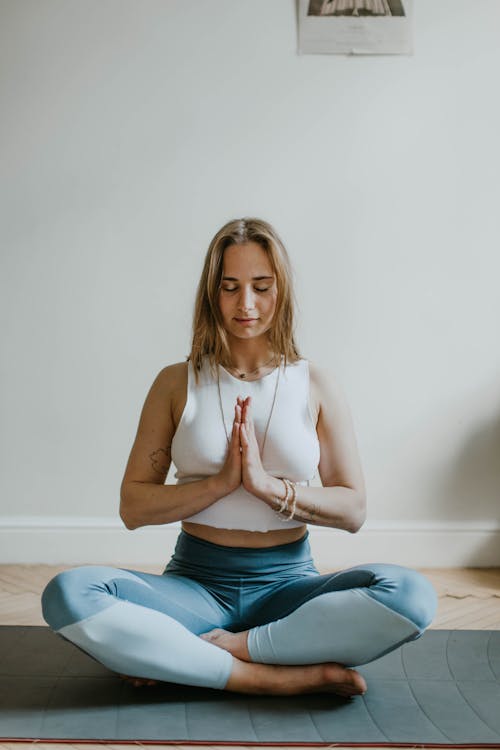

Woman Doing Yoga Inside A Room

WHAT EXACTLY IS MINDFULNESS?
Mindfulness is not just a way of thinking about others and their state of mind, but it can also be used a form of meditation. Using Mindfulness Meditation allows you to focus on the moment, becoming aware of your senses and what you are feeling right then and there. When you are able to focus just on that particular moment, there is no need to try to interpret things or make judgments about how you feel.

You are simply present.

If you have ever studied Eckhart Tolle or other spiritual teachers, you realize that the present moment is all that actually exists. The past no longer exists, and the future has not yet come. So focusing, being mindful, of the moment, can help you relax and eliminate stress.

Think about all the time we spend planning for, or worrying about the future, thinking negative thoughts about the past, worrying about all the things we need to do - pick up the kids from school, make dinner tonight, pay the bills, etc. All those things are draining and can even be exhausting. When you are able to be mindful, you are able to put those things away, and focus your attention on the present moment, which reduces your stress and anxiety. Mindfulness meditation can be very powerful!

WHY SHOULD I MEDITATE?
For years, spiritual teachers and their students have been practicing meditation, and espousing its benefits. Now, thanks to advances in modern science and medicine, there are actually many clinical trials that scientifically back up these claims. It is amazing that for hundreds of years people have known that meditation works, but there is always a certain percentage of the population that needs to know how and why before they will believe it.

There are so many studies now that provide empirical data as to the how and why of meditation, and its effects on the body and brain. Those studies are so diverse that they need to be in a separate article on their own. But suffice to say that the overall evidence of these studies show that meditation is effective for reducing stress, anxiety, pain, depression, and even a host of "medical" conditions and disease.

WHEN AND HOW OFTEN SHOULD I MEDITATE?
There is probably no such thing as too much meditation, especially if you are struggling with any of the issues previously mentioned. Studies have shown that there are certain times of day when meditation may be more effective than others. Those times are when the brain is emitting certain waves that enable it to be more receptive to suggestion and meditation. Books have been written on that topic alone, but for our purposes, for most people that time is before you go to bed, or right when you wake up in the morning. During those times your brain is emitting the proper waves and producing the proper chemical to allow the mist benefits from meditation. But as Dr. Joe Dispenza says, "There is no such thing as a bad meditation."

The best way to develop your mindfulness meditation routine is to practice, practice, practice. Do so, and you may be truly amazed with the results.


https://ezinearticles.com/?Mindfulness-and-Meditation&id=10175416

How to Cultivate Beginner's Mind

Children Multicolored Hand Paint

"In the beginner's mind there are many possibilities, in the expert's mind there are few." ~Suzuki

If you're a perfectionist like me, learning and creating while practicing "beginner's mind" is something you might find challenging. What is "beginner's mind" you ask? Beginner's mind is a concept from Zen Buddhism that encourages the practitioner to cultivate a sense of openness and eagerness. It asks that we let go of prejudgement when engaging in an activity. No matter what your skill level, it is helpful to bring a sense of openness, presence, and childlike curiosity to your creative endeavors.

Despite its name, beginner's mind is not just for beginners. Practicing beginner's mind even when we're "experts" can help invigorate our acting, our creative endeavors, and our everyday lives with a sense of wonder and "nowness." It can help bring us into the present moment.

What are some ways you can begin to apply "beginner's mind" to your creative life?

1) Allow yourself time to transition. Arrive early to a new class you're taking so when you get there you're not in an anxious and harried state. When you arrive, take some quiet time to center and prepare yourself for the experience. This can take many forms. For example, you might find taking a couple of minutes for meditation helpful, or perhaps journaling helps to quiet your mind. Find what works best for you and turn it into a ritual.

2) Breathe. I know it sounds simple, but there's a lot of wisdom in this simple reminder. When you breathe, you relax your body and create more openness. More openness in your body leads to more openness in your mind, your heart, and more openness to the present moment.

3) Have a sense of humor about yourself. Many artists (myself included) have a tendency to take themselves way too seriously. This cuts you off from the enjoyment of learning and also from creativity itself. You can't be fully alive and creative if your inner-voice is prejudging everything before you have a chance to utter the first lines of the monologue, put pen to paper, or wet your paintbrush.

4) Be curious about resistance. If you're feeling anxious about trying something new, ask yourself what is making you uncomfortable. Figure out why you are afraid of committing to the activity. Oftentimes, "This is stupid," actually means "I'm afraid of looking like an ass."

5) Don't be afraid of looking like an ass. As an artist, you have to be willing to risk looking like a fool. This requires some vulnerability on your part. I'm not certain of many things, but I am certain that nothing great was created without vulnerability.

The next time you find yourself in a situation where you're exercising your creativity, notice how you react to it. Do you allow yourself a sense of play and openness? If you do, you are practicing "beginner's mind." If you don't, don't beat yourself up- that only exacerbates the problem! Instead, breathe, take a step back, and remember the above tools. Happy creating everyone!


https://ezinearticles.com/?How-to-Cultivate-Beginners-Mind&id=9229011

Grab Energy From 'Nothing', the Pause


Person Holding Glass Ball

Can we imagine a speech without pause? No, it will be a meaningless series of words uttered.

Can we experience music without silence in between? No, it is caesura that transforms sound into a melodious tune.

The pause, the silence adds grace to our life. Our mind is in constant chase of materials, in the rat race expecting that the joy and happiness will occur only through winning that battle. However we deprive of the energy of present moment. In every moment we grapple in memories of past or we dwell in future with fear and doubts. Our mind behaves as if it is programmed to live in the cage of past and future.

We can't change! Fair enough! We can't change. Can we convert that cage into a beautiful garden to wander in by accumulating positive and empowering moments from past and by weaving dreams of grand creations?

How many times we enjoyed song of chirping birds? How many times we watched blooming buds? How many times we gazed the sky and acknowledged the mysterious existence of uncountable stars.

Not many! We leave it for an outing to be planned in future.

The nature is constantly thriving outside and within us. The nature is driving, everything and even our existence but instead of acknowledging her we live in illusions of mind.

A rain drop is falling from sky gives immense pleasure to creatures on the ground. When it settles on leaves and branches it becomes a unique glance when rays pass through it. When it falls on ground or merges in ocean it creates pleasant music and raises our hope. At every moment this tiny thing gives us immense joy, joy and joy only because it passionately enjoys its own journey without any hurries and worries.

If pause is so important then how can we create, enjoy and seek power from it?

Fill your heart with gratitude. Instead of thinking what you don't have be thankful for what you have and celebrate with it. There are many who don't have what you have.

At the start of the day be grateful that you woke up and you have a great day ahead. Promise to yourself that you will use this day to fullest by loving, by caring, by forgiving, by dancing, by smiling, by striving to do what you wish!

At the end of the day be grateful for the opportunity that you got to do various roles throughout the day, for receiving applause, for lessons learnt, all in all making that one step towards your dream.

Whatever be the situation, thinking of positive outcome is always a plus point. The moment you start worrying about future pick up paper and a pen and start listing the things you worry about, list reasons of your worry, list what actions you are taking for that positive outcome you wish to bring in. Facing the fear is winning half the battle!

Take a deep breath, feel it, trail around with it within you. No matter if you are living in midst of a city, you can't listen to song of birds, you can't enjoy blooming buds, the grand nature is thriving within us with the every breath passing by. Appreciate that!

Try doing this as often as regularly as possible and let this be part of your habit.

Can we do this every day? Every hour? Every moment? If yes then we acknowledge being nature's most beautiful creation, which we are, like that sparkling rain drop!

The life becomes infinite as we learn to live life every moment.


http://ezinearticles.com/?Grab-Energy-From-Nothing,-the-Pause&id=9542356

Why You Should Stop Boasting About How Busy You Are



An Accomplished Life

"Hi Tom, how are you?"

"I'm well Jane, just extremely busy."

"Oh, I'm glad to hear you're keeping busy then."

"Yes, I'm flat out at the moment."

The above interaction is one that takes place between people on a daily basis.

But what is behind the busyness?

Is it a way to deflect attention from what really matters?

People brag about their busy lives to highlight themselves living an accomplished life to their peers.

Similarly, they may wish to communicate how meaningful their work is and so it becomes a self-fulfilling prophecy.

Being occupied implies oneself is consumed with matters of significance. That is why people state their busyness, to have you know they are important.

Busy people struggle to keep their attention in the present moment because their focus lies in future events and planning for the next project.

"We become active and busy, but this doesn't actually move us any closer to success. Activity is often unrelated to productivity, and busyness rarely takes care of business," states authors Gary Keller and Jay Papasan in, The One Thing: The Surprisingly Simple Truth Behind Extraordinary Results.

I question those who have a hectic schedule as a method to divert their attention from connecting with their core self.

The title quote by the Greek philosopher Socrates, invites you to be wary of a busy life which can be barren.

The busy person is disconnected from others, simply because their attention is focussed on their own commitments. There is the impression of a purposeless life, masked behind the facade of a frantic lifestyle.

Busyness can be reframed to imply your pursuits are purposeful instead of busy.

Gary Keller and Jay Papasan affirm, "Don't focus on being busy; focus on being productive. Allow what matters most to drive your day."

Busy or Just Unproductive?

You can be busy but not productive and still chase your tail.

Beneath the busyness lies the unconscious desire to be rewarded for hard work.

People believe being preoccupied is impressive and associated with status. You must be pursuing something prestigious, otherwise you wouldn't be busy.

I'm reminded of an episode in the Seinfeld sitcom where the character George Costanza, played by Jason Alexander, walks around the office looking annoyed. He realises that being busy is associated with stress and works hard to uphold this facade.

He appears irritated, causing his supervisor; Mr. Wilhelm to fear George is cracking under the pressure of his work.

While this scenario is fictional, it shows how people unconsciously use busyness to draw attention to themselves.

Similarly, you may believe multitasking is indicative of productivity. Busyness implies being on top of things which is often the furthest thing from the truth.

"Productivity isn't about being a workhorse, keeping busy or burning the midnight oil... It's more about priorities, planning, and fiercely protecting your time," affirms associate editor at Psych Central, Margarita Tartakovsky.

The busy pandemic comes at a cost to people's well-being and happiness. You may find it difficult to disconnect from work to spend time with family. These are the pursuits that rejuvenate you instead of deplete you.

Busyness can be a sign of procrastination. It is a smoke screen to cover up being overwhelmed and in need of help to prioritise your life.

Consequently, those in the creative field will tell you they are absorbed in their interests and not busy with work.

It was the late Stephen R Covey, author of The 7 Habits of Highly Effective People who said, "It is possible to be busy-very busy-without being very effective."

The Demands of a Hectic Schedule


It is vital that you set clear boundaries if you wish to be fulfilled. Busy people find it difficult to say no since they do not wish to offend others or be seen as incapable.

I'm yet to meet a busy person satisfied with their hectic schedule. I'm certain they would trade their frantic life for: less work, more time and money.

Occasionally, you might be pulled by circumstances not of your choosing. Business may unexpectedly increase if you're self-employed as you try to meet the pressures of growing sales. But that doesn't mean you are happy if all you are doing is working to provide for the demands of other people.

You have a choice how you spend your time. To claim you are busy is failing to prioritise your time wisely.

"Everybody's busy. Everyone does the actions. But were they the right actions? Were those actions productive? Did you take a step forward? These are questions that most people never take the time to think about," reminds us author Jeff Olson in, The Slight Edge.

After all, what is the point of being busy and stressed to the point of exhaustion that your health and relationships suffer, just to improve your bottom line?

Surely, there's a more efficient way to work in the 21 century while enjoying more leisure time?

Busy people are prone to being overwhelmed if they continue to drive themselves hard. It is not healthy to run yourself into the ground and expect to stop at the drop of a hat.

Something must give. That may be as excessive drinking to help you wind down or toxic behaviours such as: compulsive eating, gambling or whatever distracts you from what is important.

We all have the same hours in the day and how you spend it is entirely up to you. Many people squander their time running around believing they are productive, when they are simply busy due to their lack of organisation and prioritisation.

"We are so busy being enticed by our next endeavour that we forget to savour what is already there and could be deeply meaningful. It is useful to remember the adage "The more things change, the more they remain the same" avows author Bernard Roth in, The Achievement Habit: Stop Wishing, Start Doing, and Take Command of Your Life.

A better way to reframe busyness is to state you are productive or engaged in what you are doing. Conversely, communicating you have taken on more than you can handle, is a step towards reclaiming your lost time.

This is not a cry for help, but exposing your vulnerability to those willing to help you better manage your time.

Find ways to be less busy and more engaged so you are in Flow, as the Hungarian psychology Professor, Mihaly Csikszentmihalyi espouses.

Busyness is a not indicative of a rewarding life if all you are doing is jumping from one task to the next.

Those who manage their time successfully hold on to it like it was their last breath. They prioritise what is important and so should you.

I invite you to think with the end in mind as Stephen R. Covey conveys in his teachings.

Only then will you appreciate what really matters and worth devoting your time and energy towards.


http://ezinearticles.com/?Why-You-Should-Stop-Boasting-About-How-Busy-You-Are&id=9551140

Message From the Universe: Enjoy Your Free Time on Earth!


"In my humble opinion, the best thing about living in time and space is having free time.

AND, of course, remembering that all of your time is free.

Yeah, big "and."

WOW, 
The Universe"

As per Wikipedia definition, "Time is a measure in which events can be ordered from the past through the present into the future, and also the measure of duration of events and the intervals between them. Time is often referred to as the fourth dimension, along with the three spatial dimensions."

All we have is time in our hands to accomplish our mission on earth. It is true that we are not aware of what is our mission so how can we know what is our purpose on this planet? Where to put our time so we can be the most efficient? We all have some free time in our hands and most uses that free time to enjoy it with the family and friends, or get some chores done, or practice a hobby. Whatever you decide to use your free time is based solely on your decision. Because of the fact that we have NO clue when is our last day on earth, we live our life like we are eternal, no worries in the back of our mind, especially if we do not suffer from any ailments or life terminal illnesses. There is nothing wrong with thinking this way and this is why we all need to live life the best we can. We can't be worrying about sickness, difficult challenges, ordeals, health issues and so on and so forth. The key is to take advantage of the time we have on Earth.

So what to do? Just like I said, go out there and enjoy yourself. Travel, spend time with loved ones, do the things you love doing, focus on becoming a better person to yourself and to others and never, and I say NEVER, live life with regrets. If you want to do something, do not wait. Tomorrow may never come so do it today. This mentality can be contradictory as I just said that we have free time in our hands, but you also need to read between the lines. Time is just an illusion. As per Scientific American, by Craig Callendar, published in June 2010:

"The present moment feels special. It is real. However much you may remember the past or anticipate the future, you live in the present. Of course, the moment during which you read that sentence is no longer happening. This one is. In other words, it feels as though time flows, in the sense that the present is constantly updating itself. We have a deep intuition that the future is open until it becomes present and that the past is fixed. As time flows, this structure of fixed past, immediate present and open future gets carried forward in time. This structure is built into our language, thought and behavior. How we live our lives hangs on it.

Yet as natural as this way of thinking is, you will not find it reflected in science. The equations of physics do not tell us which events are occurring right now-they are like a map without the "you are here" symbol. The present moment does not exist in them, and therefore neither does the flow of time. Additionally, Albert Einstein's theories of relativity suggest not only that there is no single special present but also that all moments are equally real. Fundamentally, the future is no more open than the past."


http://ezinearticles.com/?Message-From-the-Universe:-Enjoy-Your-Free-Time-on-Earth!&id=9533737

Expectation Is a Slippery Slope (By Sue Ellam)


Many schools of thought these days recommend releasing expectation, and thereby freeing ourselves. As most of us know, this is easier said than done. Personally, I think that expectation is the cause of much of the misery in the world today.

Physical expectations

When I was a teenager I remember meeting a young woman who was grieving for the loss of her life. Her life was dancing, and she had trained for many years to be a ballerina - her expectations were high and she had this big career all mapped out in her head. Her ultimate goal! Then the unexpected happened - she had an accident and injured her foot so badly that she would never be able to do pointe work. As far as she was concerned her life was essentially over.

How many people have been on a diet and been 'really good', but then hop on the scales at the end of the week to discover that have only lost 1lb, when they were sure they should have lost 2 or 3? How many have then felt the desperation and inner disgust that somehow they can't achieve what others seem to do effortlessly, and that somehow they are doing something wrong? How much happier they would have been if they had concentrated on health rather than weight and embraced any loss as a step in the right direction!

Then there is the serious matter of expectation of illness, as in 'cancer runs in my family, so I will probably get it' (substitute the word cancer for any illness of choice). The expectation of the illness, metaphorically keeping the door open for it to arrive, like an unwelcome but expected visitor, weakens us - it puts us into victim mode. Almost as though there is nothing we can do and that illness is a foregone conclusion. A better way to look at it would be to acknowledge that our family has a susceptibility to a certain illness, and then examine the diet and lifestyle of the people who have had it - which has often caused it in the beginning. By becoming more vigilant, we can often break the chain which means that our children won't be brought up with that same expectation.

The mind is a powerful thing and, if it isn't used correctly, it can have devastating effects on the body. I remember reading about a woman expressing concern that her brother would die when he was 41. On asking why, she said that all the male members of her family died at that age, going back several generations, so there was a strong expectation and 'family knowledge' that this would happen. Sure enough, her brother who had apparently been in good health, suddenly died before his 42nd birthday - as predicted. When asked about the female members of her family, she responded with confidence - oh, it never happens to us!

Mental expectations

We go to school, college and/or university and are told that if we work hard then we will have a well-paid and fulfilling job. When I left school the expectation was that I would have to work my way up the ranks for many years before reaching the pinnacle - whatever that might be! The expectation was that I would take a particular route (in those days the routes for women were predominantly secretarial, nursing or domestic science!) and plug away at it until I retired. Unless I got married of course and had the expected children. I remember being refused employment once, not because I wasn't qualified for the job, but because I was newly engaged and would 'obviously' be getting pregnant within a year or so and they didn't want to have to employ someone else at that time. This might even happen these days - but employers would be less likely to express the idea in fear of legal action!

It's very different these days and people leaving education will either have the expectation that there are no jobs to be had, so why bother. Or, they will expect to be able to live a laptop lifestyle, travelling the world, or at least be seriously wealthy by the time they are 30. I'm obviously generalising here, but you get the drift. The expectation has changed from belief in a long hard trek to the top of a profession, to almost instant gratification over the space of a few years.

The danger is that expectations become belief systems - which then become very hard to break!

Emotional expectations

Both physical and mental expectations tie very closely into the emotional ones - the emotions are what cement the belief systems and cause the ultimate pain and sorrow when expectations don't materialise.

How many people give love and affection to someone, in the expectation that they will receive equal love and affection back?

How many marriages don't live up to expectation? The 'happy ever after' being replaced by the mundane every day events, which is a natural progression after all. Initial expectations of any relationship can often be too high to be comfortably lived with on a day to day level. If divorce rears its head there is often a deep sense of failure attached to it, rather than recognition that people change from day to day due to their personal experiences, so the person who we married a few years ago won't be the same person we are married to today - and vice versa. The question is, can we grow together and release our expectations - or at least update them?

We have a habit of emotionally attaching ourselves to outcomes of all sorts:

  • Has our child/parent shown by word or deed how much they love and appreciate us?
  • Has our favourite entertainer let us down by not dressing well enough, not writing a better song or being caught in inappropriate behaviour?
  • Has our chosen spiritual/religious leader shown that they have feet of clay, or changed their own beliefs?
  • Has our favourite team won their game?
  • Has the 'wrong person' won that talent contest?
  • Has someone else got the job that we believed had our name written on it?
  • Has someone had the temerity to disagree or disobey us when 'we know' that we are better informed than them?

All this emotional input, which is dependent on other people fitting in to our own expectations, is exhausting. The only person we can control is ourselves, and we would be much happier if we focused on that and let other people do their own thing!
In conclusion

Imagine how much happier we would all be if we didn't attach our happiness to someone else's actions. We ultimately aren't, or shouldn't be, the centre of someone else's universe!

If we can release expectations of other people, and ourselves for that matter, life would become much more free flowing and pleasant. People would be more likely to want to be around us too as they wouldn't feel the pressure of having to 'perform' to please us!

I believe that the only expectations we should have is of ourselves and the Universe (or whatever name you call it by).

  • Our expectation of ourselves is to be the best that we can be, and do the best that we can do in service to others, whilst honouring ourselves and releasing any people or situations that don't honour us to the same extent.
  • Our expectation of the Universe is that it will have our back. It will provide the people and situations in our lives which will best suit us, help us to grow spiritually and ultimately make us happy! That we will be able to trust the process completely and relax in the knowledge that we are being looked after and always will be.

In this way, it will be easier to live in the present moment as we will more readily detach from the expectations of the future. We never really know what is going to happen - it's all just an educated guess really - fueled by lots of emotional wants and needs. Therefore, why spoil the present by continually looking to the future. After all, our future is created in the present moment, so we are only shooting ourselves in the foot!
I wish you all peace and happiness in the present moment, and a future full of the peace and happiness you have created right now!


http://ezinearticles.com/?Expectation-Is-a-Slippery-Slope&id=9813540

Manifestation is Absolutely Real


Throughout the ages, many leaders and common folk, religious and otherwise, have demonstrated the ability to manifest out apparent nothingness something that was required for the moment. Loaves and fish, great journeys, military conquests and lives of enormous luxury are the result of manifestation. These magnificent events in the history of humankind exist because the authors decided with conclusive certainty to allow them to exist. The people that accomplished great events were enlightened Manifestation Masters. Their power is available to you too.

Manifestation is a process used to create or allow circumstances, effects or material to exist. The beginning step is a conscious decision and absolute conviction to allow that which you have realized that you truly desire to be real. It cannot start until you know exactly what it is you really want. Vague ideas produce vague results, if any.

Once you determine and define that which you strongly desire, be it fame, fortune, love, inner peace or anything else, Manifestation can begin. You must be able to concentrate on what you desire, though, not the lack of it. To spend time wishing for something that is not there puts all your energy into creating more of its absence. Proper training into where to direct your thought energy is necessary for most people. Fortunately the material has already been gathered for you, for to search through centuries of writings of Manifestation Masters would take up a large part of your lifetime.

You must learn to concentrate in the very present moment, without distraction or resistance. Your thoughts must not be watered down with imagined worries or fears of what may or may not happen. To gather all of your energy together and imagine the worst case scenario of the existence you truly do not desire gives it a life of its own and you may well manifest this instead of what you do want.

The contemplation of what does not exist right now is why you begin your practice of manifestation, so this immensely powerful process must be trained on the correct targets. According to Quantum Physics, nothing ever can be created or destroyed, so therefore everything must already exist. You must learn truthful and accurate ways to manifest the proper outcome, or destroy your life in the process. Many people with enormous perceived potential spend their lives wandering aimlessly, because they concentrate on the lack of prosperity instead of the unfailing lavish abundance that already exists throughout the universe, and is available to anyone with the access to the keys.

When your thought energy is channeled along the right vectors, nothing that you can imagine cannot be created by you. All you have ever dreamed of is waiting for you choose, and manifest into existence for yourself. Manifestation is an omnipotent force that cannot be reckoned with, once set into motion. Learn the absolute reality of manifestation Computer Technology Articles, and all you crave is yours to accept.


http://www.articlesfactory.com/articles/social-issues/manifestation-is-absolutely-real.html

Stop Overanalysing Every Thought For Peace Of Mind



An Original Thought

A cascade of thoughts emerge from your mind with a life of their own. One minute everything is fine, the next you're trapped in a web of destruction.

The thoughts lead you down a trail of nothingness, overwhelming you.

How does this happen and why do you allow yourself to get caught up in the anxiety?

It's easy to become entangled in our thoughts because we experience them thousands of times a day.

Thoughts pass through our mind for no reason, and if we cling to them, they can cause emotional upheaval.

We give the most attention to thoughts related to our happiness and survival. Situations that disrupt our homeostasis are likely to result in overthinking.

However, overanalysing is a vicious cycle that doesn't achieve much other than cause stress.

"Just like the child, we get lost in mental events... The more we fixate on and pay attention to these complex mental events, the more intricate the web of complexity that we generate," states author and meditation master Orgyen Chowang in, Our Pristine Mind: A Practical Guide to Unconditional Happiness.

Contemplate this, when was the last time you had an original thought?

You may find it was weeks or months when you last encountered one. This is because you're accustomed to reacting to outside events, so your thoughts reflect what's taking place in reality.

Overthinking can lead to stress because our thoughts generate destructive emotions which affect our long-term health.

Our thoughts are harmful if we overanalyse them, instead of allowing them to pass through the mind unattached.

Recycled Thoughts

We're notorious for recycling thoughts, so much that it blemishes the present moment.

We're not really present but caught up in our minds.

Orgyen Chowang affirms, "The first step is to perceive that your mind is naturally pristine, and that your mental events are just passing through. You must deeply realize this."

Remember back to a time when you were engaged in a leisure activity such as: a sport, a hobby or spending time with friends. Recall how time passed by and you're absorbed in the present moment, not contemplating the future.

It's possible to experience more of these "flow moments" according to Hungarian psychology professor, Mihaly Csikszentmihalyi.

Being in the flow means to be in the zone. It involves being immersed in your activity, so your thoughts are present instead of stuck in the past or future.

To avoid overanalysing thoughts, you must first recognise that it's a natural process you must work with.

To accept we cannot stop negative thoughts means detaching ourselves from being invested in them. We don't get involved in the mental drama and allow thoughts to flow through the mind, unopposed.

I appreciate Orgyen Chowang's advice to practice meditation with our eyes open. He outlines three effective ways to bring our thoughts back to the present moment using the Pristine Mind meditation:

1. Don't follow the past.

2. Don't anticipate the future.

3. Stay in the present moment.

So, if we are overanalysing thoughts, we simply draw our awareness to the habit. This slows our overactive mind, so we become aware of what is taking place.

"If we want peace of mind and better self-control, we need to accept that it is impossible to control what comes into our minds. All we can do is choose what we believe and what we act on," affirms author Kelly McGonigal in The Willpower Instinct.

When driven by our impulses alone, we respond to what's taking place within. We experience runaway thoughts and emotions and wonder how we got there.

What if we identified we're overthinking and leaned away from the thoughts?

By practicing this simple process, your mind becomes attuned to experiencing thoughts without overwhelming you.

Thoughts are like horses tied to a chariot and you are the driver. If they suddenly take off, there's little you can do to slow the chariot. However, if you take the reins, you're well equipped to steer it in the direction of your choosing.

To appreciate the nature of your thoughts it's important we carve out time to relax in silence.

We're inundated with noise in our modern lives, we find it difficult to be alone in silence.

Yet, at some point we must set aside our phones, tablets or TV to carry out other tasks. This means reconnecting with ourselves and the natural flow of the mind.

"If you want to lead a more peaceful life, the primary focus should shift from external events to the inner, as a general practice," avows Jan Frazier in, The Freedom of Being: At Ease with What Is.

Many people say they have little time to meditate because their lives are too busy. It's these very people that meditation must become a priority.

Just because we can't see our thoughts doesn't mean everything is alright. During a crisis, we may fall to pieces and find it difficult to regain peace and happiness. This is because we have allowed ourselves to get caught up in the stress cycle instead of seeing it coming.

A good way to stop overanalysing thoughts is to move your body via exercise, even a brisk walk. This harmonises the body and mind so we become present, rather then dwelling in the past or future.

Do Thoughts Cause Stress?

Movement involves breathing which calms the body by activating the parasympathetic nervous system.

When overanalysing thoughts, we're caught in a sympathetic dominant state. This produces stress hormones that are catabolic. These stress hormones have an adverse effect on our long-term health if we stay in this state for too long.

The parasympathetic branch is the brake on your car whereas the sympathetic is the accelerator. If you accelerate for too long, you're bound to run out of petrol and grind to a halt or worse, crash.

The biggest movement in the Western world nowadays is mindfulness, which is bringing our thoughts to the forefront of our mind.

Psychologist and author Dr. Daniel Siegel has devised a strategy to notice destructive thoughts he calls, name and tame. When toxic thoughts emerge such as fear or anger, we recognise them and name them silently. In doing so, we become mindful instead of unconscious to our thinking.

Otherwise, we are at the mercy of our thoughts dictating our bad moods. This is clear when your mood changes for no reason throughout the day. Upon closer examination, negative thoughts have been brewing in your mind for days and have pulled you into a negative emotional state.

I enjoy Michael Neill's perspective in his book, The Space Within: Finding Your Way Back Home who states, "And the best thing about experiencing the peace of mind is that it's always available, regardless of who's disappointed in you, what they're disappointed about, and what you happen to be thinking about it at the time."

It's possible to find peace of mind with tranquil thoughts. However, it involves changing habits that no longer serve you.

If you're committed to reversing these habits, start by witnessing your thoughts more often.

Gradually, they will occupy less energy and you'll find life pleasant, without the inner chaos that often accompanies it.


http://ezinearticles.com/?Stop-Overanalysing-Every-Thought-For-Peace-Of-Mind&id=9525654

This Is How To Let Go Of Being Attached To Situations In Life

Woman Sitting at Ground Facing Grass Covered Field

"I have no idea of what tomorrow will bring, so I wish to prepare for it."

"You fear tomorrow - not realizing that yesterday is just as dangerous."

The delightful short tale by Anthony de Mello underscores the fact that our attachments to the past can be equally harmful.

We must release our hold of yesterday's concerns and bring our awareness to the present moment, if we desire to seek contentment.

It's a given that most people want to experience happiness and joy. There are many ways to achieve it and while some attain it, others don't. However, it is no less a central desire to seek fulfillment in our everyday life.

We want happiness to fill the cup when pain overflows. Yet the irony is we experience more pain and suffering than joy allows.

We attach our desires to people and situations, holding on tighter than we should. We stress about matters that impose upon our happiness and become discouraged.

Things don't always go as planned. People let us down. The road ahead gets bumpy.

Buddhist author Lama Surya Das writes in The Big Questions: How to Find Your Own Answers to Life's Essential Mysteries: "As Mark Twain said, 'It's not what we don't know that gets us in trouble, but what we are sure we know'. We attach to one or more particular ways of seeing ourselves that, neither accurate nor helpful, entrap us in mind-forged manacles, self-limiting beliefs, and unfulfilling, misdirected behavior patterns and desires. We fall into living as we are not and lose who and what we actually are."

The Art of Detachment

Detachment means to disassociate yourself from intended outcomes. It requires letting go of fixed ideas how life should be.

If you commit yourself to getting what you want, you set yourself up for pain.

For example, if you base your day on your partner's mood or getting the next promotion at work, you allow outward conditions to dictate your feelings. You are trying to control your world instead of trusting the process of life.

"Normally we think we see reality, but what we see is our own subjective perceptions, filtered through all of our associations and desires, as well as through language and conditioning," states author Ezra Bayda in The Authentic Life: Zen Wisdom for Living Free from Complacency and Fear.

Let Go of Attachments

This requires practice, though it is possible to let go of attachments that no longer serve you.

You might ruminate on the past and hold on to things that don't matter anymore. What if you were to enjoy the richness of the present moment instead?

Make it a point to let go of anything that's not for your highest good, especially expectations.

Do you often worry about the future?

Do you base your feelings on whether you are moving forward in life?

Either way, make it a priority to let go of attachments by cherishing the depth of each moment. Move beyond your negative thoughts and allow life to be exactly as it is.

Letting go is grounded in the wakefulness of the present moment being perfect as it is. Whilst you expect things to be a certain way, detachment means to let go of these thoughts.

"When we see through our attachments by fully experiencing them, the result is freedom. When we can see and experience life without the filters of our judgments and demands, the result is appreciation and the quiet joy of being. When we see through our fears, the result is love," states Ezra Bayda.

Let Go of Expectations

Expectations set you up for disappointment. Whilst it's normal to receive respect and love from others, sometimes people don't return the respect or love you deserve. Happiness means acknowledging this, so you avoid hanging your hopes on people fulfilling your emotional needs.

If we are attached to life being a particular way, we are assured of being hurt when things do not follow as expected.

The solution, you ask?

Let go.

Consider psychotherapist David Richo's view in The Five Things We Cannot Change: And the Happiness We Find by Embracing Them: "We cannot take refuge in feeling good, because that cannot be sustained. What is sustained and sustaining is a yes to what is, 'taking the good with the bad'. This can only happen when we have no attachment to how things should be."

Let Go of Outcomes

Do you want to work toward your goals and dreams while letting go of outcomes?

Focus on pursuing what is meaningful and give it your undivided attention. People pursue what they consider will make them happy, yet remain miserable now.

To work towards a prosperous future, flow with the currents of life instead of being on a roller coaster ride of ups and downs.

Steady is the way.

Author Jan Frazier offers the following wisdom in The Freedom of Being: At Ease with What Is: "When you are free, you no longer experience attachment - to the roles you play, to possessions, to ideas, to the outcome of action, to the people you love. You are free of ferocious desire, of the driving 'need' to get (and keep) what you want."

Fulfillment Comes From Within

As much as we want to believe that success and happiness happen 'out there' - it simply isn't true.

Happiness and fulfillment emerge from within.

Ask those who are content what their secret is and many will tell you, they learned to simplify life and let go of attachments.

They loosened their grip and allowed life to serve them. They are grateful for the pleasant and unpleasant moments because both experiences contain the seeds of opportunity for growth.

They are unattached to how life should develop and trust every experience serves their highest good.

Think back to a time you released your attachments to something.

Maybe it was resentment or holding on to a particular point of view. As you let go, you no doubt felt relief and moved on.

That is the significance of letting go. You let go to move forward, instead of dragging the past behind with you.

"When you are unattached, you have inner freedom. You have no investment in a particular outcome, and so you do what is necessary in the moment. You explore every option and are receptive to all new information. You do all that you know to do, and then trust, because you have no attachment to either the result or how the result is produced," affirms authors Charlene Belitz and Meg Lundstrom in The Power of Flow: Practical Ways to Transform Your Life with Meaningful Coincidence.

So, release your hold on tomorrow. Do not blemish the present moment with your attachments of how it should be.

If you are anxious about a particular matter, simply let it go. Drop it as though I were handing you a hot piece of coal.

Keep letting go until you get to a place of nothingness and have released all attachments and suffering.

Only then will you know true peace and joy in its entirety.

http://ezinearticles.com/?This-Is-How-To-Let-Go-Of-Being-Attached-To-Situations-In-Life&id=9711468

Can Mindfulness Help You Overcome Anxiety?

Do you suffer from anxiety? If you do, you will understand just how debilitating this condition can be.

The worst aspect of anxiety is that it is often well hidden by the sufferer so the people around you are not aware of what is happening to you. What if someone told you that there is an exercise that you can learn to do in just a few minutes that would not only help you cope with your anxiety but also reduce it over time?

Mindfulness is an incredible skill, it is a practice that is taking the world by storm and helping more and more people live in their present.

Anxiety stems from your mind worrying about possible future events or reminiscing over past events. Anxiety makes us believe that dreadful things will happen. But what we don't realize is that while we are stuck worrying about a future that has not yet occurred or a past that we cannot change; the current moment is wasted. We miss out on the beauty and opportunities that are present all around us. What a sad thought.

Many people with anxiety feel that they have no control over their thoughts and this can make them feel frightened and powerless. When you are constantly bombarded by negative ruminations it is difficult to break out of the cycle of anxiety. Instead of allowing us to enjoy the present moment it forces us to live out painful pasts or imagined futures endlessly.

Psychology studies have shown that there are many benefits of mindfulness, especially for those suffering from anxiety. The secret lies in being able to gain control over your thoughts. Mindfulness has been shown to lower anxiety and stress as well as the fatigue that it causes. Over time, it has also been shown to improve memory (which is often negatively affected by anxiety) and improve reaction times.

Is mindfulness the same as meditation? Well, it is similar in some ways. Meditation also teaches you to focus your mind on the present by centering your thoughts on your breathing. However, they do differ because whereas meditation generally requires a quiet atmosphere, mindfulness can be practiced at any time and during any task. The aim of mindfulness is to focus on the senses to help the sufferer experience the moment, free from worry. That is what makes it such a powerful tool in combating anxiety because we all know that anxiety doesn't wait for a quiet moment to strike us.

Damaging and out of control thoughts can rob us of the ability to enjoy our present. Once you have practiced mindfulness you begin to find yourself automatically pushing aside these crushing thoughts and paying attention to your senses and the world around you. This is a skill that could truly change your life and help you break out of anxiety.

http://ezinearticles.com/?Can-Mindfulness-Help-You-Overcome-Anxiety?&id=9407726

Learning About Mindfulness Through Baseball (By Christopher Shea)


Image result for mindful


In my writings and videos I often speak and write about mindfulness. In talking about mindfulness I emphasize the present moment, yet I am aware of how our past and our future work together. The definition of mindfulness instructs us to live in the present moment, nonjudgmentally. What is meant by the term "nonjudgmentally"?

When we speak of the term "nonjudgmentally", what we're saying is that we need not put a value judgment on the present moment, rather, we are simply to experience the moment. The minute that we think this is a good moment or a bad moment, the minute that we label our emotion, anything that we do to put a term or a definition, a label, as to what is happening, we have now judged that moment. The issue with placing judgement on our present moment means we lose a bit of the experience because in our judging, we've already made a determination within ourselves as to what we feel is happening. A problem is that our judgement may not be true to the experience. We may not be feeling or experiencing the moment the way that we think we are, so if we spend some time feeling what we feel before we label it as good, bad or otherwise, we might come up with a different experience.

For example, let's say that you're not a fan of baseball. I mention baseball as I personally do not enjoy this sport. I enjoy sports, but baseball I just don't understand. I don't understand how people can sit around and watch a player hit a ball, run to a base, and then stand around for some time. Part of this judgment for me, and this is my judgment, comes from my childhood. When I was really young, I don't remember my age, I played Little League baseball. I had my mitt, went to practices and enjoyed the experience. As a young kid I wasn't complaining about being outside hitting a ball and running around. On the team I was placed in the outfield, on the right. From what I know of Major League Baseball, if you're placed in the outfield, especially center field, you're playing an important position!

But when you're five and six years old, outfield is not the place you want to be. When you think about kids that age, even the best kid that we played against, the hardest hit they would have might get the ball over second base if they were lucky. My time in the outfield was therefore spent staring at the clouds, staring at the grass, or picking the dandelions. That was my baseball experience. So when somebody talks about baseball, or asks me to go to a baseball game, part of me, unconsciously, goes back to my childhood moment in Little League and so I think to myself, "You know what? That's boring." So the moment when someone invites me to a baseball game, and I actually go, I am going with my preconceived notions.

So where does the term "nonjudgmentally" fit in this example? If I were to go to that baseball game and consciously reflect on my experience; watching everything that's going on, paying attention to the stats, who's hitting, who's catching, who's in what position, what does this hit mean, what do these signals from the coaching staff and the catcher mean, etc? If I spent time focused on my current experience, not my experience from childhood, I might like the game.

It's important for us to be aware of our judgments while we focus on the present moment. I think that's where we end up finding our inner peace; in the letting go of our judgments in place of how we currently feel and currently live the moment. When we start to feel what we feel and take in the experience, then we learn about the life around me, and therefore we learn a bit about ourselves.

Through the process of sitting in meditation or consciously observing my daily life, that which I take in begins to influence my life. Over time we become more attuned to looking at and noticing the small things. The more that we get attuned to noticing the small things, what we'll eventually begin to notice and encounter are the small, yet important, things within ourselves. That's when we discover what in ourselves we need to change, so that when we make that change, we are doing so in such a way as to be mindful about it. We consciously make a thoughtful change.

To live mindfully takes daily practice allowing for some failure along the way. A continued daily practice will eventually lead us to our inner peace. Inner peace is not far from our grasp. We have the ability to live in peace if we have the desire for peace.

http://ezinearticles.com/?Learning-About-Mindfulness-Through-Baseball&id=9351330