Showing posts with label uncertainty. Show all posts

Uncertainty The Choices And Consequences (By Tim Connor)

Oswald Chambers once said, "The only thing that is certain is uncertainty."

Uncertainty definition - "the state of being uncertain - times of uncertainty and danger." Well, that was really helpful.

Here's mine - When we don't know what the future, whether the next minute or the next year, has in store for us, will challenge us, help us, support us or cause chaos for us or is either positive, neutral or negative.

A little better, but definitions can often be challenging since words can be interpreted differently by everyone. For example - how would you define; challenge, the future, problems, success, failure, or uncertainty? OK on with the details (if you are still with me).

In times of uncertainty we have three options; wait, quit, or act. Let's first look at each from a short perspective. Waiting in some situations is stupid and in others a wise choice - what's the difference? If you are waiting to act for something you can't control, want to improve or disappear it's wise. If you are waiting for outcomes for something you can have influence or creative responses over - stupid. How about quitting? Quitting can be either wise or stupid. Quitting is stupid if you have failed to evaluate, consider, or effectively interpret circumstances. It is wise if you have exhausted all your options, resources, approaches, and energy, and you just can't change or improve the future outcomes no matter what. And finally, you can act.

Acting when you have limited experience, resources, energy, time, skills, desire, clear direction, goals, etc. is stupid. If you have all of these and are filled with confidence and resilience acting is wise. So regardless of whether a situation requires quitting, acting, or waiting the common thread is wisdom's ingredients. And what are these - when in doubt listen to your gut, inner voice, heart, and consciousness.

Let's take a more in-depth look at your three options and their benefits and consequences.

There are five concepts however that you need to consider before we dig into the details.

1) The number one contributor to death is stress. The number one contributor to stress is impatience. The number one contributor to impatience is the need for control. And the number one contributor to the need for control is fear of the unknown.

2) Doing anything - driving, eating, exercising, working, etc. faster does not give you one more minute of life.

3) Everything changes evolves, ends, grows, or dies sooner or later.

4) Letting uncertainty in the future have a negative impact on your present will contribute to a life-time negative impact on your past.

5) Everything in life has consequences; some are positive and some are negative. Some are short-term while others can take years or even a lifetime to materialize.

OK, let's take a more detailed look at; quitting, acting, and waiting.

Quitting - Ever quit anything too soon - a relationship, a project a hobby? Quitting is only easy when you have given up - emotionally, financially, physically, etc. The problem is that most people don't want to quit, they just want to want to quit. See the difference? We want the option to bail when we feel circumstances, results or expectations don't equal our goals or actions.

To be honest, I have quit a few times when in hindsight years later looked back I realized I should have hung in there just a bit longer with more energy, more patience, more resolve, or more tolerance. Been there?

Uncertainty can create a great deal of emotional tension that many feel the need to manage or fix with action now, decisions now, something now, anything now. Sometimes immediate action vs. quitting can be beneficial but far too often quick or knee-jerk responses to challenges or unknowns can lead to disaster, unnecessary failure, or costs emotionally, financially, or physically that could have been avoided.

So, how do we know when not quitting is the right or best option to uncertainty or unknowns. You are not going to like my answer but here it is anyway - it depends. Depends on what Tim? It depends on your degree of commitment, investment, patience, a willingness to let go or surrender, your ability to learn before you quit, and your desire to ensure that whatever the outcome - it will be better than giving up or throwing in the towel.

No one knows what lies around the next corner in life. Oh sure you can try and predict, hope, dream, work like crazy and pray but in the end, life is uncertain every single day of your life. After over forty years of speaking around the world, I have learned a great deal but one thing stands out - if you can control it - do something - if you can't control it - chill, relax, breathe and use the time to learn, grow and get wiser. But quitting is far too often pre-mature and stupid without adequate evaluation, consideration, research, etc. I hope you notice the connection between these three options - quitting, waiting, and action. If not you have missed the central message in this article. They are all connected in one way or another. The secret is to learn to make the best use of the combination of the three options. Keep reading and it will come to you.

Waiting - Ever had to wait for a call from your Doctor with the results of a biopsy?

How about a decision from a potential new employer where you have applied for the job of a lifetime? Or a client who is considering making the biggest purchase of one of your products in your career history? Or how about little ones - a retuned call from a potential new date candidate for a possible relationship? Or, just an email or text response from one of your kids? This list of things we wait for is endless and I will guarantee as you are reading this article you are waiting for something from someone or something.

A basic fundamental of the character of uncertainty is - no one knows; when where, how, if, whether, etc. All we can do is hope, dream, pray, and yes wait. But there are two kinds of waiting. One is with wisdom, intelligence, and maturity and the other is with pride, arrogance, ego, or impatience. Which tends to be your approach?

The outcomes to both are significantly different.

Waiting with wisdom or intelligence is grounded in knowledge, experience, accurate information, and common sense. Waiting with the other approach leads to stress, resentment, blame, anger, regret, and disappointment. Yes, sometimes there are actions we can take while we wait and other times - all we can do is just wait.

Trust me I understand the concept of waiting. After speaking in 25 countries and I only speak English - trust me - I have had to wait a lot for a lot of things and didn't even know what I was waiting for or why.

Been there?

Keep in mind - you can't control the weather, the stock market, others' behavior, the traffic behind you, or in front of you, need I go on? One thing I have noticed about mature people is their ability to wait when they can't control stuff. One of my life mantras is simply - 'I will not let your behavior determine my behavior'. Is this always easy - no way. When I am traveling the speed limit and an idiot is behind me on my tail beeping at me and flashing their lights for me to go faster, it's not always easy to just ignore these idiots.

Waiting style demonstrates a person's maturity, common sense, wisdom, and intelligence.

Acting - And the last action - acting.

There are four elements involved in acting and they are - the how, the when, the who, and the where. For example, let's say you were just laid off from your position. Your spouse doesn't work, you have three kids and a lot of bills and the economy is sucking wind. I know I have been there - twice.

No one is hiring, you have limited special skills and limited cash to self-promote yourself. So, the four elements mentioned above.

How - You have to earn some cash so the kids don't starve. Part-time job, two part-time jobs, reach out to family or friends, file bankruptcy, sell your house, take a job as a dishwasher in a restaurant, live on unemployment as long as it lasts - the options are limited or unlimited depending on your definition of your circumstances. And your definition will determine how you respond. The answer - spend a few hours every month reading, learning, growing in important life areas and I'm not talking here about survival tactics but just "life stuff" like improving skills in communication, emotional maturity, negotiation, money management, etc.

The when - do you have time to wait, reflect, consider, etc. or do you need to do something now? The when will determine how you handle the "how". The answer - Read the book "The Power of Patience" by Ryan.

The where - This one can vary depending on the circumstances - where you live, where you work, where you play, where you do anything or everything. The answer - if you live in the city, now and then take road trips into the suburbs or the country to get familiar with different areas. Once a year I take a week road trip to a new area within 500 miles of where I live. If you live in the country, now and then spend a weekend in the city. And why - to get rid of any fears about areas you are unfamiliar with.

The who - This one depends on your relationships with; family, friends, neighbors, fellow workers, customers, employees, etc. If you have people you can count on or ask for help, guidance, etc. consider yourself fortunate as many people lack these resources and have to go through uncertainty and challenges alone - again I'm not preaching to the choir - I've been there. Sometimes, even if you have these resources you might be unable to ask for help for any number of reasons. The answer - spend time developing relationships with people you can count on if you ever need help, support, or guidance in the future. And, find ways to be of value and service to others who may some day come to you for help.

Well, that's it - during uncertain times, and I am familiar with them having been through four recessions during my speaking career, you can; give in, point the finger, whine, blame, or learn, grow, change, adapt and win. It's a choice.


https://ezinearticles.com/?Uncertainty-The-Choices-And-Consequences&id=10323943

Uncertainty - Aligning Yourself With Ease

Uncertainty shows up often when we want to transform the current paradigm. We try to avoid the uncertainty by keeping everything under control. So it is our job to reduce uncertainty for ourselves and for those that we work with. It is to reduce what is unknown. Otherwise our need to hold on to and control outcomes actually provides the total opposite in effect.

What you are doing in every day every moment is changing the foundation you are standing on. You are in a period of a new paradigm with so many changes occurring fast furious and often getting unnoticed.

A new paradigm

When do you ever question the way of doing things - e.g. when there is any kind of dispute or if there is argument is your response often on autopilot. When you speak to someone business about your work or becoming a force to change the world, and get paid to do it; do you renege and go back to what you know as practical and safe. When you argue for something that is bad and you know is bad; and because it is what is accepted, do you want that to be your truth. Arguing for what is called the 'norm'.

It is our belief even though it may be uncomfortable, when we argue, we argue for our own limitations - getting caught in resisting change. Just one big hold that keeps us clinging to the old paradigm! SAFE and RISK FREE(!)

Try this:

  • What areas of your life do you need certainty?
  • Where do you feel out of your comfort zone?
  • How do you feel to take a quantum leap in your career?
  • How much money are you prepared to invest in yourself?
  • At what point does the amount of money you invested in yourself feel uncomfortable?
  • When is it not okay for not being all right?
  • Do you ever feel it is not working the way you want it do?
  • Are there feelings of unworthiness or do you feel you have to fit in to be accepted?
  • It is safe to...
  • It is possible to...
  • Will I keep my identity if... ?
  • I give myself permission to...

Transform form uncertainty to certainty

Uncertainty will always be there yet it is your task to transform the current paradigm by acceptance to calm the raging storm. Yes, you want to reduce what is unknown and the only way to do this is to connect to that part that loves chaos rather than the part that is resisting it.

  • Build uncommitted time into your life so you can deal with the unexpected.
  • Allocate time for yourselves and lock it in.

It is easier on your ego to build a nourishing relationship that loves change and uncertainty.

If you can grab into that part than you can bring into your life a fuller wisdom and knowing.

When you know yourself and accept your own place in your world, in your field and in your life, you know you are good enough you can stand apart create the certainty you need with ease.


https://ezinearticles.com/?Uncertainty---Aligning-Yourself-With-Ease&id=10299076

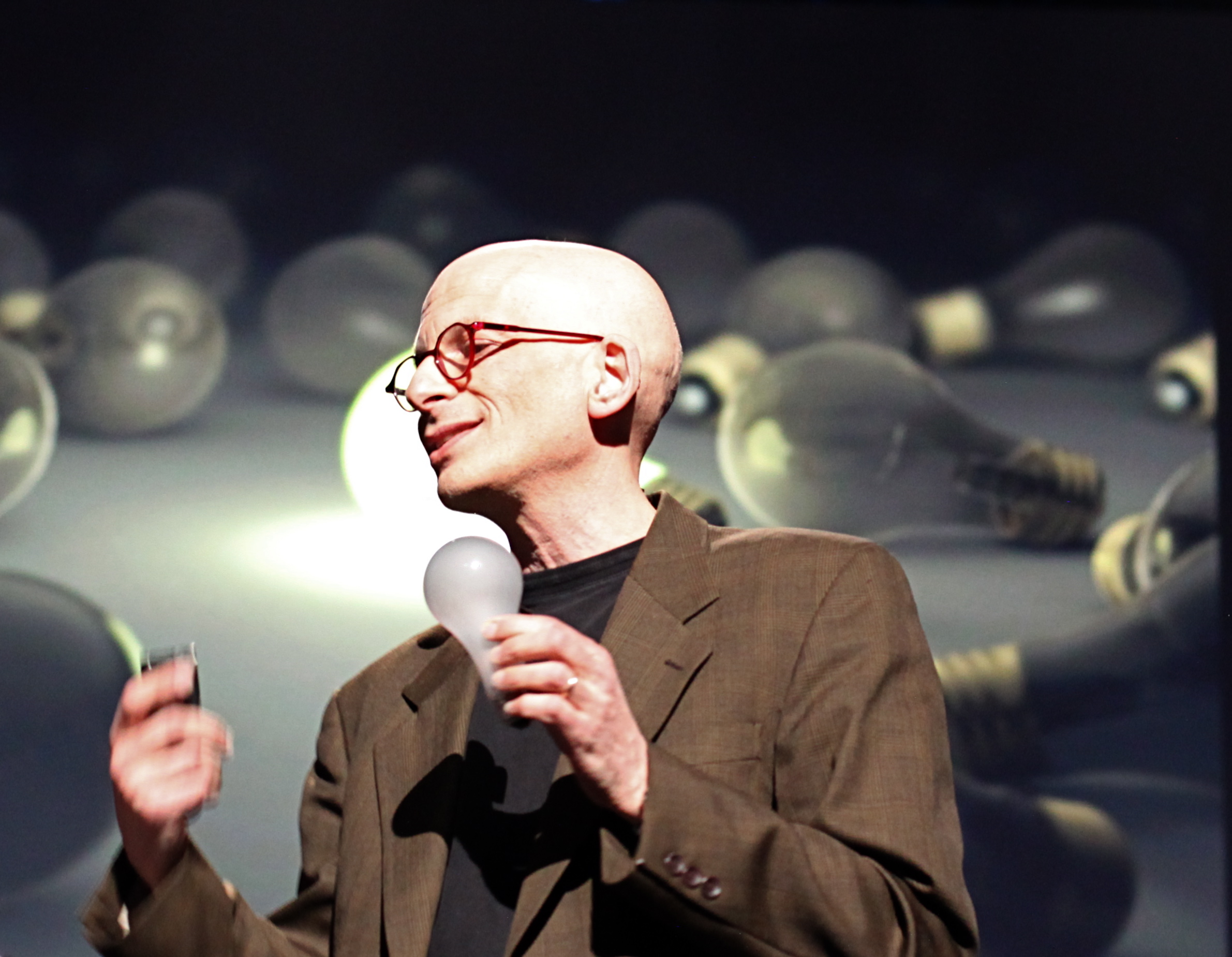
Lessons from Seth Godin on Embracing Uncertainty


If you're an entrepreneur you understand what is sometimes referred to as "the struggle." You know what I mean, right? The struggle is that state you're in right now trying to make things happen. You're hustling, building relationships, and you understand that after it all things might not work out.
Maybe you've got a great idea but you don't have the right team yet. Maybe you got your A-round of funding but you're burning through money way too fast--and need to explain and answer to an impatient investor group why you need more cash.
Those who can stomach the risks and rewards of "the struggle" have probably come to terms and become comfortable with uncertainty and possible failure.
Bestselling author and marketing guru, Seth Godin, takes embracing uncertainty and failure to the next level. In my 2011 interview with him, Godin said, "If I fail more than you, I win. Because built into that notion is you get to keep playing. If you get to keep playing that means that you get to keep failing. And sooner or later you will figure it out. The people who lose are the ones who either are afraid to fail and get stuck or they fail so big that they never recover to play again." 
This concept isn't entirely new and may conjure up things your grandpa used to say like, "If at first you don't succeed, try, try again." Or maybe you think of inventor Thomas Edison and the fabled 9,000 or more failed attempts to perfect the light bulb before getting it right.
For a more recent example we can look at Godin's (now legendary) Kickstarter campaign. After a run of hits books like The Dip (Portfolio 2007 ) Tribes (Portfolio 2008) Linchpin (Portfolio 2010) Godin took to Kickstarter to ask his readers to help him prove to his publisher that fans were clamoring for his next work of art. His goal was $40,000 goal to justify writing his next book, but 30 days later he had raised over a quarter million dollars.
While you might not be able to raise that kind of money that quickly, Crowdfunding platforms like Kickstarter and Indiegogo are a great way to leverage your fan base or contact list. Godin said it best when he explained what crowdfunding is good for:
“This project on Kickstarter is my way to organize the tribe, to send a signal to risk-averse publishers and booksellers (who have limited shelf space and limited paper). We can let them know loud and clear that this is a book that's going to get talked about. Kickstarter coordinates and it amplifies.”
Seth took a (reasonable) risk by putting it out there publicly to succeed or fail. Do you have a project that's paralyzing you because you're afraid it might fail? Are you loosing sleep, not because your passion drives you into the wee hours of the night, but because you feel the pain that can overwhelm you because of stress over stuff that might not work?
Take comfort in knowing that it's all part of "the struggle." The magic often happens when we embrace uncertainty and lean into the curve balls. Godin leaves us with these sage words: "I don’t think Yoda was right when he said 'Do or do not, there is no try.' There IS a try. Try is the opposite of hiding."

10 Signs It's Time For A Major Life Change

While there are plenty of happy changes we seek in life — new relationships, a makeover, a car — for most of us, change represents uncertainty. With uncertainty comes insecurity and worry.
The truth is that change isn't always a joyful, happy time, but rather a time to act like things are unfolding perfectly. That's what it seems to be for a lot of us: that stuff you have to plaster a smile over and pretend to embrace, even when your heart is drowning.
Most of us want change as much as we are afraid of it. We say things like, I'm so unhappy in my marriage, but I'm afraid of being alone. I'm sick of working in corporate, but I have no idea what else I would do. I can’t stand where I live, but my home is paid off.
When we resist change, it's because we're still holding on to what the universe is asking us to release. Whether it's planned or unplanned change, we are being asked to re-examine our life and consider what direction really matters most.
Change is part of life. And whether you like it or not, it's going to take place with or without your approval. It could be something pint-size (your favorite ice cream joint shut down), or gigantic (death, divorce, or disability). The universe has a natural way of balancing things out.
Based on my own experience and that of hundreds of clients, change is much more enjoyable if you make a change instead of waiting for the universe to do it for you.
Here are 10 signs it is time for a life change.
1. When you romanticize the past to escape the present.
Ask yourself why you're afraid to look at the present, and take steps to create a more positive situation.
2. When you resist unexpected opportunities out of fear of the unknown or what others will say.
Instead of holding onto what isn’t working, be open to letting go so you can make room for what will work.
3. When you feel numb.
When we feel numb to life, it's because we've lost passion and motivation.Ask yourself if you're just going through the motions. Try doing more of what you love each day and watch your inspiration come back.
4. When you’ve lost all passion for your current situation.
Be willing to let go of what no longer serves you. Some situations, places, hobbies and people have expiration dates. As you grow and change, so do your passions.
5. When you start to lie to yourself and others to avoid the truth.
Lying creates inner turmoil, shame and guilt. Instead of festering in these feelings, ask yourself what you're running away from and are afraid to admit.
6. When your actions don’t align with your words.
Actions will always speak louder than words. If you aren't doing what you say, ask why you're over promising.
7. When your relationships feel superficial.
Sometimes breaking up with a best friend or romantic partner is the best thing for your personal well-being.
8. When you feel disenchanted with life.
Staying in situations that no longer serve you always produce a by-product of discomfort. Give yourself permission to follow your heart and step into your future.
9. When you sense you are settling.
Repeat the mantra, “I do not settle. I am worthy of my desires and believe in my well-being.”
10. When your mind drifts to better ways of being.
Trust the nudges coming to you. These inspirational pushes are the catalyst to propel you into a happier and healthy life.

How to Tell if You Suffer From Anxiety


Anxiety is a type of fear usually associated with the thought of a threat or something going wrong in the future, but can also arise from something happening right now.
Anxiety can be so bad that an individual suffering from it can find it hard to enjoy life. If it really gets out of hand, anxiety can interfere with the way we relate with loved ones thus isolating ourselves.
Around 1 in 6 people in the UK will experience a mental health problem like anxiety each year, which has steadily increased over the past 20 years. It is also likely that individuals do not seek help for significant levels of anxiety, meaning many remain without diagnosis or treatment.
Below are Signs and Symptoms
Life is full of potential stressful events and it is normal to feel anxious about everyday things. There can be a single trigger or event that raises anxiety levels, but generally there will be a number of things that increase anxiety levels, including knife crime, superbugs, terrorism, exams, work deadlines, how we think we look, going on a first date or whether we feel safe travelling home late at night.

The daily round of bad economic news and uncertainty about the future makes us all feel more fearful and insecure.

Anxiety has a strong effect on us because it's one of our natural survival responses. It causes our mind and body to speed up to prepare us to respond to an emergency.
The following are some of the physical things that may indicate anxiety:
·         Rapid and / or irregular heartbeat
·         Fast breathing
·         Weakened / tense muscles
·         Sweating
·         Churning stomach / loose bowels
·         Dizziness
·         Dry mouth
Anxiety also has a psychological impact, which can include:
·         Trouble sleeping
·         Lack of concentration
·         Feeling irritable
·         Feeling depressed
·         Loss of self-confidence
It can be hard to break this cycle, but you can learn to feel less worried and to cope with your anxiety so it doesn’t stop you enjoying life.
Causes of anxiety
Feelings of anxiety can be caused by lots of things and vary according to what you’re worried about and how you act when you feel apprehensive. They depend on lots of things such as:
·         your genes
·         how you were brought up
·         what’s happened to you in your life
·         the way you learn and cope with things.

Just knowing what makes you anxious and why can be the first steps to managing anxiety.

Written by Hannington Mutungi