Showing posts with label healthy. Show all posts

There Are Three Types Of People

Yes, there are millions of types of people but, they all fall into one of three categories (for the sake of this article) - yes people, no people and maybe people. Let me explain.

But before I do, let me be clear - your response to the following will tend to be an automatic quick reaction to what you read. In other words, you will be an example of what the point of the article actually is - you will have a yes, a no or a maybe response to the content of this article and what and how I share it. OK, now that that's out of the way, on to the substance.

Yes, people are not pie in the sky optimists but tend to see the world as half full vs. half empty. They tend to have open minds even about things they are uncomfortable with or know little about. Their first reaction to meeting new people, new ideas, not opportunities and yes even new problems and challenges are - a yes - I can do it, I can figure it out, I will make it work, I won't let it derail me, I won't let it ruin me, I won't give it control over me etc. They are not always easy to persuade or influence just because they are yes people, but they are more open and receptive to new and different stuff, ideas, people, and circumstances.

No people, on the other hand, are just the opposite of yes people. Their first responses to most stuff is a quick - no - I can't, it won't work, it's too expensive, too cheap, too old, too new, he's too arrogant, she's too short etc. get it - these folks are closed off from almost anything and everything that represents new, change, better, different etc.

And then there are maybe people. These folks can go either way - yes or no, but their reaction and responses will generally be governed by a number of factors. Their need for approval, their need to avoid rejection, their self-esteem, their desire to avoid conflict, their desire to contribute to positive outcomes regardless of whether they are based on or grounded in truth, reality or evidence. They have decision phobia when any of the above situations are in play. Yes, they can be yes people, but when it suits the circumstances, environment or outcomes and yes, they can be no people depending on the same issues. A few things to consider and I'll keep them short.

What are the major contributors to which group a person is in?

Your upbringing and early conditioning by parents, caregivers, churches, schools and teachers, relatives, friends and anyone who had temporary or permanent influence over what you learned, what and who you were exposed to and everything you were taught. Most psychologists agree that a person's self-esteem is established at the latest by age 10. So, before you hit your teens you tended to be a yes, no or a maybe person.

Can someone successfully switch groups permanently?

Yes, but it's not easy and takes time, a lot of effort, great patience, focus, new learning, a lot of will and a great deal of desire to change. It's harder for no people to change and it takes more time for a maybe person to change.

Which group tends to be happier and more content?

What do you think? And why - if you were right - It's yes people. Can no or maybe people be happy and content? Of course, but it's not an easy journey for them.

Which group tends to be more successful?

What do you think? And why - if you were right - It's yes people. Can no or maybe people be successful? Of course, but it's not an easy journey for them.

Which group tends to be healthier?

What do you think? And why - if you were right - It's yes people. Can no or maybe people be healthy? Of course, but it's not an easy journey for them. Sensing a pattern here?

Which group tends to live longer?

What do you think? And why - if you were right - It's yes people. Can no or maybe people live long lives? Of course, but it's not an easy journey for them.

There are a lot of other areas we could discuss that specifically address each group and its issues, circumstances, tendencies, behaviors, attitudes etc. but if you are a no person I have lost you by now. If you are a maybe person you are conflicted because of certain things I have said and if you are a yes person you have other things to do and I'm not telling you anything you don't know or have felt or believed in the past and I have just put words to the subject and it's time for you to move on to something else.


https://ezinearticles.com/?There-Are-Three-Types-Of-People&id=9965045

Why Is It So Hard to Build Confidence? - 4 Likely Reasons


I see this one a lot. Not necessarily Why is it so hard to build confidence?, but more or less desperate variants thereof. Such as Why is it so hard to be yourself? and even Why can't I be happy?.

Sticking with the first one here, why IS it so hard to build confidence, then?

The answer is to be found in a variety of different contributing factors, which I've gathered into four general points:

#1: Major changes take their time
From a purely logical point of view, if building confidence was easy, everyone in the world would be confident. Making a million dollars isn't easy, either, but some people do it anyway. Because it's sufficiently important to them.

I know: Sometimes the world can change within a heartbeat. Like with the Kennedy assassination or 9/11. But chances are, if you're really down in the dumps you're not gonna flip 180° and become an action hero overnight.

The reason that the idea of quick fixes is so prevalent is because it appeals to our comfort. Which is, on a basic level, low confidence in disguise.

Whenever we don't feel like doing [X] even though it'd be supportive for us, we look at it as being "too hard", "too tough", "too much"... Et cetera.

So, from a reverse perspective, we don't consider ourselves strong, persistent, and altogether capable of doing [X]. And as an added bonus, we might not consider ourselves worthy of the supportive outcome that doing [X] would bring about.

Seeking quick fixes is our non-fidence at play. Nurturing our patience, then, is the key to confidence.

#2: You're not putting your back into it
This whole "quick fix"-mentality can lead us to believe that hard things are easy. And this is a belief that leads us to only do what's easy.

For example, in the case of building confidence, many people will tell you that you need to do positive affirmations - writing down a couple of new, supportive ideas about yourself, which you then repeat several times a day. Such as, "I love myself, and I can do whatever I want".

Now, there's nothing wrong with doing positive affirmations in and by itself. (In fact, I have an entire page of them which I read 3-4 times every day.) But the thing is, if all you do is this ONE, easy thing, it's not gonna have much of an effect on you.

And so, it's only a matter of when your patience runs out, and you give up and become even more discouraged and non-fident.

Now, I'm not saying that you should spend hours of your waking time every day doing confidence-building exercises galore. We all have daily lives to go about, and confidence is what supports us in going about said daily lives.

... But we NEED to do things that support our confidence, and we CAN'T count on a 30-second affirmation to turn us into Alexander the Great (or, optionally, Joan of Arc if you're female).

This includes stuff like socializing, eating healthy, practicing meditation and physical exercise, sleeping 7-8 hours every night, regularly evaluating yourself by keeping a journal, and, not the least, working towards a goal that brings meaning and purpose to you and your life.

Do as much of this as you possibly can. And keep in mind that while one's actions are critical, one's thoughts matter just as much. We want to do the right things, yes; but thinking about them in a confident manner helps us do them.

#3: You give up too fast
Giving up on things, abandoning projects, and altogether going about life half-assedly is often seen in non-fident people. And, like I was getting into before, it kinda makes sense in this regard.

Think about it. You've been shown an alleged quick and easy path to the promised land of confidence, and after weeks you still feel like you're going nowhere. Would that make for even more encouragement?

And what's one more failure if you're already used to giving up?

The tricky thing here is that generally, confident people don't give up. So if we want to build confidence, we have to get into the mindsets and habits of not giving up.

Basically, if we want to learn not to give up, we do it by not giving up.

This brings me to the final point...

#4: You're not sufficiently confident yet

Whenever we ask, - or, indeed, think - Why is it so hard to build confidence?, it says a lot about the way we think.

Because, we're impying that building confidence IS, necessarily, hard.

It's circular reasoning, really. The conclusion is part of the premise. Like when you teasingly ask someone, Have you stopped wetting your bed yet?, or, Do you still go around setting cats on fire?

"But isn't it just as much circular reasoning that I need to have confidence before I can have confidence?"

Yes. Fortunately, though, that's not what I'm saying. The gist of it all is that while it might be hard right now, it really does get easier. And the reason for that is because we steadily become more confident.

Some people would talk about "faking it 'till you make it" in this regard. I'd say it's a simple matter of learning to crawl before you can walk.

And, like I've written about before, it might not be easy, but that doesn't mean it's complicated.

In summary, building confidence is highly an inner-game thing. It's about what we do, yes, but it's just as much about how we think.

And if we think in terms of life and its many challenges being hard, we're not only thinking non-fidently; we're setting ourselves up for failure.

Conversely, then, when we think in terms of life and its many challenges being endurable, we're thinking confidently and setting ourselves up for success.

Therefore, do not ask, Why is it so hard to build confidence? Instead, ask questions like...

- How important is it for me to be confident? Do I genuinely want to live my life with confidence?

- How can I find the patience in me to let great change happen in its own time?

- Am I trying to force something which might not respond positively to being forced?

- Do I consider myself worthy of steadily building confidence and never giving up no matter what?

- Am I doing the right things? Could I possibly be doing even more? And if yes, what?


https://ezinearticles.com/?Why-Is-It-So-Hard-to-Build-Confidence?---4-Likely-Reasons&id=9823653

A Fitness Regimen Helps in Recovery From Substance Abuse

The fact that fitness is an all-important part of one's life is beyond any debate. Everybody knows the importance of following a fitness regimen to remain healthy. Now, a recent recovery program at the University of Kentucky has claimed that fitness during recovery from addiction helps patients recuperate quicker and gain sobriety faster.

The University of Kentucky's Adolescent Health and Recovery Treatment and Training clinic says that goal setting during fitness programs go a long way in helping patients of addiction recover smoothly.

Goal setting can form an integral part of recovery

Experts believe that setting goals form an integral part of a treatment plan for adolescents who are into substance abuse. Many psychiatry clinics for adolescent substance abuse accord credence to setting goals by participants.

Every week, when patients in these clinics set goals and when they manage to accomplish them, they are rewarded as a recognition of their achievements. This, in turn, propels their confidence level to a new high. Another important attribute and tool in such treatment programs is peer support. Some peer support specialists even live their experience so that they relate in a better way with the participants.

In such programs, fitness regimen is part of the goal setting, when participants set fitness goals and strive to achieve them. Depending on an individual's physical capabilities, fitness programs or goals are set which the participants try to accomplish as part of their recovery program. It leaves them exulted when they manage to accomplish the desired goals. Gyms and fitness centers are assigned to these recovering adolescents who also get a workout buddy in the form of a peer support specialist.

How it works

Groups of participants from these clinics along with clinicians and a peer specialist visit the local gyms for workout and conversation. Since the setting is outside the rehab clinic, it provides a relaxed atmosphere and there is greater camaraderie between clinicians and participants. The participants find it easy in opening up in gyms and this helps in the treatment. Here, the adolescents also feel comfortable in sharing their thoughts and the relaxed environment sets the tone for a casual conversation which is necessary for recovery. Adolescents can always find time to chat in between the runs on the treadmill.

Participants themselves look forward to such initiatives during recovery programs as they feel more energetic and excited about starting anew. They admit to feeling better about themselves after participating in such programs. These feelings are in sharp contrast to what they used to feel during active addiction. After attending such fitness programs, the participants also feel good about themselves which in turn encourages them to continue with the treatment and to stay miles away from addiction. Staying fit prevents adolescents from going back to addiction besides bringing in a host of other health benefits. Thus, these fitness programs can be the harbinger of a bright new life for patients of addiction.

Recovery from substance abuse

Substance abuse is a debilitating disease which can cripple even the strongest of people. Chronic addiction has snuffed out millions of lives globally. However, it can be cured with proper and timely intervention and one can regain a healthy life to start all over again. A healthy lifestyle can help in feeling rejuvenated, which can steer the patient away from the thoughts of addiction.


https://ezinearticles.com/?A-Fitness-Regimen-Helps-in-Recovery-From-Substance-Abuse&id=9582474

Psychological And Psychiatric Effects On Human Lives


All individuals experience psychological and psychiatric impacts equivocally and vicariously in their daily lives. What matters is to understand the factors which affect in a pronounced or in an insignificant way. Prior to prodding over the minor or major intricacies of these impacts, we must understand the basic concept and its context.

Kevan Lee explains in his article, "Six powerful psychological effects that explain how our brain ticks." Although his analysis specifically narrowed down to commercial activity, yet it reflects the thinking pattern within an individual. The synopsis of his article highlights that you are more likely to achieve if you remained normal. The extreme approach either cautious or naïve will affect differently in comparison to being normal. A question arises; Is this effect volunteer or spontaneous? We must examine the steps we intend taking to improve ourselves so that it eventually develops your mind.

At the first instance, we should be in good condition both physically and mentally to start thinking in a healthy way. It is an established fact that body and mind work coherently provided they are in a better physical condition. Well-being of an individual within a family is important because it affects the entire family. It then leads an individual or a group to arrive at a sound decision which will benefit productively. The important factor is the motivation which enhances overall performance both materialistically and spiritually.

The synopsis of above factors conclusively established volunteer psychological factors. It can be modified or altered to suit the beginning and end of aims and objectives. Now, it is intriguing to consider the spontaneous or spur of the moment effect. Here, we are concerned by the emotional impact it leaves on an individual. These impacts are directly proportional to implicit and explicit attitude. In comparison, the former is heavily inclined towards negativity.

It becomes interesting to evaluate; how does psychiatry affect attitude? Psychiatry is the medical specialty devoted to the diagnosis, prevention, study, and treatment of disorders. These include various abnormalities related to mood, behavior, cognition, and perceptions.(Ref Wikipedia) I am primarily writing the peripheral impact in a broader sense rather than doing medicinal analysis. The impacts can be serious if the disorder is neglected and ignored for longer time. However, in the initial stages, it can be controlled with treatment and support from psychological tests too.

In 705 CE, the first psychiatric hospital in the world was built in Iraq by Al-Razi (one of the greatest Islamic physicians). In his opinion, mental disorders were considered medical conditions, and were treated by using psychotherapy and drug administration. It is now clear that the human mind, and its illness are the result of cognitive disorder. Its effect can be peripheral or severe depending on the impact it sustained due to many reasons. The crux of the matter is the impact which is psychiatric, and it is should be treated accordingly.

Analyzing variations and deviations within the concept of psychology and psychiatry, it reflects human behavior. It is heavily adopted emotional decisions, thereby, affecting health, wealth and motivation. Here, home environments, social involvements and the will-power inculcate positive behavior leading to dramatic results. It will be a remarkable feat of an individual, and it is the hallmark of a compact decision of psychology and psychiatry.

Self-development and Mind Development Therapist.


https://ezinearticles.com/?Psychological-And-Psychiatric-Effects-On-Human-Lives&id=9623901

Remove Your Discomfort With Change

"In a world of change, the learners shall inherit the earth, while the learned shall find themselves perfectly suited for a world that no longer exists." - Eric Hoffer I saw this quote on someone's Instagram account the other day and it really started to dawn on me, that some people are really going to get left behind. About 3 times a week, I'd take my runs outdoor under the sun at the large park just 3 minutes walk away from where I live, and I'd pass by many old people. Some would be sitting on a bench alone, some congregated in a group at the resting shelters, others have hired help to push their wheel chairs around, or the ones who have a little more spark left in them would be trying their best to get some workout in at the fitness area.

Part of the reason why I started to "force" myself to put myself "out there" to do my runs instead of getting comfortable with the treadmill in the gym indoors is because I want to see a preview of a life that's NEVER going to be mine. Also as a reminder why my health would always be my greatest wealth and asset in life no matter where it takes me. It keeps me motivated and my fuel running. It makes me remember WHY I'm doing "this" when I feel like cutting my workout routine short and giving up. While I'm huffing and puffing on my third round of sprint, feeling like my heart's about to explode, I'd turn to look at them, and I'd remember my "Why".

I'd remind myself, "I don't want to live a life that looks like that. I'm going to make damn sure that's never going to be me." And I know what it's like to be physically impaired, along with being mentally and emotionally trapped altogether. Losing my health for 3 whole years was one of the worst crisis but the best gifts I've ever gotten in my life. Even though I couldn't see it right then, but it made me realize just how much privilege I've wasted away and taken for granted when I was living in a healthy, thriving body which I can call my "home".

Now that I have my health back, I'm never losing sight of the luxury for each moment to feel grateful for this limitless potential of a machine that can do so much, and is still going the extra miles for me everyday tirelessly pumping oxygen throughout every cell in my body so I can use it as a vehicle to sculpt my mind and my heart. How to think and feel. How to combine the right thoughts with the right emotions to give it power and breathe life into it. So I can design and create my world on my terms. I got myself obsessively educated with the biochemistry, physiological, and every aspect of what makes a human being alive. Truly alive. Not just "settling" or "getting by" or "getting used to it."

Too many people live a mediocre life as a prisoner of their own body and mind, never once taking the time to study their own user's manual to allow it to operate at its highest and most optimum function. To ever get the chance to know and experience the power it holds, or just simply being aware what a real gift it truly is to even be alive to be, do, and have anything you can dream up in your mind and have your heart set on achieving it to hold it in your hands. To not be on life support or feeding tube, that is a luxury. That is a privilege. To have that ease of the ability and opportunity to see, hear, smell, taste, and touch everything around us in our inner and outer world.

As we're ushering into the mid-year in another month really soon, let's all put in the extra effort to educate ourselves about the all the small changes and simplest things we can do to allow ourselves to become a better self than we were yesterday. It's not just about getting left behind in technology advancement, but you're going to start leaving your mind behind and also the awareness of your physical body, if you neglect it long enough. You can't just rely on popping pills every day to keep yourself "alive" and a band-aid over the pain.

That's not living, that's just "surviving" and no decent human being should live that way if there was another choice. It seems like a much easier option to just pop a pill to make that headache or migraine go away, but if we don't get to the root of the problem, it's never going away. It's here to stay in no one else's world but yours, and yours only. Actually, it does affect someone else's world too when you come in contact with them. So if you truly love the people around you, you'd really make the effort to ensure your (inner) world is a much better place that you can feel is truly worth sharing and rubbing off. How can you expect anyone to enjoy your company if you're suffering in your own body you're living in? That's one way to spark Joy... or "Friction".


https://ezinearticles.com/?Remove-Your-Discomfort-With-Change&id=10115604

3 Tips to Deal With Stress


Stress Stress Stress... Personally, we hear this word 20 times a day, at least! We're all stressed, and we are constantly exposed to stressors: work, deadlines, rush, traffic jam.

The pupils dilate, and the heart beats fast to pump oxygen through the body so muscles respond instantly. The good news is that our body is designed to experience stress and react to it. Indeed, stress is the most common form of physiological reaction among humans and mammals worldwide, and in certain moments it helps us to survive! The bad news is: stress may be very dangerous!

Today, in our frantic and busy life, we all deal with stress and our bodies strive to adapt and keep balanced and healthy. It is important to know that a prolonged state of stress can have unpleasant consequences for our health, especially on the long run.

That's why it is important to understand how to face and how to react to the stressors of our everyday life.

Here is the top list of the best methods to fight stress. We tried several remedies and these are our favorites: the first two are anti stress objects, to use at work, at home or every time you're feeling stressed; the last two are natural remedies, extremely effective and self enhancing!

1. STRESS BALLS

Stress balls are probably one of the most popular remedies known against stress. They are cheap, immediate, and it is kid of funny!

When we get stressed our brain has to channels: a sensory channel made of sight, sound, smell and feel, and an Intellectual channel which elaborates the information and our feelings in that moment.

When we start squeezing the stress ball, our sensory channel focuses on something different than the stressor, and the intellectual channel relaxes our body and our mind.

In this sense, any other object with this function is useful!

The important thing is to focus your mind on something different, for a while... These remedies don't guarantee a lasting remedy, unfortunately!

In this sense, the natural relievers could be of a little bit more of help.

2. ADAPTOGEN PLANTS

Adaptogen Plants are a class of herbs, roots, berries with adaptogenic properties: when taken over a period of time help our body to perform better under stress.

Specifically adaptogens help our body to adapt, and so to restore quickly our internal balance normalizing the body release of stress hormones.

Some of the most effective adaptogens against stress are Seabuckthorn, Lycium (or Goji berries) and Reishi. Those herbs increase the body resistance to stress!

Stress is a condition of threatened homeostasis (a set of regulated internal conditions that allow us to maintain balance), adaptogens' active components make each cell of our body more intelligent dealing with stress and so to reduce the negative impact of all stressors on our physical and psychological well-being.

It gives us a permanent remedy against stress, helping us dealing everyday with the pressure, the anxiety and stress!

3. YOGA AND MEDITATION

Take time to focus on yourself everyday! Yoga and meditation help us to control our thoughts, our anxiety. We'd only need 10-15 minutes once or twice a day in order to bring about more "mindfulness" and reduce stress or anxiety.

Yoga and meditation relax the body, relax the mind, giving us the opportunity to focus on our breath, and developing the connection between the mind and the body.

We tried them all and we can assure that they really work. Do you have any other suggestions? How do you deal with stress?


https://ezinearticles.com/?3-Tips-to-Deal-With-Stress&id=9946012

Use It Or Lose It


It's common knowledge that if you don't keep developing muscles, over time, they will atrophy. Well folks the same is true of your brain. Here is just one of thousands of illustrations I could give you to make my point.

There are approximately 400 billion brain cells in the average human and each one of these has on average - 10,000 neural connections - do the math - that's a lot of intricate stuff going on between your ears. Estimates are that there are over three trillion chemical reactions in the human brain every second. OK, enough of my biology lesson and to my point. In summary, there is a lot going on, thousands of activities in your body every second, that are driven by or monitored by your brain. When it stops - your life as you know it is over.

The brain is no different in many ways than your muscles - if you don't keep exercising them, over time they will atrophy and how do we know this - dementia and Alzheimer's are typical outcomes of years of brain inactivity (a lack of stretching/growing) as current medical research is finally coming to realize. Yes, there are other factors but in this brief article I just want to focus on how or whether you are exercising your brain to keep it healthy, vibrant and working effectively on your overall benefit - moment by moment for all the years you are given.

For a moment think of yourself on the treadmill walking at a vigorous pace. And the benefits are - improved cardiac function, stronger more resilient muscles, improved stamina etc. So, you continue to do this routinely to maintain these abilities. Yes, at twenty the benefits might be better than doing this at eighty but in the end doing it is better than not doing it.

The same is true of your brain. It needs challenges to maintain a healthy, creative and useful ability. And how do you accomplish this? Duh - read more, study more, play word games, artistic creations, contemplate more, evaluate more, question more - got it - use it or over time or you will lose it.

And the cost of losing it? Well for starters the ability to remember, focus, feel, share, love and create. Need I go on? OK, the ability to be of service to others, the skill of using talents and abilities in a positive and proactive way and the over ability to be a valuable human being to and for the people in your life. Don't think this is enough - think again.

I watched my mother in her seventies lose her mental function as I'm sure many of you have had the unfortunate experience as well watching a loved one become less valuable and I can't tell you how observing this downward spiral saddened me. And, to some degree it could have been avoided if she would have just spent a little more time during her life challenging herself mentally with any variety of mental activities.

Let me repeat - use it or lose it.


http://ezinearticles.com/?Use-It-Or-Lose-It&id=9671853

A Chuckle A Day, More Than An Apple, Keeps The Doctor Away


Are You Laughing Enough?

When did you last have a really good laugh? How many times a day do you smile? How much fun do you get out of life?

It isn't much of an exaggeration to say that 'laughter is the best medicine'.

Laughter can help keep you healthy. And when you're ill, laughter can make you well again.

Take the case of Norman Cousins, for example.

He had been assured by his doctors that there was no cure for the inflammatory disease that was crippling him.

The doctors told him that they could do little to help him.

But Norman, an American magazine editor, wasn't prepared to give up.

He took himself out of hospital and moved into a hotel room. There he spent his days watching his favourite comedy films and reading books by his favourite funny writers.

Not only did Norman feel better. The doctors looking after him found scientific evidence to prove that laughter had helped to cue him!

Doctors still don't know how laughter can help to cure the human body.

We do know that it improves breathing, lower blood pressure and releases special healing hormones.

Even smiling can help.

There is evidence that when you smile, your whole body becomes calmer. Try it: next time you're feeling miserable, try putting a really cheerful smile on your face. You'll find it difficult to stay sad.

Try making your eyes sparkle with laughter and you'll feel jollier than ever!

To find out if you're getting enough laughs, answer the following ten questions:

1. How often do you have a really good laugh?

a) At least once most days

b) At least once a week

c) At least once a month

d) Not very often

2. If some one plays a (harmless) practical joke on you, do you:

a) See the funny side straight away

b) Usually see the funny side eventually

c) Usually fail to see the funny side.

3. When something amuses you, do you:

a) Smile inside

b) Laugh out loud but try to restrain yourself

c) Laugh out loud and let yourself go

d) Smile and chuckle quietly

4. You're making love. Your partner suddenly starts to giggle. Would you:

a) Be surprised, offended and hurt

b) Want to know what was so funny and then probably start laughing

c) Start laughing straight away - even if you didn't know why

5. How many books can you name that have made you laugh out loud?

a) None

b) 1 or 2

c) 3 or more

6. How many films can you name that have made you laugh out loud?

a) None

b) 1 or 2

c) 3 or more

7. How many comedians can you name who make you laugh?

a) None

b) 1 or 2

c) 3 or more

8. How many TV programmes can you name that have made you laugh out loud?

a) None

b) 1 or 2

c) 3 or more

9. You're at a party and a group of friends start to behave in a silly way. Would you:

a) Join in straight away

b) Maybe join in

c) Watch

d) Keep out of the way and leave as soon as possible

e) You don't have any friends who would behave like that

10. A street entertainer has gathered a huge crowd - most of the people are laughing. You're not in any hurry. Would you:

a) Stop and enjoy the show

b) Sneak a quick look but then carry on

c) Hurry by without looking

d) Hurry on and look for a policeman so that you can make a complaint about the noise

Now check your score!

a) 4; b) 3; c) 2; d) 1
a) 3; b) 2; c) 1
a) 1; b) 3; c) 4; d) 2
a) 1; b) 2; c) 3
a) 1; b) 2; c) 3
a) 1; b) 2; c) 3
a) 2; b) 2; c) 3
a) 1; b) 2; c) 3
a) 5; b) 4; c) 3; d) 2; e) 1
a) 4; b) 3; c) 2; d) 1
If you scored 25-35
You laugh a lot. You're undoubtedly fun to be with. You're a great tonic to friends - and strangers. And you're doing your health a lot of good!

If you scored 17-24

You have a fairly healthy attitude but you tend to hold back sometimes. Maybe you feel guilty about being seen to have a good time. Maybe you feel embarrassed if you are seen laughing. Maybe you feel that you're too old, or too important to be seen laughing. Stop worrying! Let your hair down, follow your natural instincts and don't let your fears about what other people will think interfere with your desire and ability to enjoy yourself.

If you scored 16 or less

You really do need to loosen up and take yourself less seriously. Are you, perhaps, a little pompous? Do you maybe take yourself too seriously? Let more laughter and fun into your life and loosen up a little and you'll probably enjoy life more, make more friends and be much healthier.

Quick ways to put more laughter into your life


  1. Try to spend as much time as possible with cheerful people. If you spend all your time with people who have long faces and always look on the black side then you'll acquire a long face and gloomy outlook yourself. Depression is contagious. Bright and cheerful friends will help make you bright and cheerful.
  2. Try not to take yourself too seriously. You don't have to be pompous to get the respect of other people.
  3. Make a list now of your favourite funny films and books. Keep a library of your favourite funny videos and books. One businessman I know reads comics on the train - hidden inside his daily paper. He says they make him laugh and help him to relax.

WARNING
Not all types of humour will improve your health!

A professor of psychology at Central Michigan University in America claims that the type of humour you listen to determines how healthy you'll be.

James Carroll, says that:


  • cynical comedy increases your chances of falling ill.
  • humour that puts down authority figures can make men ill.
  • self-deprecating jokes make women ill.

As a general rule, clown comics are good for you. Satirists are bad for you!


http://ezinearticles.com/?A-Chuckle-A-Day,-More-Than-An-Apple,-Keeps-The-Doctor-Away&id=9713706


What Did You Want To Be When You Were Young? (By Rosina S Khan)

Ever remember what your passions were as a child? They are the compass directions to lead you where you should be now as an adult. Why? Read on to find out.

As a child I remember I liked to draw and color. Later when I was older, it was a wild fascination for me to write a fiction book about a girl who was the reflection of the inner child in me.

Similarly you can reminisce what your fascinations were as a child. You are most likely to excel in these areas.

My other fascination was to follow the footsteps of my Dad and be an engineer like him, which is exactly I ended up in becoming. Like him I taught students in a university and enjoyed the career thoroughly.

Now I am fulfilling my other childhood fascinations. It feels great materializing this stuff.

You too can be in the way of materializing your childhood fascinations. You are likely to enjoy every moment of the journey. So when you are lying in your deathbed, you will have fewer regrets about what you didn't do when you were healthy and vibrant in life.

As writing in the English language was a challenge for me since I was a child, I had never thought it would be possible for me to excel in it ever. Now I write freely fiction stories, self-help eBooks, scholar papers and articles. I am happy that what was once my grave concern is now a blessing for me.

You too can make a list of challenges ever since your childhood that you badly wanted to overcome and make it a winning game of your life. You are likely to feel on top of the world overcoming these challenges, getting out of your comfort zone and achieving everything to the very best.

So whatever was your great aspiration or a daunting challenge for you as a child, you can make that happen now and feel at ease and peace with yourself. Therefore, I really encourage you to go through the process. You are likely to have moments of euphoria, accomplishing them all. And you will thank me quietly for suggesting it in the first place!

Childhood fascinations are usually bright clues to give you an edge about where you should be leading yourself at the present. Try to recall them and act upon them. Take the slow and steady mode, make it a point to bring them to fruition, overcoming the obstacles on the way. You will feel blessed. I wish you every success on this quest and journey.

Rosina S Khan has authored this article, highlighting how your childhood fascinations could give you clues on what to act upon in your adult stage, which could be your ideal career that you love.


3 Tips To Upgrade Your Morning Routine


Having a morning routine is one of the best ways to kickstart a day in the most productive, positive and healthy manner and be energized and motivated throughout the whole day.

It takes time to form it as a habit. You begin by waking up earlier than you have to and investing that time in some activities that are good for your mind, body and soul. Over time, you add new elements to it like meditating, working out, creating your to-do list for the day, organizing things to save time later on, etc.

For some people, however, it never gets easier no matter how long they've been having a ritual to start the day successfully. Sometimes, it's still a struggle and you realize you can't become a morning person, don't find enough joy in this whole thing, aren't as effective as you should and feel upset because of all this.

If that sounds familiar, then here are some tips to deal with your morning routine struggle, and take your mornings to the next level by making the most of every minute:

1. Go to bed with intention.

In life you should always know why you do what you do. A reason becomes a purpose and makes everything easier and meaningful. To apply that approach to how you start your day means to decide to have a powerful morning routine the night before, go to bed with that thought in mind and prepare to prevent failing.

Here are some things you can do tonight for a highly productive and inspiring early morning:

Write down why your morning ritual matters to you and how it can change your life - doing that before sleep gets the message to your subconscious mind and you truly believe in the power of starting the day this way. You'll wake up motivated to do all the morning habits you desire.

Be excited about it - look forward to leaving bed earlier tomorrow morning. Remember that few people find the willpower to actually get up earlier than they have to and use that extra time to become more disciplined, organized, energized and productive.

Put your alarm clock on the other side of the room so that you'll have to go get it and thus avoid the temptation to close your eyes for 5 minutes more.

Prepare your clothes - keep them beside your bed to know what to do in the morning and make it more likely to dress up.

Declutter - seeing chaos first thing in the morning will keep you in a bad mood for the whole day. Make sure you put everything back in its place, wash the dishes, organize your desk, etc.

2. Make the ritual more fun.

To look forward to waking up in the morning and make sure you do your whole routine, include activities you enjoy, or stuff that can't happen at any other moment of the day.
Wanna take up a new hobby? Wake up an hour earlier and dedicate that time to it. Be it painting, learning a new language, creating a digital business, or taking a fun course online.

If you are looking for some peaceful me time, there's no better choice than the early hours of the day. Do some reading or writing, while listening to music or drinking your coffee or tea slowly and with a smile on your face. No one will be there to bother you and you'll keep that calm attitude till the evening.

3. See how others are doing it.

If you struggle with your morning ritual, take a look at what some remarkable people out there are doing first thing in the morning to stay motivated and steal an idea or a few.
Read about the daily rituals of famous men in history, read blog posts from successful entrepreneurs and notice how they start each day. They'll all talk about how this is one of their best habits. Whatever you do, keep in mind you're working on yourself and thus being a role model. You inspire with your actions!

But if you don't take control of your morning, you'll still have a routine, it will just be a bad one. The average person wakes up with the last alarm, complains about having to be up at that time, doesn't have time to prepare for the day, leaves in a hurry, often forgets something, and begins the day in an awful mood. Don't become someone like that. Even if you're struggling with your ritual, keep working and making changes slowly over time. It's worth it!.


http://ezinearticles.com/?3-Tips-To-Upgrade-Your-Morning-Routine&id=9417815

Make Time to Smell the Flowers - The Power of a Flower


Making time to notice a beautiful flower is a great way to notice the simple things in life that can impact self-perception or aid in understanding differences in flowers that have different qualities or compare to people with different personalities. I'll bet you,I know what you are thinking? NO, I am not a crossover from the sixties, I enjoy nature and take advantage of what is given by nature. After a long, uneventful or overly loquacious week, I take the time to smell the flowers that let me live in their yards and on their turf. I realize that society can be compared to beautiful flowers. Making time to notice flowers is like taking the time to notice people and the beauty and power that we recognize in ourselves and in everyone else as well.

There are countless wild flowers, cultured or cultivated flowers that abound around city streets, walkways and yards everywhere. That's not even the beginning of what I can say about flowers. They abound and I am happy when that they surround me; to say that they offer fragrant scents, beautiful views and make endearing gifts is simply only the beginning. For generations we have taken flowers for granted and offered them as sacrifices, gifts and have even borrowed them to demonstrate our condolences.

A flower will never fail to present it's healthy beautiful best appearance, especially if it has been well fed, watered or kept in temperatures conducive to its natural environment. We can all learn a lesson from the flowers. Are you satisfied with the type of flower that your life represents?

Flowers are more resilient in their form and appearance than what is perceived at first glance. The same can be said for me and for you. We may sometimes, appear weak or easily upset, though we are resilient and attractive when we smile; are well rested; properly nourished; and in an environment that is conducive to our soul's mission, while living in a healthy environment.

Take the time to smell the flowers;notice new or pleasant, inviting, smells and scents. The time for waiting is over. The time for action is overdue. Take your cue from the flowers in your yard or garden and make your strong work ethic pay dividends for your hard work and input, strive to achieve your lifelong goals, make a plan and follow through.

Flowers never stop trying to be beautiful from the inside out and they always display their personal best assets for the world to enjoy. We are all flowers in different phases of existence. As a flower, you require peace, rest, and an appropriate vase to display your countenance. You decide if you are a beautiful red rose, romantic and expensive to maintain, a yellow rose, friendly, captivating and engaging, or an amazing daffodil, eager to please and learn from mentors or other flowers, the tulip that sings to its own tune, the sunflower, although a loner, very competent and willing to grow with every lesson; excelling amid excessive amounts of heat or competition.

Take the time to smell as many flowers as you can and heed a lesson from the flowers that surround your life. Some flowers, although brighter than others, are all different, unique and part of our environment. Flowers bring beautiful scents, views and when hard work is accomplished can easily blend well,or decorate any home, office, or garden or give its personal best effort as a gift, a sign of hope,or a symbol of sincere sorrow. Symbols of love or strength, much like me and you, only, we can
choose the tone and it's not too late to demonstrate your ability to expand and grow into a strong red rose or dainty daffodil.

If you call me, and I don't answer by the first ring, that's because I am probably outside picking flowers or admiring the scenic view; imagining what type of flower I will emulate for the day! We can all learn a lesson or two from the flowers in our view. Maybe to slow down, or to speed up, it's you who knows your best timing, like the way a flower decides when to blossom or when to relax..

Take the time to notice every flower in your day, whether literally or figuratively, there are a lot of great people and flowers with remarkable attributes and personalities for you to engage!

I enjoy learning from you offering me knowledge continuously!

http://ezinearticles.com/?Make-Time-to-Smell-the-Flowers---The-Power-of-a-Flower&id=9465077

4 Beliefs I Had To Unlearn To Be Healthy & Happy

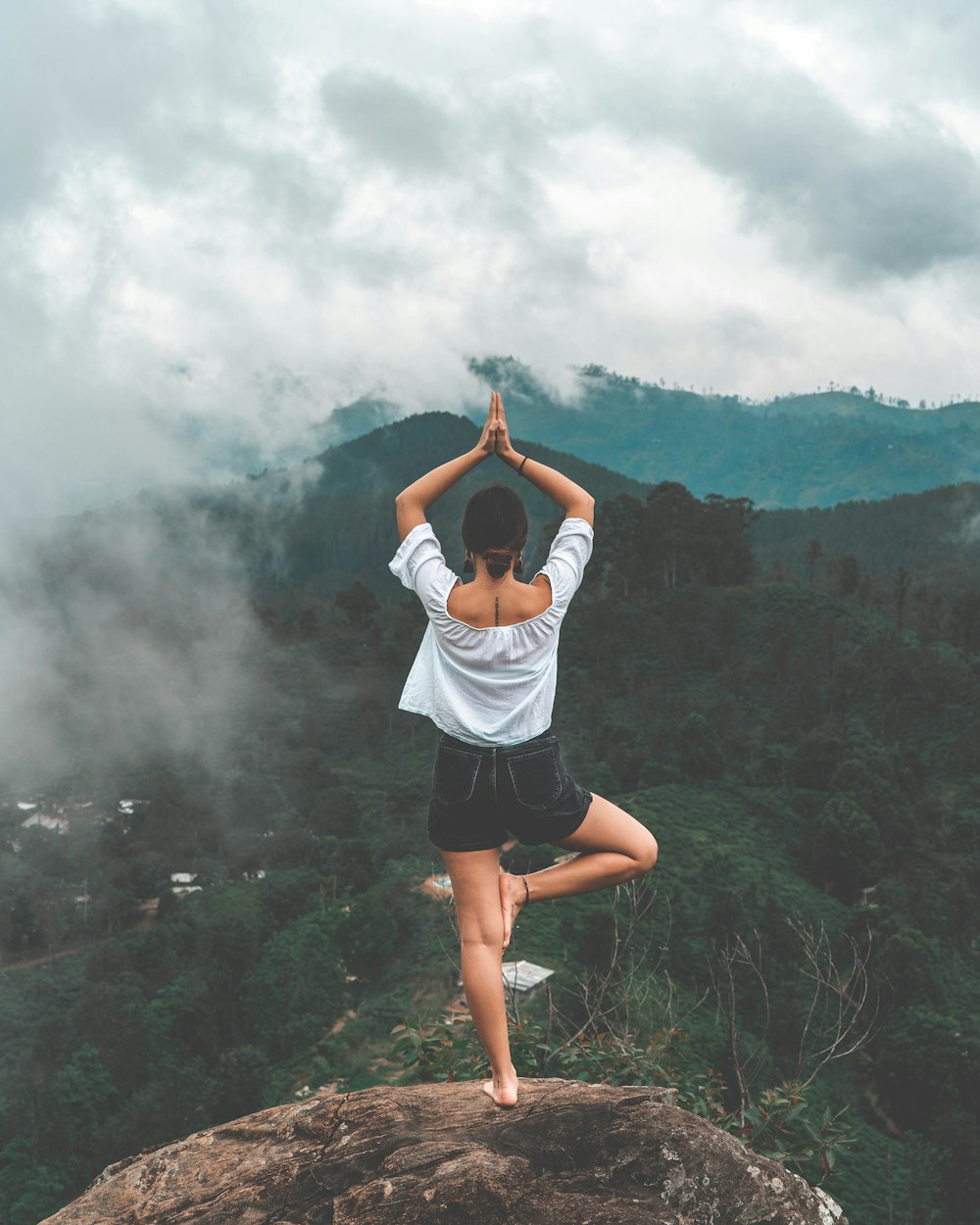
              woman standing on rock facing forest                    
For most of my years, I thought life was about learning and growing. But one day as I struggled to drag myself to a yoga class, I realized there were a lot of thoughts and messages getting in the way of my living a happy, healthy life.
My parents did the best they could, but their advice often came from a place of fear, insecurity, and pride.

When I slowed down to listen to these critical, negative voices in my head, I began to realize they'd been programmed into me since childhood. And that as an adult trying to do my best, I often had to quiet or counteract these voices in order to do what I knew in my heart is the right thing for me.
In other words, just as it's important to keep learning, life can also be a series of unlearning what's been wired into us.
Perhaps this isn’t your truth. Maybe you were told you could do and be anything you wanted, and you grew up fearless, determined, motivated, and ambitious. I did not. I understand now that my parents did the best they could, but their advice often came from a place of fear, insecurity, and pride.
So if this sounds like your childhood, feel free to borrow these four examples of what I needed to unlearn so that I could live a happy, healthy life that made sense for me.

Myth #1: Food makes you happy.

Growing up, cookies, cake, ice cream, chips, and popcorn were the reward for just living life. They were the soothing touch for injuries great and small. They were the center of any gathering and the cure for boredom.
New truth: Food is meant to be savored; it's our life force, but it isn't a replacement for love or self-respect. Every single day, I'm learning new things about how important it is to feed my body the nutrients it needs to thrive, that nourishing my body in a way that works for me is more fulfilling than eating for a thrill, to eat when my body tells me to, and to stop when it says so.
Revolutionary, huh?

Myth #2: Exercise is drudgery.

I didn't come from a Kennedy-esque family who enjoyed a game of touch football on a crisp fall day. No, our cardio was shopping. Exercise was the rope climbing that was forced upon us by sadistic gym teachers. It was a chore. I dabbled in team sports from time to time but when I got bored or it became too difficult, I quit with minimal repercussions.
New truth: I actually like exercise. Sure, I get bored, but instead of quitting I move on to something else. Once boxing became old hat, I tried boot camp. After a few months of Zumba, I started Bollywood dancing. Now my passion is yoga. It’s not always easy, but it sure feels amazing, and always remembering that feeling is great motivation to keep going.

Myth #3: Isolation is good.

When bad things happened at school, my mother let me stay home the next day to avoid the people responsible. So naturally, I began to think that being alone meant being safe.
Even as an adult, if I’m feeling anxious, angry, or sad, my instinct is to find a private space and be alone for hours. But the problem with this approach is that I end up feeling crappier and even less equipped to handle people than when the day began.
New truth: What works to get me out of a slump is antithetical to almost everything I was taught: confront the issue as soon as possible, reach out and talk to a friend, exercise, get outside into the sunshine, be productive, eat well. Come out from the shadows and be part of life.

Myth #4: Asking for help makes you needy and annoying.

Whether because of pride or fear, neither of my parents ever asked for help or guidance when faced with a problem. As a result, things went unfixed, questions were never answered, and we all just white-knuckled it through the unknown.
New truth: It took decades to realize that if I enjoyed sharing my knowledge, time, and stuff with people that maybe others wouldn’t mind either. In fact,maybe they would get something out of helping me. And so, slowly I began reaching out.
If I don’t understand the topic of a dinner conversation, I ask. Whether or not the others judge me, I always learn something new. If I can’t fix something or handle a weird situation, I put out an SOS on social media or call a friend for advice. Not only do I get the help and guidance I need, the person offering that help often gets something out of the interaction as well.
It’s important for me to remember that I did learn some wonderful things growing up that still come naturally to me: laugh every day, creation is part of life, make your home warm and welcoming. But sometimes a happier, healthier life means undoing some of the well-meaning advice we were given. Figure out what works for you, and make an effort to change (or "unlearn") that which doesn't.

Feeling Low Energy and Tired All The Time? Try This Out!


One thing that I’ve noticed over the years is that sometimes my habits have caused me to get into a low energy state.  For example, perhaps I’ve been feeling down in the dumps about something, so I’ll sit or lay down a lot, lower my rate of productivity and generally “space out.”  As a result, my energy slows and I’ve had a harder time pulling myself together.  When this has happened in the past, I’ve gotten into a state of feeling low energy and tired all of the time.
This low energy state can be hard to pull ourselves out of if we are unaware of how our actions contribute to our energy levels.  While we might feel compelled to sit or lay down, be quiet, and veg out, these actions actually compound the slowing of our energy, and cause us to feel even more tired and unproductive.
Fortunately, I’ve found a remedy that works for me in low energy times.  If you are feeling low energy and tired all of the time, give it a whirl and see if it works for you too!
Now, I realize that when your energy is low, some of the things I am going to recommend will probably feel like the absolute last things that you will want to do.  So the trick is this, pick one thing from the list that feels like something you could do.  Do it, take a break, and then pick another thing off of the list.  Slowly, but steadily, keep crossing items off of the list, taking breaks as needed.
The reason that you will want to start small is that energy moves by the principle of inertia.   The slower energy is going, the harder it is to make it go fast.  The faster energy is moving, the harder it is to slow it down.  So, the goal here is to gradually build up momentum, like those first few, slow pedals on the bike when you are just getting started and haven’t yet ramped up any speed. 
That being said, here are a few things that I’ve found can speed up energy momentum.  When you are feeling like you are in a low energy state, gradually pick items from this list.  Look at them as individual pedals on the bike.  As you take one after another, your energy will begin to build, and each task will become easier than the one before it.

Actions to Take When Feeling Low Energy

1. Get some sunlight and fresh air: 

I live in Florida, so this one is a natural for me, but even if you don’t live in an area of the world with a great deal of sunshine, try to make an effort to get outside for at least 20 minutes.  Sunshine and fresh air are naturally stimulating, and unfortunately, for so many of us, when we are down in the dumps we tend to stay inside, depriving ourselves of these natural energy boosters.

2. Listen to fast, upbeat music: 

Put your headphones on or turn on the car radio and find some high energy music.  Again, you will probably not feel like listening to high energy music, but listening to fast music will naturally get your blood flowing quicker.

3. Get some light exercise: 

It could be as simple as a walk around the neighborhood, but exercise is critical.  Make sure to get out of bed, or out of your seat and move around for a few minutes to get your blood circulating.

4. Attend to your personal grooming: 

We tend to let our appearance go to the dogs when we are in a low energetic state.  Even if you just get up for a few minutes, put yourself together, and go sit back down again you will feel a little bit stronger and more capable to cross another item off of this list. 
Grooming also has the added benefit that it will make you more likely to leave your house when you are feeling down.  Most of us don’t want to be seen when we are looking rough, so putting ourselves together makes the idea of being out and about less daunting.

5. Clean up a little: 

Tidy up your surroundings.  You don’t have to do a complete Spring cleaning routine, but look around for one small mess or area of clutter in your home or workspace and clean it up.  You will feel better when you look around and things are cleaner and less cluttered. 

The more things there are for you to clean up, the better.  So if your home or workspace is very messy or cluttered, good!  This gives you a lot more “pedals on the bike” to ramp yourself up as you feel ready to tackle them.

6. Run a quick errand: 

Go to the bank, head over to the grocery store or get your hair cut.  Get something on your “to do” list crossed off.

7. Eat something healthy: 

Eat some whole, organic foods that are nutrient and energy rich like blueberries, spinach, black beans, red peppers or any other kind of high energy food.  Even if you prefer to eat potato chips and cookies, adding a few healthy foods into the mix will help build energy in your body.
Again, when we are feeling like we are in a low energy state, we usually become fairly listless and sit down, lay around a lot, and reduce our rate of productivity.  This slows the inertia of our energy, making it harder to get back into a high vibrational state.
So the goal here is to gradually build momentum.  Pick one item off of the list above, do it, and then take a break.  Then do another, and repeat the process.  Eventually what will happen is that you will find your energy building and building until you are back into a higher vibrational state.  After a little bit of initial work, items on this list will no longer seem overwhelming, and you’ll wake up in the morning eager to tackle what lays in front of you because you know it will actually make you feel good.
Please keep in mind, I do realize that some people have medical and psychological conditions that may be underlying causes for low energy.  With this being said, while I stand behind the actions listed above to raise your vibrational energy, these ideas are not substitutes for medical or psychological care.  Use these suggestions in addition to any necessary, professional treatment.