Showing posts with label panic attack. Show all posts

Less Stress, More Living


Stress is a real issue in these modern days. It is reported that people who regularly experience physical symptoms caused by stress is 77%. We all experience stress in our lives but how do we handle it? Is it pharmaceuticals? Alcohol? Or do some of us, most of us just live with it. The thing is, living day by day with stress can have a serious impact in our lives over time. I have personally experience this by just not thinking about it and lock it deep inside a locked chess, beneath the deepest parts of my sea of thoughts. Whenever another event takes place that causes stress, I will just place it in there too. Days turn into weeks, weeks to months and before we know it, stress seems to creep out of this overflowing chest of unknowing results. I have never resolved these thoughts that cause these stress levels to climb higher and higher. Some of us are like bombs, one event triggers the mind and before you know it all those thoughts in this chest explodes out uncontrollably, over flooding our minds to where we can't seem to function or breath. This is what most would say is a panic attack. I have been there and it is the worse timing when it happens. So here are some simple ways in dealing with stress and resolve your thoughts instead of hiding them in this chest.

When enough, is enough!

1) Breath...

We all know how to do it! We have been doing it since the first breaths we have taken as an infant. Overtime are technique in breathing does get sloppy. Technique is everything. Sit down, close your eyes and breath. Focus on just your breathing, tune into your body and just focus on that. Slow it down and take deeper breaths, and remember! have good posture as you are sitting. Posture is key to breathing, it helps us gain more oxygen into our lungs. As you breath you will notice that your belly fills up with air first. But have you noticed? That you have more room underneath and on each side. Focus on breathing just a little deeper as you concentrate on breathing AND good posture. Slow down and take the time to take some deeper breaths and you will notice a change in your own conscious mind. It allows us to take this moment to really be present. Not the past, nor the future, but present.

Sam Harris has an amazing podcast that I heard his technique for breathing.

He truly explains in more in depth in this YouTube video, http://www.youtube.com/watch?v=pzMhLmErz5Q

2) Diet

Your diet can have an effect on your own personality. Eating unhealthy foods everyday can cause bloating. Overdoing your portions in your meals will leave you with plenty of extra calories that you end up storing away. Feeling bloated because you know you over ate, or over complicating your meal can have this affect. Just pay attention to your choices everyday. Do you really need sugary drinks at every meal? Mixing up all these complex carbs can definitely make your body harder to process everything and end up with an unhealthy feeling. Eating healthier can be a little challenging, but it is so much simpler than you think!

3) Exercise

We as humans were meant to move! push ourselves and overcome challenges and obstacles within our lives. Exercising in the morning, before work or anything you do allows us to wake up, get the blood moving and take anything that might come at us in our every day lives. Yoga is perfect for starting the day, you are already learning to breath better, have better technique sitting, take it to the next level! This is just the beginning, from yoga you will be more active and more inclined to try new things. Being active is the key though, through breathing, good posture and your new choice of activity, you will want to experience active things that you thought you could not do before. I have been there trust me on this. Joe Rogan has an amazing motivational video on exercise. Click http://www.YouTube.com/watch?v=e_eJRDl2J6Y

Very simply put, Breathing, Diet and Exercise can help you battle the long struggles of stress. Take these steps when you have had enough! You don't need pharmaceutical prescriptions to help with your own conscious thoughts, or your bloating, weight loss or even depression. It all starts with saying enough is enough! Breath, look into your diet, and exercise. You will be surrounded with people who do the same and those communities are an amazing way to support you into your new life style. Wake up and truly live again.


https://ezinearticles.com/?Less-Stress,-More-Living&id=9817710

The Anxiety Corporal Sings


Anxiety symptoms are not too hard to spot. Tension headaches are probably the most popular anxiety symptoms. This anxiety symptom brings on constant toilet encounters. General anxiety is not the same as panic attack.

Were you conscious of the fact that you may be suffering from anxiety? Anxiety symptoms are not too hard to spot. Although, they can be somewhat difficult to decipher from everyday normal emotion and other health problems. Did you know that anxiety symptoms bother more than 40 million residents in the United States alone? Those who are bothered by anxiety are also twice as possible to develop depression, which can feed off anxiety and vice versa.

However, should you are suffering from anxiety it is time to begin recognizing some of the well-known physical anxiety symptoms. Anxiety generally creates you feel like you might be on the edge. It's important to realize that general anxiety is  different from a panic attack. Those who suffer from anxiety will almost certainly also suffer from regular panic attacks. The difference is that anxiety symptoms are felt most of the time.

Tension headaches are probably the most popular anxiety symptoms. They may be commonly set off from stress, which of course is fueled by anxiety. If by chance you often seem like you might be having regular headaches, you will need to take a step back and look at various parts of your  life. There could possibly be one area that's triggering them and knowing this will help you get rid of your headaches.

You may also be plagued with an sour stomach. This anxiety symptom brings on constant toilet encounters. Most individuals assume they had something their stomach didn't agree with, but the reality is it's being caused from a situation that is troubling you. This is an critical area to track, because you never know if it is being caused by something else.

Nausea and acid reflux may be present as well. These can interfere with everyday life for example something else. Although these will likely be effortless to recognize, they're hard to associate with anxiety.

It's not improbable that ulcers might surface too. These usually form due to non stop worrying. Even though they are something to be dealt with, they can lead to other health issues in the near future. So it's extremely essential for you to get this handled. We understand it's easy to say, but it needs to happen.

Another one of the easily recognizable anxiety symptoms is fidgeting and restlessness. A person who has anxiety will be obvious to spot because they will often will look as, contemplating items, and maybe even a bit talkative.

People may have a hard time being close to those who are suffering from anxiety because they are so nervous and uneasy. It isn't their fault they are this way. If you believe that you might be an individual who is dealing with anxiety, then you may see that some of these things are happening to you.

Unfortunately, the longer you have had to live with anxiety, the more common these anxiety symptoms may seem. You may suppose that this is just the way a person is, and that this is common for you.

It is never healthy to accept a a life filled with anxiety symptoms. Doing so will only lead to feelings of hopelessness, depression, and emptiness. More often than not, anxiety may begin when a person experiences their first panic attack. They will start to live in fear of having another attack, so they are frequently on the edge. Even when they manage to get their panic attacks controlled, their lives are containing a considerable amount of anxiety due to their past experiences.

While all of these are negative enough, there is also constipation, insomnia, racing thoughts, hyperventilation, trembling, muscle tension, dizziness, and shortness of breath that comes into play.

People who suffer from anxiety are highly likely to also suffer from frequent panic attacks as well. The difference with anxiety is that the signs are felt almost all of the time and really never seem to cease. A great place to begin is what you want to transform inside your life. What reasons your symptoms? How can you keep them from interfering inside your daily life? The starting steps are maintaining a certain attitude about life, and who you are being a person. Taking this route can allow you to find a method to get your life back.

The overall best news is that if you are suffering from anxiety, you can stop it on your own by noticing some of the most common physical Anxiety Symptoms. Anxiety can sometimes make you feel like you are on the edge. General anxiety is not the same as panic attack.


http://www.articlesfactory.com/articles/health/the-anxiety-corporal-sings.html

Self-Care to Avoid Burnout for Teachers (By Rosalind Henderson)


Image result for teacher

I had my first panic attack at twenty-seven. However, I thought it was a heart attack. In the midst of teaching thirty-two students, my knees began to quake, sweat rolled down my forehead and my heart beat out of my chest. I was whisked away to emergency whereupon I was given a clean bill of health. The third doctor, however, suggested I learn how to deal with my stress. Hence, my intense interest in managing stress grew.

There is a national teacher shortage. Eight percent of educators leave each year according to Linda Darling-Hammond, president and CEO of Learning Policy Institute and founder of Stanford University's Center for Opportunity Policy in Education.

Those who remain report the overwhelming stresses related to the profession. Unsafe working conditions, large class sizes and the lack of administrative support are just some of the stress teachers face everyday.

Stress has pervasive and damaging effects. I have witnessed colleagues complaining about migraines,constant body aches, laryngitis and fatigue. Long standing stress can result in hypertension, autoimmune and heart disease, and it has links to certain types of cancer.

However, some stress can be managed with targeted effort.

Teaching teachers proven stress management strategies and helping them devise and implement a self-care plan can go a long way in keeping teachers healthy.

Here are two of many strategies I've shared with my teacher participants at the yearly event I host: "Self-Care to Avoid Burnout for Teachers"

Learn to say NO

External pressure from administration, the public and the district can warp our perspectives as teachers. Unrealistic expectations can have us overreaching in our jobs. Are you a parent? Are you a psychologist? Yet, there is an overlap between teaching and these roles. However, contact a parent immediately when students pose a threat to the learning environment. Ultimately, It is their role to control their child's behavior or to seek more expert services.

We are EDUCATORS, striving to be excellent ones. There are times I reread my job description when I'm under pressure from the public to occupy any other position.

Secondarily, respect your physical, mental and emotional limitations. Many teachers consider themselves super teachers, and continually extend themselves beyond their capacities. Here's a formula I'd like you to keep in mind: If you are dealing with more duties than resources to undergird them, you are heading towards burnout. Do you really need to sit on the calendar committee, be the teacher association rep and pursue your Masters in Education--all at once while parenting two children? A better approach is to meter out your energy on those things that are in line with your values, and consider the timing in the pursuit of your goals.

Learning to keep first things first can protect your emotional, physical and mental energy.

Lastly, delegate your duties.

Again, aligning your behavior with your job description, can save you a lot of energy. Research suggests that eighty percent of your time should be spent on your expertise--crafting lesson plans, designing and implementing assessments, establishing an effective classroom management program and delivering lessons. So, what can you delegate to a parent, an aide, a student teacher that you can supervise to lighten your load while you focus on the main thing? Some suggestions? Taking roll, correcting papers, inputting grades, presenting parts of a lesson and doing other time and energy-saving tasks can go a long way in supporting you as you develop the art of teaching.

Aggressive attention to self-care is key to maintaining the health of educators. By creating a plan, and implementing it on a daily basis, perhaps this will impact teacher burnout and promote teacher retention.

http://ezinearticles.com/?Self-Care-to-Avoid-Burnout-for-Teachers&id=9694296


5 Powerful Reasons To Have More Confidence In Your Public Speaking

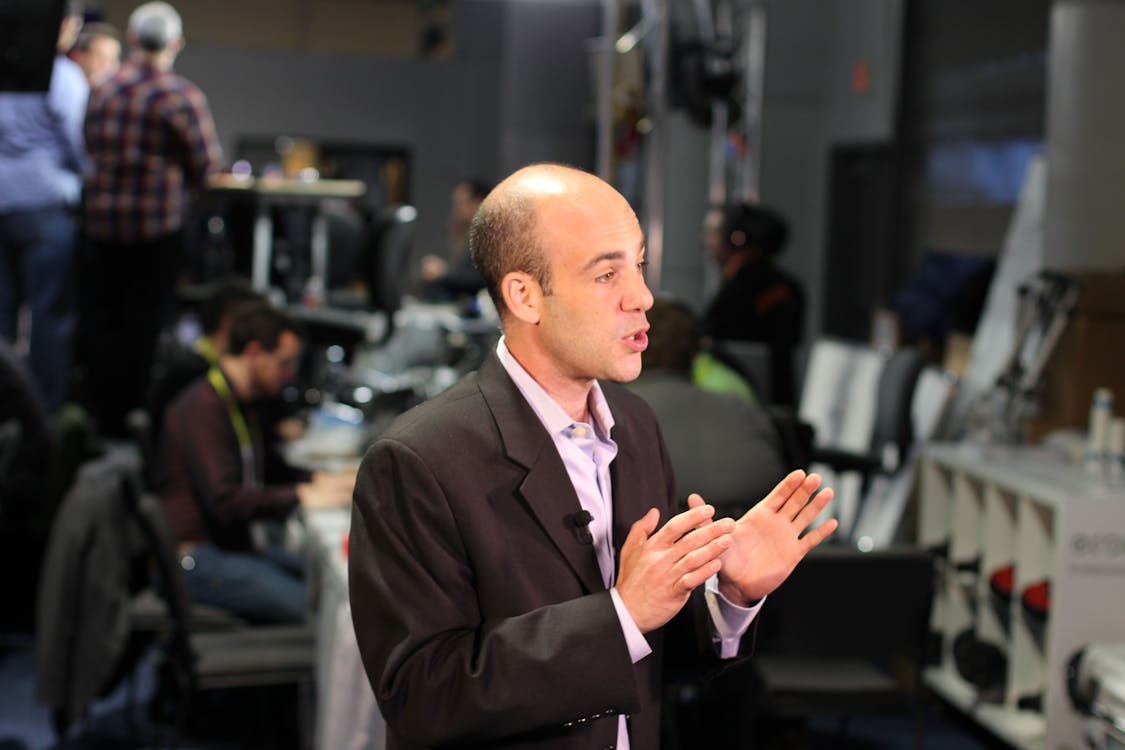
Man Facing Side With Hand Raise on Chest Level

Contrary to what many people feel, public speaking is a classic example of a function learned through practice.  Great speakers are made not born.  As are just plain old good ones.  And, of course, it’s an invaluable management and career skill.
I can speak from experience on the subject, having had minimal abilities to begin with, but improving over the course of a management career through trial and error and coaching and repetition.  But don’t take it from me, an unremarkable retired Fortune 500 executive.  Take it from the examples of this eclectic famous five: Warren Buffet, Winston Churchill, Tiger Woods, Julia Roberts and Hugh Grant.  Five exceptional public speakers who share one attribute: All once dreaded the limelight.   They all feared speaking in front of others.

If these five had public-speaking problems, why should anyone feel bad about having them?  But they all overcame it and are fine examples of how it’s a skill that’s learned.  In short, they’re five powerful reasons to realize speaking anxiety is entirely natural.  And five powerful reasons to have confidence in your own ability to improve.

Warren Buffett - Today a wise and highly respected public speaker, Buffett was so uncomfortable with public speaking as a young man that he avoided college classes where he might be required to make presentations.  At times early in his career he’d even throw up from pre-presentation nervousness.  He credits taking a Dale Carnegie course (twice) and diligently practicing in a supportive environment with giving him confidence.

Winston Churchill  – One of history’s greatest orators, whose stirring speeches of course lifted the spirits of a nation when it most needed it, Churchill wasn’t always preternaturally gifted in this regard.  In fact, he originally had a lisp and was even known to freeze at a complete loss for words early in his political career.  But over the years painstaking, meticulous practice transformed him – into the legendary orator whose speeches many still watch and learn from.

Tiger Woods – No matter what one’s feelings  about the greatest golfer of our generation, as a pro he’s never shied away from the cameras, even in stressful times, and has always been at ease and articulate in front of them.  Yet it wasn’t always that way.  During childhood he had stuttering problems – a challenge he was able to overcome through hard work and practice.  As a boy he even talked to his dog to help become more comfortable conversing with an audience, albeit a canine one!

Julia Roberts – Like Tiger Woods, Roberts too stuttered as a child, and although Roberts has been less outspoken on the topic than some of these other famous five, she has credited speech therapy with helping her speak more fluidly.  It clearly worked, as today this Hollywood icon is as relaxed and graceful a public persona (photo above) as could be imagined.

Hugh Grant – Unlikely as it may seem, the smooth, charming English actor who’s seldom at a loss for words has admitted to panic attacks while filming “Music and Lyrics.”  Grant has said he was helped during the filming both by anti-anxiety medication as well as a friend who explained to him it was only the adrenaline you need to be a good actor overacting a bit, and if he could just tone it down slightly he’d be OK – which ultimately he was.  (Or, put another way, as a speech coach once described it to me, Everyone has butterflies, it’s all about getting them to fly in formation.)

My main point in all this being: If public speaking caused significant anxiety for these five, why should anyone feel bad about having it?
It’s a perfectly natural reaction to a legitimately stressful event.
If there’s a common thread running through these stories, it’s that practice, practice, practice is often the difference maker.  Practice breeds competence, and competence breeds confidence.
If others can do it – and even succeed wildly in the process – you can too.

What Your Anxiety Is Really Trying To Tell You


I don't know about you, but a lot of people today look at anxiety as if it's this amorphous, inexplicable, physical phenomenon. They view it as an uncomfortable symptom that needs to be treated with medication, or with anything that will make it "go away."
As a psychologist, I prefer to look at it like this: Anxiety is the emotional equivalent of Glenn Close's character in Fatal Attraction; it's thoughts or feelings that we're not paying attention to REFUSING TO BE IGNORED.
The best clinical explanation that I've ever heard for a panic attack is that it's a ton of suppressed feelings rising to the surface of our experience, simultaneously and in full force. I agree with that assessment, and I think that something akin to it can be said about anxiety in general:
Anxiety is your body's way of trying to get your attention. It's an invitation from your unconscious, alerting you to something in your emotional life that needs to be heard.
Unfortunately, because most of us "deal" with anxiety by trying to make it go away, that message is never acknowledged. As a result, it continues to haunt us.
If we approach things with curiosity instead — if we wonder WHY we're feeling anxious instead of forcing it into subterranean territory — then we can understand it, and we can find relief.
In my clinical work, I have the following experience with a great amount of frequency:
A client comes in to my office (or meets me on Skype, as it were) and tells me that she's been feeling anxious but that she doesn't know why. As we begin to explore it (What's been happening in your life this week? When did you notice this feeling start to come on?), we always eventually land on the piece of insight that unlocks the puzzle — and suddenly the root cause of the discomfort is obvious to both us.
Once we gain that clarity, everything seems to make sense, and a feeling of relief emerges. Simply being able to hold the anxiety with understanding makes all the difference.
The funny part is how self-evident it seems once you figure it out.
I'll give you an example, and instead of choosing something from my clinical work, I'll borrow from my own life. Being an effective therapist does not mean escaping human suffering, but living through it and surviving to tell the tale.
In the spring of 2003, I experienced a spell of personal tragedies in short succession. In February, my only sister was diagnosed with cancer. In March, I lost my job during a massive round of layoffs in the music industry, which was where I worked at the time. In April, my boyfriend broke up with me unexpectedly and, because we lived together, this plunged me into a temporary state of "couch surfing" (thank god for good friends), because I was — to put it quite technically — suddenly unemployed and homeless.
The anxiety that I felt in the weeks and months that followed was absolutely unbearable. Because I needed to focus on putting my life back together by doing things like apartment and job hunting, in many ways I had to shelve what was happening in my emotional life in the service on just getting back on my feet. But sleep did not come easily, and food has never been less appealing; my entire body buzzed as if I'd been plugged into an electrical socket.
That said, the "interpretation" of the underlying cause of my anxiety is pretty uncomplicated: I had been emotionally traumatized. It was as if I'd survived some sort of personal tsunami, because the ground underneath my feet — everything I thought I knew about what made me feel secure in life — changed so quickly.
While the passage of time helped for some of my anxiety to subside, I didn't begin to truly heal until I started a new course of therapy with a woman who was able to help me make space for the feelings that were running amok inside of me. She created a safe landing place for me to explore my emotions so that I could face them and allow them to release — rather than leaving them to bounce around between my ribs like a bird, furious in its cage.
To give you a sense of how far I've come between then and now, I spent this past holiday season in a state of deep contentment, making food in a slow cooker at my home in San Francisco and reading by my Christmas tree — seemingly an entirely different person from that young woman who was sleepless, heartbroken, and terrified so many years ago now.
But this is the way emotions work. They're not etched in stone; they retreat once we greet them, and are willing to learn what they've shown up to teach us.