Showing posts with label meditating. Show all posts

Procrastinating? Try This Simple Formula

Do you have those days when you just aren't motivated or inspired to follow through on your good intentions? You're lethargic, stuck in procrastination, and just can't seem to get started. On days when I don't feel like meditating, exercising, writing, cooking healthy food, or doing anything I really need/want to do, I've found a simple formula to get me going: low expectations and an easy warm-up.

I start with low expectations by telling myself, "If I do a little, that's good for today." I usually define "a little" as half or less of what I might normally do. For example, with exercise, it might be 10 minutes of cardio, instead of 30, and one set of 5 strength exercises, instead of two sets of ten exercises. With writing, I tell myself I'll just write a paragraph or two. Because I've done more in the past, I know this lesser amount will be easy.

With my low expectations in place, I start with an even easier warm-up, something that feels like nothing at all. For exercise, I just start moving. This could be a walk or riding a stationary bike with little resistance. If I'm writing, I start with one sentence of any quality. I just get something written down.

Once I've gotten myself moving in this small, easy way, I often find the internal juices start to flow. With exercise, I begin to breathe a little deeper, feel a little looser, and my energy increases. With writing, ideas come to mind, associations click in, and I often find myself in the flow.

Invariably, I exceed my low expectations and end up feeling good about my efforts. I remember why I wanted to do what I'm doing. It feels good. It's taking me somewhere I want to go. It helps me feel productive, purposeful, and alive! At this moment of feeling good, make sure you record this experience in your memory. Then, you can recall this positive feeling of "being in the flow" to support you to get going the next time.

Now, if I do a little exercise and a little writing every day, it's easier to stay in the flow. It's easier to be consistent with a small doable action. That's the power of having an intentional daily practice to grow something that's important to you-be it your health, relationships, business, art, or spiritual growth. Small consistent actions are the building blocks of big accomplishments. They're the key to deeper meaning, purpose, and productivity.

And, if I just don't feel like taking action--if I find myself procrastinating--I go back to my low expectations and easy warmup to get me going. If getting started is the hard part, make getting started as easy as possible.

Are you ready to be free from procrastination and self-judgment?


https://ezinearticles.com/?Procrastinating?-Try-This-Simple-Formula&id=9929161

How To Love Yourself Through The Difficult Times When There's Little Growth


Dare To Go Deep Into Your Being

The way we treat ourselves in difficult moments says a lot about who we are. It's easy to be on top of the world when things are going right and we want to hold on to this feeling hoping it will last forever. Yet when it doesn't, it feels like we're bound to train tracks with an oncoming train headed our way and unable to move.

How we act towards ourselves in our darkest moment's lays the foundation for who we become later on. Self-love is a difficult concept for many to grasp. I've had countless coaching sessions with people who find it hard to love and appreciate themselves. This primarily stems from our formative years and the messages we received from our parents or caregivers. They become entrenched into our psyche and nervous system and, if reinforced, are difficult to let go of. However, difficult does not mean impossible.

Is this something you've experienced? For example, how do you treat yourself when things don't go your way? When your significant other breaks up with you or your health or finances suffer. What is your inner dialogue during these times? I've experienced pain and suffering throughout my life in the form of losing my father to illness, a relationship break up, a health crisis and financial woes. There were times I found it difficult to appreciate myself because of the despairing inner dialogue that convinced me it was my fault for being in this situation. I felt stuck, helpless and hopeless to navigate my way out.

It is why I wrote my first book because it was a theme I was intimate with and new well. However, I recognised that being stuck in my circumstances was not who I am. It was not the narrative I wanted to live, nor succumb to. I knew somewhere deep within me there was a presence yearning to express itself but I didn't know how to get in touch with it. I wanted to love and nurture myself with compassion instead of negative self-talk. Gradually, I noticed my conditions began to shift and my inner dialogue changed when I started meditating. I was an anxious person then, but this shifted to a calm and peaceful person over the coming years. I dared to go deep into my being and connect with the love within me.

Breaking Down The Old And Tired Ways Of Living

The love within us awaits you to come home to it. It is your palace of refuge, a place that knows no bounds, other than to receive you in its arms and awaken you to your authentic self. The self-love I speak of begins by recognising that difficult moments do not last. They come and go from our lives to awaken us to the greater intelligence within us vested in love, light and true refuge. To love yourself through difficult times when there's little growth requires you trust that what is taking place is doing so to help you let go of the ruins of the past. It is breaking down the old and tired ways of living so a new foundation of strength and love can emerge from your authentic self.

The spiritual teacher and author Matt Kahn offers us the wisdom in his book Everything Is Here to Help You: A Loving Guide to Your Soul's Evolution that love is more than an emotion but a wellspring of compassion that resides within us and our task is to bring it forth: "From a spiritual perspective, love isn't an emotion we feel all the time. Love is an unwavering depth of compassion and empathy that reaches inward to embrace our experiences-no matter how mixed up, shut down, unfulfilled, or overwhelmed we tend to be. When rooted in the vibration of love, we don't have to be completely healed to bring forth the kindness and care that already dwells within us."

There is a source of love within you that beckons you to connect with it. Don't take my word for it because it appears on your screen. Unite with this loving presence by standing in front of a mirror and reciting the words: "I love you" the moment you finish reading this article. Recite those three-letter words when you feel joy and happiness or when you are angry or depressed. Recite them as often as you can because you're outside conditions do not have to dictate how you love yourself. The love I speak of is always there waiting for you to come home to it. The more you connect with this infinite presence, the greater it will be known throughout your life. The way we treat ourselves through difficult times says a lot about who we are because who we are is an energy of love. If we make time to connect with this presence more often, we will realise that our difficulties serve a purpose; to return us to the wholeness of our true self.


https://ezinearticles.com/?How-To-Love-Yourself-Through-The-Difficult-Times-When-Theres-Little-Growth&id=9981007

Suffering From Addiction to Over-Thinking? Learn The Symptoms & The Cure


Do you ever over-think things? Do you get caught up in mental cycles of negativity or fear that keep you from living fully? Does your mind race like a hamster wheel-and you just wish you could step off?

Did it ever occur to you that you might be addicted to thinking? If so you're not alone. It's estimated that the average person has between 50,000 to 60,000 thoughts per day.

Yet, how many of those thoughts are helpful? How many do you really need? How many are even true?

Though most people are unaware of it, addiction to thinking is the number one addiction affecting us humans today. And, it just may be the driving force behind all of our other addictions.

Here are the symptoms you may or may not have associated with over-thinking:

• Constant worrying about what you did in the past or what might happen in the future

• An incessant voice in your head that comments on everything

• Feeling judged and habitually judging others

• Keeping the radio or TV on as a constant background

• Constantly checking your Facebook, Twitter, texts, and email

• Needing to keep your mind busy

• Discomfort with silence, stillness, and inactivity

• Discomfort with feelings and body sensations

• Feeling there's always too much to do & never enough time

• Trouble sleeping, meditating, or relaxing deeply

• Feeling a constant subtle stress that never lets up

So, what's behind addiction to thinking? Why is it there?

What drives it? If we knew what that was, maybe we could put a stop to it and the stress it causes!

There is a two-pronged false belief that traps us in our thoughts:

1) We believe that "our thoughts represent reality," and,

2) We believe that "we are our thoughts."

Without us being aware of it, these two false beliefs makes us slaves to the mental fabrications we call thoughts.

Mental fabrications?

Yes, that's right. Our problems begin when we mistakenly believe that our thoughts represent reality.

If that were the case, of course, thinking would be as important as it seems. It would be how we know what is real and possible in our lives.

Yet, thinking does not, in fact, represent reality. Instead, thinking interprets, categorizes, and organizes reality. Thinking is not about representing Reality at all, it is about analyzing reality and organizing it for action.

Thinking makes reality into a "To Do List."

You can recognize this, if you stop and notice what you're thinking at any given moment-and then ask yourself, what is the purpose of that thought? What are the consequences of thinking that way? What type of action does it compel or inspire?

Without understanding what thinking really is and what it does, you can unwittingly get caught up in over-thinking. And, excessive thinking leads to excessive doing which leads to excessive stress.

We become that hamster on the wheel of thought, spinning around until we are exhausted.

Then, we compound matters by thinking that we "are" the thoughts that we "have." We identify ourselves with that incessant voice in our heads. How crazy is that? Are you really that voice that spews 50,000 to 60,000 thoughts every day?

How could you possibly be defined by all of those varied thoughts? You would have to be a severely multiple personality. Is that really who you are? Are you really just that voice in your head, who thinks one thing one moment and a completely different thing the next-all day long?

When we begin to investigate what thinking really is and how it's different from who we really are, we are able to step back and get a little space from our thoughts. We begin to experience a little freedom from all that thinking.

When we understand the real role of thinking, it empowers us to let go of thoughts that do not serve us or others, choose those that do, and spend more time being present with, paying attention to, appreciating, and enjoying, Reality Itself. We step off the hamster wheel, take a deep breath, and take in what is really happening inside and around us.

This opens the door for us to see more clearly, listen and feel more deeply, and appreciate the peace and joy of enjoying life as it is-without all the commentary.

Are you ready to be free from negative thoughts, feelings, and beliefs that stress you out?


https://ezinearticles.com/?Suffering-From-Addiction-to-Over-Thinking?-Learn-The-Symptoms-and-The-Cure&id=9516934

The Awakened Life - Spiritual Development Struggles (By Danielle R. Gault)

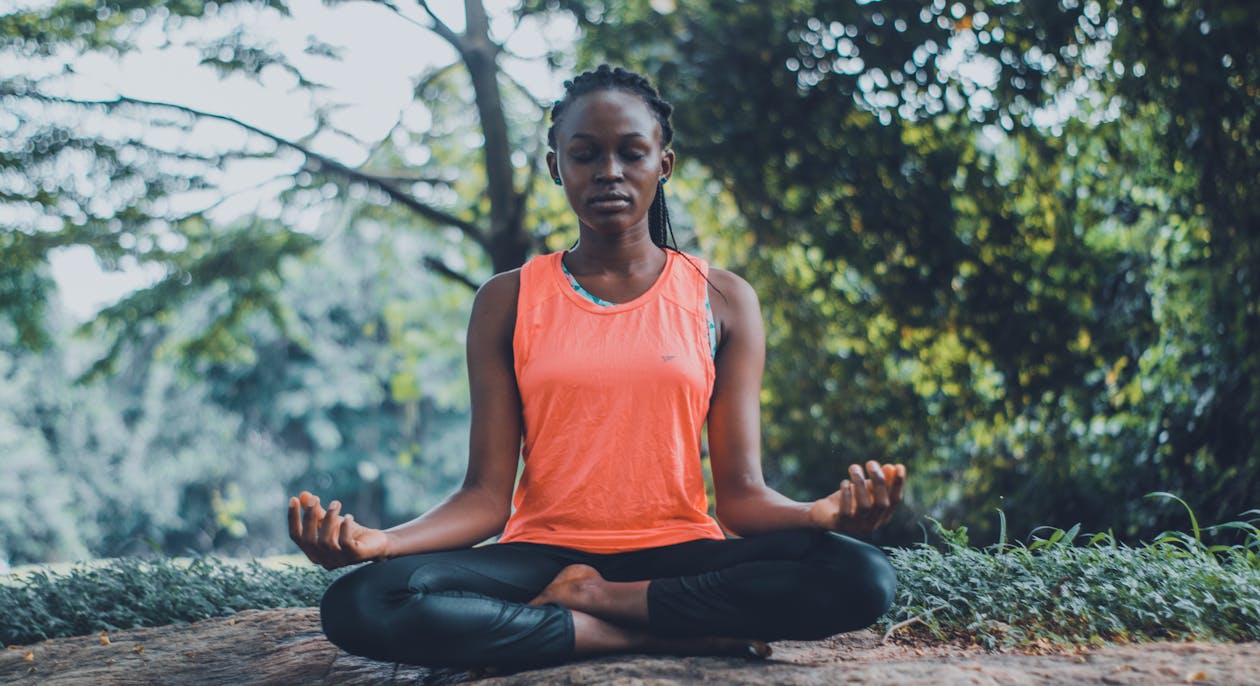
Woman Meditating in the Outdoors

As a life coach, I often get questions from participants who have gone through my course. Some of these questions lend themselves to a great article. Here are some questions from a previous participant who is struggling with his spiritual development processes.

HOW TO FIND TIME TO MEDITATE IN A BUSY LIFE

He asked about meditating and in his busy life, finding time for this practice can be a challenge. We know that meditating has great stress-related relief benefits that help the mind-body cope with a demanding and often chaotic world. I've gone through many phases with the practice of meditation and have come to the conclusion that even if you sit at your desk and close your eyes for a couple of minutes, you are communing with God - higher power, energy, the field of all possibility - whatever you want to call it and even for a couple of minutes, this can be helpful to your inner world.

Our spiritual teacher, Shri Brahmananda Sarasvati (Ramamurti S. Mishra, M.D). used to say that when you pray, you're talking to God and when you meditate (are silent) God is talking to you. I use to be very strict with my meditating practice but am no longer as I see it as a tool that is there to serve me and not the other way around. Even in your everyday working life, if you are present, you're meditating; there are many forms of meditating not just the 'sitting' form my teacher use to say. Mindfulness is truly a great meditation.

Just close your eyes and take a few deep breaths in and out and tap into that all-encompassing energy that is always there around us and makes no demands on us - just remember its presence and it will feed your spirit - that is its job. You don't have to work at it or make it a ritual or even a practice if you want to - just close the eyes and be silent.

AGES, STAGES, PHASES IN LIFE

In my life coaching teaching, I say that there are different ages, stages, and phases in our life. Each of these stages calls upon different aspects of ourselves.

The first stage is mainly taking in content. You stay there until you get sick and tired of taking in other people's ideas. At this point, you move into the second stage. At the second stage you are taking in AND putting out. Then the third stage is doing as you like.

At the second stage, you have to pay attention to the phases in this stage because you can get burned out by putting out too much. At this point, you start negotiating with life - so much taking in and so much putting out - how to negotiate with it and maintain some balance within? That is the challenge we all face.

I'm at the third stage: you take in and give out for your own pleasure, amusement and to keep entertained. At this developmental stage, generally later in life, one hopes that the 'self' feels satisfied with what has been accomplished but still likes to stay alert and aware by challenging yourself and your ideas from time to time and by revising your spiritual interests.

To be open for what life has to teach us at every stage we go through and at all the phases in these stages and no matter what our age is, we have to determine where the in-and-out is out of balance - that is natural as life is dynamic and not static. No matter what stage, phase, or age we're in, we need to set some boundaries or some kind of formula for ourselves.

AS THE PENDULUM SWINGS

How much do I give out this week, this month, and this year and how much do I take in and how much do I rest. Negotiate with yourself. That is what I do with myself. Think in terms of yoga poses - stretch and create tension in the muscle group. Pause. Then rest. Repeat: create tension, pause, rest, tension, pause, rest. In the resting state, we repair the nervous system which makes it stronger to cope with more stress and tension in our life. Rest is important to maintain a good balance. Such is the nature of life - it is like a pendulum and swings in one direction and then the other looking for the balance or optimal homeostasis but it is always moving or should be. If it is not moving, it is like the body/mind becomes lethargic and dull and rusts out - heading toward death and dying. If it is always moving, too much, too fast, and too often, then it burns out and we snap and burn out.

We need to find the right balance for ourselves at all ages, stages and phases of our life. It is a perpetual challenge.

This year started with a bang and I felt so jam-packed and full of too many details, demands, and pressures along with my husband's medical issues. I look back at it and wonder how I coped.

So when September arrived and we came down to our seasonal cottage, my daughter asked me what will I do and I said NOTHING. Boy this was a challenge for me as I am a 'doing' machine but it is something I can learn to do or remember how to do; I just have to watch the mind and its judgment about doing 'nothing' because after my first husband, David, died, I defined myself by 'doing'.

Life is always a great teacher and we are always learning something about ourselves. The Awakened Life - it can be tiring but would we want it any other way?

FIND SOME FORMULA

An example of a formula - when we were in India in the late 80's we saw a lot of poverty and we struggled with giving money or not giving money until Bill said we'll put so many rupees in our pocket each day and when they are gone, they are gone. We decided to give money when someone triggered an awareness in us - that was our condition - a smile, a door open, a blessing - then we gave until the money was gone and then we didn't feel guilty about not giving any more - we used our formula and we felt good about what we did and didn't feel guilty about the rest of the day - tomorrow was another day and we'd start over. So set up some formula for yourself with taking in and giving out.

When asked by a participant in the life coach training, "with so many opportunities for healing, growth, and personal development, how do you chose or know which ones to do?" My response to this question was, "The way you know which ones to do is by doing them. The ones you do are the ones you want to do and the ones you don't do, you just don't get around to doing them or you do them sporadically. Pay attention to what you are doing. Ask yourself why you are doing those things that you do regularly.

I like to exercise so I am pretty good about working out. I meditate 'sometimes' because I am not as charmed by the practice as I use to be but I feel that I 'should' meditate. The motivators for exercise and meditation are very different at this stage in my life but it helps to know and understand the 'why' of what we do.

Then I was asked, "How do you suggest narrowing down activities to not just keep learning, but to live a life more aligned with my values/vision? I'm noticing I also get derailed trying to please others requests, and put those before myself." And I replied, "What are your values/vision - understand the underlying principles out of which you operate - what are they?"

If you find that you spend too much time pleasing others, ask yourself what you get out of it. If this brings you personal satisfaction but you're concerned about time management or personal achievement, and then monitor it.

As for getting derailed, a principle you can set up for yourself is to allow yourself some of that (pleasing others) and just know that that is what you do - cut it off when it becomes too much.

SELF CARE IS A PERSONAL RESPONSIBILITY

Self care dictates that we are responsible for what we take in and what we put out - there is no one out there who manages us - we are self-managers and self-regulators - when the pendulum goes too far in one direction, turn around and go in the opposite direction - look for the optimum amount of give and take that works for you.

Make that a principle - a formula - then let that be OK. If it is not OK, then keep investigating and learning. What else can we do? We don't want to live someone else's principles or formula or way of life - that is not awakened but robotic.

When your body or mind sends you a message that you feel burnt out then you know that the pendulum has swung too far to one side and that is not in harmony with your balanced self - so swing it back. And so it goes in life - we are always negotiating and striving to maintain balance and homeostasis and that process keeps us alive and active and engaged. Isn't life wonderful that way?

We can only learn more about what works for us and what does not work for us and to be a curious observer of the process is enlightenment - fascinating stuff.

When, Bill, my husband got his cancer diagnosis, I had to 'look' at myself and all the wonderful things I have said over the years about being strong and coping with life and I was challenged to see how I would 'adjust' to this new thing in our life that impacted it in ways that I still don't know so I wondered how I would show up.


http://ezinearticles.com/?The-Awakened-Life---Spiritual-Development-Struggles&id=9795618

4 EASY WAYS To Become A SUPER Creative Person

Woman Lying on Green Grass While Holding Pencil

Creativity is one of those things that people believe you are just born with it or you're not! I was always very creative as a child. I used to spend hours by myself in my room drawing and writing, so it is does come somewhat natural for me.. however, I have periods where I can't think of anything! So I had to think.. Can anybody be creative? Where does it come from? Where do creative people get their ideas? How can I become more creative and also teach others to do the same? Well I gave it a lot of thought and here are 4 Easy ways to tap into the creative genius that lives in all of us!

Relax

I noticed that my best ideas come when I'm doing almost nothing! Like driving in the car, taking a shower or just staring into space and being very quiet or meditating. Oftentimes the inspiration for creativity comes when we are relaxing. Take a walk, or relax and cook a nice meal When our body is relaxed our brain is freed up for creative things. If you are feeling stuck on an idea - take a break from it and just RELAX. I have started purposely setting time aside for nothingness and the ideas seem to keep on flowing because of it.

Get Some Competition

Nothing gets the creative juices flowing quite like competition. When someone challenges your creativity on a subject are you going to give up? Not likely! You are going to think of something new and different to be better because that's what we do. Talk to a friend or colleague and see which one of you can come up with better ideas for whatever you might be working on.

Find Your Inspiration

What really inspires you? Is it music, art, laughing, sports, cooking? Whatever it is.. do more of that! When you are doing things that inspire you, oddly enough you become more inspiring, which results in more creativity!

Improve On An Old Idea

Well, no idea is truly original but you know rappers take a sad song and make it better? (well sometimes it's better) Just think of think of ways to make improvements on already existing ideas. Advertising agency think tanks are always spinning old content and making it fresh again. Why can't you???

Creativity is as unique as the individual. There might be creative dry spells but trust and believe the source for creative ideas is infinite. If you need help tapping into your creativity to help in your business, life, or relationships contact me for a FREE Coaching session.


https://ezinearticles.com/?4-EASY-WAYS-To-Become-A-SUPER-Creative-Person&id=8562656

How to Invest Time in Yourself - 8 Inspirational Ideas


The goal and focus of this coaching session is to find out what action I will take, to invest my time better. At the same time I want to invite you to feel inspired with my solutions, so that you will have a more clear idea on how to invest time in yourself. With that said I will pose the question that I'll find an answer to.


  • How can I invest time in myself even better to become more successful with my business?

My current situation: I've just recently listened to a success audio program, which have made me more effective. I'm writing daily goals and short and longterm goals. I have a to-do daily list with stuff I need to do every day. These goals are done quickly, so I can move on to my business. I've decided to educate myself in my field of expertise 1 hour every day. I exercise every day and I work out at home a bit also. I'm meditating when I need to relax, to avoid stress. The most useful thing I've done in a long time, was to seize the opportunity to become a certified coach to be able to coach myself and others writing articles like now, using the specific coaching model.

Alternatives to my current situation: Now it's time to find out how I could invest my time differently to become more successful with my business. These ideas might prove to be inspiring on how to invest time in yourself.


  1. I could listen to more audio books about different areas of running a business
  2. I could go to the library and get inspired
  3. I could find inspiration from different types of trade fairs.
  4. I could learn a new creative skill like painting, to nurse my creative side and use it at my website
  5. I could learn a new working skill like public speaking on videos
  6. I could exercise more to improve my mental capabilities
  7. I could train my memory
  8. I could learn a new language to open up even bigger possibilities

That's the end of alternative possibilities and now it is time to choose the action.

The action I'll take to invest time in myself even better to become more successful with my business is:

I'm going to inspire myself, researching other successful businesses in my area of work and write down thoughts and ideas that I could incorporate into my own business plan.

How will I remember to do it? I'll write it in my calendar


http://ezinearticles.com/?How-to-Invest-Time-in-Yourself---8-Inspirational-Ideas&id=9320189

Shifting Out of Negative Space


Meditating does not mean that you extract that part of your memory and forget all that has ever happened before. Especially life events that hasn't served you well and more than anything in this world, you would like the "pain and suffering" to be taken away. You must know, that our mind is like the revolving earth, ever evolving and spinning in its orbit in its own perfect proximity and whatever that's been planted before, it is there and always will be.

Because it is so wide and limitless, we can choose where we would like to lead our thoughts to. Our mind is the limitless space, and "negative" spaces are fundamental to building an "image and picture" of anything we wish to put together. That is how we are able to visualize dreams, scenarios, circumstances and fragments of things we have come to learn and know about. We put those pieces together inside our heads. When you learn to "un-clutter" the mind, you get to choose to be on the other side of the "negative space" that is part of your brain and living mind and you can't turn that part "off" like a switch. You can only ever attempt to make the effort for a "shift" into a different space.

When you "quiet" the mind, you see more clearly and there is a small window of opportunity to make the "shift" when that happens. Slowly, steadily, you shift yourself to a different space - a positive one. One that contains new affirmations and thoughts, new memories, experiences and places you have recreated for yourself. Planting new seeds takes time for it to grow and also takes consistent care for it to ensure that it is healthy and strong before you can bear fruits and flowers for you to enjoy and repeat the cycle.

It is a process, a journey, a learning curve for the mind to adjust and know its way around. Just like anybody you first come to know as a stranger, our minds are the same and it could be our potential best friend or worst enemy. You can make the effort to understand her strengths and weaknesses to make the "relationship" work or you can resist, resent it and feel like it is a battle and challenge every day and feel the need to fight against it all day long. It is a choice we all have and we can make it work to our advantage.

Meditation doesn't necessarily mean sitting in a chair or on a floor and just closing your eyes in a dead quiet room that could echo your breath and forcing your mind to stop the chatter. In the beginning, this would probably be counter-active to your first step of taking the leap to have control of your mind. It would probably work better if you used other tools or routines to help jump-start your mind and introduce new positive things and subjects into it before you begin to sift and sort.

Yoga is one of the methods that best serves as a physical and also a mental workout, producing best results for both body and mind. Because you literally hold your own physical body as your object of attention, all the focus and concentration put on it will ultimately produce positive results if you commit wholeheartedly and go into the postures with intent and give it your undivided attention. If you do it consciously for a full 60 - 90 minutes every day, that would definitely lead you feeling a whole lot better re-leasing all kinds of tensions and stress in your body and mind with your attention taken away from any feelings of negativity in that frame of time and put right onto your physical body directly to tone and strengthen. It is by far one of the most effective practices for easily distracted individuals.


You can of course pick up a quieter and more subtle routine and habit like a good self-development read, (if exercising is a big issue for you for whatever reason) books of a positive nature and feed your mind with more "good stuff" so that you can "fill it up" with new knowledge that are applicable in your daily activities and one that serves you well. Painting nature also serves as an extremely good way to put your attention on bright colors and natural feel-good settings and environment over a good period of an hour straight, uninterrupted with your mind stationed in a good, happy place.

It is a little obscure as people always have this idea that only professional artists can pick up that paintbrush to do something like that. But really, you don't need to be Picasso to attempt to engage in this activity. If you have a love for nature, it will not be a difficult task for you to set your eyes on it for a full hour, however your painting turn out to become is totally irrelevant and only serves as an outlet to grab hold of your attention.

The more positive activities and attitudes you choose to include into your daily life activities, the easier the road to be able to sit down and literally do nothing and naturally be able to quiet you mind comes quickly. You will no longer have to use external tools to aid you in doing so. It will just be you, your space and your mind. That is the ultimate goal eventually. Not having to meditate while you're in an awkward pose (yoga) or having to set your eyes on something beautiful to do so (nature) will be the best outlet to go about because you take yourself and your mind everywhere you go, literally.

You can't always carry your yoga mat with you 24/7 or readily have paints and brushes in your bag pack or a new book constantly at the back of your palms so if you can eventually do it with nothing in your hands or on your plate to "keep you occupied", you have successfully achieved the best method to do your meditation. To simply just sit there, close your eyes and let it all go. (Negative thoughts and feelings) To allow well-being to enter with ease and flow, making the shift to the positive space of every-thing you ever desired for and want in your life.


http://ezinearticles.com/?Shifting-Out-of-Negative-Space&id=9493744

Practice the Technique Top Performers Use to Achieve Any Goal

Athletes use this technique to overcome nerves and perform at their peak. Actors use it as the heart of their craft. And, corporate leaders use it to envision bold new products and services for their companies. But, did you know you can use it to overcome anxiety and addictions, create new habits, test decisions, and welcome the experiences your soul desires?

You can apply this technique to any goal you have, such as creating a successful business, finding your life partner, growing a deeper relationship with your current life partner, cultivating health, engaging in self-care practices such as eating well, meditating, or exercising, or any creative project you wish to accomplish.

The technique is "Mental Rehearsal." In this post, you'll learn the steps of this powerful tool for personal change.

The Science Behind the Technique

The premise is simple: imagining a desired experience creates the same neural networks in your body and brain that having an experience in "real life" does. By mentally rehearsing an experience you groove the neural pathways to more easily welcome an experience into your life. What you can imagine in full sensory detail you more easily become.

You use your imagination all the time to imagine experiences you want and dread experiences you don't want. The purpose of Mental Rehearsal is to consciously pave the way for experiences you desire by imagining yourself immersed in the felt experience "As If" you are living it right now.

In a nutshell, Mental Rehearsal familiarizes you with the felt experiences you want to have, so you can recognize them, choose them, and grow them in your life. It also helps you make decisions by imagining what different options feel like and weighing your felt responses. For example, does this option feel light and energized or does it feel heavy and burdensome?

Now, you may not feel worthy of the experiences you desire or may not feel they are possible for you. By mentally rehearsing these experiences, you learn to become comfortable imagining yourself having them. In the process, what you thought was out of reach seems more possible.

To make this practice even more effective, you can imagine not only the experience you desire, but also significant steps you take to get there. This makes taking these steps feel easier and more doable.

It's important to note that imagining a specific experience does not mean this exact experience will happen exactly as you imagine it to be. Life may have even better plans for you-ones you may not have imagined. What's important is to imagine the experience you desire, given what you know right now, and meditatively engage in immersing yourself in this experience "As If" you are living it. This generates the same state of being as if the experience was happening in real life. And, it creates the same neural pathways in your body and brain.

Once you are immersed in your desired state of being, it becomes a filter through which you can recognize and choose similar experiences in real life. Cultivating this state of being becomes a magnet that draws similar experiences to you. For example, if you long for the feeling of being loved, you mentally rehearse what it feels like to be loved, you carry this feeling with you, and you engage in loving others. Then, you notice how loving relationships blossom in your life.

How to Practice Mental Rehearsal

1. Begin by asking your heart for an experience you'd like to have.

2. Close your eyes, take a few slow deep breaths, and imagine the specific details of this experience, including where you are, who you are with, what you are saying, and what you are doing.

3. Step into this picture "As If" you are taking these actions. Feel the experience with all your senses.

4. Notice any resistance. Is there any way you would like to change the experience to release this resistance? Imagine these changes.

5. Once you have the experience fully present with you in a way that feels good, imagine three steps you take to this experience from where you are now in your life.

Do this in reverse time order, beginning with a step you take just before arriving in your desired experience. Imagine another step you take just before this one. And, finally, imagine a step you take to initiate this whole process from where you are now to where you want to be.

For a simple example, say I want to make a putt in golf. My desired experience is seeing the ball fall into the hole. I imagine that before this moment I followed through on the correct line to the hole, before this I drew my putter back on this line, and before this I visualized the line of the putt. (Note: These three steps can become a routine for the actual putting of a ball in a real golf game, as well as a tool for Mental Rehearsal.)

Notice any challenges to taking these steps and imagine how you might address these challenges.

6. Run the three steps forward, from where you are now to your desired experience. Then, rest in the feeling of your desired experience again, so you really absorb it.

7. Set your intention to live from this state of being and welcome experiences that grow this for yourself and others.

Keep in mind you don't have to imagine this perfectly. You don't have to get all the steps right. And, it doesn't have to feel incredible at first (though it can). You might even find you imagine failing. For example, when I first imagined myself making a putt in golf, the putt lipped out and I didn't make it. That's O.K. You can pick yourself up and try again. See if you can relax more and try less. Welcoming new experiences takes practice.

If you feel resistance, unworthiness, or any other uncomfortable feeling about this whole process, I encourage you to simply observe and accept these feelings as they arise. Breathe through them and notice any ways they shift as you pay attention to them with calm, curious, acceptance. You might ask yourself what is underneath these feelings that is important to acknowledge.

See if it's possible to view Mental Rehearsal as an exploration, a game in your imagination, and a fun way to step outside your normal view of yourself and life, so you can imagine something new, exciting, and emotionally compelling. Have fun with this! You are using untapped creative resources to step into the life your soul desires.

Enjoy your practice!


http://ezinearticles.com/?Practice-the-Technique-Top-Performers-Use-to-Achieve-Any-Goal&id=10001126

Thou Shall Not Steal - How Are You Stealing From Yourself?

Last week at the end of one of my yoga classes, we had an unusually invigorating conversation about the Ten Commandments, focusing mostly on "thou shalt not steal." Webster's defines the word "steal" as to take the property of another without right or permission. The word "another" is defined as one of an undetermined number of the group. Using the Webster's definitions allows you to take this commandment much further than stealing the property of others.

Most people in a civilized society are morally opposed to taking the property of others without expressed permission. We have even gone as far as to put hundreds of ordinances and laws on the books of our justice system in order to protect our society from this activity. But what have we done to stop us from stealing from the most important person in our lives, ourselves?

In order to answer this question, we must first list the ways in which we steal or deprive ourselves. We steal our health by refusing to eat healthy well-balanced meals, not drinking enough water, overindulging in alcohol or other stimulants, ignoring our body's requirement for sufficient rest and not exercising our bodies daily. We constantly allow our words to damage our health by having "organ recitals" with our friends and neighbors testifying to our failing health and aching muscles. With zeal, we declare the poor condition of our health by repeating over and over, "I do not feel well or I feel like I am catching something."

We steal our peace of mind by not meditating or relaxing daily or more often if your mind requires it, believing that it is our responsibility to solve the problems of our love ones and participating in gossip.

We steal our prosperity by continually speaking untrue statements such as I am broke, I do not have any money, I cannot afford it, some people have all the luck, other folks have all the fun. Our spoken word is one of the most powerful creative tools we have. Every time we consistently make statements regarding our wealth or lack of, we are sending commands into the Universe that have no choice but to create the very thing we spoke of. The Law of Attraction and the Cause and Effect guarantee that what we send out will return to us. Genesis states that our word will not return to us void. Our actions also determine our experiences. When we neglect to do our very best, we send a message to the universe that we expect in return less than the best.

In what ways are you stealing from yourself? What messages are you sending?

This week spend some time thinking about the instances you steal from yourself. List them and start to eliminate them one at a time. I have recommitted myself to watching my words and guarding my though
ts. I was surprised at the number of time I could see myself in the examples.

Dream Big. Life the life you've imagined.


http://ezinearticles.com/?Thou-Shall-Not-Steal---How-Are-You-Stealing-From-Yourself?&id=9512020

The Art of Noticing: 3 Steps for Returning to Center


My mind is going a million miles a minute, in a dozen directions. As I lie on the yoga mat, I think:

"Stay here."

I manage it for 3-4 seconds and then I'm off on some thought train.

"Find your Stillness."

Yes, for 3-4 seconds more, and off again.

When meditating each morning, I count my breaths. I'm lucky if get to 5 before I lose track and have to start over. As I count, I'm present. I feel the breath come in and out. Then... I'm not.

That's the point. To notice and come back.

To return to center.

On the mat... and in life.

5 Steps for Returning to Center:

1) Notice you're not.

This is the first and most important step. If you don't notice, you'll never get to the others. Because of this, you want to notice with a smile. "Ah!" As Pema Chodron says, "I take delight." You are already returning to center -- just by noticing.

You want to get really good at this first step.

2) Transform Uncentered Moments Into Centering Practices

All the things that are uncentering now -- make each one a centering practice.

  • That difficult person, the one who takes your center and runs away with it. "Ah! Thank you very much for this opportunity to practice." For 5 seconds -- can you center that long around this person? 10 seconds? When you make it interesting for yourself, you will begin to look forward to being in this person's presence so that you can practice.
  • The driver who forgets to signal, drives too slow (or too fast!), who cuts you off. "Ah! Thank you very much for this moment. I have a choice. I can get hooked by this emotion or I can breathe, center and return to equanimity."
  • Bad weather is one of my favorite teachers. Or unexpected frustrations. Being caught without my raincoat or my sense of humor. Once you notice, it is only and always a choice. All that is required is intention.

3) Practice Gratitude: Accept What Is

In the beginning, when I was first learning the art of centering, I would become disgruntled and angry with myself when I forgot to center, when I missed a ki moment that could have turned out so differently... if only... And, of course, I became even more uncentered.

I've learned to center sooner, to smile at myself more often, and to take myself less seriously. You can, too.

One of my favorite mantras is: Thank you very much. When I say this, I look for the gift that is usually present but that I'm missing by attaching myself to some other desire, by resisting what is. This is another way I have of returning to center.

One of my favorite quotations by Morihei Ueshiba, the founder of Aikido, is this:

Practice the Art of Peace in a vibrant and joyful manner.

Good ki!


http://ezinearticles.com/?The-Art-of-Noticing:-3-Steps-for-Returning-to-Center&id=8543042

What Is Your Sacred Practice? (By Beverly Molina)


Have you been lucky enough to find a practice that brings you into the Now Moment, your personal Truth Place, your authentic Heart Space?

And if you have, have you surrendered to it in its entirety?

Have you let it take you on its expansive journey into the unknown and creative flow that makes you feel... And therefore feel alive?

Maybe you have found your practice in hiking, gardening, jogging, painting, snowboarding, surfing, drumming, cross-fitting, meditating, or being in nature. Your practice is the one that feels right to you.

And have you ever wondered what might happen if you fully devoted yourself to this personal passion for even a short amount of time, whatever it may be?

I got to find out, firsthand, recently.

If you've known me even for a short time, then you know that free form dance is the sacred practice that does it for me!

I've been free form dancing for seven years, once or maybe two times a week - but I recently found out what happens when I spend a concentrated amount of time with my favorite practice.

Find That Which Reveals Yourself to You

Exactly one month ago, I found myself aboard the first ever Ecstatic Dance Bus Tour - a weeklong tour made up of myself and 31 other colorful people, for whom ecstatic dance (also called conscious dance or free form dance) is a passion and a practice.

For 9 days and 8 nights we travelled over 2000 miles up and down the state of California and brought our ecstatic dance practice "to the people." We danced in other ecstatic dance venues and connected with ecstatic dance tribes in 9 different cities. We danced on lakeshores, beaches, mountains, and parking lots. We immersed our bodies in authentic dance expression, shared what dance meant to us, and danced with others in hopes of inspiring.

I got to dance for hours everyday, sometimes multiple times a day. This intense immersion in free form dance was a first for me, and I am feeling the rhythmic reverberations inside me still today. I've been processing these significant changes within me for the last month and I want to share some of those with you.

It was 11 pm on a Sunday night when I finally made it home from the bus tour, and I had to work the next morning. That next day on duty, and in the week that followed at home were intense. I was suddenly feeling deep reservoirs of emotions - all kinds of emotions - pulsing and rising up to the surface. Sadness, fear, anger, resentment - they all came pushing their way up out of an unbeknownst well, which had up to this point remained mostly invisible to me. And they actually felt good to be spilling out all over the place. But why now, why did these emotions, all of a sudden, decide to show up and demand to be seen and felt? What did it all mean?

The Truth Will Set You Free

Over the next week, the answers came from my heart:

For 9 days you dropped out of your conditioned mind and habitual routines.

You entered your body, allowing yourself to be moved through the practice of ecstatic dance.

You listened and allowed the body to inform you.

And your body became the Teacher.

And you became the Dance.

And your movements showed up authentically, freely, and radically true.

You experienced Being your pure, personal truth.

I spent 9 days in this radically true and free space, free to be myself at a very deep and profound level. And when I came back to my life as I knew it, my body was still informing me from this place of truth.

Unaddressed, suppressed, stuffed, and forgotten feelings and emotions, therefore, came bubbling to the surface. And they were grateful to be finally seen and felt. Even now they continue to be addressed, healed and released.

I am learning that it is actually a welcome surprise to be greeted by joy, silliness, sadness, fear and anger on and off the dance floor.

I am grateful to feel the essence of myself alive as these juices of life - all feelings and emotions - pour through me.

I get that my dance practice is perfect for me. When I dance I am able to freely access my truest self, somehow more easily than when I get caught up in the busyness of everyday life.

I get that I want bring this authenticity off the dance floor and into my life - always.

I get that once my body and soul have experienced truth and authenticity, it's hard to turn back.

I wish this for all of us, that we may find whatever it is that lifts our souls. What would happen to us individually and collectively, if we all lived from our authentic heart space in every moment?

May you find joy in the discovery of your own sacred practice and truth.

May you welcome and feel the spectrum of emotions coursing through your spectacular human body.

May you feel alive!


http://ezinearticles.com/?What-Is-Your-Sacred-Practice?&id=9706731

Message From the Universe: Self Worth at Its Best


"As if you weren't among the most important people who have ever lived.

Bowing before greatness,
The Universe"

Give yourself a bit of credit here. You are working hard to accomplish your goals, you are keeping yourself healthy, both physically and mentally and you make sure to always be there to help others. You are doing everything right and it is now up to the Universe to decide what is the best path for you. You can't be feeling down if it may take a bit longer to accomplish your lavish goals. It is crucial to keep on trying until you get it right. The question is: "How will I know what is right? How will I know what path to take to guarantee my success?" If something doesn't work, you will be aware, unless you are blind as a bat. You will realize that you are running fast on a treadmill, not going anywhere. Some other things will happen to take you OUT of your present path and redirect you somewhere else. Signs will be all around you to stop doing what you've been doing and start something new. It is important for you to carefully read these signs. You owe this to yourself. Focusing on what is important will be enough motivation to create yourself a better future.

Your presence in this world has a meaning, or the Universe wouldn't allow you to live too long. You are here, today, because your mission on Earth is YET to be accomplished. So how do you know what is your mission? There is a voice inside you that will direct you towards it. How do you get to hear that voice? Well, meditating is definitely a good start. It will allow your psychic awareness to kick into high gear and help you pay attention to the voice from within. Do not be afraid if you do hear it, as long as it is not a couple dozen voices that ask you to wrap a belt of explosives around your waist and blow yourself up. If you hear these voices, I would recommend psychiatric help. For everyone else, that little voice is the voice of wisdom and more you meditate, more you will hear it. Just remember, this little voice will never shout, will never be clear enough for you to hear it properly, so you need to really pay attention. Once you master these listening skills, you will experience drastic changes in your life and will finally know the main reason why you are here, in this planet. Once you know the ways how to listen to that voice, teach it to others so they can do the same. This is definitely a very valuable skills you want to share with others.


http://ezinearticles.com/?Message-From-the-Universe:-Self-Worth-at-Its-Best&id=9713865

How To Attract Money Using Meditation

What we constantly think about, we will attract. So if we think about money all the time shouldn't money come to us? It doesn't seem so because people who are broke think about money all the time but they are still broke. So what is the right technique for attracting money?

Yogic masters say that the third eye cakra is the seat where creation takes place. Meditating on a thought with a feeling in the third eye will bring it into reality. Quantum physicists find this to be true too. There have been many experiments to prove this theory.

The third eye, or scientifically called the pituitary or pineal gland, is under the mid-brain. It is the organ that connects you with the universe. The cerebellum is negative. Thoughts come and go all the time in the cerebellum and it will always say no to you. So logically if you put money thoughts in it, money will never materialize. Unfortunately a large proportion of us never realize this fact..

The pineal gland is very direct and does not judge. Whatever thought you put into the pineal gland, it will interpret it as so. Thus if you tell the pineal land that you want money means that you are currently broke and will always be so. Instead, if you project a picture of wealth surrounding you, such as an expensive house or car with heaps of money, and you are having tremendous joy with this experience, the pineal gland takes that as your current reality and gives more of it to you.

The activation of the third eye cakra and all the other cakras is through meditation. Commonly known as cakra meditation, specific quantum sounds or mantras are chanted for activation.

There is a specific quantum sound or mantra for each of the cakras and each one complements the other. When practised consistently, each of the cakras come alive and serve their intended purpose. The meditation and the mantras when done together create a feeling that activates manifestation in the pineal gland.

So to attract money, this is the general technique:

1. Meditate using quantum sounds/mantras to activate the 7 cakras in the body 
2. Let the kundalini energy rise through the spinal column 
3. Put a thought in pineal gland 
4. Create a feeling using quantum sounds 
5. Thank the universe and disconnect

Sit back and let the universe do its work.

http://ezinearticles.com/?How-To-Attract-Money-Using-Meditation&id=9546925

The Law of Attraction - Why Can't I See It?

In the beginning I just went with it, and did all the affirmations, and intention setting stuff. I wrote my 'wish lists' and 'bucket lists' by the hundreds, and had all my yellow 'post-it' stickers around the house telling me I was 'Beautiful', or 'Rich' or 'Prosperous'. In fact, according to all the stickers, if you put them all together, I was probably the most perfect human being on the planet!

But even with all of this, and all the visualising and meditating, I felt like I'd spent years without really "GETTING IT"!

Oh, I'd find the perfect car park when I wanted it, or a situation would unfold 'just as I'd imagined it'. But I still didn't think I'd totally got it!

I went back, and started reviewing this whole 'Law of Attraction' thing, and realized I'd never really appreciated the most important step. The last one. Step 3.

You have to be clear on what you want (check); You have to 'put it out there' (check) and you have to give it up to God/The Universe/The Divine/The Almighty/ {put your understanding here} and wait for it to happen (UNCHECKED!!).

I was great at doing the first two, but then got impatient waiting for the last one. I'd give up and doubt the process. I'd get impatient and decide it wasn't happening. This is the part I was most active in, and this is what was sabotaging my first two steps!

On a scale of 1 to 10, how much did I do the first two steps? Always and absolute 10!

On a scale of -1 to -10, how much did I do the last step? Always a -10!

Add the two sums together and the answer was a massive big, fat 0! The realization hit me like a sledge-hammer. I was cancelling out any positive 'vibes' working towards manifesting my intentions with the doubts and impatience in my third step! I realised I was constantly looking for 'proof' that the Law of Attraction was working, and in doing so, this sent out the message that I doubted it worked, which is what I consistently got back in return.

So now I do steps one and two, and then spend most of my time sitting back and enjoying step three. I've shifted my mindset to accepting that "when the time is right" I will get what I've intended (or better), in the same way that night follows day, which follows night.

Detaching from the outcome - That's the missing link!

http://ezinearticles.com/?The-Law-of-Attraction---Why-Cant-I-See-It?&id=9529149

Entering the Conscious Moment


We operate our life in our conscious mind. This is where we think and perceive the world around us. Consciousness is what allows us to experience our perceptions and conceptions. Now, think of your mind as an empty bowl. Consciousness enters that bowl and fills it up to be a conscious moment. When we share this with someone, there is an experience of simple love. We do not remain in this state because that bowl has leaks, where our consciousness goes to the past or the future.

The conscious moment is when you are totally present in the 'now.' There are many ways our consciousness leaves the now. We can have attachments, suppressed desires, conditioned habits and unexpressed emotions. It is a powerful experience to share this moment with another person. A committed relationship is not based only on agreements or decisions; it begins with a conscious moment and naturally grows from there.

Committed relationships are not limited to romance. They can be between friends, working partners or even within yourself in relationship to God. What weakens commitment is when your consciousness leaks out from the moment or you lose contact with the experience of sharing this. It is easy to fall into a conceptual relationship: That relationship would have a limited commitment and a limited quality of experience. Religious fanatics or people in storybook relationships may believe their relationship has a strong commitment, but their commitment is really to their mind.

Here is a simple 4 step process for entering the moment:

1. Realize that you can have a conscious moment and be willing to enter it.
2. Get away from the idea, 'I can't do it.'
3. Take a breath that is free from your thoughts; imagine breathing into silence
4. Relax and a complete breath takes you into the moment

If you practice this for about 5 minutes before you go to sleep and upon awakening for at least 10 days, this will become a habit. Then when you are in a loving moment or a deep communication with God or your lover, that moment is there for you without you even having to think about it.

To live a complete life, you have to live in a conscious moment. You could feel disappointed in your life if you have problems with your health, wealth or family, but you can feel fortunate to sometimes have conscious moments. If you could have any benefit from health, wealth or a conscious moment, if you choose to be totally present, everything would improve. In health, being conscious connects you to the Wisdom of the Body without the conditioning that limits your health. In the pursuit of wealth, being conscious creatively solves problems and improves your performance.

When meditating in a conscious moment, thoughts may bubble up. When you embrace those thoughts, you may leave it, but you leave with a heart full of simple love. You can tend to share that love or get involved with some action that expresses it but when those actions are done, you need to hunger for it to return. You need to develop a habit that recognizes you left that moment, so when those sharing or serving are done, that hunger brings you back.

Leaving that moment is a natural thing to do, but that was what sharing your heart and serving others was created for. It is easy to develop your ego, when those actions are done, but the entrance to that moment is small and humbled, so when ego is inflated, it is hard to enter the conscious moment. Nothing you have accomplished or acquired is greater than that, so being humble and surrendered allows entering that precious moment one of life's greatest gifts.

Remember when the bowl that contains consciousness is full without any leaks, you are in a conscious moment. Here is an important question; why live your life with a partially filled bowl?

http://ezinearticles.com/?Entering-the-Conscious-Moment&id=9462779

Finding Your Sweet Spot

Anything out of balance feels out of whack, feels unpleasant and overwhelming. It just doesn't sit right when you're not in your "sweet spot". Meditating is the same. In the beginning, it would be extremely awkward, even certain levels of discomfort in the physical body caused by the attempt to give the mind new instructions to take it slow. To let it all go. Any kind of environment we were growing up with, be it work or school or even at home, you were conditioned to take in as much as you possibly can. To grow up quickly and learn as fast as you possibly can. To absorb and to digest.

No one in this world ever taught you to let go. To do less and to not do anything at all. To just be present and be in the moment. You would never find it in any "to-do list" because it seems "lazy" to have so little on it. To fathom the concept of doing less yet able to be producing more. In this day and time, quality productivity surpasses any other forms of multi-tasking.

You can be the best multi-task-er in the world but at the end of the day, if you went home and unloaded your "overflowing" cup and drowned everyone else with your workload you have taken on, then you have not succeeded in finding the balance and harmony for yourself. You are simply dumping it off on someone else. A best friend, a lover or a spouse, your poor mother or perhaps even strangers who have no business listening to you ranting on about your day's issues.

This is why we practice mindfulness to find the "sweet spot". It can increase positive emotions and lower negativity and thus counteract stress and prevent depression from "overworking" the mind. It also increases the capacity for attention (to be present) and develops our memory so we may focus on the good things in life that we already have. Of course, being mindful helps to be more solution oriented and getting better at exploring creative strategies for problem-solving. Meditation also helps a person withstand the traumatic effects of the mental state of being and enhance its resiliency.

Mindful living benefits us in a positive way which we are able to experience our bodies and minds differently and we are not so quick in reacting to bad situations and circumstances, instead we will be able to handle it effectively and positively strengthening ties and relationships with every aspect of our lives. It can extend to every aspect of our existence and consistent practice will lead us to benefiting from it in the long-term immensely.

The "sweet spot" equates to "life's satisfaction". Mindfulness cultivates behaviors and attitudes that encourages it and makes the pleasures of life more noticeable and enjoyable, also helps us become more committed to activities in the moment and a greater capacity to deal with life's challenges and curve balls thrown in our way. All of these ultimately leads to greater overall life's satisfaction. So we get more done and feel really good about it which reduces the moments of "default thinking" allowing the mind to wander off carelessly.

Being present in the moment lets us learn to become more flexible in our thinking, less stubborn and resistant to new concepts and ideas. We can observe our thoughts without becoming overly attached to them against our own will, we're able to accept them without the attempt to change them or have it be different. There is a deep sense of well-being that is sturdy and stable, not having to be dependent upon life's circumstances which is ever-changing at an unpredictable rate. We will be able to thrive in the harshest of conditions with a practiced mind, sitting in our "sweet spot".

http://ezinearticles.com/?Finding-Your-Sweet-Spot&id=9493732

The Concept of Deliberate Thinking

Image result for meditating

When you have a practiced mind, you will be a very selective sifter of your own thoughts. You will not miss a single opportunity that comes through the cracks to feel thankful for and in our meditative practice, what better ways than to pick our breath to do it? When you gather all of your focus and concentration and direct it to breathing in a manner where the rhythm and timing of it soothes you, it will gradually get easier to be still and not find yourself (your mind) wandering about carelessly.

You will be "in tuned", "aligned" and "in harmony" with your breath and as you practice daily consistently, you will start to enjoy that quality time set aside just to concentrate on your breath. It is the best way to start off having something to focus on to quiet the mind and using the breath is effective because it makes audible noises (but not overbearing) and you have complete control over it to exaggerate the way you breathe to the degree it holds your attention for periods long enough to stay focused throughout your practice.

Therefore, deliberate breathing equates to deliberate thinking. You pay attention to it on purpose and then proceed to use it as a tool to serve you directly and intentionally. You see instant results. The more focused and concentrated you are, the less you feel distracted or the need to fidget physically while you are "meditating". Meditation comes in many different forms and ways. Some verbally chant sutra and play music that will guide them through that 20-30 minutes, some find other forms of outlets to ensure that quality time was set aside to focus on themselves. As long as it takes your attention for at least a full 20-30 minutes without interruption and allow you to focus on you, that is meditating.

You have to keep in mind, each practice does not need to be categorized into a "good" or "bad" attempt. Your own practice is for the sole purpose of completely honoring and loving yourself therefore, you can't evaluate it as you would do a performance. If you carry this mindset of "grading" yourself with you, it will entirely write off the actual purposeful intention of it and if there's any goal to these practices, it is very simply - to learn. It is the quickest route to mastery and growth when you take a "learning mind" with you.

If the time goes by and you forget or miss your practices, just "forgive" and "restart" again. That is the very first step towards accepting yourself. Each time you feel like you fall below your own bars and standards you've set, don't beat yourself up and wallow in self-pity and just acknowledge your small efforts and baby steps you have taken. It matters how you approach the subject because the way you handle forgiveness to-wards yourself is the way you would apply to others around you, even if you don't know it just yet.

You'll be imperfect at this, but that's okay. Investigate what have thrown you off course, learn from it, then in that space of self-awareness, you create a new opportunity to "invite" yourself to begin again. "Letting yourself in" is the first big step you take in learning to have full acceptance of your freedom to make mistakes and understanding they are not flaws, but rather, personal attempts to try something new. You will eventually get the hang of it if your heart was set on mastering it - whatever it may be.

http://ezinearticles.com/?The-Concept-of-Deliberate-Thinking&id=9493687