Showing posts with label panic. Show all posts

This Simple Technique Can Reduce Your Pressure Immediately


grayscale photography of woman

What do you do when you're under pressure? How can you be at your best when it matters most? If only there were something that could reduce that pressure-immediately.

Well, I've got good news for you. There is something that can immediately reduce your pressure, and it's not tequila. First of all, tequila can be expensive. And second, tequila is not always around. The technique I'm going to tell you about is absolutely free, and it's something that is always available to you, no matter where you are.

I call it box breathing.

I first learned this technique years ago, when I began speaking professionally. Getting on stage to deliver the opening or closing keynote to an audience of hundreds-sometimes thousands-is a high-pressure moment. Your heart is pounding with anticipation, and you definitely want to be at your best. That's the time for box breathing.

Here's how it works:


  1. Breathe in deeply through your nose, slowly counting to four.
  2. Hold that breath for another slow count of four.
  3. Breathe out through your mouth for, you guessed it, a slow count of four.
  4. Hold the empty breath for a slow count of four.
  5. Repeat the above steps.

I call it "box breathing" because the steps are like the side of a box: 4-4-4-4.
So why does this work? Several reasons.

First, when you're under pressure, your breath tends to become quick and shallow. This is bad for two reasons:


  1. It increases the sense of panic.
  2. Shallow breathing means that your brain isn't getting all the oxygen it needs. And believe me, when you're in a high-pressure situation, you want your brain to have oxygen!

Box breathing is all about breathing slowly and deeply, which reduces the panic and makes your brain happy!
The second reason this technique works is that it forces you to focus on something other than the pressure situation. The very act of slowing down and concentrating on just breathing and counting shifts your energy from a place of anxiety to a place of calmness.

Finally, box breathing gives you a sense of control. One of the reasons that high-pressure situations are high-pressure is because the outcome is uncertain. You feel like you don't have complete control over what's going to happen. But by focusing on something you do have control over-your breathing-you reduce the uncertainty.

I was once talking about box breathing with a friend of mine who happens to be a retired police officer. He said, "Oh yeah, they taught us that on the force. We use it all the time. I still use it!"

Getting on stage to deliver a keynote is pressure. But it's nothing compared to the pressure a police officer feels when confronting an armed suspect! If box breathing can help that police officer, then I'm guessing it can help you too!


https://ezinearticles.com/?This-Simple-Technique-Can-Reduce-Your-Pressure-Immediately&id=9812985

The Fear Of Failure Phobia Overcome By Facing Fear Head On


Dealing with fear of failure is the modern-day bubonic plague, contaminating millions upon millions of people. Whatever the cause, a vaccine is readily available for dealing with fear of failure.

The Course in Miracles teaches us, "Bringing the ego to God is but to bring error to truth, where it stands corrected because it is the opposite of what it meets.

One excellent example can be discovered in sports, when we fear losing (or stopping working).

Why should we fear losing if it occurs to everybody?

Not only is the panic and anxiety of failure a waste of time-it likewise puts you in a reactive, more passive mode of competing.

Begin determining your most significant fears perhaps in a sport, in competition, or relationships, or just life in general.

These are the fears that hold you back the most. Fear of failure, fear of success, worry of injury, fear of God, fear of hell and all the other seeming threats we allow to penetrate us.

Remember, as the Course in Miracle states, "There is no hell," you only think there is because somebody told you so, and you believed them.

Exactly what are the effects of harboring a few of these fears?

Fear of failure: you will never completely give all of yourself to competitors if you are afraid of losing

Worry of success: you're less likely to win, undoubtedly, if you have actually mixed feelings about being able to deal with success (and the duties that come with it).

Fear of injury:

You're most likely to be hurt, as you will be more tentative.

Fear of risk-taking:

You'll never risk, and therefore, never gain.

Start setting a strategy to begin dealing with fear of failure, and to "face head on" these "untruths". Without a plan, there is no prescription for elimination of these worries.

Here's what I prescribe:

For panic and anxiety of failure: Go out and fail daily. Get used to it, because human beings do stop working, and you are human. You will also learn how to deal with it.

For dealing with fear of failure and of success:

Get directly in your mind that success is an excellent alternative to failure. Actually, it is. Wouldn't you agree?

For fear of injury:

Pull yourself up and start over again as soon as possible after being hurt. The longer you wait, the greater your worry will be.

For worry of risk-taking:

Take risks, but on a big and frequent scale, and in every location of your life. Ask people out on dates.

For dealing with fear of failure move toward the face of fear rather than hiding from it. You will find that the closer you move towards that which you fear, the less afraid of failure you will be.

Shifting toward your fears when panic and anxiety is lurking indicates doing that which you hate/detest/fear/ loathe/don' t wish to do, and doing that thing initially, before all else.

The key to dealing with fear of failure and beating back our illogical and disabling worries is to advance, not halt, to them at every possibility.

By doing so, you will show to yourself how silly those fears are right up front, as they offer no inner or intrinsic value to who and what you are.

Course in Miracles gives us this lesson by asking, "How long can contradiction stand when its impossible nature is clearly revealed."

Remember, dealing with fear of failure instead of hiding from those fears keeps you advancing toward achieving your goals and objectives.

Fear of failure, fear of imperfection, fear of success, fear of being hurt in a relationship, the panic and anxiety of risk taking can be beat.

The less frightening those fears are when you begin dealing with fear of failure by staring right into the teeth of fear.

To facing fear and watching it fade away!


http://ezinearticles.com/?The-Fear-Of-Failure-Phobia-Overcome-By-Facing-Fear-Head-On&id=9839875

You Got Triggered, Now What? Reflections on Mindfully Moving Through a Stress Response (By Jennifer C Jackson)


Image result for insomnia

I had just done the very thing I advise people not to do. I was all relaxed and ready for bed, but decided to check my email one last time. In truth, I had been having a tense online conversation, and was hoping to find a peaceful resolution in my in-box. Unfortunately, the opposite was true. Our miscommunication had taken an even worse turn and now there was a toxic blast waiting for me. Sure enough, I could feel my heart racing, my brainwaves moving faster, and stress hormones coursing through my body. Not what you want when preparing for sleep!

In the past this would have completely overwhelmed me. As my body moved into fight or flight, panic would have set in - both around the content of the email and the fact that my body had moved completely in the opposite direction of sleep right at bedtime. I would have felt like a helpless victim. Sleep would have been out of the question for that night and this one little incident could easily have started a two month bout of insomnia.

Now I can't say I was able to go right to bed after this and fall into a deep, peaceful sleep, but I did have strategies in place that helped me keep my power and perspective, and drastically shorten the effects.

In this case, the very first thing I did was laugh! What was I thinking checking my email like that when I knew a toxic nugget was a possibility? I had broken my own rule and now I was paying the price. Okay, so be it. I was clearly going to be awake for a bit, so it was time to make the best of the situation.

When my husband went to bed, I settled down on the couch, knowing I might be there for a while. I became very present with the physical stress symptoms. I tapped on my racing heart and mind and the stress hormones I could feel rushing through my body. I tapped and tapped until it became slightly less intense.

Next, I took this as an opportunity to grow and learn. What about this email had triggered me so badly? What part of this could I own? What could I do differently next time to avoid a miscommunication like this in the future? What lesson, gift, or gem might be buried in this situation? As I answered these questions in my journal, I tapped on the various responses. Finally around 1:00 a.m., I felt my body shift and knew I would be able to get some sleep. It was not my best night, but far better than it would have been in the past.

It took a few more days of deep inner work and tapping to fully mine the gem out of the situation -- and my sleep was off for a couple of nights as well. However, because I managed to stay present the whole time - both with my mind and with the effects on my body - I never felt out of control or helpless. I knew resolution would come one way or another and that my sleep would calm down as well.

After a time, the situation did resolve. It was not the way I would have originally chosen, but I know now it is the highest and best resolution for all concerned. And my sleep has been great!


http://ezinearticles.com/?You-Got-Triggered,-Now-What?-Reflections-on-Mindfully-Moving-Through-a-Stress-Response&id=9494500


Affirmations - Anxiety & Panic


Using affirmations can be a very powerful tool. You can use it in many aspects of your life to achieve certain goals and to ultimately effect the way YOU want to feel. Using affirmations can mirror the world you want to live in.

If you are not sure of what an affirmation is I will explain this now. An affirmation is a statement that you repeat to yourself over and over again until it penetrates into your sub-conscious and becomes a belief.

This is what you do. You can either write your affirmation down or you can just make one up in your head. Think of something that you really want to achieve, or something you really want to feel.

What's important when you make an affirmation is that the words you use are positive words and they reflect the present, not the future. It doesn't matter whether you believe your affirmation or not, because the main goal is that you will believe in it in time. It will become your belief!

Words you want to avoid when making affirmations are: anxious (I know this is what you're trying to get rid of, but anxiety is a negative word and a negative feeling, you don't need to remind yourself of this).

Most people when first learning affirmations feel compelled to make their statement like this: I no longer feel anxious. This is a big NO NO! I repeat DO NOT place any negative words in your affirmations AT ALL. If you do this, it will be affective.

All affirmations should be short and straight to the point. Do not put big lengthy words in your affirmation. This will only clutter and confuse your mind and take much longer to work.

I strongly recommend only concentrating on one affirmation at a time until you receive those results. Some people might disagree with me on this. But I find using only one at a time brings faster results.

It's extremely important that you repeat your affirmation to yourself as often as possible. I usually repeat mine in my head hundreds of times in a day.

Persistence is also very important. You may not get results right away, but do not give up on it. Stick with it, the results will be worth it in the long run.

Here is an example of an affirmation you can use if you suffer from Anxiety & Panic Disorder.

I am strong, I am healthy, I am happy.


http://ezinearticles.com/?Affirmations---Anxiety-and-Panic&id=39804

Free Yourself From Debilitating Fears (By Andrea Kellerman)

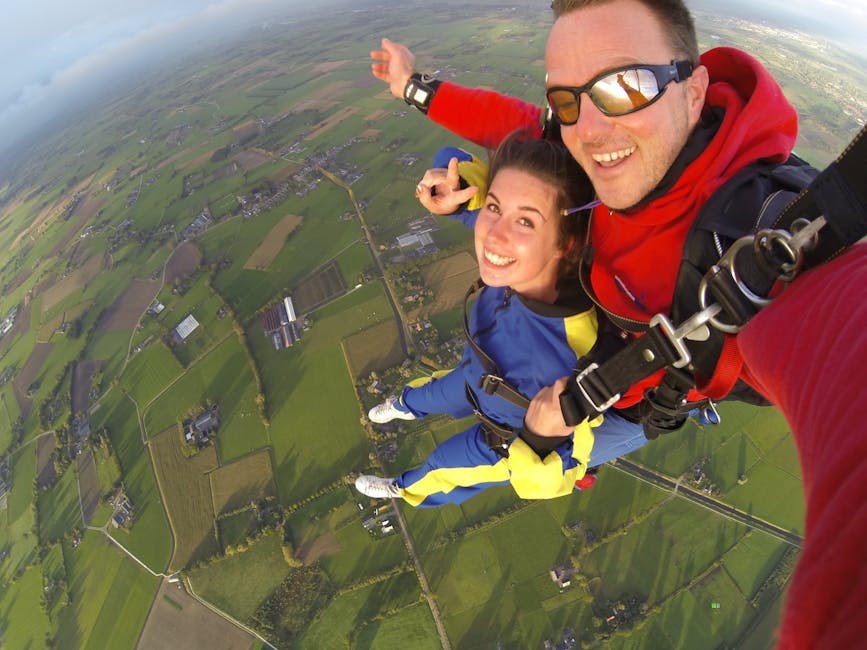
Woman and Man Wearing Overalls Sky Diving

Leanne Belling, who suffered from flight anxiety has overcome her fears and feels like a new person now.

Leanne's story: "I never had a problem with flying, day or night, no matter the weather or distance. A few years ago, I was on a flight from Johannesburg to Durban, the flight was scheduled to leave at 7pm, but due to the severe storm and rain we were delayed by an hour, and departed around 8pm. At the time, I was not worried, I boarded the plane, we took off and I assumed we would be home in an hour.

The take-off was very bumpy due to the weather and 15 minutes into the flight, the Captain announced that we needed to remain in our seats as there was a bad electrical storm ahead and they were going to fly us around it. The flight at that stage was very turbulent, we went through many air pockets and were being shaken around quite badly with lots of lightning bolts all around us.

There were some luggage compartments that opened with bags falling out, resembling something out of a horror movie. There was a really loud bang and massive shudder through the plane, it was suddenly very hot and the air hostesses started running around frantically and were looking rather pale themselves. It was at this point the fear of God was instilled in me and I realised we had a problem. The Captain came back on and announced that were descending to 10,000 feet as we had lost cabin pressure and that anyone wearing a neck tie or jersey should remove and loosen the items, they recommended the bags to assist with breathing. I suddenly realised that this "could be it" and I may never see any of my loved ones again.

Everyone on the plane was in a panic at this stage and everyone was hysterical, myself included. Strangers were holding hands and praying in support for one another in the terrifying moments where none of us knew if we would survive it. Once we had descended to 10,000 feet, they proceeded to go through the emergency landing brace position. The rest of the flight was really rough, and seemed like it took forever for us to reach Durban. Total flying time 1 hour 45 minutes.

On arrival at the Durban Airport (old Durban airport), we were cleared for landing, as we descended to the runway, all I remember seeing were rows and rows of emergency vehicles, ambulances and fire engines. The landing was extremely rough, and when the plane came to a stop, everyone on board clapped and cheered for the pilot. The plane was parked and we were all ushered out the back and around the opposite side to the engine that was struck by lightning with beacons demarcating the wing which looked damaged. I was so happy to see my mom and I sobbed like a baby when I hugged her and held onto her.

Since that unfortunate flight, I have battled with a serious struggle whenever I needed to fly for business, to the point where in a period of about 8 or more years I have never flown on that airline again. In some instances I deliberately missed a flight or two in the hope I wouldn't have to go. My doctor prescribed tranquilisers that were to calm me down before a flight, they didn't work so I used to have a few drinks as well no matter the time of day, just to gain enough courage to actually set foot on a plane. Before I flew I used to be on edge for weeks before the actual flight, a complete nervous wreck, and drive everyone around me insane. On the day of the flight I was very teary and nervous, I battled with anxiety, sweaty palms, uncontrollable panic attacks and uncontrollable tears.

Once actually on the plane, I would do random things, like check the condition of the outside of the plane, touch the plane as I entered to feel for myself that it was solid, ask the air hostesses what the weather was like and whether or not we were expecting a turbulent flight, their answer usually sent me into a panic. I would sit down and fasten my seat belt and then proceed to grasp the arm rests while my heart pounded so hard that it felt as though it would jump out of my chest. My hands were shaky and sweaty, I had this uncomfortable tingly sensation down my throat and neck with a paralysing effect on my arms. So bad that I would keep saying I want to get off.

Any sounds in the plane or on the outside prior to take off would make me start crying as the fear of the flight getting closer got worse. I could never envision arriving on the other side safely, every time I left my family to fly I would imagine that I was not going to make it and it would be the last thing I ever did. As the engines started I would end up in a complete panic and sob my way through the take off. Every time there was a bump or noise I would get such a fright and my heart would pound even faster. By the time the drinks were served I would ask for 2 hunters dry or 2 bottles of wine and drink them as fast as I could, on top of the tranquilisers and alcohol I had already consumed, to further "numb away" the fear. Whenever we landed I couldn't wait to get off and felt the most immense relief when my feet touched the ground.

I ended up in a position at work that required me to fly very often instead of the usual twice a year, beginning with 18 flights in 7 weeks on all kinds of planes to all kinds of airports big and small. After the initial flights I would be required to fly 2 to 3 times per month to Johannesburg and Cape Town. I was in a complete tail spin to the point where I started going for interviews as the thought of flying that much scared me to death. Added to this, I faced continuous ridicule from my fellow colleagues, people think that having a fear of flying is silly, they'd laugh and make a mockery of it and me, which makes it even worse to face or talk about.

A friend of mine suggested that I try hypnotherapy. So a week before the 18 flight marathon began I booked my first appointment. I met her and we went through all the details of what exactly it was that scared me and how I felt when I was overcome with fear. During my first hypnotherapy session we recorded the actual hypnotherapy part onto a CD, and I religiously listened to it every night before the first flight.

I was very nervous before the first flight as I had never used hypnotherapy and I didn't know how I would react on that flight. It was difficult, but I managed to fly with no medication or alcohol. I was still sweaty, heart pounding, getting a fright with every bump and worrying I would not arrive safely, but there was a huge difference even from session 1. I continued with my CD and booked another session. I became calmer, could book my flights without having a panic attack, was able to check in feeling calm, got on the plane without feeling that I needed to get off and managed my emotions so much better.

On about the 5th or 6th flight I realised that I did not need any form of medication or alcohol anymore and I realised that I was making good progress. Every flight I took from there on was a step towards my recovery. I didn't need to drink, I chose to drink and I chose to drink only half at a normal pace.

Slowly but surely with each and every flight, my fear diminished and my hands stopped sweating, I didn't cry any more or get nervous with every bump or sound. I slowly worked my way through all of the issues and the reactions one by one over a 6 month period, and now I don't worry about flying, I don't touch the plane or ask the hostesses about the weather, I do not worry whether it is day or night, I do not pay attention to the actual weather. None of those things bother me anymore, and I find that I now speak to people and say, I used to be scared of flying, but now I actually enjoy it.

On the 22 April 2016 marked my 6 months of hypnotherapy, I snuggled in with my pillow and blankie and I fell asleep for about half an hour. This was the final hurdle that we have been trying to overcome, and I did it.

On the 17 May 2016, I will be boarding a plane on the airline that I had a terrible experience with and I will be facing and conquering my ultimate fear. The ticket is booked and I am feeling confident about it. I am looking forward to achieving my ultimate goal.

Hypnotherapy is an amazing tool to choose and if you really do want to overcome your fears, I recommend you give it a try. It is easy, non-invasive and it has changed my life forever. I can just recommend it to anyone who has fears, want to achieve goals and is serious about having a better life."


http://ezinearticles.com/?Free-Yourself-From-Debilitating-Fears&id=9429193

Within A Thinking Person, The Life Of Fear Is Limited


The fundamental thing in life is the courage to live life. With that simple sentence, I begin this article. There are many things we all need to overcome before we do "make it where we want to go", and even then: There is work and usually lots of it to do after that. I remember when my Dad was dying in 1990. He basically said that it was not the end for his consciousness and that there was more to do for him elsewhere and somehow. To be honest, I wanted so bad to think he was "delusional" or "crazy" somehow. But, being that there is not any end to change, and never any end to the need for courage over fear. I am convinced that he was and is right in so many ways, and courage that is consistent is a process, a consistent process, not an end to be "achieved permanently" without anything else to do to achieve it.

To prove my point about fear implied in the title of this article, let me go into the nature of panic: When one panics, thought is literally stopped, and fear literally takes over. Where there is courage, and genuine courage, not overconfidence I might add, there is not any panic. What I mean by overconfidence is misunderstanding, what confidence is in the most positive sense is certainty and understanding in the most pure, real, honest and genuine sense.

The mental and spiritual attitude is the valve and lever to reality, and the mental and spiritual attitude can be used to control or lose control of reality. Fear is an attitude as well as courage. Reality misunderstood and feared is a form of panic, and the absence of thought is a form of misunderstanding. With that, I would like to reiterate a formula I give in many other articles:

Patience, understanding and tolerance is the key to a life without panic or fear. Oh, it sounds easy, and it is simple. But like so many worthwhile things, it takes work, it take honesty, and it takes a working conscience, and ultimately it takes a cool, actively thinking mind that takes rational action whatever the circumstances.

Sure, I can talk about rational thinking and action, but, even for me, I have to "play by ear" and force it to happen within and outside of myself and I do flinch, but I ultimately realize that life is only as good as my attitude is and strive to do the right thing by life and existence instead of the wrong. The wrong is always based on panic and fear. The right is always backed by courage and faith. Know that consistent process, and life will ultimately work, whatever the temporary failure, even the seeming "death of a situation". I will simply end with these words that I meditate on honestly and you should too: I get it and I will work with it however it comes. That is tolerance. Understanding is full context perception without prejudice. Patience underpins it all for me, for that is where the peace is. Well, I will leave you some room to think and act, but I have said my peace.


http://ezinearticles.com/?Within-A-Thinking-Person,-The-Life-Of-Fear-Is-Limited&id=9533767

3 Science-Backed Ways to Handle Fear


It was twilight and I had turned into the little alley to take the shorter route home. Suddenly something moved in the shrubbery. Before I could think, literally, I felt blood rush to my extremities and found myself turning back in panic. Within seconds though, it dawned upon me that it was merely a leaf rustling in the evening breeze, and I regained my composure. I had believed it to be something far more sinister, and my fear had kicked in way before my rational mind could.
Fear is part of our evolutionary journey—the oldest emotion we have inherited from the earliest reptiles of 600 million years ago in order to ensure our survival. We've managed to preserve it in the deepest recesses of our brains and carry it forth into the relative safety of the 21st century.
However, in today’s world, we rarely face the physical dangers that our hunter-gatherer ancestors did. Most of our fears are psychological, creations of an imagination that tries to protect an illusive ego. The classic fight, flight or freeze response shows up as the "attack, avoid or accommodate" tendency that harms our relationships and limits our full potential.
What are we to do? Here are 3 strategies to try.

Breathe from Your Belly

Our fear response is largely beyond our control. A pumping heart, blood rushing to our extremities, and the release of cortisol and adrenaline are all physiological reactions that run their course without our conscious input. But there is one we can control, and eastern meditation practices recognized its importance thousands of years ago. It's the breath. When we're fearful, we breathe shallowly from our chest—which is why our voice can squeak. Any vocal artist would recognize the importance of breathing from the belly to overcome fear and regain a commanding voice. In his book, The Self Comes to Mind, renowned neuroscientist Antonio Damasio talks of the importance of maintaining a natural rhythm to our breath, since it's ground zero for the way we experience life. And mindfulness practices study the benefits of focusing our attention on our breath in order to ground ourselves in the safety of the present moment and thus calm the fear response.

Reach Out to Others

It's often believed that humanity’s rise to the top of the food chain is the result of our social brain more than any other capability that distinguishes us from other primates. In his book, Social, psychologist Matthew Lieberman reveals that our need to connect with other people is even more fundamental than our need for food or shelter. No wonder we can calm others by a smile and a soothing voice, by looking and listening to them and by the warmth of a gentle touch. Neuroscientist Steven Porges explains that the new mammalian vagal nerve that enables us to do so developed as an alternate response to stress so that the traditional defense mode need not be called into action. By calling a family member or a close friend, or spending time in their company, we can initiate the parasympathetic nervous system and return our body to a state of calm.

Sit with It

Fear calls for urgency and action. For the purpose it serves, it's a brilliant mechanism devised by nature to ensure our survival. However, not all fears require the limited repertoire of the fear response. Panicking before a big presentation or feeling queasy about a difficult conversation are all fears that urge us to avoid the situation altogether. Being angry about someone’s behavior or fuming over an email are also reactions to fear that instigate us to react with vengeance in order to establish our power.
When we can sit with our fears without reacting to them, we develop an inner resilience that silences them over time. This is the basis of many of the cognitive behavioral treatments for anxiety disorders such as panic and obsessive compulsive disorder. Watching the wave of fear’s urgency rise, pound, implore, and then reduce to nothingness is one of the best ways to handle its false cries of wolf and allow our rational mind the time it needs to kick in.
Einstein famously said that the most important question facing humanity is whether we view the world as a friendly place. Our fears have gotten us thus far in our evolution. But they have also given rise to the many challenges we face. We don't need to look far to find solutions to these problems. The answers lie within us, in our ability to see the world not as foe to be feared, but as a common humanity.