Showing posts with label relaxation. Show all posts

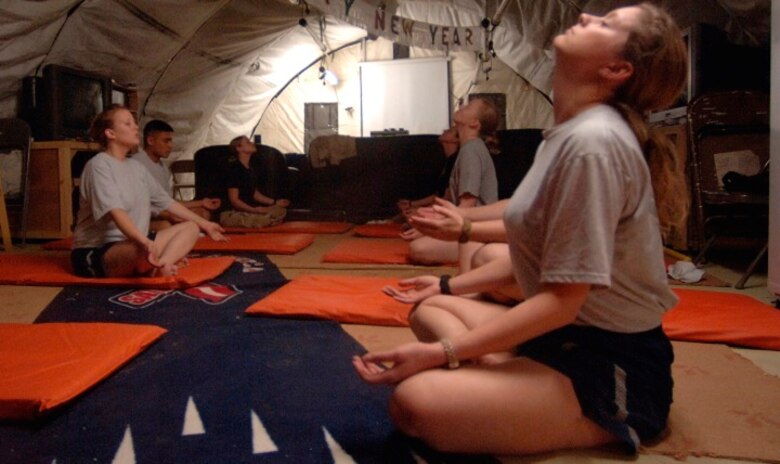
5 Great Reasons to Try Guided Meditation


Guided meditation brings deep relaxation. Healing imagery is most powerful when you're deeply relaxed.

And good things happen.

So, here are 5 great reasons to try Guided Meditation with healing imagery.

Great Reason #1: Repair the negative effects of stress on your health

You know stress causes physical health problems, and you know reducing stress effects will help you stay healthy. But you can't get rid of all the stress in your life! So how can you protect your body?

Guided meditation shows your mind and body the path into deep relaxation. Your brain releases cascades of healing biochemicals, washing away the negative effects of stress, reducing inflammation, enhancing immune functioning and rebuilding healthy neurons in your brain.

Great Reason #2: Positive time management.

It's hard to find time for you, so it's important to use your time most effectively.

Listening for only 20 minutes, guided meditations take you through the process of releasing physical and emotional stress and nourishing your brain and body, and healing imagery gives you the added physical and emotional boost of mind/body nurture in the areas you need it most. Those few minutes of support give you energy and focus for the rest of your day.

Great Reason #3: Support your healthy choices

Habits like healthy eating and healthy sleep are important, but they're also difficult to establish. Personal changes like letting go of old fears or learning to be more confidant can also be challenging. Healing imagery is more powerful when you are deeply relaxed. Your brain can practice your new behaviors. You see yourself succeeding, and your mind and body get comfortable with making new choices.

Great Reason #4: Nourish your heart.

You may have come to a dry spot in your life. It happens to all of us. Healing imagery shows us new ways out of the deeply rutted paths, and allow you to experience your inner world in fresh new ways. As you rest in deep relaxation, you can open up new areas, explore new facets of yourself. And discover new pathways of hope, of peace and beauty.

Great Reason #5: It's fun!

I know, personal growth, spiritual development, mind/body healing - it's all supposed to be serious business. And I suppose it is. But the same God who is present in the deepest, most spiritual meditation is also present in story-telling, joy, and yes, even fun. And experiencing the joy, the warmth and support your heart has needed - that's a gift.

So, take a rest from the work of your life. Sit back and nourish your brain and body with guided meditation and healing imagery.


https://ezinearticles.com/?5-Great-Reasons-to-Try-Guided-Meditation&id=9701481

Zentangle - The Art of Untangling a Tangled Mind


"Are you stressed all the time?"

"Do you need to let out your stress and relax?"

"Is there a need to improve hand/eye coordination?"

All of these and much more can be done through the Zentangle method. The Zentangle Method is an easy-to-learn, relaxing and fun way to create beautiful images by drawing structured patterns. This method can be used by anyone who knows how to write their name. It helps increase focus and creativity and provides artistic satisfaction with an increased sense of personal well-being.

Zentangling is a formalized process that was created by Rick Roberts and Mary Thomas. It is a specific way to draw images, most often in black pen on white paper. The traditional practice of Zentangling is done on 3 1/2" inch square tiles made of special paper, but it can be done on any paper cut into squares or can be done on larger paper as well. The process of Zentangling may look very intricate but it is a very simple pathway to relaxation and focus. It is also called doodling with a purpose. Practitioners of this art form have given several benefits including calming an anxious mind, increasing self-confidence and creating moment to moment awareness in a similar way as mindfulness meditation.

How to create a Zentangle?

To create a Zentangle you begin with a pencilled frame and then draw a "string" through the frame to divide the box into sections. In each section you draw a repetitive pattern, called a "tangle." The meditation comes both in the rhythmic drawing and in reflecting on your work afterward. Some of the characteristics of the Zentangle method are: Deliberate Stroke: In the Zentangle way, each stroke is done consciously and deliberately. When we draw each stroke deliberately, we realized that how these insignificant strokes contribute to an overall pattern.

Deliberate Focus: When deliberate strokes are being made, the attention is on the stroke and not on the final product that will be made. So this leads to increased focus on the strokes being made and not thinking about what the final pattern will look like.

Unknown Outcomes: The Zentangle method allows each person to discover new possibilities that is not anticipated when we begin with the art.

Abstract: A Zentangle creation is meant to be non-representative with no up or down. Since it is not a picture of something, creators need not be worried about whether they can draw a hand or a duck. It is just the different strokes that form a pattern and finally an abstract picture.

No Eraser: There is no eraser in life and there is no eraser in a Zentangle kit. However, in creating Zentangle art, one discovers that the apparent mistakes made can be foundations to new patterns and take one to unknown and new directions.

Gratitude: Gratitude is the foundation of zentangle art. Whether it is appreciating the texture of these wonderful paper tiles, becoming aware of the patterned beauty around us or thankful for the opportunity to put pen to paper, we always return to gratitude.

Inspirational: The Zentangle Method's non-verbal language of patterns and proportions can open doors to insights which seemed locked before. Creating in a Zentangle way opens those doors, not because they were locked, but because those doors swing on non-verbal hinges. When you create in a Zentangle way you can enter a state of relaxed focus in which intuitive insights flow freely.

Ceremonial: Like in the Japanese tea ceremony, when zentangle art is being created, the person creates a personal environment of peace and harmony.

Portable: A Zentangle tile is 3 1/2 inches (89 mm) square. A Zentangle tile is designed to be completed in one sitting. A tile can be finished in as little as 15 minutes. Once the tile is completed, a sense of accomplishment occurs and more tiles can be completed in less time.

BENEFITS OF THE ZENTANGLE METHOD:

Zentangle Method is being used by many people for different objectives. Some of the benefits that people have experienced by practicing this method are:
• Relaxation
• Simple and quick access to mindfulness
• Non-verbal journaling
• Insomnia (improved sleep by creating Zentangle art before sleep)
• Self - Esteem
• Inspiration
• Panic attacks
• Modify Behaviour
• Being part of supportive community
• Nurture and develop creative abilities
• Relieve stress
• Improve hand/eye coordination
• Develop/rehabilitate fine motor skills
• Team building and group focus
• Therapy
• Anger management
• Addiction therapy tool
• Diet aide
• Increase attention span and ability to concentrate
• Home schooling
• Brainstorming
• Problem solving
• Design Inspiration
• Stretching and warm up for artists.

Personal Experience of practicing Zentangle art:

My personal zentangle story began in 2015 when a surgery to my ankle had me on bed rest for 6 weeks. As they say "an idle mind is a devil's workshop", the bed rest and immovability had my mind getting unwanted thoughts that needed to be put to rest. Since I was immovable and could not do much, I started exploring the internet for something that I could do while I am on bed rest. That's when I chanced upon the Zentangle art. I first started reading about it and was intrigued to try it. So one step at a time, I started trying out tangles from the internet and felt very relaxed when doing it. I became so involved with this art form and realized that even a day without doing the art made me feel like I was missing out on something. Though I was out of bed rest and working along with taking care of my family, I did not stop doing the art as it gave me peace and helped me relax and have some time for myself. On further research, I found out that only certified teachers can teach the art. So I started looking out for a certified teacher and took a class with her after one year of practicing the art form. The class was a huge learning for me on the nuances of doing the art. It helped me better understand the art form and what benefits it can provide to me.

Practicing the art has helped me in the following ways:
• Relax my mind
• Anger management
• Reduce mental stress
• Live in the moment
• Not think about what has happened or worry about the future.


https://ezinearticles.com/?Zentangle---The-Art-of-Untangling-a-Tangled-Mind&id=9824280

How Do You "DO" Stress - How Do You "DO" Relaxation?


Today, I want to share a powerful insight from the practice of Neuro-Linguistic Programming (NLP) that will help you release stress and increase relaxation in the face of any challenge.

One of the primary things you learn from NLP is that your experience of life is in your control.

That doesn't mean that you can control every event or circumstance. What it does mean is that you can choose HOW you experience events and circumstances and HOW you relate to them. You can choose HOW you are doing your life.

Richard Bandler, the father and co-creator of NLP, began his work in the 1960s with a simple empirical approach. Rather than theorizing about "why" people did what they did, he would investigate "HOW they did it."

For example, he looked at how people who were successful in kicking habits, getting over loss, achieving success, and creating relaxed positive experiences used their minds to get those results.

He also looked at how people who were stuck in bad habits, lost in depression, ridden with stress and anxiety, and frustrated in moving forward used their minds.

What he discovered is that recurrent experiences are the result of habitual ways of perceiving things. It's all about how you are in the habit of interpreting your experiences.

If this is so, then, you have the ability to have new experiences by adopting new ways of perceiving the same situation.

As Bandler says, "When you think in a new way, you get to do new things and you get to feel new things." (p.xxvii, Get The Life You Want)

So how does NLP work? It begins with a present experience. You begin by looking at your present experience as something that you are doing rather than as something that is happening to you.

This is a powerful mental shift that is the key to overcoming stress as well. Stress is the result of looking at yourself as a victim of events that are happening to you, rather than seeing what you can do to make things better.

With this as a starting point, your first goal is to discover how you are mentally creating your experience of stress, consciously and subconsciously.

You can get a feel for how you do this by calling to mind a recent experience of stress...

When you have this experience in your mind, ask yourself the following simple series of questions.

What do I feel in my body?

Where is this feeling located? What are the qualities of this feeling?

Does it make me hot/cold? Does it make me breathe fast? Does it make my muscles contract? Is it heavy or light?

Where does the feeling start from? How does the feeling move in my body? Is there a direction to it?

You can move your hand in circles in different directions and see which one matches how your feeling is moving.

What images are associated with this feeling?

How many images are associated with my feeling? Are they moving or still? Are they in color or black and white? Are they small or large?

Where do I see them? (In front of me? Behind? Above? Below? Left? Right? In the middle?) Am I in the image or looking at it?

Are there any thoughts, beliefs, or words in my head associated with the feeling and images?

What words do I hear in my head? Who is speaking them? What is the tone, tempo, and rhythm? How do those words make me feel?

Are there any other sensations associated with the feeling/image/thought? Any smells, tastes, or bodily sensations?

Mr. Bandler calls this taking an inventory of the "submodalities" of your experience.

Now, bring to mind an experience of "relaxation" and go through the same questions:

What do I feel in my body? Where is this feeling located? What are the qualities of this feeling? How does the feeling move in my body? Is there a direction to it?

What images are associated with this feeling?

Are there any thoughts, beliefs, or words in my head associated with the feeling and images?

Are there any other sensations associated with the feeling/ image/thought? Any smells, tastes, or bodily sensations?

As you witness how you are doing relaxation and how you are doing stress, you see that these experiences are generated by doing different things. Since stress and relaxation are the result of what you are doing, you have power to step into these experiences and do something different.

You can imagine being relaxed in any situation, focus on relaxing thoughts, embody relaxing feelings and sensations, and take actions that make you feel empowered to take yourself out of stress and into relaxation.

One of the most powerful ways you can practice this is through meditation. In meditation, you learn to calmly witness how you are "doing stress"-and let that go-so you can consciously choose to "do relaxation and empowerment" instead.

Enjoy your practice!


https://ezinearticles.com/?How-Do-You-DO-Stress---How-Do-You-DO-Relaxation?&id=9477728

The Dangers of Stress and How To Manage It


This is a state of mental or emotional strain or suspense. The body functions in a cyclical manner. There are periods when it functions at a peak and there are periods when it needs to rest and replenish its energies to face more challenges of future activities. Through relaxation, the body is reenergized. It is then able to restore the brain processes of focusing attention and performing subtle cognitive and social tasks.

A lot of stress in our lives causes great havoc to our body system. Some of the negative effects of stress are:

i. Muscular tension-

This is the physical condition of stretching or overworking the muscles. The muscles, like machines, needs time to rest to replenish their energies to work for the body. If this break or rest is denied it, it puts a strain on it and can cause its breakdown. If this does not even happen, the efficiency of the muscles will be drastically reduced and the individual will start experiencing short term sicknesses. A long-term effect may have serious consequences such as stroke or render the individual paralyzed.

ii. The reduction of the flow of energy-

Stress causes the body to lose a greater quantity of energy to undertake its activities. This weakens the immune system which is supposed to protect the body from foreign substances and pathogenic organisms. This makes it very easy for the individual to be attacked by diseases.

iii. The feelings of fatigue-

Fatigue is a temporary loss of strength and energy resulting from hard physical or mental work. It is boredom that results from overexposure to work. When this occurs, the individual begins to experience tiredness which can be disastrous to his health. Working in this state can cause a person to commit serious mistakes in the course of work.

iv. The reduction of flexibility and range of motion in the body joints-

Stress can also cause the joints of the body to be stiff and may cause it not to enjoy its natural flexible manner of working. This reduces its speed of work resulting in the individual slowing his or her pace of work. It can cause the person to lose his employment because he works below the standards and expectation of his employers and thereby affecting his mental health.

v. Strain and injury-

Strain and injury are the visible end products of stress. The victim of stress usually exerts himself or herself too much to be able to perform even a simple task. If the task to be performed is physical in nature, the stresses person vigorously attends to the work resulting in injury. Stress has been the cause of numerous accidents, injuries and in some cases death in workshops, firms, industries and on our roads. Therefore, do not yourself good and maintain your healthy lifestyle by taking a rest or relaxation whenever you feel stressed up.

Stress is part of humans because we all toil to make ends meet and to take care of our families. There is, therefore, the need to manage stress. Stress can be managed through deep relaxation and massage.

i. Deep relaxation - a way of resting and enjoying yourself. It helps in keeping away from external detractions and to restore the lost energies that the body needs to function effectively.

ii. Massaging/touch therapy - the act of pressing and rubbing the body manually with the hands or mechanically with a machine, to help them relax or to reduce pain in the muscles or joints.

A creative person has to use his/her own imagination to come out with something new. He needs to have critical thinking, innovative and problem-solving skills. When the body is stressed up, fatigue sets in and critical thinking etc. are affected. This makes it very difficult for the creative person to come out with fresh original ideas. The artist should not get stressed up in any way since it can affect his abilities to create or bring new things into existence.


https://ezinearticles.com/?The-Dangers-of-Stress-and-How-To-Manage-It&id=9524574

Simple Technique to Release Tension and Anxiety


What if you're holding tension in your body right now that affects how you think, feel, and act without you even knowing it? This unrecognized tension keeps you in a state of subtle stress that drains your energy, makes you perpetually anxious, and sets up chronic neck pain, back pain, and illness. Over time, you can become so numb to this stress that you don't know what deep relaxation feels like. In this post, you'll learn a simple technique to release subconscious tension, so you feel lighter, freer, more relaxed, and energized in just minutes.

In the book, "Meditation: An In-Depth Guide" (Tarcher/Perigree, 2011), authors Ian Gawler and Paul Bedson tell a funny story that illustrates how most of us are so accustomed to holding tension in our bodies that we don't even know we are tense.
Gawler and Bedson describe a participant in one of Ian's meditation classes named Brian. Brian came to meditation class wanting to relieve back and shoulder pain that had plagued him for years. In their first class, Ian slowly guided the class into a meditative state and then opened his eyes to check on how people were doing. He noticed Brian "sitting there, deep furrows across his brow, shoulders hunched, and hands tightly squeezed in two fists." (p.81, MAIG)

When the meditation was over, Ian went around the room and asked about people's experience. When he got to Brian, Brian said through clenched teeth, "Oh, fine, really relaxed" and he seemed to mean it.

Ian had seen this many times. As a result, he used simple exercises to help people both become aware of tension and become familiar with what relaxation feels like. After doing these exercises for a few weeks, Brian reported that "I have a lightness in my body. The backaches and shoulder pain have gone and I seem to have more energy." (81, MAIG)

The Tension You Don't Know You're Holding

Tension comes from stress. Here's how this happens:

You are faced with a challenging situation. You don't know if you have the resources to handle this situation well. This perception initiates your body's stress response.

Immediately, your amygdala, the part of your brain responsible for monitoring threatening situations, fires up. It sends alert signals throughout your body to mobilize you to action. Your hormone system switches to adrenaline mode and electrical signals shoot through your connective tissue preparing you to be on guard.

If you are facing a major, or life-endangering threat, this reaction is dramatic. You feel your heart race, your breathing quicken, and your muscles tense. If and when you handle the threat, these physiological responses subside and you return to a resting state of recovery.

Since the situation and the resolution are somewhat dramatic, you will likely notice and feel the effects. The sensations are strong and the contrast between alarm and recovery is great-so you can easily sense it.

However, there are two situations in which the tension does not subside-and you don't notice it. In both cases, tension is subconsciously stored in your body.


The Tension of Trauma

The first case is when a situation is dramatic and you are not able to fully process it-it overwhelms you. Being in a car accident, being subject to physical or emotional abuse, being the victim of a crime, or experiencing intense trauma such as war, will likely exceed your coping resources. In these situations, your stress response is initiated and your body goes into shock. Your body "freezes" in this state. You lock into stress mode and do not recover.

As time passes, the tension locked in your body moves to the background of your awareness and you no longer notice it. It becomes "normal." However, it continues to affect how you think, feel, and act.

For example, you may become anxious in related situations. You may "flashback" to the original stressful event or have persistent negative thoughts and feelings that seem to come out of nowhere. You may have persistent mental chatter related to the traumatic event such as "I'm unsafe," "I better stay on-guard," and "the world is a dangerous place."

These thoughts and related feelings will continue to cycle in your mind and body until you are able to consciously process and resolve the trauma and release the associated tension.

Subtle Tension

The second cause of subconscious stored tension is more subtle. It's so subtle you will probably be completely unaware of it, until it builds into something like digestive issues, chronic back or neck pain, migraines, or cancer.

I began to notice this subtle tension when I was stretching my clients. In one dynamic stretch, my client lies on their back. I stand and hold them by their ankles. I rhythmically pull one leg and then the other, creating a side to side rocking motion at the hips. This is a great way to release hip and lower back tension.

As I stretched client after client in this way, I would notice that most people would at first have their hips "locked," so that I was not able to move them. I would have to say something like, "O.K. now, let your hips go." With this simple instruction, most people were able to let go and get some degree of lateral movement.

I generally kept this rhythmic stretching going for at least 60 seconds, so the hips and back let go and release more and more. Yet, I would notice that a few seconds into the motion, many clients would lock up again. Their hips would go rigid.

Intuitively, I began to ask, "What did you start thinking about just now?"

Invariably clients would say, "What do you mean?"

I would tell them that their hips just locked up. When I questioned them further, they would say things like, "Oh, I just started to think about this or that that I have to do later," or "I started to worry about such and such."

It was fascinating to see how initiating a slightly stressful thought would immediately produce tension in the body.

How many stressful thoughts, worries, or anxious moments do you have in a day? How many of these thoughts or worries are persistent? For example, with your finances, work, or family situations? Can you imagine how much subtle tension gets stored in your body-without you even knowing it-as a result of stressful thoughts, worries, and concerns?

Stressful thoughts and feelings immediately translate into physical tension. I became persistently aware of this insight as I worked with clients who had chronic neck pain and low back pain in particular. Yes, these relate to physical issues such as muscle tightness, weakness, and imbalance-AND they were invariably accompanied by stressful thoughts and feelings.

For example, I learned that when someone has an acute attack of neck pain or back pain it is invariably traceable to a stressful event or series of events. Yet, most people do not make this connection. Most are looking only for physical causes and physical cures and fail to see the mental-emotional events that set the tightness and pain in motion.


Recognizing and Releasing Subconscious Tension

Fortunately, your body and mind are equipped with resources to recognize and release tension and the accompanying pains, thoughts, feelings, and memories. These tensions may exist in layers that take time and persistent attention to release, but it does happen if you work with it. A practice such as meditation is a gentle way to release these tensions as they arise in awareness-whether they come from traumas in the past or are momentary tensions of the present day.

Here's another simple way to recognize and release tension in just a few minutes.

The Contract/Relax Technique

Above, we talked about how intensely stressful experiences are palpable when first experienced and noticeable when they subside-if we handle them well. There is a sharp contrast between alarm and recovery that provides a clear awareness of the difference between tension and relaxation.

When I learned meditation in the Kriya Yoga tradition, the initial instruction capitalized on this feeling of contrast to train a feeling of deep relaxation. The idea is simple: move your attention through your whole body, from toes and feet, to legs, buttocks, abdomen, chest and back, shoulders, and face, first gradually tensing each area into a strong muscular contraction, then slowly releasing the contraction until you feel the muscles completely soften.

Go ahead and give this a try just with one body part and see how it feels. I suggest trying it with one hand. It's a pretty cool sensation.

Place one hand, palm up, on your leg. Focus on the sensation in your hand as you slowly curl it into a fist and then gradually tighten it to about 70% of maximal contraction. Hold this contraction for ten seconds... Then, VERY SLOWLY release the tension until your hand is completely limp.

When you think your is completely relaxed, see if you can let go even more-until your hand and fingers are softly resting on your leg, like a cloud floating in the sky. Notice how your hand feels. You may feel a lightness in your hand, a warmth of circulation, or just a soft, spacious feeling.

Compare the sensation to the other hand and notice any difference.

If you want to experience a deeper, whole-body state of relaxation, you can perform a Contract/Relax sequence, first with both feet, then both legs, both hips, your abdomen, chest, back, shoulders, and face. This technique, sometimes done from head to toe, is generally known as "Progressive Muscle Relaxation." Once you are finished, notice how your whole body feels. Record this feeling in every cell, so it forms a strong impression that you can return to more easily and deepen the next time you practice.

If you practice consciously relaxing using this technique, meditation, or some other method, you'll begin to have a reliable baseline of relaxed awareness you can live from and return to whenever you need.

Enjoy your practice!


https://ezinearticles.com/?Simple-Technique-to-Release-Tension-and-Anxiety&id=9961745

Fighting With The Stress


Not many people were familiar with the word stress a few years back. But in the past decade or so it has not only become popular but also has become a common symptom in human beings. As we know every action has an equal and opposite reaction, the same is the case with our lives. Sometimes there are situations which can make us worried. These worries can cause stress when carried in our mind for long. There are three types of stresses in common:

• Acute Stress- It is the response of our mind towards any terrifying event that can cause emotional disbalance.

• Episodic Acute Stress- When the acute stress starts happening more frequently then it may cause episodic acute stress.

• Chronic Acute Stress- If the acute stress is not taken care of for long period of time then it enters the phase of chronic acute stress.

To counter stress it is very important to know- if we are really a victim of it or not? So before starting to cure it, we should first check the symptoms of it and then take any further steps. Some of the symptoms of the stress are:

- Longtime headaches.
- Insomnia.
- Stomach problems like constipation, diarrhea.
- A sudden increase in heartbeat and blood pressure.
- Dizziness, nausea.
- Pain in muscles.
- Thinking more about a particular thing.

When you encounter these symptoms in yourself or anybody it is always good to take the advice of a doctor to get a better view of the situation. A doctor can help you in getting out of that, what you think, is stress. Stress is something which cannot be treated with the medicines but it can only be handled by knowing your inner self.

Taking the advice of a doctor is important, but there should also be some efforts from your end also. Here are some of the tips which can help you battling stress:

- Avoiding caffeine.
- Try to sleep more.
- Try meditation and other relaxation techniques.
- Talk to your near ones.
- Try to take control of your mind.
- Spend more time with friends and people who make you happy.

Other than these tips the one thing that is really important is to never give up on yourself. Mind -'It is not the stress that kills us, it is our reaction to it'. So, try to act smartly, and fight with it like a warrior.

Students and parents all over the world face stress when it comes to excelling in academics. The tutors at House Tutor provide quality coaching to students to help them excel.


https://ezinearticles.com/?Fighting-With-The-Stress&id=9873979

Deep Breathing for Stress Relief

Ready, set, focus: Finding calm in a storm through the power of ...

One of the first responses to a stressful event is a noticeable change in the respiration rate. If you are stressed, you'll find you either breathe more rapidly or you go the other way and hold your breath. This is quickly followed by an increased heart rate and tightening of muscles as the stress hormones further kick in.

The good news is that our body has a parasympathetic nervous system that activates the "rest and digest" response to be able to rebalance, following the "fight or flight" response of the sympathetic nervous system.

When the stressful situation is over or diminished in intensity, a person will often find themselves taking deep breaths for relief. These deep breaths are vital to trigger a recovery and relaxation response in the brain. This will enable a normal breathing pattern to establish, which subsequently slows the heart rate, expands the lungs and relaxes the muscles.

The Dangers of Shallow and Rapid Breathing

Sometimes a person's normal breathing pattern does not return promptly after the stressful situation has passed. They continue to take shallow and rapid breaths that cause the brain to maintain a stressed state, instead of entering the recovery phase. In turn, the body's sympathetic nervous system also fails to relax and becomes overworked.

Quite often when this happens the person experiences a panic attack. This will cause the depletion of essential nutrients in the body as the endocrine chemistry is further destabilized.

If these adverse changes in body functions persist for extended periods of time, the person will be subject to an increasingly higher risk of health issues, linked to having an overworked sympathetic nervous system due to constant exposure to stress.

Deep Breathing for Relaxation

Thankfully, activating the rest and digest response of the body is something over which we do have some degree of conscious control. By mindfully performing correct deep breathing we can "tell" our subconscious mind that the stressful situation has passed and more rapidly switch to our recovery or resolution phase. Even if we do still feel threatened or challenged, invoking this response through deep breathing will allow greater clarity of mind, reduce feelings of alarm, and allow reasoned thought rather than panicked reactions.

When we talk about "relaxation response" it does not mean lying on a couch or sleeping on a bed. The relaxation response that is promoted by consciously and actively deep breathing will provide a calm but mentally alert mind, capable of focusing on any given task and not distracted with symptoms of stress. This state of mind enables the body to achieve its resolution phase sooner.

Simple and Effective

Deep breathing technique focuses on taking deep, full breaths. While this may seem to be an overly simple technique, it has been proven to be extremely effective in bringing about feelings of calmness and relaxation.

It is easy to learn and you can practice it almost anywhere. Performing deep breathing techniques on a regular basis has been scientifically proven to positively affect a person's digestive system, immune system, heart and brain function.

Simply mastering this technique will give you the confidence that you can deal with stressful situations as they occur. This trust in your own ability will also lessen the undercurrents of generalized anxiety that keep your stress levels elevated. Whatever additional relaxation techniques you choose to practice, you should first learn the correct way to breathe deeply.

Deep breathing is the cornerstone of relaxation and it can be practiced along with other types of stress-reduction therapies such as music therapy and aromatherapy.

Many experts recommend that everyone set aside at least ten or twenty minutes each day to perform deep breathing exercises.


https://ezinearticles.com/?Deep-Breathing-for-Stress-Relief&id=9709803

Relaxation As Part of the Creative Process

High-Angle Photo of Person Wearing Sun Hat

The creative process is a series of flows going and coming from different directions. Some flows come from sources of inspiration, go into the artists mind and flow out from the artist and into the audience. Other flows encircle two fellow artists, while others come from fans to the artist in the form of support, admiration, or income.

But as far as the act of creation is concerned the flows that go through the artist sometimes become problematic and cause difficulties. The artist takes elements they perceive in the environment and fuses those elements together in unique ways with emotional aspects of their psychology derived from their philosophy of life. They combine these factors with the work of their hands using earthly materials to create aesthetic products.

The flows and the process of creation form a system and like other systems they can get damaged or break down. The reasons vary greatly from one artist to another as to why damage or corruption causes the system to slow or fail altogether. Failing altogether isn't as common as slowing or burning out, which is typically caused by the system running or flowing in one direction for too long.

The body and mind are an interface that works well in harmony to control the flows from the environment and the mind as they move through the body. Interestingly, the environment and the mind are constantly emitting impulses or providing stimuli to the body via the nervous system, which consists of the electrical circuits that run throughout the body. The mind is constantly providing orders to various body parts to get them to do its bidding while the environment is a gigantic theater of sensory input without end.

This makes the body a conduit for the flows going in to the mind from the environment and back out to the environment and from the environment coming in to the mind and back out from the mind to the environment. The mind can also provide its own stimuli in the form of inspiration, memories, dreams, and ideas-realms of creativity-which also flow through the body, out to the environment, and back in again.

All of this flowing and non-stop sensory input keeps the body in a state of enervation, which causes damage, slowing, overloading, and burn out. Enervation is simply when the body feels drained of energy or experiences exhaustion from too much stimulation (overloaded circuits).

Physical Relaxation

For artists, relaxation is the only method of reversing the effects of enervation and is therefore a vital practice to achieve creative longevity. The use of drugs (illegal or prescription) or hypnotism is no substitute for relaxation. In fact, they are in themselves additional forms of stimulation and sensory input that would further agitate the body in a state of enervation. Avoid them if possible when relaxation is required.

Exchanging one form of stimulation for another doesn't constitute relaxation. Like the alcoholic who exchanges one drug with another by replacing alcohol with nicotine or caffeine, they are merely switching one addiction for another. Such compromises bring about new problems and the individual remains an addict for the whole of their lives without really living drug free.

True relaxation means refraining from artificial forms of stimulation and sensory input to experience one's self and one's environment in a natural state. When the alcoholic switches to nicotine or caffeine, they are actually mitigating the effects of withdrawal by forming new addictions.

For the drug addict, going through withdrawals is actually the gateway to living drug free. Withdrawals are actually the body's method of removing drug toxins from its systems so that they can be expelled as waste products. This along with other therapeutic techniques is what finally allows a person to eventually arrive at a drug free existence.

Similarly, the artist can recuperate from the artificial forms of stimulation and sensory input derived from the creative process by going through a kind of withdrawal. Because each form of artistic labor will have its own particular challenges to achieve a state of relaxation, each type of creative work will have its own form of withdrawal and will require the invention of strategies to remove the unique stresses that are specific to that art form.

For the chef, try a period of eating only pure flavors to help you relax your palate. This would comprise eating only raw fruits, slightly cooked vegetables, and meats or starches with little or no seasonings at all. Periodic short or prolonged fasts might have the most benefit in the long term to keep the palate sharp and the digestive system strong.

For musicians, go with a period of quiet. Because we exclusively use our ears to find, test, and combine new sounds, it's our ears that suffer the most stress during the creative process. The height of tall buildings and the remoteness of the mountains will help you rise above the sounds of cities and human life, while the distance and expanse of wide open spaces in the desert, grasslands, and bodies of water will bring you peace through extremes of noise reduction.

In contrast, relaxation for the athlete and dancer might consist of either active or passive processes such as resting or stretching depending on the movements they are normally performing.

For the illustrator and painter relaxation might actually pertain to several practices to resolve several issues. Stretching might work to help relax the effects of restricted and repetitive movement, while meditation (sitting with eyes closed or in a pitch black room) will work to de-stimulate the eyes.

Notice how relaxation actually constitutes sensory deprivation of one or more of the senses. The reason is because what we're trying to resolve is enervation (chronic nervous stimulation), which can only be alleviated with its opposite: sensory de-stimulation or deprivation. Other approaches for achieving sensory de-stimulation will include noise cancelling headphones, a sound-proof chamber, meditation, dim lighting, a walk in the forest, travel to a secluded out-of-the-way location, and extended time in an empty house or hotel room.

The purpose of all these approaches is to greatly reduce the amount of stimulation our brains and bodies undergo during the creative process because the focused effort of the act of creation almost always comes at the expense of our body and its need for relaxation. But much more important than the purpose is the effect we are trying to achieve which is resetting or refreshing our senses, so as to return to our work with "new eyes."

Mental Relaxation

Resolving enervation and the physical toll it takes on our bodies is just one component to achieving complete relaxation, while altering mental function will be the other. Sensory deprivation will help alleviate the accumulated stress collected in the nerves of the body, but what about the accumulated stresses in the mind. Just as the creative energy of the body can slow or burn out by flowing in one direction for too long, so can the function of the mind in the creative process.

The focused intensity of the act of creation usually comes at the expense of our minds, especially when our attention acts in a single capacity or mode for too long. Ironically, sensory deprivation will not assist the mind in its ability to refresh itself, because the senses are not its only channels of stimulation. Dreams, creativity, and imagination are unique aspects to the function of the mind and require a different approach when trying to achieve mental relaxation. However, the same principle still applies when dealing with the issue of relaxation.

Just as we resolved burn out caused by excessive or prolonged sensory input, the mind can also be helped. The focused intensity of creative thought can be relaxed by "free thought" because focused intensity and unregulated thought energy are opposite forms of mental activity, which means they can be used to counteract one another. In other words, structured or guided forms of thinking can be relaxed into more fluid or "free" forms of thought.

Within each artistic discipline these forms of mental activity express themselves as extremes such as the difference between the novelist and the poet in writing, the realistic painter and the abstract painter in painting, the ballet dancer and the modern dance performer in dance, as well as tonal and atonal or microtonal music in composing.

Sometimes stretching oneself as an artist can be a form of relaxation, but only if you explore an opposite artistic extreme than what you're normally used to. So if you tend to write in more structured forms, relax by attempting to author a bit of poetry and vice versa. This stretching technique can also be a great benefit because it allows you to find new material to bring into your normal creative mental function.

Improvisation and accidental art approaches are also interesting areas to explore because they combine what we know or have learned with expression without the need to necessarily create something with structure and conscious intention. In other words, approaching our craft with the skills we've acquired but without the goal of creating structure is a form of relaxation for the creative process by getting us to act more spontaneously. The openness of mind required in these approaches slackens the desire for creative outcomes to turn contrary artistic efforts into relaxation techniques. The contrasts and deviations of approach between each pair of opposite as shown above actually holds the keys to therapy within each art form and medium.


https://ezinearticles.com/?Relaxation-As-Part-of-the-Creative-Process&id=9427165

Retain Relaxation, Shun Nervous Energy

Woman About to Drink from Plastic Cup

It is a funny thing, but stress is a form of anger, especially the negative kind of stress fear causes. With that, I begin this article. Real success breeds relaxation. Fake success just breeds looking over your shoulder for fear of getting found out, which is a form of anger directed at yourself and stress within yourself that you cause by not taking the right road in life. Alcoholism, smoking, drugs, they are forms of what I call ultimate stress not relaxation or fun of any sort in that you are looking over your shoulder for horrible effects when sober or a hangover. The point of this article is exploring all forms of stress and anger understanding and management. It may sometimes be hard to read, but reality is ultimately easier than denial.

So, think about this reality, and think about it deeply, very deeply: The only way to be real is to go through reality, not try to escape it through self caused fear, stress or faking it. In short, relax and take it, then give what you want to give to it legitimately. This is the most powerful advice about this subject I can give which I do follow myself to the letter now. Sure, like everyone, I have tried to escape this advice once in a while. But, I never succeeded. Now I am patiently, with understanding and tolerance following my own advice. There is nothing to fake in life, especially knowledge and understanding. Tolerance especially cannot be faked, especially inside of yourself. Beyond thinking about reality, for it to work, the thoughts have to be productively acted upon. For fear, hate, worry and resentment acted upon is the ultimate fantasy, it drives you genuinely insane. After all, what do you think your average patient in a mental hospital ward consists of: Fear, hate, worry and resentment acted upon deeply. After all, that is the near end result of avoiding reality, the other end result could be amnesia or suicide unless you forge a path back to sanity, patience, tolerance and understanding yourself.

Relax, for the only one you deceive in the game of lies is really yourself ultimately. The only one you are playing tricks on in all your deception is you. So, relax, lay back, be honest with yourself and everything, you will get further that way. The stress of lies are weakness. For, after the glitterning promises of lying to yourself fades, there is only stress. Honesty is the ultimate relaxation and the only antidote and pocket therapist that works better than any other therapist. If you are honest with yourself, everything can help in existence. If you are dishonest, even with all the great resources in existence, they can do nothing. We all have a choice.


https://ezinearticles.com/?Retain-Relaxation,-Shun-Nervous-Energy&id=7745096

6 Effective Ways to Focus on Your Personal Goals and Avoid Getting Distracted


Like many people around the globe, is it becoming more and more difficult for you to avoid the ever-present distractions of our time and move purposefully toward the targets you set for yourself?

If your answer is yes, then I want to assure you that all hope is not lost yet. You still have the chance to do more in your life. You have what it takes to do what you want to do despite being bombarded on a minute-by-minute basis by the incredible amount of information, for example, which tends to get you stuck and confused rather than empower you to take action and succeed in life.

I've personally had to deal with lots of distractions as I try to become more productive as an online writer and publisher. Finding time to feed myself alone can be a demanding activity which robs me of a sizeable amount of time to create more content online.

As I work from home, a single visitor to my home can stay for such a long time that they often end up disrupting my day's schedule. It's too bad if it's all about small talk!

Unforeseen life events are another source of distraction.

Now, if you're a mompreneur or a single parent working from home with those lovely precocious kids all around you, I can well imagine how your day could be turned into a nightmare.

TV, emails, phone calls, and excessive noise from neighbours who hardly understand the harm they're causing are just a few more sources of the distractions that are making all of us do less, thereby missing our targets, day after day.

What is the solution to all these? I've got six ideas to share with you to help you focus better. They've been helping me a lot and I hope you too will find them extremely useful.

1. Never lose sight of your original vision.

In whatever you do, let your original motivations be your guide. Remind yourself frequently about why you decided to do what you're doing. This should give you the needed will-power to stay committed no matter the distractions.

2. Listen to advice but let your intuition be the final decider.

Do not allow the enormous number of tips-based and how-to articles, podcasts and videos on the internet these days to make you stray from your goals. If anything, they should provide a guide so you do things right and maximize your outcomes. In the final analysis, what your gut instincts tell you should moderate or even override some of these pieces of advice.

3. Identify the things or people that are a constant source of distraction in your work life.

This will enable you to devise the right approach to at least minimize the nuisance and achieve your production targets.

4. Have a daily schedule you can implement.

It is no use putting too much on the plate only to end up doing so little at the end of the day. Your daily to-do list should be an enabler rather than a noose around your neck. Make it simple and achievable so that you can have a laser-sharp focus on only what is doable.

It is better to properly implement one or two tasks within a set period of time than to have lots of poorly executed personal projects. Too many uncompleted projects can make you waste resources. They can frustrate you or become a source of pain and permanent regret.

5. Make room for "any other business" inside your schedule.

Like it or not, the unannounced visits will happen once in a while. You'll have to attend to the children - and oh, some can really be demanding! There's absolutely nothing you can do about that. You must eat well in order to stay healthy and productive.

Life's unexpected occurrences will always be with us.

This is why you have to find an effective way to accommodate all these within your otherwise tight schedule.

I believe this is the only way to go on being focused and productive in spite of the obstacles that may come your way.

6. Finally, get enough rest.

You need not overwork your body and mind in order to get what you want out of life.Find enough time to engage in healthy habits which will enable you to sleep soundly and rest better.

What is the use? You may ask. According to the experts, one big benefit of having adequate sleep, rest and relaxation time for yourself is that it allows you to gain clarity and psychological stability.

It goes without saying that you will come back more energized to focus on your tasks and achieve your desired results.

So, there you have it. The distractions will never go away completely. In fact, the world is gearing itself up for more to come. That's the reason why you need to cultivate these habits to stay focused on your tasks and personal goals.


http://ezinearticles.com/?6-Effective-Ways-to-Focus-on-Your-Personal-Goals-and-Avoid-Getting-Distracted&id=9916820

3 Ways to Get Things Done When You Don't Want To

Man Leaning Against Wall Using Laptop

Everyone experiences that feeling of not being able to get anything done. Not just not getting things done because you ran out of time or had emergencies come up, but rather just that you can't do it. Usually you're mentally out of it or frazzled or just plain aren't able to care enough right now to do anything. It's kind of a mental exhaustion more than anything else. Sometimes we feel physically exhausted because of it too.

What do you do about this? It's not something that you can fix by learning a new skill. You've probably already got the skills to do what needs to be done. It's not something that can be fixed by listening to some motivational speaker most of the time. Motivational speakers often stir up excitement that pushes us over the edge into action. When you're mentally out of it, you're no where near that edge.

Here's a few simple methods I've used over the years to want to get those things done, so I can actually be able to get them done.

1) Walk away. Somethings you just have to walk away from things and take a break. This might be taking a few days of total relaxation where you don't try to do anything or worry about doing anything. It might mean a few days of vacation somewhere nice and sunny. The important thing is to not think about what needs to be done at all if you can arrange it. When you get back, your mind is often relaxed enough to concentrate on what you have to do.

2) Delegate it. This one isn't something everyone can do depending on what you're blocked on. If you're a small business owner, there may not be anyone handy to delegate things to. Some things only you can do. However, there are things even small business owners can delegate. There's plenty of options to outsource work on the internet. There's temporary help you can hire locally. Heck, sometimes you can get your family to help out. The key is to get someone to ease your load and so you can ease your mind.

3) Just don't do it. Let it go. Just don't do it. The majority of things get stuck on or mentally check out when they come up are things that we rarely absolutely have to do. There's a small number of things that are so critical to our personal and professional lives that we absolutely have to do without fail if we don't want to cause a catastrophe. The things we just can't get ourselves to do are rarely thing things that earn us the most money, get the most clients, get the most things done or please the boss the most.
What's the common thread here? We give ourselves a break. Why? So we can work through whatever's keeping us from being able to do the things we think we should without the added pressure of feeling guilty for not doing them.


https://ezinearticles.com/?3-Ways-to-Get-Things-Done-When-You-Dont-Want-To&id=9533797

How To Easily Create Your Emotional, Physical And Spiritual Health

As you navigate your personal and professional vicissitudes today, you may feel disconnected and unlike your Self. It may seem like your world has been suffused with an oddity that is puzzling and unwieldy. These unfamiliar feelings may be even mysterious sensations or changes which prompt you to react differently.

This unfamiliar pattern may be your body and mind telling you that you are too immersed in too many concerns and you need to step back from your perceived obligations in order to take care of your Self. Consider that you might need more rest and relaxation on a daily basis instead of relaxing only on the weekend.

Feeling disconnected in your life can be a sign that you need to reconnect with your inner Self in order to cement your dedication to the values you know are important. Or you might need to reevaluate your food plan. Is you food plan the best for your body? Furthermore the goings on in the world distracts you, blinding you from your needs.

When you schedule in time to restore your relationship with your Self and are diligent about remembering who you are and your evolution to be more of who you are; you will ensure that you hold onto your integrity, values and goals. Your frequent reflection on managing what is most important to you strengthens your will to approach worldly concerns on your own terms, rather than at a command from others' rules and values.

Make it a habit to reflect periodically each day. Ask your Self:

-Am I utilizing my time well?

-Am I including my needs?

-Am I including adequate rest and relaxation today?

-Am I getting 7 to 8 hours of sleep regularly?

-Am I eating nutrition for my Blood Type?

-Am I getting adequate exercise and spending time in nature?

-Am I spending adequate time with my significant other, family and friends?

-Am I spending time on hobbies and other pursuits of Interest?

These basic questions will prompt specific questions that get to the root of your daily emotional, physical and spiritual health and wellness needs.

When you meet your emotional, physical and spiritual health and wellness needs daily, the feelings of disconnection and feeling unlike your Self will dissipate.


http://ezinearticles.com/?How-To-Easily-Create-Your-Emotional,-Physical-And-Spiritual-Health&id=7012328

Knowing More About Effective And Safe Stress-Relief Treatments


Image result for stressed out

Many people today still prefer natural ways of healing. Despite the rise of advanced technologies designed to deliver better convenience, life remains too exhausting and stressful for many. With all the responsibilities to stay on top of, as well as the pressure to perform well in such a competitive world, it's no wonder folks are so stressed out. Studies show that stress can make people sick. Research found that people who feel tense over marriage problems or job loss are twice as likely to catch a cold. In another study, it was discovered that those who experience prolonged stress are prone to high blood pressure and heart-related problems. These prove that stress is a serious health concern.

Additionally, people should be taking rest and relaxation as seriously as they do all other responsibilities. Fortunately, there's a vast variety of affordable treatments for stress relief available. There are facilities that offer plenty of options. Patients can explore them all to determine which one provides them the best relief from the physical discomforts they experience due to stress.

One of the most recommended ways is to find an acupuncture clinic. An acupuncture clinic provides convenient menu-based acupuncture. If you're a patient, you can tell them what your discomforts are or what pains you are feeling. The superbly trained therapists will recommend the most suitable type of acupuncture for your condition. If you're not keen on anything that involves needles, there are other wellness treatments to look into. One of them is effective cupping therapy; cupping uses localized pressure to promote healing and reduce pain in the body. It's like a reverse massage, but the after-effect is as relaxing as a typical massage treatment. Cupping can undo all those tension knots that tend to make certain movements painful. Another effective and safe stress-relief treatment is massage therapy. It is part of the wellness selection.

A reliable massage therapy program can restore energy balance. It has the ability to improve circulation so essential nutrients present in the blood reach their intended destinations. These nutrients can promote healing or faster cell regeneration. It's also worth noting that massage feels really good. It forces you to slow down and just focus on you and your wellness. All these treatments can deliver the relief any stressed person needs. Aside from reduced pain, you get to enjoy other benefits as well, such as a stronger immune system. Check out with your health expert about effective cupping therapy, acupuncture and massage therapy today.

http://ezinearticles.com/?Knowing-More-About-Effective-And-Safe-Stress-Relief-Treatments&id=9373221

How Do You "DO" Stress - How Do You "DO" Relaxation?


Image result for meditation

Today, I want to share a powerful insight from the practice of Neuro-Linguistic Programming (NLP) that will help you release stress and increase relaxation in the face of any challenge.

One of the primary things you learn from NLP is that your experience of life is in your control.

That doesn't mean that you can control every event or circumstance. What it does mean is that you can choose HOW you experience events and circumstances and HOW you relate to them. You can choose HOW you are doing your life.

Richard Bandler, the father and co-creator of NLP, began his work in the 1960s with a simple empirical approach. Rather than theorizing about "why" people did what they did, he would investigate "HOW they did it."

For example, he looked at how people who were successful in kicking habits, getting over loss, achieving success, and creating relaxed positive experiences used their minds to get those results.

He also looked at how people who were stuck in bad habits, lost in depression, ridden with stress and anxiety, and frustrated in moving forward used their minds.

What he discovered is that recurrent experiences are the result of habitual ways of perceiving things. It's all about how you are in the habit of interpreting your experiences.

If this is so, then, you have the ability to have new experiences by adopting new ways of perceiving the same situation.

As Bandler says, "When you think in a new way, you get to do new things and you get to feel new things." (p.xxvii, Get The Life You Want)

So how does NLP work? It begins with a present experience. You begin by looking at your present experience as something that you are doing rather than as something that is happening to you.

This is a powerful mental shift that is the key to overcoming stress as well. Stress is the result of looking at yourself as a victim of events that are happening to you, rather than seeing what you can do to make things better.

With this as a starting point, your first goal is to discover how you are mentally creating your experience of stress, consciously and subconsciously.

You can get a feel for how you do this by calling to mind a recent experience of stress...

When you have this experience in your mind, ask yourself the following simple series of questions.

What do I feel in my body?

Where is this feeling located? What are the qualities of this feeling?

Does it make me hot/cold? Does it make me breathe fast? Does it make my muscles contract? Is it heavy or light?

Where does the feeling start from? How does the feeling move in my body? Is there a direction to it?

You can move your hand in circles in different directions and see which one matches how your feeling is moving.

What images are associated with this feeling?

How many images are associated with my feeling? Are they moving or still? Are they in color or black and white? Are they small or large?

Where do I see them? (In front of me? Behind? Above? Below? Left? Right? In the middle?) Am I in the image or looking at it?

Are there any thoughts, beliefs, or words in my head associated with the feeling and images?

What words do I hear in my head? Who is speaking them? What is the tone, tempo, and rhythm? How do those words make me feel?

Are there any other sensations associated with the feeling/image/thought? Any smells, tastes, or bodily sensations?

Mr. Bandler calls this taking an inventory of the "submodalities" of your experience.

Now, bring to mind an experience of "relaxation" and go through the same questions:

What do I feel in my body? Where is this feeling located? What are the qualities of this feeling? How does the feeling move in my body? Is there a direction to it?

What images are associated with this feeling?

Are there any thoughts, beliefs, or words in my head associated with the feeling and images?

Are there any other sensations associated with the feeling/ image/thought? Any smells, tastes, or bodily sensations?

As you witness how you are doing relaxation and how you are doing stress, you see that these experiences are generated by doing different things. Since stress and relaxation are the result of what you are doing, you have power to step into these experiences and do something different.

You can imagine being relaxed in any situation, focus on relaxing thoughts, embody relaxing feelings and sensations, and take actions that make you feel empowered to take yourself out of stress and into relaxation.

One of the most powerful ways you can practice this is through meditation. In meditation, you learn to calmly witness how you are "doing stress"-and let that go-so you can consciously choose to "do relaxation and empowerment" instead.

Enjoy your practice!


http://ezinearticles.com/?How-Do-You-DO-Stress---How-Do-You-DO-Relaxation?&id=9477728