Showing posts with label persuasion. Show all posts

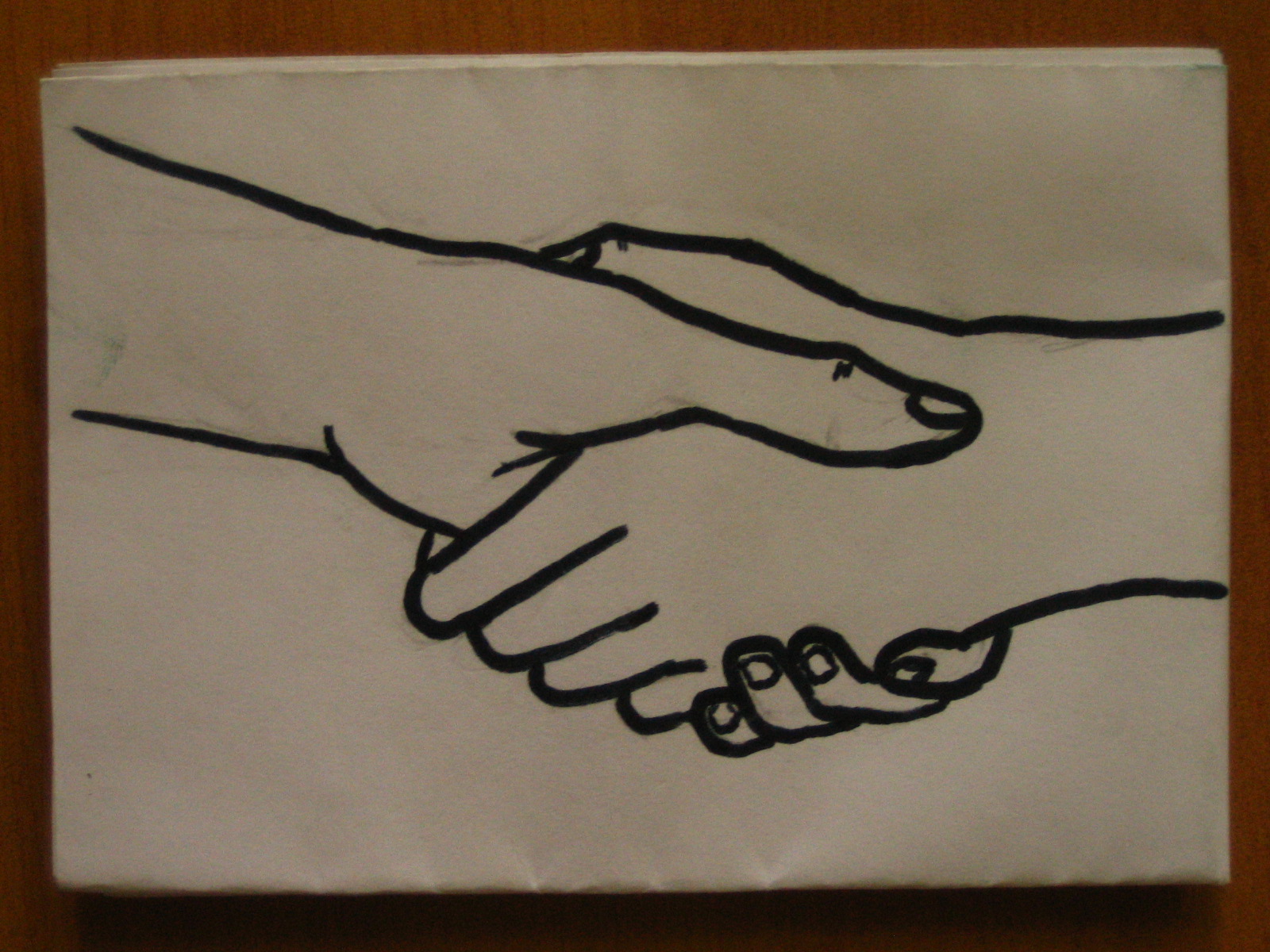
6 Fail-Safe Tips to Make You More Persuasive


Image result for persuasion
How can some individuals be so persuasive while others cannot appear to encourage anyone to do anything? Persuasion is part art and part science. Some people are born with the charisma that most people lack. But anyone can become more persuasive with the right approach. Anyone that can read or write can influence others successfully.

What would it mean to your professional and personal life if you could reliably influence others? Very few abilities are as extensive in their advantages.

Persuade others to align with your mindset:

1. Produce a connection with those you wish to influence. Whether you're aiming to influence a single person or a thousand, it is essential to produce relationships. The level of trust and connection you can develop will directly influence your capability to affect others. This is an essential first step. There are lots of ways to establish a connection.

Show what you share in common.

Mirror and match the other person's body movements and gestures.

Be sincere and real.

Show others that you can be trusted.

2. Be convincing. You might feel very small and insecure, however holding yourself in that manner won't encourage anybody that they should follow you. There are a number of ways we show an absence of conviction, such as body language, using qualifiers like "I think, probably, maybe and possibly," and absence of eye contact.

Stand tall, look them in the eye, and present your viewpoint like it's an apparent truth. Your self-confidence is key.

3. Use reciprocity to your advantage. Research studies reveal that you're far more likely to return a favor after someone does something for you. That's why the people who knock on your door and aim to offer you vinyl siding offer you a pen or a magnet. They understand that you'll be more likely to buy from them.

Do something for the individual you're trying to persuade. You might buy them lunch, drive them to the airport, or let them borrow a cup of sugar.

Do something for them prior to you trying to persuade and influence them. Your odds of success will increase drastically.

4. Consider their interests. Even the most honorable of people question what's in it for them. Make it clear exactly what they'll be receiving out of the deal. Your neighbor might not want to accept your idea of building a fence between your properties. Nevertheless, he may change his mind if you can show him the advantages he'll be enjoying.

You might explain that your dog will stop leaving "gifts" on his lawn.

It may help the resale value of his house.

It may minimize the amount of weeds on your lawn spreading to his.

It will increase his level of privacy.

5. Be an excellent listener. The other party matters a lot. We tend to only consider ourselves when we're aiming to be influential, however this is a serious error. Open your ears and close your mouth. When you comprehend the needs of the other individual, you'll understand how to influence them.

6. Develop yourself as an authority. If you hung around with the Dalai Lama and wrote three books on meditation, your viewpoints on the subject of meditation are much more likely to be valued and appreciated. Wearing a suite would convey authority in the right setting.

Persuasion is a highly researched topic. There are countless resources if you wish to learn more. The capability to influence others is useful both in and outside of work. Invest some time in practicing this important skill. You'll be glad you did!



http://ezinearticles.com/?6-Fail-Safe-Tips-to-Make-You-More-Persuasive&id=9507988

A former hostage negotiator explains the 4 words you need to use to negotiate with someone in business


Richard Mullender knows a bit about getting his way.
Mullender spent 30 years in the UK police force and then went on to spend five years as a hostage negotiator, working in Afghanistan and the Middle East.
He has the power of persuasion to talk someone out of jumping off a bridge or to prevent an armed kidnapper from killing the person they are holding captive.
Now he runs his own training company, teaching companies about the power of listening.
Mullender gave a crash course in "life-or-death listening" at Advertising Week Europe in London on Monday and revealed the four most important words you need to use if you want to negotiate with someone.

Those words are: "I feel as if ..."

Mullender explained that the best barristers at London's central criminal court, the Old Bailey, weren't the ones that asked endless questions. It was the ones that didn't.
"Don't change the conversation. It's the dumbest thing you can do. The secret is in the rambling. It's the rambling I'm interested in," Mullender said.
Get "I feel as if ..." into your office vocabulary.
Sometimes, in conversation, people ask questions to let the other person "off the hook" and to stop them from rambling. But as soon as people ask questions, they are changing the subject, rather than attempting to interpret how they feel. And it's when people give their opinions that you begin to work them out.
So rather than asking a direct question like: "Why are you doing that?" when attempting to interpret what someone is saying, you should say: "I feel as if ... "
Saying something like "I feel as if something I said upset you," or "I get the impression this is the problem," allows you to interpret their true emotion without offending them, Mullender said.
He added: "It allows you to guess what you think the other person means. If you get it right, they expand on it. If you get it wrong, they correct you and expand on it."

The best way to sit in a meeting

While Mullender said he doesn't ascribe as much value to body language when it comes to negotiation, he said there is a "listening position" that "automatically makes you listen better."
When sitting, lean slightly forward, with open space between you and the person you are listening to. Keep your hands apart with your palms open too, Mullender said.


Leaning forward, not eyeball to eyeball.
"The moment you do that, the body is telling the brain: 'Wake up and smell the coffee,'" Mullender added.
Seating arrangements are vital too when it comes to negotiating with someone. You should never sit directly opposite the person, according to Mullender.
Instead of directly looking at each other eyeball to eyeball — which can feel quite intimidating and tense — the people in the meeting should slightly angle their chairs — at a "1.50" angle if you were looking at a clock face —to give people the opportunity to look away if they feel they need to.
But just as it's important to look away occasionally, Mullender said it's certainly not ideal to do it throughout the entirety of the meeting. People in meetings often take notes throughout, but if the person talking looks around and finds the note-taker isn't keeping eye contact, they tend to go quiet.
Mullender advised note-taking should only take place every five minutes and that this practice should be agreed upon at the start of the meeting: Talk for five minutes, summarize the main points, write down the summary.

Persuasion Depends More on Attitude Than It Does on Words

I just Googled "hypnotic language" and got more than 29 million hits. If you believe that "where there is smoke there is fire," you'll believe that there must be some truth to the idea that you can use language in a way that gets people to do what you want them to do. That might set you on a quest for the magic words that will make you irresistible.

You would be on that quest a very long time. You can memorize every pattern from every site and play with every deck of flash cards and still not be irresistible. You might even make yourself quite annoying or just a little creepy. I sometimes hear the stories of people who have been made very uncomfortable by people who say they know hypnosis or NLP.

It's unlikely that someone else has been messing with your brain. Conspiracy theorists aside, it is unlikely that hypnotic suggestions will prove anything but a momentary distraction unless two conditions are met:

• The suggestion is for something you wanted to do anyway

• The suggestion (or command) is for something of benefit to you.

Yes, people can make suggestions that get us to do things we would not otherwise do. You don't need the concept of covert hypnosis to explain how it happens. You could just go back (to Aristotle, for instance) and study one of the many lines of development for rhetoric: the art of persuasion through language.

Words work when people make connections. Hypnotic language works when you form a strong connection with someone else. If the strong connection is negative, then the suggestions that will be made will be framed by that negativity (often taking the form of "why don't you just jump off a bridge?"). In fact, you might have been told to go do something (maybe to yourself) and even if it was brilliantly hidden as an embedded command, you did not do it. Instead, you probably matched it with an equally inappropriate suggestion of your own.

On the other hand, you have also had the experience of meeting someone who just seems to be good for you. After talking to this person, you might do little things that you would not otherwise do: things like reading a book or going to bed early or walking instead of driving. You probably didn't connect something that person said to the small, inconspicuous changes you made. You might not have realized you made any changes. But somehow, things went better and felt better after that conversation.

If you are in a position where you need to get someone to behave in a new way (you might be a coach, a trainer, an employer or a manager), then you get to choose: will you be the person practicing magic words in the hope that they work or will you be the person who talks in a way that results in small, positive changes?

If you, like me, want to be the second kind of influencer, then the words you already know and the patterns you already use will give you the language that you need. You just need two vital ingredients to make them work: a clear intention and a genuine interest in connecting with the person you want to influence. Those two ingredients harness two of the brain's superpowers: the ability to find the resources to meet clear conscious goals and the ability to make social connections. You can count on those superpowers to interact with your language centres and make the best words pop into your mind at the right moment.

You don't have to believe me now. You can believe me after you try what I am suggesting. Put away the flash cards and instead have a clear, reasonable intention based on what you know of the person you want to influence. Then clear your head and pay attention to that person. Show that you are genuinely engaged by paying attention to what they are saying and doing (you'll find you echo their behaviours and words when you are paying attention).

The language you choose will match the patterns that endless websites are promoting. They will work as if they are magic, but you will know the real magic is somewhere else. It's the combination of a clear, strong intention with a commitment to paying close attention to another person that will make you almost irresistible.

http://ezinearticles.com/?Persuasion-Depends-More-on-Attitude-Than-It-Does-on-Words&id=8886347

This Is the Best Way to Flirt With Someone New

Whether it's a first impression or a first date, body language speaks loudly.


Flirting is often associated with the idea of spoken words, like witty jokes and pick-up lines. And words do make up a part of our social skills and the games we play. But dating, mating, and finding a relationship are also about body language. What you say without words matters when breaking the ice, making a first impression, and getting a date. What's more, the match between your non-verbal communication and a verbal request may mean the difference between connection and dinner alone.
Research About Body Language and Influence
The importance of this match between verbal persuasion and non-verbal communication (sometimes called congruence) is supported by research from Fennis and Stel (2011). The authors were interested in figuring out what types of body language would increase the success of various compliance strategies. Particularly, the authors were interested in which non-verbal styles would be most persuasive to individuals with different "regulatory focus" (Higgins, 1998).
There are two types:
  • Promotion focus—goals are seen as hopes and aspirations, and the individual is eager for advancement.
  • Prevention focus—goals are seen as obligations and duties, and the individual is cautious and vigilant.
Across two experiments, Fennis and Stel (2011) found that a good fit between a persuader's influence strategy and his or her non-verbal communication increased the chance of success. Essentially, they note, when trying to persuade someone with a cautious "prevention focus," it is better to use a vigilant non-verbal style. In contrast, persuasion with an open "promotion focus" requires an eager non-verbal style.
What This Means for Flirting and Dating
Throughout the course of meeting and attracting a partner, the regulatory focus of that partner is going to change (as are your influence techniques). When you first meet a potential partner, they are likely to be vigilant and cautious of you as a stranger: They will have a prevention focus. So your first persuasion strategies will be centered around making them comfortable and getting them to like you—getting their guard down.
Later in the relationship, after safety and liking are ideally established, the relationship can be moved forward. The potential partner usually feels safer and more adventurous at this point (signaling a shift to a promotion focus). Essentially, they transition from worrying about what could go wrong in their interaction with you to wondering what good things they can get from your connection. At that point, requests for dates, phone numbers, and further courtship becomes much more likely.
So in the beginning of a social interaction with a potential new partner, remember that the individual is most likely cautious (prevention focused). According to the research by Fennis and Stel (2011) above, this requires a vigilant non-verbal style, defined as:
  • Using precise and small gestures.
  • Using slower movements and speech.
  • Taking a backward-leaning posture (away from the other person, rather than leaning forward and crowding them).
Essentially, this means using body language that is a little standoffish at first—quiet, calm, and non-threatening. Remember, you are virtually a stranger. Give your potential partner some personal space, lean back a bit, keep your hands from flailing, and smile warmly. This will support your verbal persuasion efforts to encourage them to feel comfortable and like you.
You will know you've won them over when your partner's body language begins to change: His or her shoulders will relax. They will lean in to you more, make more eye contact, and smile. They will start to open up. At this point, they have switched to apromotion focus—and now it's time for you to switch to an eager nonverbal style, defined as:
  • Using more animated, open, and broad gestures.
  • Using faster and more energetic movements and speech.
  • Taking a forward-leaning body posture (conveying interest and excitement).
Now that you are no longer a potential threat, you can convey your own interest and excitement through body language—and in fact, you should. No one is going to get excited about a date request from a man with slumped shoulders and hang-dog look; similarly, a woman with her chin up and an animated personality is much more compelling. Once you've broken the ice, amp up your eager nonverbal style, and ask for a date. . . 
Conclusion
What you don't say matters. It also changes throughout the course of a dating interaction. Stay calm and lean back in the beginning to persuade your partner that you are safe, trustworthy, and likable. Lean in and get more energetic once you've earned their trust, to motivate them to become excited about the prospect of seeing you again. Add these body language strategies to your social skills, and flirting, dating, and mating will become much easier.
References
  • Fennis, B. M. & Stel, M. (2011). The pantomime of persuasion: Fit between non-verbal communication and influence strategies. Journal of Experimental Social Psychology, 47(4), 806-810.
  • Higgins, E. T. (1998). Promotion and prevention: Regulatory focus as a motivational principle. In M. P. Zanna (Ed.), Advances in experimental social psychology, Vol. 30. (pp. 1-46), New York: Academic Press.