Showing posts with label relieve stress. Show all posts

Body Scan Meditation: A Simple Mindfulness Exercise to Relieve Stress and Anxiety


Meditation is an activity which allows the person to still the mind. There are different types of meditation practices. All the practices however promote mental well-being, calm the mind, help in the healing process, and relieve anxiety.
Mindfulness Meditation:

Mindfulness involves clearing your mind and having focused attention on a single point. It allows the practitioner to be fully present in the moment without being distracted by other things going around.

The trash accumulated daily in our household can cause stink and disease if not disposed off regularly; the trash in the form of negative thoughts invades a person daily. On an average a human being is bombarded by 60,000 thoughts in 24 hours, majority of those thoughts are negative. If the mind is not emptied of all this trash in the form of negative thoughts daily then we can end up being stressed up resulting in anxiety and depression. Medical science has also proved that the root cause of a majority of chronic diseases is mental stress.

The benefits of Meditation are manifold some of which are listed below:
• Reduces stress and anxiety
• Improves concentration and focus
• Encourages a healthy lifestyle
• Increases self-awareness
• Increases happiness (brain produces feel good chemicals like Serotonin, Oxytocin and Endorphins)
• Slows the aging process
• Benefits the cardiovascular and immune system

Body Scan Meditation:
This type of mindfulness exercise is a simple and effective means to relieve you of unwanted thoughts and bring you into the present moment awareness. It is recommended that the exercise should be performed daily for 10 to 15 minutes.

The exercise is performed by sitting cross-legged with the back leaning against a wall or in an upright position; the head should be relaxed and slightly tilted but not slumped.

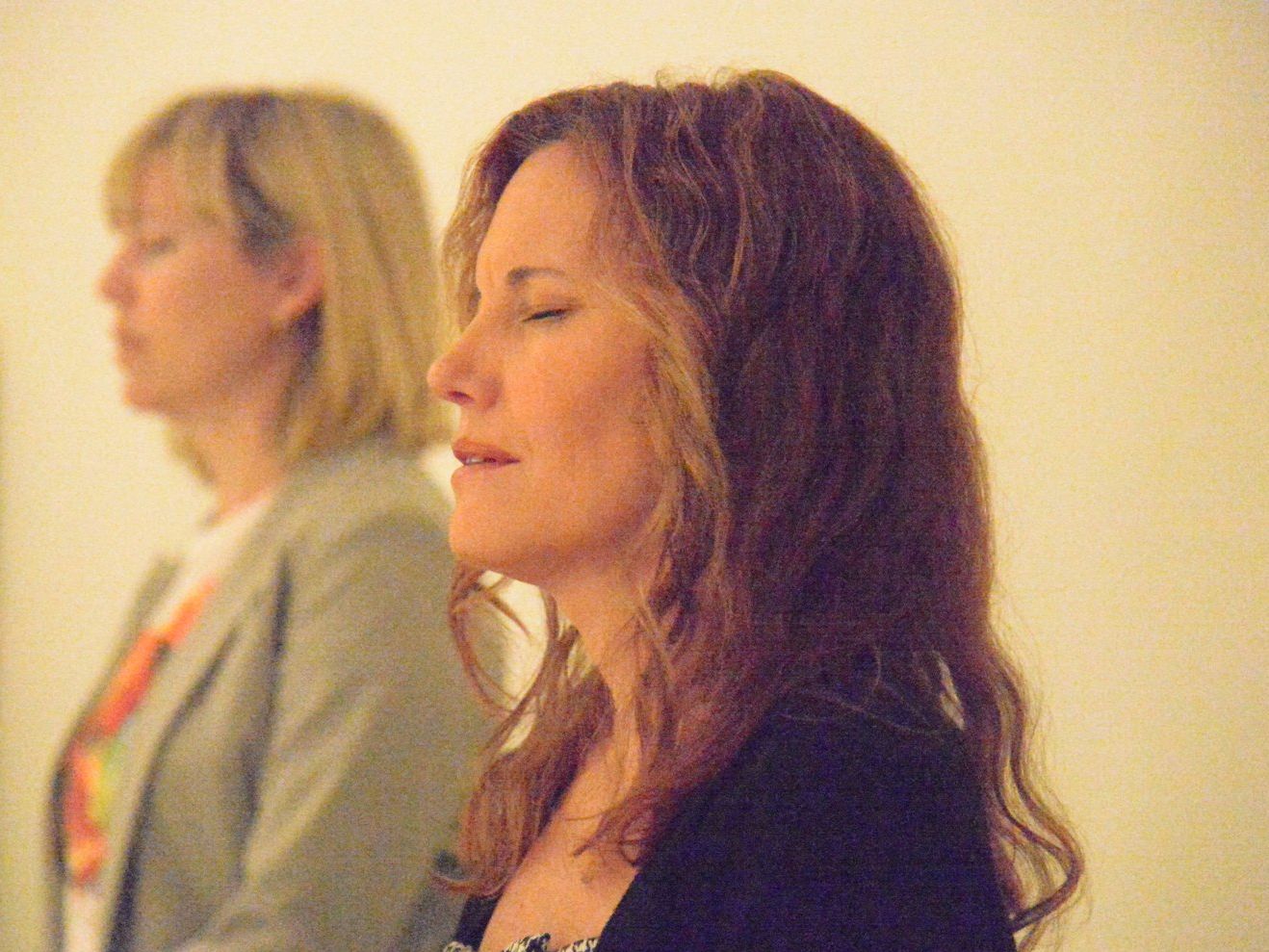
Close your eyes and focus your attention on your breathing. Take 3 deep breaths in and slowly exhale. Breathe in through your nose and breathe out through your mouth. Make the breathing effortless, slow and deep, completely filling your lower abdomen and chest as if filling a balloon with air.

Visualize a beam of white light entering your body with each breath in and imagine grey smoke leaving your body with every breath out. The white light symbolizes positive energy entering your body and the grey smoke represents negative energy like stress and anxiety leaving your body.

After the three deep breaths resort to normal breathing and bring your attention to the top of your head. Imagine a wave of awareness entering your crown and travelling down your head, your forehead, eyes, cheeks, mouth and jaws. Let this wave of awareness pass all over your head area, relaxing all the muscles and tissues along. Bring this awareness to your neck, relaxing all the muscles and ligaments in your neck area as it passes down. Let this awareness travel down your shoulders to your arms, forearms, hands and fingers, relaxing all the body parts. This wave of awareness then travels down your spinal cord, relaxing all the muscles and bones as it travels down. It then enters your chest, the upper abdomen and the lower abdomen, relaxing all the muscles and ligaments in your upper body.

Visualize this sensation in your hips, down your thighs, calves and feet systematically relaxing all your lower body parts.

Now that your whole body is relaxed the next step involves relaxing your mind.

To relax your mind, imagine a place of solitude and comfort. It could be a beach, a forest or a mountain top. Utilize all your senses in imagining that place of peace and calm.

If it is a beach, visualize the blue waters of the sea, the pleasant wind blowing, the flight of the sea gulls and the sound of the waves crashing against the sand. Make the picture as detailed and colorful as possible as if you are reliving that moment.

After you have created that ideal environment in your mind's eye, stay in that place for a few moments. This will gradually calm your mind and relieve you of all residual stress and pressure. You can commence the activity whenever you feel you have achieved the desired state and then slowly open your eyes and bring yourself to normal conscious awareness.

The daily practice of this simple yet powerful mindfulness exercise releases all the feel good hormones from your brain which will make you happy and stress free.


https://ezinearticles.com/?Body-Scan-Meditation:-A-Simple-Mindfulness-Exercise-to-Relieve-Stress-and-Anxiety&id=9657132

Top 3 Tips on How to Relieve Stress


Sometimes life doesn't go the way we want it to all the time and we just need something to help relieve ourselves and help us let go better in the lives that we live. These are the top 3 tips I can give you to help relieve stress in your life.

1. Doing your favorite hobbies

Whenever you are feeling down or overwhelmed in someway, sit down and do your favorite activities sometimes. Participating in some of your favorite hobbies can be good for you and can be good for your soul when your feeling like you need to heal and wind down from all the stress in your life currently.

2. Talk to a friend or family member and discuss what exactly is wrong or rant about your troubles

It's always good to remember friends and family are always there for you, so don't always feel you should shut them out when the going gets tough in your life. There your family and friends for a reason and they are there to help you no matter what happens to you through thick and thin. So don't feel afraid to open up to them about your problems and feel free to spill as much of your life to them as you need too in your life.

3. Relax, eat, sleep, and mull over your life as a whole

Always make sure to get some good rest, food, and water in your system casually throughout your depression and stressed stages. Don't ever try to neglect these things since sometimes when being wrapped up in stress and depression can cause people to neglect their everyday duties and tasks as such. And while you're doing these things to help you get better and live life, also take the time to casually reflect on your life as a whole and find yourself on where your at in your life and whats next for you and what problems and issues you may feel are holding you back in life and try to grow and get stronger from them the best you can.

With all that those are some good tips on how to handle and relive from stressful situations in your life. Don't hesitate to execute these tips and practices in your life and always stay as healthy as you can be through all the trials and tribulations in your life. Never give up through any stressful times and always remember these tips here and that your friends and family are always there for you as well.


https://ezinearticles.com/?Top-3-Tips-on-How-to-Relieve-Stress&id=9641118

Top 5 Tips to Help You When Dealing With a Bad Day


The everyday lives we live in this world can be both great and wonderful at times but sometimes life can also take a major turn for the worst and send us into a spiraling array of dismay, negativity, and depression. We've all dealt with bad days before at least once in our lives, so as a result here's some quick tips on how to turn those terrible bad days in life into fantastic and positive good ones for your benefit and uplift your spirits when you're feeling down.

1. Listen to your favorite music and new songs.

Sometimes winding down and listening to your favorite songs is the best way to relieve stress and let go of the bad things and negativity currently enveloping your life. When your having a bad day put on some of your favorite tunes when you can and able and sit down and immerse in them and remember what you liked about them even to make them become your favorite music in the first place.

2. Go for a long personal walk outside and reflect on your problems, feelings, and other things bothering you in your life.

When people are feeling down in life sometimes they just need to be alone and help find themselves in that moment and get to the source of the issue there dealing with even. Don't be afraid to go for a personal walk alone outside like in a park or some area down the street from your home that you may or may not have been before. Once your outside walking to yourself, casually think about your life and where it's at currently and reflect on your personal issues, what your problem may be that day, and other things that may be bugging you in your life as of now and try to resolve the emotions the best you can as you take your personal alone time outside.

3. Exercise.

Similar to the previous tip above, when your feeling down it's always good to get your body stimulated and moving around to help shake off that negativity and allow more room for you to embrace positivity in your life. Go jogging, walking, and running down the street of your neighborhood when your down if possible and get your body motivated again for a better day today and tomorrow. Execute any other types of exercises you may enjoy doing or feel that may help you better keep your mind off things negative in your life currently.

4. Eat, Rest, and Sleep.

Another common good way to shake off troubles is to definitely eat right and get some kind of rest and sleep afterwards. Depending on your schedule for the day try to eat some of your favorite foods throughout. Try to rest your body as much as you can as well through the day as well. As soon as you get off your responsibilities and activities for the day, make it home and try to receive actual rest by obtaining as much sleep as you can before the next day rolls around.

5. Look forward to the next day.

Some of the best ways to extinguish the pain of today is to definitely look forward to tomorrow. Looking forward to a bright future certainly helps a person psychologically, emotionally, and with their mood of the day their experiencing currently. And with hopeful thinking for tomorrow all the negativity and depression you may be feeling will be only temporary and once you get some food and rest you'll be up tomorrow in much higher spirits than before.

These are some of the best five tips provided on how to deal with a bad day. If a bad day even stumbles upon your life try these five tips out to help cope with the stress and bring more happiness and inspiration to your life.


https://ezinearticles.com/?Top-5-Tips-to-Help-You-When-Dealing-With-a-Bad-Day&id=9635811

Wake Up Call for The Grumpy


Do you ever wake up feeling nothing but grumpy? And you are not aware of it. Not until everyone else says it to you repeatedly. And even feel more irritated because you won't believe it to be true reasoning out that you are just "not a morning person". And then you realize "Oops! I have been relatively grouchy." There is your wake up call. But why do you feel you are having a bad mood in the morning, when in fact, your day has not started yet? Here are some factors that may ring the alarm with the corresponding recommendations you can do.

Poor Quality of Sleep

Sleep quality is "one's satisfaction of the sleep experience" as defined by National Sleep Foundation's Sleeptionary, who advocates in sleep health as a new field of research on keeping us informed and motivated to have a good slumber. It is highly subjective and is comprises your sleep's initiation, maintenance, quantity, and refreshment upon waking up. If you are having a bad morning it can be associated with these determinants especially on your ability to wake up comfortable, positive and calm.

79% of Americans wake up badly according to Withings, a French tech firm who studied both Americans and British who are snoozers. 79% of the respondents admitted that waking up in a bad mood affects them throughout the day affecting their concentration (51%), overall work performance (38%), and well-being (35%).

We have our own body clock also called as the circadian rhythm. If we wake up ill-tempered most of the time, our own clock is probably not working right. Sleep inertia is the psychological state characterized by feeling groggy upon waking up and lasts about 15 to 30 minutes. At this stage, the culprit sneaks in. Neurotransmitters affect sleep are erratic including norepinephrine, serotonin, and acetylcholine. Tossing and turning, you will rise up irritated. Fight inertia during its course it will be a big help if you prepare prior to a big day. What you think before you sleep will remain in your dreams up until you wake up. Dr. Vijai P. Sharma concluded that if we have too much stress in our life before sleeping, our compensatory mechanism regulates our mood while asleep in our dreams. Dreams give us hints on how we should deal with what is on the day ahead. Basically, the input of our mind and body is also the output. If you are stressed out before hitting the bed, waking up will be hard for you.

If you cannot catch the Z's (Bedtime routines)

The Bedroom

• Keep the room spick and span to minimize contaminants.

• Strategize your bedroom design. A study by Indian humanitarian Sadhguru, founder of Isha Foundation, shows that sleep positioning and proper arrangement of your ideal interior actually helps you sleep right.

• Mattresses have a life span good for ten years. Invest on a comfortable and supportive ones to avoid and/or relieve back pain.

• A survey shows that 91% of Americans, according to National Sleep Foundation, change their sheets every two weeks. Wash sheets with mild water and detergent as often as possible to stay away from allergens that may hinder you to fall asleep. Use relaxing fabric conditioner to soothe you.

• Wash pillows every 6 months and add a protective case in between the pillow and pillow case to prolong its lifespan and prevent the spread of infectious-causing germs and foul odor.

• Use humidifiers or scented candles such as bamboo, peppermint, and lavender to saturate air and reduce anxiety.

• See to it that brightness of light source is adjustable from dim to luminous. Turning off bedside lampshade will make you sleepy because our body releases melatonin.

• Set up the clock where you can easily see it but do not watch as it ticks. You may get too focused on the time that will not allow you to sleep.

• Watch out for white noises that can distract you from having a sound sleep such as electric fans, machinery, and the likes. Try to tune it down.

• Regulate bedroom temperature to your liking. 60 to 70 degrees is usually suggested.

The Grumpy Head

• Prepare the things you need to use for the next day.

• Avoid doing strenuous work out before going to bed. Keep it light and simple to relieve stress and improve blood circulation. If you wish to go to the gym, do it 3 hours before hitting the hay.

• Try the good old counting sheeps formula. If this does not work for you, try relaxation techniques to help you meditate before sleeping such as imagery, yoga, and deep breathing exercises. These will also help you load off stress.

• Eliminate the use of cellphones, laptops, TVs, tablets and other devices that emit blue light that makes your brain activate.

• Lessen taking naps if necessary. Naps may take away from your night sleep especially if you are having a hard time or have insomnia.

• Clear your thought process. Try writing down your worries and solutions to resolve it. This way your brain will do the problem solving while asleep and waking up won't feel like a burden.

If you want to get out of the Z's

• Open the curtains. 35% of Americans don't use bedroom curtains or shades, according to National Sleep Foundation. Allow the power of sunlight to brighten your day. This instantly stimulates your brain to wake up and fight sleep inertia faster than usual keeping you from being volatile.

• Drinking tea and coffee are known to be effective mood boosters.

• Take a hot shower to awaken you and counteract inertia.

• Use your electronic device to your advantage. Set an alarm with reminders, quote of the day, prayers or pictures to be inspired.

• Quit snoozing. According to Dr. Peter A. Fotinakes, hitting the snooze button time after time decreases the quality of sleep. Instead of waking you up, you will just get a bad morning.

• Make sure to focus on the positive. Upon waking up, smile to remind yourself to look into the bright side of things. Think of something you look forward to making you jump out of the bed. Get your quick fix but don't let it procrastinate you.

• Wake up early to allow more time to prepare yourself from the day's hustle and bathroom politics.

• Listen to music that energizes you and keeps your focus on the positive.

• Go out for a walk and see a beautiful scenery for 30 - 60 minutes. Appreciation of nature helps combat your grumpiness away.

• Gretchen Rubin's The Happiness Project recommends adding favorable activities in your morning routines before going to work.

• Encourage social contact. A friend or a loved one will cheer you up and knock your head just to tell you to stop being irritating even when you are weary.

If you cannot keep the Z's

• Set a sleep schedule and stick to it. It will set your internal body clock to wake up on time and get enough sleep. Young professionals and adults are highly recommended to have at least 7 to 9 hours of sleep a day.

• Minimize the use of your bed strictly for sleep and sex. Unnecessary things lying around your bed is a no-no! Take away clothes, books, and gadgets. Place them properly where they belong. Work materials should not be found on your bed. These will stimulate your brain to overload and would not induce sleep.

• Avoid eating heavy meals or spicy foods to prevent indigestion. Eating dinner 2 to 3 hours before lying down prevents you from waking up in the middle of the night. If you are still hungry, you can eat light meals 45 minutes before.

• Avoid drinking alcohol and caffeine. In an article in Time Magazine, doctors explained how the effect of "alcohol is probably to blame" for keeping you up at night.

• Exercise daily but take into consideration your sleep routines. Go to be bed when already tired and do not force yourself into working out.

• Keep a sleep journal to track your sleep cycle and evaluate irregularities.

• Seek professional help from a physician or a sleep doctor.

Waking up grumpy reflects your attitude towards the day. Do not own up to it. Stay away from it all cost before drifting off to dreamland and prepare for a great morning. Answer the call with positivity. Batter the grumpy in you before it batters you.


http://ezinearticles.com/?Wake-Up-Call-for-The-Grumpy&id=9482783

4 Practical Solutions to Relieve Stress


Image result for stress balls

Many of us experience a certain degree of stress in our day-to-day lives and it can help to use one of the stress-relieving gadgets to reduce it. Stress can have a long-term impact on the health and lead to degenerative diseases, so it makes sense to take the necessary action to control it. Here are four of the most effective tools and gadgets to relieve stress:

Stress ball

The stress ball is usually sized about 6-8 cm in diameter, which is small enough to easily fit in the hand. The stress ball is designed to be squeezed and manipulated by the hands to help with relieving stress. By focusing on the ball it is possible to forget about issues that are causing the stress, which means the body has time to relax in a similar way to mediation. Other benefits of squeezing this light, pliable ball are the ability to exercise the hands and ease muscle tension. Many of these balls are made to be hard-wearing and include a soft foam putty type material in the center and a resilient rubbery membrane on the outside. Plus, the compact size means it is easy to fit in the pocket and take with you when on the go.

Sound machine

For all stressed people, the sound machine is a simple, yet effective solution to shut out all types of unwanted noise in the home or office. These machines are practical relaxation tools and sleep-aids, and play plenty of calming and soothing sounds such as white noise, rainfall, waterfall, ocean or fireplace. By creating the more relaxing environment it is possible to enjoy better sleep, decrease anxiety, calm the mind and ease depression.

Magnetic balls

A great tool to relieve office stress is the magnetic balls. The magnets are really powerful and easily stick together. They are intended to be used to create awesome shapes and can provide hours of entertainments. By focusing on building the simple to complex shapes it is possible to cure boredom, develop the brain and think about something unrelated to what is causing the stress.

Massage mat

Massage mats are simple to use and can be placed on a couch, bed, floor, or other surface to provide a completely natural way to relax the entire body. Most of these mats have plastic discs or spikes that are designed to put pressure on the meridian points. A 20-30 minute session on the mat each morning has the potential to provide plenty of benefits, such as increasing blood circulation, relaxing stressed muscles and producing endorphins.

http://ezinearticles.com/?4-Practical-Solutions-to-Relieve-Stress&id=9442956

Improve Your Personal Life by Looking at the Entire Picture


Have you watched The Movie "LIMITLESS"? It's about a writer who takes an experimental drug that allows him to use 100 percent of his brain, with his heightened brain activity, all of his senses become tuned in to everything in his surrounding environment, he can recall everything he has seen and heard, he can learn exponentially faster, and he is able to outsmart and out-talk people. That's what that movie goes well my question is "Can one person really Improve his/her Personal Life by Looking at the Entire Picture?" Hmmmmmp!!! Sounds like a "Birds Eye View" for me- but what is bird's-eye view? Wikipedia defines it as an elevated view of an object from above, with a perspective as though the observer were a bird, often used in the making of blueprints, floor plans and maps. Well that means to improve your personal life you have to consider yourself as a whole pie. You have to review your liability, behaviors, actions, emotional responses, and overall standard of living. Once you review the details, you will find it easier to move ahead and make the necessary changes. To get started begin with a checklist.

How are your behaviors?

What are your behaviors? Do you engage in activities that lead toward negative consequences? Do you drink heavily? Do you drug? Do you smoke? Do you associate with the wrong people?

Once you write down your behaviors that pull you down consider the details. If you engage in activities that lead toward negative consequences, likely you are not looking at the whole pie. Rather you may act before you speak or do something. What you need to do is to consider consequences before you speak or act. If you drink heavily, perhaps you have an alcohol problem. There is nothing wrong with admitting you have a problem. You will need to seek help. There is nothing wrong with seeking help. If you have a drug problem, you will need to apply the same rules mentioned when handling alcoholism. If you smoke, you want to consider ways to stop. You will need willpower and the goal to quit. If you associate with the wrong people, you will need to evaluate your situation. What do these people bring to your table? Do they give or take from you?

How do you handle problems?

Every day there is some kind of a problem that has to be thought out and decided what to do about the issue. What are some things that you can go to help? You should always think out the problem before you make a decision on the issue. You will make healthier decisions by looking at the entire picture. If the problem is too big for you to handle alone, ask for help. Talk with friends, family, or experts.

Do you pay bills on time?

Do you pay bills on time? Paying bills is a major problem that leads to many hassles. If you pay your bills on time however, you can reduce some of these hassles. Failing to pay bills only builds stress. You will need to set a budget that works within your means to pay your bills on time. Maybe you can get a better paying job, so you make more money.

There might be some times that you are late but you should try to keep up as best as you can this will help take off some stress.

Do you visit your doctor regularly?

Keeping your doctor visits and exercising will help relieve stress. Visiting your doctor regularly will help you keep an eye on your health. Healthy people live a productive life.

What actions do you take to improve your life?

As long as you think things out before you make a decision you will work to improve your personal life. You will also need to take steps to reduce stress, by avoiding harmful actions, such as smoking, drugs, or alcoholism. You can benefit by paying bills on time, visiting your doctor, exercise the mind and body daily and so on.

If you have problems quitting on your own, remember help is available. You have many options, including inpatient services, outpatient services, group support, one-on-one services and more. To learn more about these services go online. You will also find help at local government agencies in your area.

To improve your life you can also volunteer to help someone. You can wrap a gift this year for a homeless or handicapped child.

Quote to live by:

The totality of a record is usually beyond ones' ability to imagine when you start working on it, but the component parts are, usually, fairly clear one way or another. - Fred Frith

http://ezinearticles.com/?Improve-Your-Personal-Life-by-Looking-at-the-Entire-Picture&id=9472723

The Following Are Some Techniques of Reducing Stress, Not Necessarily in That Order


1. Take regular breaks from work.

If you feel like stress is overwhelming you, it is important that you take regular breaks from your activities. Working long hours without rest, will create a buildup of stress and tension. However, if you take regular breaks, and "have a change of scenery", you will discover that you will relieve some significant amount of stress.

2. Share your problem with a friend.

Find a friend whom you can trust, and open up to. You are likely to find out that your friend will give you some helpful insights and encourage you to carry on in life. This will go a long way in reducing your stress.

3. Meditate.

You should take some time off and meditate to relieve stress. This technique is not complicated. You just find a quiet place with a soothing atmosphere, make yourself comfortable, close your eyes and start freeing your mind of all thoughts. When a thought pops in your mind, gently visualize it moving along. You will end up benefiting a lot from meditation.

4. Take a deep breath.

This technique works tremendously well. No special equipment needed to do this. You can do it anywhere. Start by simply breathing slowly then deeply in through the nose and out through the mouth. You will begin to feel the relaxation effects which will go a long way in relieving your stress.

Do not allow stress to get the better part of you. Take action now, and use any one of the techniques described. You are responsible for your own state of mind. The buck stops here! As a stress free being, you will experience the happiness and joy you deserve!

The Art of Real Honesty

Truth! A five letter word that we wish would make the world run! A clear word that wins you respect, trust, and favor. A tiny word that brings to you friends that are worthy of your character and your direction in life.

Truth is a virtue that will help you live a stress free life, with no fear of repercussions. Many people have had to live a life of mastering lies upon lies, in order to escape the disgrace of being found out.

Yes, some may have succeeded at it, and still survived up till now, but they live in constant fear of what might happen to them the next day, or hour or minute. People who tell lies put a huge burden on their backs, and have to twist words and use tricks in order to get through the day.

Happiness is a choice! I wonder how many people would realize that? We were born into this world being happy. Just watch babies and younger children, they are happy and eager to explore the world. Everybody would agree that we all would love to be happy with our families, finances, health, relationships and everything that surrounds us. Why aren't we? The door to happiness is always open.

http://ezinearticles.com/?The-Following-Are-Some-Techniques-of-Reducing-Stress,-Not-Necessarily-in-That-Order&id=9335100

How To Improve Mental and Emotional Stability with Simple Writing


Can writing improve mental and emotional stability? Does it help people to deal with traumatic situations? The answer to both of these questions is a resounding yes. Writing absolutely has mental health benefits. In fact, there are many therapists and counselors who include writing therapy as part of their treatment regimen for people who are dealing with stress, trauma, anxiety, major life change, addiction, and other difficulties. On a personal level, you may have used writing as therapeutic tool yourself. If you’ve ever used a journal to pour your heart out or vent your frustrations, you have used writing as a tool to cope with those frustrations. Likewise, if you’ve ever written a letter or sent an email letting somebody know how you really feel about a situation, positive or negative, and then felt better, you know the benefits of writing as a mental and emotional release.
Have you ever wondered how or why that works? When you write, how does that influence your brain and thought processes? Why are certain people more compelled to write on a regular basis? Are there groups of people who would benefit from writing therapy more than others? How does somebody get started with a journal or diary? Keep reading!
How And Why Does Writing For Mental Health Work?
Patients undergoing writing therapy are asked to write about their lives as part of a therapeutic process. People undergoing writing therapy may write about specific experiences, memories, their emotions, and their goals. People who see counselors or therapists that use writing therapy may be asked to keep a journal of their emotions, write letters, create fictional stories based on their feelings, or even write poetry. Writing as therapy isn’t something that is simply faddish. These techniques are more than 50 years old.
From a physical standpoint, many scientists believe that writing therapy works, because the release that is felt by patients relieve stress. It can also positively impact blood pressure. When stress is reduced, or it is relieved altogether, the person who is using writing to improve their mental and emotional health has more reserves to create strategies to make any life changes that they need to make for themselves. This is a very common phenomenon for anybody who is in crisis, whether that crisis is financial, physical, or emotional. They are too mentally emotionally taxed to find ways to fix their situation.
Why Are Certain Populations More Drawn to Writing as a Form of Therapy or Self Help?
Teenagers, prisoners, the mentally ill, people with chronic illnesses, and crime victims, among others all have the tendency to use writing to express themselves and sort out their feelings. This is true whether or not writing is part of a formal therapy plan or simply something that is taken on by the individual under their own accord. There is a lot of truth behind the stereotype of the teenager venting in his or her diary or writing love letters to a lost loved one. Of course, this is just one example, lots of at risk populations use writing as a way to communicate, cope, and process what is happening to them.
Writing Therapy And at Risk Youth And Others
Many teenagers enjoy using writing to express themselves and to work through their emotions. This is why creative writing is often a popular class among high school and college students. The act of writing provides emotional release and gives young people a healthy option for working through traumatic experiences, negative emotions, and common adolescent crises. However, as beneficial as writing can be to the average adolescent, it can be even more beneficial to at risk youth.
At risk youth are children and teenagers who are at risk for any one or more of the following:
  • Dropping out of school
  • Becoming involved in the criminal justice system
  • Using drugs or alcohol
  • Running away from home or becoming homeless
  • Struggling with mental health issues
  • Being victims of abuse or exploitation
Of course, before they are identified as needing services, many youth have already been directly impacted by at least one of these risk factors.
Many organizations that are dedicated to helping at risk youth use writing as one of many treatment protocols. Youths may be asked to write poetry, short stories, and even their own autobiographies. They may also be encouraged to keep journals. Even storytelling can be a part of an effective writing therapy program. There have even been programs where at risk youth write plays about their experiences that are acted out by themselves and their peers.
Writing therapy for at risk youth has a place in juvenile detention facilities, mental hospitals, schools that are located in troubled areas, group homes, and camps or other private facilities that have been created specifically to help troubled youth. These programs are also well-suited for boys and girls clubs and community centers, especially ones that are located in areas where the average youth is at higher risk of social, emotional, educational, or legal problems.
The benefits that at risk children receive through writing include the following:
  • Improved literacy
  • Increased coping schools
  • Improved emotional and mental maturity
  • A greater understanding of self
  • Greater empathy
  • Improved self esteem
  • Learning to use writing to replace unhealthy or antisocial coping strategies
Similar writing therapy programs have also been used in prisons and in other institutions to help adults who struggle with mental disorders, antisocial behaviors, and a criminal history. Just as writing helps teenagers, these adults are able to process past trauma, modify behavior patterns, and learn more about themselves by writing about their experiences. Some, are even able to improve their ability to feel empathy and relate to others.
Clearly, writing is an activity that has major mental health benefits. This applies to people who are undergoing life changes, simply struggling to grow up, or who are truly at risk. People who are struggling emotionally should be encouraged to use writing as a healthy means of expression and self discovery.
http://www.pickthebrain.com/blog/improve-mental-emotional-stability-simple-writing/

Learning To Relieve Stress Throughout Your Day

Stress can be a very serious problem in all of our lives. Men and women can experience different types of stress throughout the day. There are many opportunities to deal with stress. Work schedules can be very stressful among other issues at work. Other factors such as home life and your children can cause stress to be an issue. It is just how life works and we all deal with stress in different ways.


Relieving Stress in Small Ways through the Day

Learning to de-stress is a very fine art for our mentality. There are many things during the day that we all can do to reduce stress. Everyone has a different routine for learning to de-stress in their lives. If you are just beginning and need some examples of learning to de-stress. Here are 5 ways to de-stress to help inspire ideas to help you start a better way of living.

1. Slow Deep Calming Breathing

This may seem simple, but it really does help to relieve stress that may come on immediately. Just simply slow down for a few moments and begin to breathe calmly and slowly. You want to breathe very deeply and reach your diaphragm with calm soothing breaths until you feel the tension begin to ease. This method really works and it might take three to five cleansing deep breaths to begin the feeling of calmness that comes with deep breathing. However, you will feel a calming feeling from allowing the oxygen to flow freely to your brain through deep breathing.

2. Music

Music has always "soothed the savage beast" and it works as one of the 5 ways to de-stress. Researchers have now learned through scientific study that music reacts much like a drug to the brain. This makes so much sense because the second way to relieve stress throughout your day is calm soothing music. Find a great playlist that continuously plays a great selection of music that soothes your mind and body. Relaxing with music is excellent for helping to reduce stress levels during your busy day.

3. Hobbies

Another wonderful way to relieve stress is having a hobby that you absolutely love doing. A hobby can be just for your pleasure and it can relax the mind and body doing something you love that is just for pleasure. A hobby doesn't have to include major planning to be a hobby. A hobby can be anything you love doing including planting in the garden or just cooking your favorite dishes. Hobbies definitely make the list of 5 ways to De-Stress for everyone to enjoy.

4. Exercise

Exercise is not only good to keep your physical body in shape it also relieves tension and stress. Find a great routine you love and exercise regularly during your week. Exercise releases endorphins which also help to physically relieve stress and fatigue in our bodies. Exercise is an excellent way to de-stress.

5. Treating Yourself To Little Things

Finding little pleasures that you love throughout your day can help relieve stress tremendously. Perhaps you love to fix your favorite coffee and sit with a good book. Find little things all day as you begin to learn how to relieve stress in small ways. Little pleasures that only you enjoy really do make the difference and keep stress from building up in your body. As the old saying goes, "it's the little things." Little things really do help in learning to De-Stress as you begin this new routine.

The Benefits of Learning to De-Stress

Stress can be a problem in our lives or we can learn how to relieve stress by learning how to treat ourselves with tender care. These 5 ways to De-Stress are really great examples of how to begin this new type of lifestyle. When your day has been stressful just start simply and begin to search for the small things that give you a smile.


It is a very different way of living and you really begin to enjoy the journey of living. This is what we all strive for in our lives and these little ways to enjoy the week will help you learn to appreciate each day a little more. Reducing stress can help with health conditions and relieve pain and fatigue. There are many terrific reasons to learn how to use this advice to reduce the stress in your life. Begin your new routine today and reduce harmful stress with a completely different outlook on the little things in life.

I Gave Up Alcohol For 31 Days. Here's How It Transformed My Life

Just over a year ago, I was at the airport, returning home from a business trip to London and feeling like crap from the night before. It hit me that l'd been drinking more than I had ever intended.
I realized I desperately needed to reevaluate my relationship with alcohol. In London, I had heard of a new tradition, a government-sponsored initiative called “Dry January." In short, you pledge to take the month off booze while also raising money for charity. Although I would be spending January in the States, I decided to give it a try. I hoped it would help me transform my overall drinking habits.
I quickly realized that approaching the challenge as if it were an “alcohol diet" would be torture. Instead, I need to change my mentality — focusing not on giving up alcohol but on what’s so great about not drinking.
Not only did I succeed in not drinking that January, but I haven’t had a drink (or even wanted one) ever since.
My mentality has changed from “I don’t get to drink” to the empowering realization that “I don’t have to drink.” Years of drinking convinced me that it was a vital, necessary part of life. The truth is I never actually needed alcohol to enjoy myself, or relieve stress. I only thought I did.
More than 2 million people around the world, including celebrities like Anne Hathaway, made it their resolution to ditch the booze in January and it’s easy to see why. Here are just a few of the ways a Dry January could also transform your life:

1. You'll lose weight.

Alcohol is notoriously full of empty calories. Some drinks, like a Long Island iced tea, have close to 800 calories — almost the same as a fast-food meal. Starting the new year with the goal of losing weight but not abstaining from alcohol is self-sabotage.
Studies have shown that the average participant in Dry January loses about a pound a week and also experiences improvements in other health measures, like blood pressure and cholesterol. Personally, I was pleased to find that I lost 7 pounds in January and a total of 10 pounds in my first six weeks of not drinking.

2. You’ll look younger.

We all know that alcohol dehydrates you — and that can be seriously damaging to your skin, making you appear older than you really are. Plus,studies show that alcohol leads to disruptions in REM sleep, the most restorative phase of the night. And we all know what we look like sleep-deprived!
I've always struggled with skin issues, but after I stopped drinking I noticed my complexion cleared up. My guess is that staying hydrated helped flush toxins out of my body and revitalized my skin. I've also noticed that my teeth stay whiter (I used to drink red wine) and my eyes are clearer. These days, people often tell me, "Wow, you look healthy" — something I never used to hear.

3. Your relationships will improve. 

Alcohol can put a strain on even the best of relationships. We’ve all heard that loose lips sink ships, and alcohol can definitely make you say things you never intended to. It can also make you aggressive and encourage pointless arguments.
Not drinking can help you become a better partner, friend, and family member — you’ll be more engaged, empathetic, and compassionate.
Personally, not only is my marriage at a more peaceful place after I stopped drinking, but our sex life is actually better too!

4. You'll be a better employee.

Some research shows that drinking can dull your brain as much as 20 percent, harming your concentration and memory. Just think about how hard it is to be productive the morning after a night of drinking.
Those few glasses of wine at a business dinner could be what’s holding you back from your next promotion — especially if your co-worker is stone sober.
I believed, for many years, that alcohol was an important part of my corporate success. I thought it made me better at networking and I even gave drinking credit for some of my better work-related ideas.
And yet in the past year of no drinking, I've balanced a full-time executive role and written a book in my spare time. Plus, my work-life balance has improved — it was shocking to realize how much time drinking sucked up. I've found more personal and professional success in the past year than ever before.

5. You'll save money.

By cutting out pricey drinks in January, you'll likely find yourself with a significant amount of extra cash in your account by the end of the month. You can use the money to pay down debt, boost savings after your holiday spending, treat yourself to something special, or donate to charity.
These days, I don’t feel guilty at all about splurging on a massage or treating myself to a movie. All I have to do is compare it to how much money I was spending drinking on a daily basis in order to realize that my checking account is much healthier sans booze.

6. You'll feel better.

Alcohol is a depressant. Not only can it mentally depress you, but it also has a physical impact by messing with your blood sugar levels. But when you aren’t drinking, your body is able to stabilize your hormones and your inner systems so you’re at your prime physically.
In the last year, I’ve had more energy than ever before and weaned myself off the two antidepressant medications I'd been taking, which had been a personal goal for a long time. Further, I now find myself exercising in the mornings instead of nursing a hangover — which means I feel better all day long.