Showing posts with label benefit. Show all posts

Doing Good Is the Ultimate Stress Reducer


You're probably aware of the many personal benefits of volunteering, not the least of which is that volunteers tend to enjoy longer, healthier lives. You are no doubt also aware of the already hefty demands on your time: your job/s, spouse/significant other, children, aging parents, relatives, friends, your need to stay physically fit, politically informed, keep up with social media, your boss's latest mania, etc.

Don't Put Off Volunteering Until You Have "More Time." Volunteering may seem to be something uniquely suited to retirees and seniors, i.e., those with lots of time on their hands. Something you figure you'll do "when I get to those years." A laudable ambition, for sure. But you're missing out on a wonderful, easy, cost-free way to increase your health and longevity by deferring volunteering until you've run out of things to do.

The misconception is that volunteering requires hours and hours of committed effort. It certainly can, but it doesn't need to. The essential benefit of volunteering comes from the support that you give to another human being. Someone in need. It's less a matter of the time involved than it is of the giving of self.

Helping Others Leads to Less Stress. Recent research published in Psychosomatic Medicine concludes that people who give social support (fancy words for helping others) are less affected by stress. Now, in case you missed the news flash - stress kills. Namely, stress depresses the immune system and can wreak havoc with our cardiovascular system, both of which tend to shorten our life and/or make us miserable. The less affected you are by stress, the more your overall well-being increases.

If the benefit of volunteering comes not from hours and hours of selfless devotion, but from the "giving of self," how do you do that in practical terms? How do you give of yourself when you barely have time to breathe?

One simple way is to smile. Yes, smiling at people for no good reason is a way to support them, and give of yourself. Smiling at someone to reassure them that things are going to be all right is even better.

Give someone a hug. It doesn't have to be the love-fest of the century, just a simple acknowledgement of someone's feeling lonely, or bereft, or upset, a way of saying, "I'm with you, it's OK."

Listen. Listen without texting, tweeting or drifting. Listen with your ears, brain and heart. Listen with your eyes. Listening to someone with genuine appreciation or empathy for whatever they are going through or wish to communicate is one of the most powerful ways to support them. Try it with your teenagers, with that co-worker you don't like, with your partner. even when you're tired. Listen.

Making others feel better without interfering in their lives, fixing things for them, or enabling their drama - just offering a smile, a hug, your full-on listening - makes them feel supported, not as adrift in whatever upset/unhappiness plagues them. It doesn't take any more of your time, simply your full attention. In return, you get to feel valuable. You benefit, whether you realize it in the moment or not, from the simple act of supporting someone.

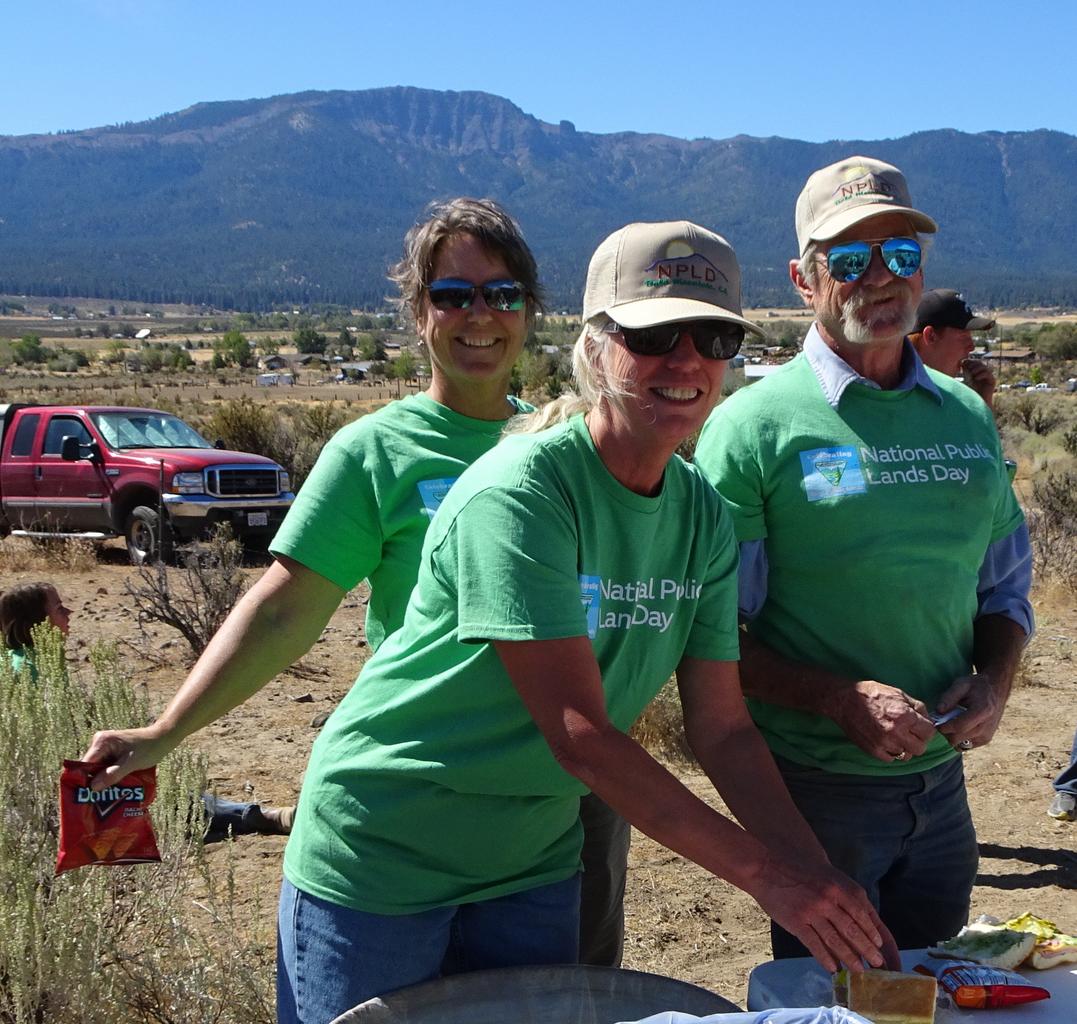
And if you can see your way to giving an hour of your time once a week or even once a month to whatever cause rocks your boat - do it! An hour at the local animal shelter helping out, an hour spent at your local library participating in a children's reading program, an hour distributing food at the homeless shelter - great! You'll feel good about yourself, which is good for your mental and physical health, as you do good for others.

Even adolescents benefit from volunteering. Research published in the journal JAMA Pediatrics showed that when Canadian tenth-graders in a recent study began volunteering at an after-school program for children, the high schoolers lost weight and had improved cholesterol profiles as compared to their non-volunteering peers: "Adolescents who volunteer to help others also benefit themselves, suggesting a novel way to improve health."

You're may not be that far away from adolescence (OK, several decades, but who's counting?). Maybe what benefits teenagers in such a measureable manner can benefit you too. It's worth a try.


http://ezinearticles.com/?Doing-Good-Is-the-Ultimate-Stress-Reducer&id=9684666

Avow Your Independence - Esteem Your Best Qualities - Vow That Your Life Served Its Purpose


As adults, we decide that we will rely on our own logic and judgement to guide us, resolve ordinary challenges, protect us- AND, there is more to life than survival. Relying on family members or friends reaches its expiration date by the time we finish our education, or sometimes even before.

Avow to be an independent person, relying on your own ability to rationalize and think- it requires more effort and reaps more benefit for that effort, you'll be glad to see what your independent effort accomplishes..Accomplishing difficult or extraordinary problems is a great accomplishment, and usually achieved through independent thinking.

There are many decisions that we make that require independent thinking. Deciding that physical fitness has temporary as well as long-term benefit should be obvious, though oftentimes we may forget. We alone are responsible for planning regular activity and eating properly is a great way to be an independent doer and thinker for improved health and vitality.

We independently avow to our creditors that we will pay-off a car note or mortgage payment,on an almost monthly basis. We avow to our spouses that we will be loyal and faithful in our marriage. We independently avow to tell the truth and satisfy the terms of contracts, in personal and legal commitments. We can go a step further, and challenge ourselves to do more work,and reach even higher goals.

Avowing uniqueness or independence to oneself along with seeking balance in daily activity as well as in our work-life is a great way to surpass regular accomplishments, especially when we recognize our strengths and weakness'. Making and assessing our strengths is important. Knowing where we excel and feel the least amount of resistance is comfortable and our effort flows easily. Decide to mold and shape your life into a project that needs to be completed. We all have areas in where we excel and need little support and areas that need more work by cultivation or more education. Focusing on how to improve or fine tune our effort, in more challenging areas, of career or personal life, is necessary for improvement, challenging us to, gain more knowledge. There is one area that we tend to neglect- our favorite hobbies or passion. Deciding to pursue our dreams is a scary challenge, though achievable in our lifetime, if we make vows to ourselves, before me make vows to anyone else, we can achieve anything!

Challenging ourselves, in new areas of our daily life, is a great way to show ourselves value. Recognizing the value, in the vows that we make to others, is a great way to kick-start personal vows for self-benefit. Vow that your life is going to make a difference. The book that you write, unique invention, or beautiful peace of artwork will outlast your life and add value to your existence way after you and I are gone!

Give yourself a timeline for achieving your passions, before you get too old, physically unable or before you die. Make a vow to yourself that you will pursue greater training or learning to focus on the activity, or passion that brings you the most personal satisfaction. Practice playing your guitar; building your dream house, or go back to school to get your next degree, you'll be happy that you put forth the effort.

Allow yourself the time for developing the experience, expertise or skill in reaching your personal objectives is of great value to your self-esteem. Vow that you deserve happiness engage or seek more knowledge in the area or activity that brings you excitement and passion. Improvement in the pursuit of enjoying your favorite activity or passion requires you to recognize that you deserve to pursue happiness-without question.

Vow or promise openly, or silently that resolving hard or extraordinary tasks or problems is a great way to eradicate or release issues that cause you angst or pain. There is no need to deliberately accept pain as a part of life. If you can perform an action or recognize that avoiding your calling in life is not an option, you will be a lot happier knowing that living your life in happiness is easier than avoiding your desire to enjoy your favorite hobby or passion.

It is important to recognize that by improving your skill-set you make yourself more marketable in the job market or for achieving personal goals. Vow to be balanced, proactive;apply logic and reason, going even deeper into cause and effect, for personal improvement, helps yourself and others that are dependent on your success. Declare your commitment and listen to deductive reasoning, formulate a strategy and place yourself on the trajectory of where you can best excel. You'll reach your personal or professional goals a lot faster, and be prepared to reach even more goals if you live and plan your life for success!

I enjoy learning from you and from others offering me knowledge continuously!

http://ezinearticles.com/?Avow-Your-Independence---Esteem-Your-Best-Qualities---Vow-That-Your-Life-Served-Its-Purpose&id=9468761

5 Ways to Make Sure You Don’t Regret Your Next Decision

Zig Ziglar’s basic rules for good decision-making


Is it hard for you to make decisions? Do you worry that your choices aren’t good ones—and later regret them? Or do you lack the confidence to make quick, or merely timely, verdicts? Well, a lot of people worry about their decision-making abilities, and I bet if I were to ask you your routine for doing it, you’d probably tell me you don’t have one.
But you’re wrong, because you do—everybody has decision-making habits. You just might not recognize them, or maybe you don’t like the way you go about the process. Everyone’s decisions are based on something, though, so if you just stop to think about it, you’ll discover what that something is and be able to fine-tune your routine for a more confident approach, with fewer regrets.
Want an expert’s advice? If you were to ask author and motivational speaker Zig Ziglar how he made good decisions, he would tell you that he followed some basic rules.
So what would Zig do? He would…
1. Sleep on it. If I’m really tired, I don’t make significant decisions (except in emergencies) until I’ve slept, for a fresh perspective.
2. Take time. If someone is pressing me to decide something right now, unless an immediate decision is critical, I say, “If I have to choose now, the answer is no. After I’ve had a chance to catch my breath and review the facts, there’s the possibility it could be yes.” Then I put the ball back in their court and ask, “Do you want my decision now, or should we wait?”
3. Weigh the pros and cons. I like to determine the maximum benefit of a decision, assuming that everything goes my way. Then I ask myself, Suppose nothing goes my way? Suppose this doesn’t develop and materialize as I expect it to? What is my maximum exposure? What would I lose?
4. Seek advice. For significant business-related decisions, I run them past my advisors. These people are successful in their businesses and professions and have a considerable amount of knowledge, experience and wisdom, all of which are musts in the decision-making process. I get their advice and follow their recommendations, with good results in most cases. If the decision is too minor to involve my advisors but I still want input, I get my family together to look at the pros and cons.
5. Reflect. I like to pray about my decisions. If I’m about to make an unwise decision, I simply don’t have peace about that decision and I consequently act on that feeling of unease. I ask, How will this decision affect all the areas of my life—personal, family, career, financial, physical, mental and spiritual? I think carefully as to whether what I give up is compensated for by what I gain.