Showing posts with label children. Show all posts

Parents And Children's Behavior - Points to Ponder

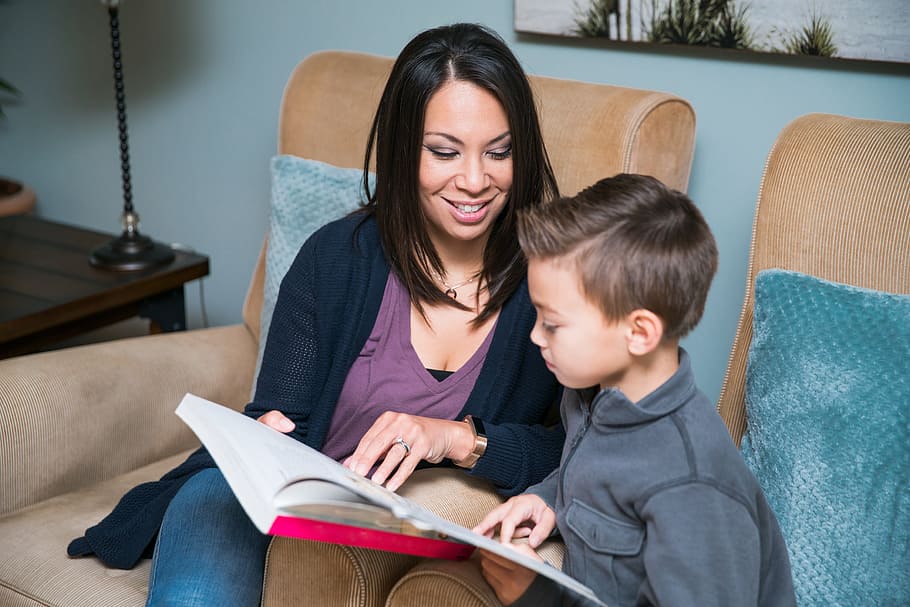
Learning To Read With Mom Photo, Children, Boys, Family, Books

At home little things are even more important. The behaviors of parents and children have its profound effect. It makes huge difference in parents and children's personality and psychology. Scholar's view in the following paragraph is self-explanatory:

"The beginning of both spouse and child abuse can be found in seemingly insignificant things, such as belittling the abilities and competency of another, constantly criticizing, being insulting or calling names, refusing to communicate, manipulating, causing guilt fleeing, repeatedly making and breaking promises, intimidating, threatening physical harm, making unfolded accusations, or destroying property."

It is a two-way traffic and has its impact evidently in their respective lives both positively and negatively. The point to ponder is to understand individual's rights and responsibilities. They both need to execute it emphatically and judiciously. Any deviation and distortion from the right path at the behest of materialistic gain will deeply affect them alike. A word of caution, they must think out of the box to comprehend the reality of life and its meaning the context of creation.

It is a fact that people learn from their mistakes and failures rather from their success. This particular experience becomes a tool to shape up own house and impart rich culture to younger generations. The transformation of constructive attributes will positively show improvement in personality. It then teaches them that respect is earned through command and not by demand. Here, it is important to emphasize that The Holy Quran highlights 'Dignity' apart from respect. This is the crucial and cardinal intersection that catapults the youth into the orbit of knowledge and wisdom. It gives parents a sense of pride to see their offspring achieve success and fame.

The youth will then be exposed to new vistas of behavior, which follows the foot-steps of wise people and becomes the beacon of light to others. This is the after-effects of adopting and molding individual's personality into meaningful ways. He not only improves upon self but also gathers others into the umbrella of sense and sensibility. At this point, the youth takes over the mantle and starts learning advancement of knowledge and its application. The self-confidence makes him strong and determined in self-improvement and also contributing to the society. It ultimately leads to development of the mind, which synchronizes with self-improvement and personality development.

There are many tools available to achieve success affecting different people in varying circumstances. Steve Tobak says that it is not intrinsic characteristic or personal habits that determine success or failure. It is your behavior. It means; it is an individual's discipline both in home and in working environments. It reflects your attitude, commitments and flexibility to understand and execute the values.

Analyzing the above scenario objectively will focus our mind on the existing circumstances in our society. The life is progressing with an accelerating pace forcing parents and children a daunting task to meet both the ends. It develops cracks in the delicate fabric of family relationship. Both expect more commitments from each other. Hence strained relationship, and families started to drift and seek solace somewhere else. This is the focal point where parents need to inculcate values in children and make them realize where to draw the line. The children need to understand their position and avoid excesses thereby losing their balance in life.

Parents should also realize that children during this era are exposed to more avenues to learn and understand ethical values. Parents who are ignorant of new vistas of knowledge expose lack experience. Their stagnant intelligence and rigidity in life are depriving their appreciation to gauge the situation. It then, denies the necessity to listen and understand to their children's mind. Of-course, their rich experience can be shared with children who in turn analyze it and adopt those values. Healthy interaction and critical discussion with each other objectively can be of great value to both.


https://ezinearticles.com/?Parents-And-Childrens-Behavior---Points-to-Ponder&id=9722772

Potential Causes Of Anger Issues In Children

teenager

Sometimes, it is difficult to identify anger issues in children because most kids pass through phases where they are learning to express their emotions. Sometimes, they can get angry and express those feelings through crying, yelling, stomping, fighting with friends and family members or withdrawing completely and pouting in silence and frustration.

These behaviors are typical, and all children do have temper tantrums and outbursts of anger when they are unsure of their feelings and they have not yet learned how to express their emotions in healthy and appropriate ways.

Anger becomes a problem, however, when it causes harm to themselves or other people. When it cannot be controlled and when it leads to other problematic physical and mental issues.

The causes of anger in children are varied. A large number of children model their behavior after their parents or other adults in their lives. If a child comes from a home where there is constant yelling, fighting or even abuse, that child is prone to having anger issues of his own.

Studies have also indicated that children who come from homes where there is extreme marital discord are also more likely to develop problems with anger and depression.

If parents overreact and display their anger in problematic ways, the child will learn that such behavior is acceptable. It's a cycle that can be difficult to break.

Another potential cause of anger issues in children is selfishness.

Small children often think they are the center of the universe. This is normal. However, as they grow and develop and mature into older children, they should be able to understand that the feelings and needs of others are just as important as their own.

When they are unable to understand this principle, they get angry for wrong reasons. They might think that another child is getting more attention, more love, more care, more material things, more comfort.

This will send them into a rage that they don't even understand themselves. Extreme selfishness is terrible for children, not only because it can lead to anger issues, but also because it separates them from feeling like they are a part of a larger community.

Jealousy is certain to cause anger in children.

If one child has a toy that another child wants, the child without the toy is going to be mad. Again - this is normal with young children. Eventually, children will be able to find contentment with other toys.

However, a child that is obsessively jealous or preoccupied with what he doesn't have will have a problem controlling and dealing with anger. Kids who get whatever they want, on demand, will grow to expect that they are entitled to every single desire. A point will come when that child cannot have something, or will get jealous of someone who has something he covets.

Not understanding that this sometimes happens, the anger will grow in the child and probably be expressed in an unhealthy way.

If a child is lonely, that loneliness can be expressed through anger.

Not getting enough attention can cause pain for kids, and instead of seeking attention and love in healthy ways, the child might act out in order to gain that attention he so craves.

Providing attention for positive behaviors is the best way to avoid this. Make sure children are loved and provided with all the affection and attention they need so that they don't feel they must act out in anger or rage in order to get that attention from parents, siblings, friends, caregivers and other people who matter in their lives.

Loneliness will lead to isolation, and kids who are isolated or feel like they have no one on their side will only allow their anger to grow and fester.

Some children demonstrate a problem with authority early on in their lives. While most kids will test boundaries several times during their childhoods, a defiant child will often display signs of anger that is out of control.

When anger issues in children come from defiance, parents, teachers and other figures of authority must work hard at helping those children understand that authority is not a bad thing.

Rather, it is in place to protect children and help them. If your child can see authority figures as trustworthy, loving and helpful, there will be less cause for alarm. Children who trust adults and figures of authority are less likely to be angry and defiant.

Before you begin to treat and deal with anger issues in children, you have to understand the causes. Some children are angry because it's what they witness and learn from a very early age.

Other children develop anger problems because of selfishness, defiance, loneliness or jealousy. Allow a healthy expression of anger when it's appropriate, but make sure to get help when anger becomes a problem


https://ezinearticles.com/?Potential-Causes-Of-Anger-Issues-In-Children&id=7825792

Kids Stress When Parents Fight


Ten-year-old Todd looked like an old soul. He was clearly worried about something. "I don't like to talk about it," he whispered. "It just bothers me."

After a short period of silence, I said, "Sometimes it's hard to talk about what's bothering you." Todd kept his eyes peeled to the floor. Though he was large for his age, at this moment, he looked small and helpless.

"I just wish my parents would stop fighting. I hate it and I'm afraid they're going to get divorced."

"What do they fight about?" I asked.

He shrugged.

"Who usually wins the fight?"

No answer.

"Is it mom or dad?"

"It's nobody. Mom calls dad an idiot. Dad yells back about how she thinks she knows everything. After awhile, Dad slams the door and says he's out of here. Then Mom goes crazy, calling him a coward and some other really bad names. Sometimes she throws stuff at him."

"Do they ever fight about you?"

Todd nodded. "Yeah, they're always fighting about me or my brother. Mom thinks dad should do more things with us and be stricter with us. Dad says he already does plenty."

Todd's parents admit that they not only fight in front of the kids, they also fight about them. At times the fighting is a big blowout altercation; other times it's an ill-mannered squabble. How can a kid deal with that without being stressed?

Now I'm not suggesting that parents be conflict free. Kids can handle parents' disagreeing. They know that Mom is a stickler for the rules while Dad is a pushover. They know that Mom stresses the importance of getting top grades while Dad shrugs off a low grade here and there. Parents do not have to be clones of one another. In fact, it's better if they're not. That way kids get to know that reasonable people can view a situation differently.

Kids don't get stressed out because their parents disagree but they do get stressed out when the intensity, frequency and nastiness of the disagreements are severe. Here are five ways that parents fight that kids hate (for good reason):

Kids hate when parents fight like kids, unable to control their emotions. Calling each other stupid, crazy, out of your mind, don't know what you're talking about and cursing each other out is a terrible model for teaching kids how to deal with conflict.

Kids hate when one parent wins all the time. While they may side with the underdog, they may also be furious with him/or her for being so powerless. When parents vie for their children's loyalty, a no-win situation is created for their children.

Kids hate when parents fight about them - their behavior, their grades, their friends, their attitudes. They think they are the cause of their parents' conflict and feel guilty that they will be the reason for their divorce.

Kids hate when parents expand their fighting from one topic to almost anything. An argument might begin with what to eat for dinner, expand to how mom or dad is a control freak, and end up with a disdainful remark about how the kids are turning out just like you.

Kids hate when their parents' conflicts remain unresolved. When disagreements from the past are brought up again and again, kids try to distance themselves from the fighting by distancing themselves from their parents and/or shutting down emotionally.
How parents handle conflict is the blueprint for how their children will handle conflict. Hence, if this article is hitting home, make it a priority to learn more constructive ways to disagree. If you can't summon up the will to do it for yourself, please - do it for your children.


https://ezinearticles.com/?Kids-Stress-When-Parents-Fight&id=8103894

How To Simplify Life When You Have Kids


Life can be hectic and chaotic in general, but add kids into the mix and it seems to double responsibilities and obligations. If you have children, it's even more important to simplify your life, not only for your sanity but also to be a good role model for them. Teach them early on that no matter what society says, they can choose to live a simple, peaceful life. Below are 4 simple tips on how you can start doing so.

#1 Have each child choose one extracurricular activity

Some parents are run ragged by getting their kids to all their various activities. This is certainly the case when there are several children in the family. Decide now that each child can choose only one extracurricular activity per year or season, depending on how much you feel you can handle. They may grumble in the beginning, but they too will enjoy a less stressful schedule.

#2 Create an out-the-door basket

Set up an area right beside the door that you go out of in the mornings and designate a basket for each child (and adult). Before bed, each person is responsible for gathering up everything they need to take with them the next day and putting it in their basket. This makes mornings go much smoother!

#3 Create a weekly lunch menu

Before you go shopping for the week, sit everyone down and come up with one lunch menu for everyone for the week, with very little variation. In other words, no one is allowed stuff that no one else likes. They can have that at home during the week.

For example, buy turkey and ham and the kind of cheese everyone agrees on. Buy one or two types of fruit and vegetables only. Purchase one type of bread that everyone likes, even if it's not their favorite. Then on Sunday late afternoon, gather everyone in an assembly line and together, make all the lunches for the week at once. Since there's very little variation, this will make it go quickly and be one less thing you have to do each morning during the week.

#4 Move more slowly

No matter what you do. Build in more time between activities so you aren't rushing through eating dinner, for example, so you can get homework and dishes right away. Set rules for no running in the house, no dashing out the door without sitting down to breakfast. Start savoring your time with your family, it's one of the best things you can do for all of you.


http://ezinearticles.com/?How-To-Simplify-Life-When-You-Have-Kids&id=9583194

The Law of Attraction and Our Children - How Do We Explain the LOA to Our Kids? (By John MacLeod)


Recently I have been thinking about the Law of Attraction and children, and how learning about it could be so helpful to them in their growth. But then I wondered, how do we explain the Law of Attraction to our children? In what ways can we help them understand the way we attract things to our reality in a world where not everyone accepts this as being the truth?

Ever since I learned about the Law of Attraction, I have often thought of how my life may have taken a different path if I had known about the LOA, or better still, been taught as a child that I could create my own reality. What if I had known that my thoughts and feelings played a role in how my life was playing out? I feel very blessed for the life that I have, but what would I have done, what kind of manifesting would have been possible for me if I had learned this law right from the beginning of my life? How amazing and refreshing would it be to have a new generation of children who understand that they don't have to be at the mercy of their outside conditions, and that if they believe and more importantly, expect a certain result, it can come to fruition?!

Teaching our children about the Law of Attraction should actually be easier than teaching an adult. Kids don't have the emotional baggage that a lot of adults carry around, plus many of our limiting beliefs were formed when we were very young. Many times it is this baggage that causes many of us to have resistance either consciously or subconsciously to manifesting what we truly want in our lives. If we can explain the principles to children of how the LOA can work for them at an early age, I believe they will enjoy a much easier time harnessing its endless powers.

I know what you're thinking. How can I explain the Law of Attraction to my child? First off, we should help them understand that they can have the things they desire, but show them that there is a process to how this happens. Maybe tell them that not everyone knows about this power that they have. Helping them to understand their emotions and why they have the feelings they do is a great way to begin. They should understand that each emotion they have is the universe's way of giving them a message, and that it is OK for them to feel a certain way, be it sad, angry, happy, etc. Instead of getting them to avoid or suppress their emotional feedback, we need to help them embrace it. Once they understand that they can express their feelings and try to learn from the message they are giving them, the quicker they will be able to find a better feeling vibration. The key here is to not be judgmental of whatever they may be feeling. When they know it is OK to feel their emotion, they will be able to trust their own gut feelings to figure things out on their own going forward in life. They will understand that every feeling has a purpose.

Don't deter your children from dreaming as big as they choose!

Sometimes we as parents may feel that we don't want to give our children false hope or set them up for disappointment. However, we shouldn't let them feel limited in what they wish to create for themselves. As we know, the Law of Attraction doesn't know any limitations to what can be manifested. As long as we help them understand that there are many ways for the universe to help them realize their dreams they will develop the confidence and faith that they can create anything they desire.

Personally, I came from an environment with many limiting beliefs. Like many of their generation, my parents had a scarcity mindset from what they experienced growing up. This had likely come from their parents who had experienced tough times during the depression. I sometimes have to catch myself with how I respond to my children when it comes to this topic. It can be a challenge getting the message across to them that there really are no limits to what they can manifest if we have any attitudes that represent a contradicting or limiting point of view. This could confuse the child as to what they should truly believe. I have been trying to be very careful how I choose my words these days as my children aged 1 ½ and 4 are very impressionable and absorb everything we say like sponges.

What if the Law of Attraction was taught in the school curriculum?

I recall Bob Proctor saying one time that the Law of Attraction should be taught in the schools. What a good point, I thought. Children are taught about certain important dates in our history, but nothing about how they can shape their existence using the LOA. I believe that we are getting closer to a day where using and understanding the LOA will be common thing for the masses. Every time I think of this possibility, I have a renewed hope of a huge shift of the consciousness of the world. Once this shift occurs, you will start to see how humans are naturally supposed to live. People will want to find peaceful solutions to their problems. Wars will become a thing of the past; the fears of accepting and integrating different cultures within our borders will disappear. People will see their similarities and how deep down we are all the same, instead of judging and focusing on our differences.

When I look at the world right now, I see a great divide in attitudes when it comes to acceptance of our differences, especially in the U.S. and the U.K. It seems that many are frustrated with their situations in life and think that by going back to "the way things used to be" it will somehow fix these problems; some have a real issue with our changing world. It seems that there is a group that wants to progress and embrace change in a positive fashion, and another who wishes to repeat the mistakes of the past. This simply will not work! The universe is meant to be constantly changing and evolving, in constant flux. This time in our history may come to be known as one of the most important in the entire history of mankind. We need our youth to be influential in a more positive, inclusive manner so that the world can move forward.

I often think about Dr. Wayne Dyer's story of how his daughter was upset with him for something and how he explained to her that she was the one who manifested herself into the physical form to be here on earth, and it was her who chose him to be her father. He had mentioned how she was so surprised to hear this and that she said something to the effect of "I chose you?" I always found that to be a very telling and amusing synopsis of how all of our existence here on earth has come to be. I have told my 4 year old this same story and his response was very similar. He said, "Really? How did I do that?"

When our children understand that their very purpose of being here on earth is to be creators and that they have the power to create their own existence here on earth, what other possibilities are in store for them? I truly believe that we have much to learn from our children, especially their imagination and sense of wonder. I think back to the statement that I have often heard about "seeing the world through the eyes of a child." Maybe if more adults viewed the world this way, we wouldn't get in our own way as we so often times do. A child's natural instinct is to love; hate is something that is learned. Anything that is learned can be unlearned. If we truly want to change the future of humanity for the better, we need our children to be the driving force of that change. Teaching the next generation of children of the great power they possess in their hands using the Law of Attraction is a huge step in the right direction to accomplishing the unity that the world so desperately needs. I feel that we are on the precipice of a monumental shift of consciousness, and we all have our role to play, one positive vibration at a time.


http://ezinearticles.com/?The-Law-of-Attraction-and-Our-Children---How-Do-We-Explain-the-LOA-to-Our-Kids?&id=9520256

Dinnertime - Balancing the Work/Life Balance Equation

Image result for dinner time

Some time back I did an interview on the importance of dinnertime. It reminded me of the importance of eating dinner as a family in the work/life balance equation so I thought I would post it here as well:

In your view, why aren't families sitting down to the dinner table like they did in the 1950s?

Simple; families have allowed themselves to get so busy that they have come to accept that sitting down together for dinner isn't a necessity. It all starts with the parents; if they don't sit down together or enforce that the family will be eating together, the family won't do it. Make sitting down together the rule and not doing so the exception.

How does this affect both parents and children?

Dinnertime is a prime opportunity to have a captive audience with your kids and to allow for discussions to develop organically. Not capitalizing on this opportunity means that parents and children miss the chance to connect on both simple topics (how was your day?) and more complex topics (addictions and sex).

What are your top five tips for creating the perfect family dinner together?

1. Start early when the kids are young - set the expectation that the family sits down for dinner together such that the kids see it as the normal thing to do.
2. Establish a contract - When my kids were little, my wife and kids would eat dinner at 5PM and I would eat later when I got home from work. We had to agree upon a dinner time (6PM) where we would all agree to be at the table for dinner. I had to schedule it in my calendar and treat it just like a meeting; because if I didn't make the meeting I would keep my family waiting. Our 6PM dinnertime contract has been in force for years and has worked beautifully.
3. Turn off the electronics - No TV, iPods, or any other distractions at the table. If Publisher's Clearinghouse calls with a $1 million prize then let them wait.
4. Have some fun - laughing at the dinner table is massive for building relationships as a family. Encourage a bit of goofiness and fun. If kids see dinnertime as a fun time they are more likely to want to do it
5. Don't be in a rush to leave the table - Before our daughter went off to college my wife and I frequently would sit around the table with her after the meal talking about whatever was on her mind. From our perspective as parents there was nothing more important than giving her our attention and talking about whatever it was she wanted to talk about.

What is the most important thing parents should know about eating with their children?

Dinnertime is more than filling your gullet. It is where kids get to observe their parents in a captive environment and establish relationships which transcend well beyond the dinner table. Think about dinnertime as the place where relationships get built and where your words and actions imprint upon your kids.

Is there anything else you think I should know?

This all starts with the parents. If the parents agree that dinnertime is a priority then the kids will see it as a priority. If the parents view the dinner table as a place to build relationships, the kids will participate. If parents make the dinner table fun, the kids will want to be there. Parents need to set the standard and be the example.


http://ezinearticles.com/?Dinnertime---Balancing-the-Work/Life-Balance-Equation&id=9478091

Parenting and Divorce


Divorce. For some this transition is the easiest thing in life. Some people have waited for the day they were finally divorced from their spouse. For others, it's the most difficult thing they will ever endure. Divorce is a change, a huge change for everyone no matter if it's a happy occasion or a sad one for the spouses, when children are involved it can get very messy.

Many parents are guilty of one thing, talking crap about the other parent in front of the children. Stop it. Your children are one half of the other person. You might hate the person you have divorced, but respect the fact that your children still love that person. "Love your child more than you hate your ex-spouse". No matter how awful your divorce might have been, or even your marriage, repeat this to yourself often. It's very difficult to be the bigger person, but it's necessary for your child. You as the parents divorced for a reason. Even if the divorce wasn't mutual, or was for a horrible reason, there was likely conflict involved. Likely the children were a part of the divorce discussion. Likely you divorced so you as people could have a better life. Give your children that gift. Do not put them in the middle of constant conflict between the two of you.

If you must have conflict, don't do it in front of the kids. Choose a time when the kids are in bed and do not scream and yell. If you two can not get along for the sake of parenting your children and you need to have a discussion, do so in a text or an email. Sometimes tone of voice is the main reason for an argument. Sometimes just hearing your ex spouses voice is enough to make your skin crawl. You don't have to love your ex spouse, you don't even have to like them. You do have to be a good parent though. Both ex spouses have an obligation to their children to successfully raise them into adulthood.

Do not meddle in your ex spouses life. Quite frankly unless their new partner is a meth addict and cooking meth in his or her basement, it's none of your business who they are dating. While you might not think much of the person they've picked, unless the courts find them unfit, there's nothing you can do about it. Just accept that this person is now going to be in your child's life. If you talk badly about that person, and your child likes them, your child will grow to resent you. Maybe they don't parent the same as you, but that doesn't make them a bad person. They are not trying to replace you, nor will your child replace you with that person. Just be the best parent you can be when your child is with you. Just because dad's girlfriend fixes your daughter's hair, doesn't mean you should fight with them. Be thankful this person actually enjoys spending time with your child. At least your child is being cared for. Same goes for dads who get mad at mom's new boyfriend, so what if he takes your son fishing, at least your son is being cared for. You do not have to be best friends with the other person, just be civil.

Do not have your children call the new person in your life, "mom or dad". This is only OK if the child is very little and your ex spouse has basically abandoned them. If your new partner has raised this child from the time they were six months old, and your child is now 10, that person has become their honorary parent for the most part. If the step-parent is comfortable with this, as well as your child, by all means, go ahead. Otherwise you're just doing it to spite the other parent. This is not okay. Spite has no place in successful co-parenting relationships.

Work with one another. If dad wants to take your child to a baseball game on one of your days, and you want to take the child to a party on a certain day, switch. Don't keep the child from a fun time because you want to be spiteful. Perhaps dad can afford an activity you can't at the moment. Perhaps it's something your child really wants to do. Let the child go if it doesn't interfere with something important you already have planned. Maybe mom's family has a holiday party on one of your scheduled visitation days and she would like the child to attend. Work with her on this. If you don't already have plans, let the child go to the party, but only if mom lets you keep the child some extra hours to make up for the time spent away.

Don't look at the other parents gifts as a bad thing. What I mean by that is, one parent might out gift the other parent for holidays and birthdays. So what. Perhaps by consulting with the other parent on what they plan to buy for the child is actually a good thing. First off it's a great plan so you don't both buy the same things. Second of all, look forward to all the wonderful things your child will receive because you are a split family. Look at it as your child having a better holiday than if you were buying yourself. Your child will receive double the amount of holiday fun now. If your child comes home with a new expensive piece of clothing, simply say to them, "Oh I know you've really been wanting that, I'm glad you finally got it". Be happy for them.

Accept that not everything is in your control now. You both don't have to parent the same way. It's not the law. If your child is being cared for at both homes, don't turn petty things into huge issues. Perhaps your child eats canned food at dad's house and you feed only fresh organic food at your house. While you might think this is awful, at least your child is being fed. Maybe one parent sends the child in mismatched clothing, but clean clothing. At least that parent is providing a clean environment for the child. People aren't perfect. As long as a clean, safe, stable environment is being provided, don't sweat the small stuff.

Stop trying to save your image. Parenting is messy. No parent is a perfect parent. You might clean your entire home with bleach every day, your child might wear the best brands of clothing, there is still going to come a day when you mess up. Your child will forget their homework in their bedroom, or maybe even burn themselves on the stove, or even eat a booger when you aren't looking. No parent or child is perfect. Stop making the other parent feel awful when they aren't perfect either.

Children are going to try to turn you against the other parent. This is a famous defense mechanism for a child. They feel like they are in control in a crazy world when they do this. "Mom never plays with me", "Dad always goes out when I'm at his house". Stop buying into this. This ruins more co-parenting relationships than anything else. If you have deep concern, talk with the other parent. Even if they are doing something, they will likely deny it in fear of you flying off the handle. Honestly the only thing you really need to involve yourself in is if the child accuses the other parent of abuse, and there's evidence of this abuse. Even then remember, children can't always say what they mean to say. Perhaps your daughter comes home and says something to the effect of "dad hurt my butt". A sentence like that can make you jump to all sorts of conclusions. Perhaps the only thing that has happened is dad was holding your daughter, and she went to slip out of his arms, he caught her and it just happened to be he caught her by grabbing her rear. A perfectly innocent act has the potential to get a perfectly happy child removed from her dad. Or a really horrible set of investigations will happen, along with a lot of unwanted painful testing for the child. Just be careful what conclusions you draw from what your child is telling you.

Successful co-parenting relationships do not mean still loving or liking your ex spouse. They just mean you have to love your children. If successful interaction is impossible, do so through text or email. If you can't stand the sight of your ex spouse, choose a parent or relative to do child exchanges for you. When attending activities together, sit far apart. Still allow the other parent to give the child a hug and kiss or talk to the child at the activity. Children cannot thrive in stress. Being mean and nasty to the other parent creates stress for them. Always remember, "Love your child more than you hate your ex spouse".

http://ezinearticles.com/?Parenting-and-Divorce&id=9411543

Valuable Lessons Taught By Children


Maybe you're a parent or one of your siblings is. Perhaps you have a close friend that is a parent. It could be that your kids have kids or your kid's kids have kids. There is probably someway that children are in your life. The common mindset towards children is that it is the adult's job to teach them. Something that many people don't consciously acknowledge is that children are great teachers themselves. That is to say a child has the potential to teach an adult just as much if not more than an adult could teach a child. Lessons taught to a child will differ greatly from the lessons a child teaches. Adults tend to teach ideals in the logical realm while children teach the illogical. What do I mean by illogical?

Children are great teachers of faith. If you are a parent you probably have noticed how much faith your child or children have in you. They believe you are a source of infinite knowledge. Yet the really powerful thing is they have total and complete faith in your character. They believe that you are only capable of doing the right thing. Is there anyone in your life that you have that much faith in? Faith is a powerful thing and children have a great capacity to trust those they care about. Something every adult should take notice of.

Another great lesson that can be learned from a child is to be present. Children are notorious for living or as some people refer to it as living in the moment. Obviously children don't have the stress of work, bills and preconceived notions but I don't want to take away from a child's ability to be fully present. That ability allows children to experience the complete range of human emotions that a logical mind tends to suppress. They don't wait for the right moment to enjoy the world. They just enjoy it. Let's use an upcoming doctor's appointment as an example. An adult will think about the appointment, try to prepare for it and wait for it to happen. While a child will play or do whatever he/she sees fit until the actual appointment takes place. Children have a knack for focusing on only what they want to focus on which is usually what is happening now.

The last lesson to be learned from children I want to address is their creativity. Imagination is something we all associate with children and rightfully so. It is absolutely amazing to watch a child play. They are able to create a game from pretty much anything. They come up with new ideas that aren't based on how profitable it might be but on how much fun it is. Their imagination allows them to experience life in so many different ways. When was the last time you weren't so concerned about your image that you could just act like a dog and bark at your friends? Better yet, when was the last time you were even able to imagine you were a dog? Creativity spawns from losing yourself in the moment. If you are unable to be completely present you won't be able to be truly creative.

Children are teachers of so many other lessons but those three are some of the most powerful. Being an adult is great but being an adult with a child's outlook on life is absolutely wonderful. Children are the world's greatest inventors and scientists even if most people refuse to acknowledge the fact. If children were in control of the world I guarantee it'd be a better place. They may never have all the answers but they'd definitely be willing to ask to right questions.

Remember that you must put forth the time and effort to become the person you want to be and live the life of your dreams. You owe it to yourself to push to be the best you possible. Strive to improve daily and take things in stride.

http://ezinearticles.com/?Valuable-Lessons-Taught-By-Children&id=9237263

5 Reasons You Shouldn't Fear the End of a Relationship

The pain of leaving will pass. The pain of staying will not.


For married couples, it's a good idea to keep working on your marriage when both you and your partner are invested and committed. Otherwise, if you find yourself stuck in the same old dispiriting patterns, you may wish to tackle your fear of change.
Here are 5 reasons why, in some cases, divorce may be the right decision:
1. It is not always better for the kids to stay married.
It is heart-wrenching for many who are chronically unhappy in a marriage to even consider the idea of divorce because of fear that it will forever harm their children. It is important to take children's feelings about divorce seriously, to empathize and help them to talk about how it impacts them (not you). However, the notion that staying in a bad marriage is somehow better for kids is dubious. What is more harmful and even traumatizing to children is spending a great deal of time in a home filled with negative emotion, tension, and chronic conflict. Children tend to absorb these feelings and even believe they are responsible for them in some way. If you are in a chronically unhappy union and eventually make a thoughtful decision to end it, you are modeling for your children that they do not have to be passive participants in their own unhappiness.
2. You'll improve your physical health and emotional wellbeing.
Healthy couples are able to resolve disagreements, where both people feel better about the issue at hand and sometimes the couple can even feel closer and more understood as a result of the disagreement. However, when negative relationship dynamics chronically play out between partners, resentment grows. Before you know it, not picking up milk on the way home becomes a knock-down, drag-out fight. When there is no resolution to chronic marital distress, both partners live in a fight-or-flight state. They may have difficulty sleeping or eating healthfully, or trouble with short-term memory; they may gain weight and fail to go to the doctor or nurture themselves emotionally. Their cup is so full between work, children, and the chronic negative emotion they experience, there is no room for self-care. The toll negative relationships take on physical health should not be underestimated. There is even some research to suggest that chronically negative or abusive relationships can shorten one's lifespan. Ending a toxic union is the first step in a chain of events that leads to taking better care of one's self. 
3. You'll open the door to find a more fulfilling love.
Sometimes working through a difficult marriage and developing greater self-awareness around what your role may have been in the demise can open the door to a path that leads to a happier union. If after thoughtful work on yourself and your own weaknesses and consideration of your partner, you do not notice progress in your marriage, then the longer you stay, the longer you deny yourself the right to romantic happiness. Instead of fearing facing the world alone, fear spending a lifetime with someone with whom you are unhappy. Fear of being alone is not an adequate reason to stay in a marriage and actually increases the misery, as one feels trapped and powerless.
4. The grief will pass.
For some who know they need and want a divorce, the fear of unbearable pain keeps them stuck in an unhappy or even unhealthy union. As hard as ending a relationship can be, many find that they learn something from the heartache—they find they grow in some unexpected and meaningful way. For example, they become more connected with family and friends, they pull more meaning from the relationships they do have, they connect with feelings of gratitude, or they have an easier time not sweating the small stuff. The problem comes not for those who experience grief, which is a natural and necessary stage in processing a divorce, but for those who do not allow themselves to take time to grieve. Make sure you give yourself space to experience the loss and to process your feelings around ending such a significant relationship. Working through it for many is a way to self-rediscovery.
5. Giving up the fantasy that things will improve is ultimately liberating.
Many have lived for years with a hope and expectation that things will improve. Hope is important but without noticeable action, it is misguided. If you have been in a long-term relationship that has been filled with discontent for a long period, you have probably tried to tell yourself, "Things will get better." Although in the moment this thought can be relieving, in the long run it sets people up for defeat and disappointment when things don't get better. If you and your partner are not taking active steps to improve the marriage; not noticing small improvements; and not both equally committed to this work, then hoping things will get better could keep you stuck in a no-win-situation.