Showing posts with label positive outlook. Show all posts

Kindness and Happiness (By Tina Tessina)

Recently, I went through very unpleasant and difficult dental work, and the outpouring of kindness I received-from my husband, who held onto my ankle all through the two and a half hours (and had nightmares that night about it) to my dear friends, who offered me support and encouragement to heal and take care of myself-made me feel blessed, despite the pain. I don't think there's a greater happiness in life than knowing the people who love you are there for you.

We can cry together when loss is inevitable; and fight together when there's a chance something can be changed for the better. We can go for a walk, and share an hour of stories and mutual ideas. Contrary to the currently popular notion that what you have is more important than anything else, I find that who I know, who cares about me, and who is there for me makes the difference in how well my life goes.

Kindness

I have a textile art piece in the hall outside my office-a beautiful quilt square by Cynthia A Morgan-containing the following quotes about kindness:

A Kind Word textile art piece by Cynthia A Morgan

"One kind word can warm three winter months" - Japanese proverb

"Kindness is the language which the deaf can hear and the blind can see" - Mark Twain

"Forget injuries; never forget kindnesses" - Confucius

"Constant kindness can accomplish much. As the sun makes ice melt, kindness causes misunderstanding, mistrust and hostility to evaporate" - Albert Schweitzer

"That best portion of a good man's life; his little nameless, unremembered acts of kindness and love" - Wm. Wordsworth

"No act of kindness, no matter how small, is ever wasted" - Aesop

"The greatest work that kindness does to others is that it makes them kind themselves" - Amelia Earhart

"My religion is very simple. My religion is kindness." - Dalai Lama

"Kindness in words creates confidence.

Kindness in thinking creates profoundness

Kindness in giving creates love" - Lao Tzu

Spreading kindness is the best way I know to be happy. If you want to spread kindness around, here are some ideas:

• Kindness begins on the inside-learn to be as kind in talking to yourself as you are to others-then, keep improving. Self-talk sets the bar for the happiness in your life.

• Letters, e-mails, notes and cards expressing kind words to your friends, kids or spouse and family, even when you live together or nearby. Getting uplifting messages will inspire anyone's day.

• When you know someone who is ill, bereaved, down or needs help; get together with other friends and work together to get them what they need: whether it's a meal, some company, or errands run.

• So many of us are lost about how to help a friend in times of grief; but all that's really needed is a little kindness and a listening ear. Grief needs a witness, and you can listen sympathetically.

• Don't forget to express your gratitude, beginning with the simple "Magic Words"-please and thank you. Manners are social lubricant-they hold society together, and they show respect to others. There's respect for self (treating oneself as you would a good friend), respect for family and friends, respect for differences, like other cultures, races, religions. There are certainly rewards for kindness. It lubricates social connections, and lays a foundation for love, friendship, business success and social recognition in your own life.

• One of the kindest things you can do for yourself is to keep a positive outlook and see the silver lining. Often we feel unlucky because we aren't noticing the luck we have. Even if something bad has happened, such as the loss of someone dear, the fact that you had such a person in your life was lucky, or having something to lose, in the first place, is lucky. By all means, express grief for your loss, but also remember the gift that you had whatever time with that person before the loss.

• Every gift is an expression of love, and every giver should be thanked graciously, no matter what the gift is. Whether you're giving or receiving, what counts is the thought, not the value. May you give and receive kindness as much as possible-it will make you happy.


https://ezinearticles.com/?Kindness-and-Happiness&id=10294210

Stay Positive Through the Winter Blues

Woman Stretching on Ground

Short days, cloudy skies and inclement weather add to the gloom that often comes with the winter season. This mood of gloom often peaks right after the holiday season is over. The celebrations, blinking lights, parties and fireworks are over yet the days are still short and the air cold. You're feeling low and there may be a good reason for it.

Extended periods of low light and darkness have a direct effect on your hormones. Specifically, your body generates serotonin in response to exposure to daylight. In the absence of daylight, serotonin will be lower in your body. Serotonin plays a role in regulating your moods, your attitudes in general and it may also influence how hungry you feel. This can lead you to snacking, which may only sink you lower if the snacks are loaded with sugar or starch.

For many people, the feelings of sadness and depression in winter are symptoms of seasonal affective disorder, or SAD. Sleep may be disrupted by low levels of serotonin, as the body needs it to help produce melatonin which helps you to sleep. Other general symptoms include excessive napping, irritability, panic attacks and obsessing over things that seem trivial to others. Without assistance, most people find their symptoms abating when spring arrives, around April or May depending on where you live. The days are longer and warmer and serotonin levels and outside activities begin to regulate your body in a happier cycle.

Activities that help to boost your serotonin levels can go a long way to prevent SAD from affecting you during the winter. A variety of SAD lamps, or blue light lamps or sunlight lamps that emit daylight spectrum light have been shown to boost serotonin temporarily and enhance the mood. Twenty to thirty minutes a day in front of one of these lights and you should notice a difference quickly. Exercise is a great way to regulate your hormones and improve your overall health and fitness, which naturally leads to higher self-esteem and a positive outlook. Even a twenty-minute walk each day can make a big difference.

Avoid high carbohydrate sweets and starches as much as possible, including pasta, rice and bread. These foods spike your insulin levels which leads to further drowsiness and that only adds to your low feelings. Instead, choose nutrient-rich vegetables and proteins with every meal. These foods help to boost your metabolism and help to keep your hormones in balance. If you face a long gap between lunch and dinnertime, eat a few nuts such as walnuts or almonds. These nutrient powerhouses will keep you balanced and ward off the hunger pangs that tempt you in the wrong direction. Add Omega-3 oil to your diet as it also makes a direct contribution to enhancing your mood.

Go to as many open houses, social meetings and group gatherings that you can. Go walking with a friend. Connecting with other people keeps you socially engaged and outwardly focused. If you made a New Year's resolution, now is the time to put it into action. Aside from the health benefits of exercise, a regular routine or project with specific milestones is likely to lift you out of the doldrums. Celebrate every small accomplishment and before you know it, spring will arrive and you'll wonder what all the fuss was about.


http://ezinearticles.com/?Stay-Positive-Through-the-Winter-Blues&id=9588021

Coping With Narcissistic Rage


Hate is the complement of fear and narcissists like being feared.

It imbues them with an intoxicating sensation of omnipotence.

~Sam Vaknin, Malignant Self Love: Narcissism Revisited~

Psychiatrist Mark Goulston tells us that engaging people in the midst of narcissistic rage is not likely to be productive. If it is safe, you might just listen until they are finished ranting. You can later request that they talk with you in a calm and respectful manner. If that does not happen the next time, it might be best to just walk away if you can or avoid such people altogether.

Susan Whitbourne, Ph.D. suggests specific ways to handle narcissists:

  • Determine which type you're dealing with. A grandiose narcissist might be a good ally if your goals exactly match theirs. Vulnerable narcissists are harder to deal with because they are constantly on the lookout for people who might further diminish their already poor concept of themselves.
  • Acknowledge your annoyance. Learn to recognize where your annoyance lies, usually related to the person who constantly interrupts you when you are trying to accomplish something.
  • Appreciate where the behavior comes from. Understand that vulnerable narcissists need to make themselves feel better. A modicum of reassurance for them is necessary to focus them on a group task. Just don't get carried away with praising them or they will take over a project.
  • Evaluate the context. Some situations will worsen tendencies toward being defensive, vindictive and spiteful. One example is a narcissist who is passed over for a promotion but still needs to work with the team who they are not leading.
  • Maintain a positive outlook. Some narcissists enjoy seeing others suffer. Letting them see your annoyance is likely to just increase their efforts to make your life more miserable.
  • Don't let yourself get derailed. Stay focused on your own goals despite a narcissist's efforts to take center stage and monopolize the direction of your group.
  • Keep your sense of humor. Try using humor to react to a narcissist's attempt to monopolize group goals rather than direct confrontation.
  • Recognize that the person may need help. Narcissists whose low self esteem leads them to their disruptive behavior may be in need of help to find better ways to improve how they see themselves.

These suggestions appear to be good ones when you are the one in charge. If the narcissist is the one in charge, your chances of using any of them successfully will be quite diminished. Using any of these approaches when you are in a vulnerable or one-down position is likely to be seen as undermining the power of the narcissist in charge. In such a situation, your options for improving the situation do not look good. Your best bet may be to find a way to remove yourself from the situation or group.
Maybe you are not ready to flee or are in a position of not being able to afford doing so. Now what? Susan Price has some ideas. Here is one possible scenario: "Your boss is a complete narcissist: he expects you to be at his whim all day, he blames everyone for mistakes except himself, argues and contradicts employees with every small detail even things he said himself!" If this sounds familiar, read on. Here are her suggestions for handling the situation:

  • Forget being friends. You will have to sell your soul to be considered a friend by such a person. Remember that narcissists are not capable of making friends in the sense of having mutual respect and caring for each other. Your interests are never a priority.
  • Don't criticize. Your criticism will never be taken at face value. Anger or rage is to be expected when you criticize a narcissist.
  • Focus on analyzing problems. Sharing your feelings is not likely to get you anywhere. Narcissists are interested only in their own feelings. Instead, concentrate on problems and potential solutions. Then, don't count on receiving credit for a good idea.
  • Let him or her make decisions. Presenting options works better than suggesting the best option. Then allow him or her to take credit for the plan.
  • Make him or her look and feel good. His or her importance and having it recognized are uppermost in such a person's mind. Don't be stingy with praise.
  • Absorb the blame. Narcissists never see themselves at fault. Someone else is always the blame for whatever goes wrong.
  • Set boundaries and keep them. Try to focus on solutions and temper criticism with praise.
  • Don't compete. Don't expect praise for yourself or thanks for doing a good job. A narcissist will always take credit for teaching you to do a good job.

To survive, you need to set aside your own needs and become a cog in the machine operated by a narcissistic boss. Staying afloat is a tricky business and has few rewards. You might be better off finding a more rational and rewarding position. If you decide to stay, don't expect much for yourself.
You might be wondering whether dealing with a narcissist with power is a lost cause. It is difficult but not impossible. In a social group, you can work with others to reconstitute the group without the offending narcissist. In a corporation, the board of directors, informed by shareholders and workers, has power over any given boss. In government, citizens have power to elect representatives who have the power to contain if not remove narcissists not in touch with public needs. In all these cases, your job is to start working with others and find a mutual path toward resolving the impasse.

Life Lab Lessons

  • Dealing with a narcissist is an uphill battle at best.
  • Don't expect to do the impossible.
  • Don't expect too much of yourself.
  • Get support from others in your venture.
  • Try to avoid situations where narcissists have power over you.


https://ezinearticles.com/?Coping-With-Narcissistic-Rage&id=9673503

5 Tips to Build a Positive Life


Keep track of things you are grateful for from that day.

This is often something that is suggested to maintain a positive outlook because it can be very effective when you focus on the good things that have happened that day. I personally try to write down at least 5 things that happened that day that I am thankful for. It doesn't have to be something big, even little things have the ability to show us that the world and your life is much more bright than it might sometimes seem

Try and do something nice for someone else.

Serving others is a great way to build a positive life. While I keep a gratitude journal I make it a goal to make it into another person's journal each day (even if they don't keep one). Adding your own light to the world can make it just a little bit brighter even if you're not the one that is receiving the kind action. Try and add your light through small efforts every day. This can be something as simple as holding doors open for others or giving a friend an unexpected call.

Challenge one of your fears.

This is the most challenging of the 5 tips. Facing your fears is incredibly difficult for most people but, when you are able to even attempt overcoming a fear, it can fill you with a lot of self-confidence. Set a goal to overcome a different fear within the next month or two. This might seem like an incredibly hard goal to reach but, through your own efforts, you can really brighten your image of yourself and your overall life. Also decreasing the number of things you are afraid of gives you less anxiety in your life.

Take Time for Yourself.

This tip is very beneficial for a healthy life in a lot of ways. Setting a time apart for yourself each day gives you some time to relax from the stress of your life and distract yourself from the negative aspects of the world. A good goal to shoot for is one hour a day for you to relax and rewind. You can spend this in any way you like but, try and make the activity you do not too taxing that it could possibly add to the stress you already have in your life. Maybe you can start a new hobby to fill this time. Improving at something that you are just starting is also a good way to build confidence.

Build a Healthy Schedule.

Building a healthy schedule is a fantastic way to build positivity in your life. Try and set up goals for regular aspects of your life like school, work, and so on. Also, you want to have a schedule set to take care of your own body. This means setting good eating and workout habits. Setting a solid schedule that has clear goals makes it easier to see bright spots and improvements in these aspects of your life. Everyone feels better when they see some sort of improvement in their life and the best way to improve is to set goals and to follow through with them.

Write down the steps you think will help you build a more positive life and hang them somewhere you will see daily. Then visualize yourself fulfilling those tasks. Also, another good way to stay motivated is to confide in someone you know your goals and have them follow up with you at different points in the future. This makes you accountable to that person as well as yourself. Every person on this earth can find the positive of their life and that includes you. So get out there and find the happy! 


http://ezinearticles.com/?5-Tips-to-Build-a-Positive-Life&id=9866554

Laugh Your Way to Health and Success (By Anne O'Dwyer)

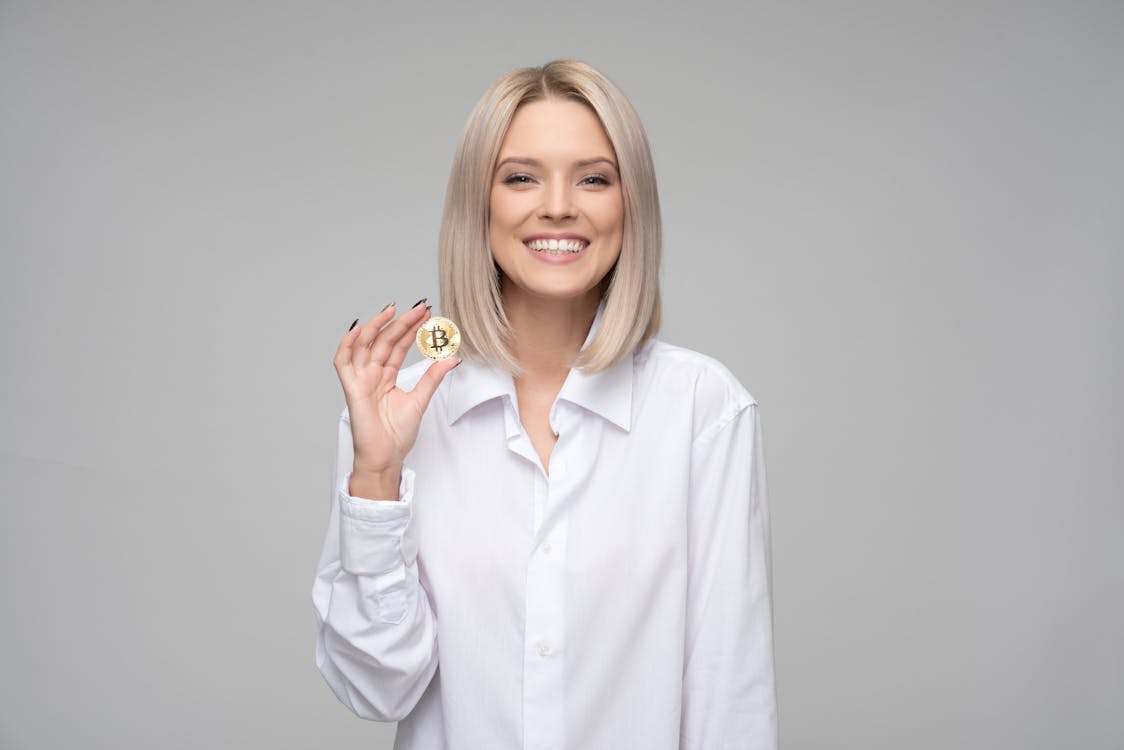
Women Wearing White Long-sleeved Collared Shirt Holding Bitcoin

Laughter is considered the best medicine, not only do you have a positive outlook, but you feel happier and laughter is found to have an aesthetic effect on pain. Norman Cousins laughed in the face of death, not only prolonging his life by many years but anesthetized his pain so he could sleep when he developed a debilitating disease. He watched comic movies for ten minutes to give him two hours respite from the pain, he decided belly laughter was the answer to relieving pain and studied the effects of human emotions on pain and ill-health.

This morning I visited my mother now in her 90's, it's always quite a tonic, she is always laughing despite various ailments. My brother had lost his voice and was writing messages, making hand gestures and whispering, but her eyesight isn't so good and she is very deaf; with the result they were making slow progress.

However she could see the funny side and spent the morning laughing. It's probably a mix of good genes, her indomitable spirit and happy disposition that keeps her alive.

So when things are getting you down find something funny in the situation, you can't smile and feel miserable at the same time - Try it! Maybe we should all watch Carry on Films, to boost our immune systems. So when I put my foot out of the door this morning and ended up on my back, instead of feeling annoyed I should have laughed - it must have been a funny sight!

So I'm lucky, I don't usually greet the frosty mornings, and venture out later in the day, as I work at home. There are 2,000,000,000 people making a daily Google search for ways to work at home, I'm pleased to say I have found the answer - Affiliate marketing with the guidance of a coach and mentor who provides best-selling products for my customers and excellent current marketing training. With her help commissions can be earned whilst learning the techniques.

It takes a while to replace your day-job earnings so beginning part-time is the answer. Later when you have perfected the basics you can move into different avenues, there is plenty of choice. There are many millionaires in the industry and many part-timers. It doesn't happen over-night but extra cash is always useful and it makes an exciting new hobby whilst it's growing. It is exciting seeing your efforts grow into a business.

So if you have at least basic computer skills, a laptop and broad-band connection, in time you can work anywhere and enjoy time and location freedom. We have bought a Spanish house near the beach and can enjoy warmer winters. So I can ovoid icy mornings again as we will soon be returning to sunny beaches.


http://ezinearticles.com/?Laugh-Your-Way-to-Health-and-Success&id=9584337

Force and Direction for a Positive Outlook on Life


We draw power each day from a number of forces and directions. It may be through interaction with a person whom we love, communication with a friend, a creative partnership at work, or just the beauty of being alive as we enter a new dawning. The amount of power depends on many factors including our mood, attitude, and life's functioning. If I tumble out of bed, late as usual, and then struggle to pull hair, clothing, and self together to race out the door and just miss the commuter train, I have pretty well set myself up for some abysmal results. It is difficult to be happy and light-hearted with pressure piling onto our shoulders and into our hearts and minds.

Imagine a morning quite the opposite of the above scenario. This time you awaken, refreshed before the alarm. Part of this is because you have gone to bed at an earlier hour without extra stimulation from electronic devices - games, emails, texts, movies - and you have established a bold, newfound mindset. No more mad flashes and dashes to pull yourself and your life together to greet the day, but rather a start filled with peace, organization, and positive atmosphere. You plug in time for yourself and your coffee, meditation, phone call to Mom, or reading the newspaper. This becomes your "all-to-myself" time to set up the start of a glorious day. Knowing that this dream world is impossible under your old regime, you have to carefully design and implement a new one that includes private moments for you to gather and regroup.

The most important source for the "new you" is contentment with your inner being, gaining strength because you are at ease with who you are. A second source comes from those you love and who love you in return like a brother or sister, parent or other relative. People who love us do not judge, do not condemn, and they do not criticize. While they may at times wonder at our choices, they care about us and accept us just the same. They listen with open ears and full heart and they offer feedback and insight when requested but never assault us with "you shoulda done!" advice. Their thoughtfulness fortifies and fulfills never leaving us with feelings of distress and failure.

Friends can satisfy us with this capacity as well. The biggest difference between family and friends is that a friend may go, but a family member is there forever (and sometimes the going of a "friend" is beneficial). A good friend, listens, offers understanding, and can perceive a need where we, perhaps, have missed it. With the "outside looking in" point of view, and a certain lack of lifelong familiarity, clear vision can exist. Friends most often are of similar age and interest and so a generation gap or lapse is not evident. Sometimes it is simpler to share with a friend because of their outsider standing and the desire to withhold some tough choices and events from close family members. Even though it may feel like a burden to unburden your soul, a friend can make it seem easy.

Co-workers and colleagues also add to force and direction. A common drive and goal pull teams together to accomplish magnificent feats. At work there is a unique level of you - the worker bee, the dedicated employee, the visionary, the leader. Colleagues see you in a different light. Your outside-of-work life lies in another realm and problems there, when carefully left behind, do not interfere with work which allows you to be more productive and engaged. The power of a great job with empowering co-workers revs up life and vitality. The mind expands and talents run rampant. Of course, you have to be in the right job with the right co-workers. If work is a drag and the people you work with even draggier, change is the eminent call. This is one tremendous way that family and friends can help you see more clearly and assist you in envisioning a new and brighter future. After all, a job has to be more than money, although dollars are very nice.

Finally, the greatest force and direction in life lies within your body and soul. You are the one who can be happy or sad, spirited or distressed. Just as your decision to be angry at the world enables it to be angry with you, you have the ability to adjust. Sure, the dog pooped on the floor, you have no milk for cereal or coffee to brew. The house is a mess and your favorite shirt has just been scorched by a much-too-hot of iron. You can haul in doom and gloom, stomp and roar, and berate yourself and the world or you can refocus and reassess and start with a fresher outlook for the day. And even if you must gloomily stomp and moan, you can halt these at will and alter your mood and attitude for the day. I do not begin to suggest that there are no rough moments in life. There are plenty of reasons to be down and out, withdrawn and afraid. There are also multiple reasons to move ahead with an optimistic, confident glow. You will be amazed at the results and the incredible benefits.


http://ezinearticles.com/?Force-and-Direction-for-a-Positive-Outlook-on-Life&id=8949674

How Developed Is Your Belief System?

Woman Sitting on Chair While Holding Smartphone

I am a great fan of Anthony Robbins and other great writers they all say it is your beliefs that control your life. Even Henry Ford said "If you think you can do a thing or think you can't do a thing, you're right". If you believe you will get over a life threatening illness you are much more likely to do so, as many people have demonstrated including Dr Hugh Murphy in his book "The Power of Your Subconscious Mind". He even cured himself of a malignant Tumor. Changing your beliefs can change your life.

The National Geographic magazine has an article in the December 16 issue on: The healing power of faith called "Mind over Matter"

Norman Cousins an American biochemist who studied the effects of human emotions on disease, suffered with excruciating pain (caused probably, by ankylosing spondylitis, or post-sreptococcal reactive arthritis). He alleviated the pain with intravenous vitamin C and belly laughter created by watching comic movies which he found gave an anesthetic type of pain relief. He lived much longer than the doctors anticipated, in fact 26 years from first diagnoses, despite the above and heart disease.

Your belief is a feeling of certainty, whether good or bad, but you are sure the outcome will be as you anticipate. Now it is obviously an advantage to have a positive outlook and always "know" there will be a good outcome, but how can we change our beliefs?

As Anthony Robbins states it is not so much events that control our lives but the meanings we attach to them. Parental behaviour might influence one son to be a drunkard and thief, another could be spurred on to reverse his up-bringing. I know a child whose mother abandoned him at 3 years old. He was left to play in the streets with little neighbourhood supervision. He has since grown into a great guy, a successful business man, and has a beautiful house and trappings, a lovely wife and an adopted daughter.

Many of our beliefs about ourselves stem from past experiences, often from childhood. Some people haven't updated their beliefs since then when they felt small and inadequate, there has been no adult reasoning.

If you want to strengthen beliefs about yourself, think of them as "legs" supporting a table top. Find examples to boost an inadequate belief system to re-enforce the messages and strengthen the "legs" List all the occasions when you have succeeded or achieved things, however small. The longer the list the more proof you have to reassure you and strengthen your beliefs.

To read more about beliefs, and personal growth, Anthony Robbins wrote a great book "Awaken the Giant Within". He also has many YouTube videos that are great for building confidence.

So with this new-found confidence what would you most like to achieve? Write a book, learn a language, learn to paint or play the piano. Maybe get fit or lose weight. Or you could start a business, so eventually you could work at home.

Affiliate marketing is the simplest way to start-up online and if you enlist the guidance of a coach and mentor it will be a lot simpler. You only need basic computer skills, a desire to learn, and commitment to succeed at your venture. Take a look at magazine racks to find a niche to excite you. When learning with a coach you can start earning commissions whilst you are learning the necessary skills.


http://ezinearticles.com/?How-Developed-Is-Your-Belief-System?&id=9583977

How Do You Cope in a Crisis?


There are times when we may feel world-weary, overwhelmed and jaded. Something has gone wrong, or perhaps yet another crisis has occurred in our lives. It may be as a result of one specific incident, life has thrown us a curved ball. Or there may have been a sequence of disasters and now the final straw, something seemingly minor has landed and our resilience has folded.

How is it that some people seem able to take crises and testing times in their stride, whilst others really struggle to cope?

- There are people whose mindset always seems to anticipate setbacks and disaster. They can seem overly enthusiastic about catastrophizing situations, looking at the potential for rejection and misfortune with their 'what if' or shocked 'that could have happened' attitude. They speculate about things that haven't happened, the 'what if he'd fallen and broken his arm', or 'what if she'd let your secret out of the bag?' This mindset predisposes them to negativity, panic and a desire to be over-cautious, even though caution's not always the most helpful or effective approach.

- Having a more relaxed approach to life can mean that if something bad does happen or a situation doesn't work out as planned it doesn't have to spell crisis and failure. In fact, people who have a more positive, receptive approach to life and the difficulties they encounter are often more upbeat and not as easily deterred. They usually have a positive outlook and see beyond any immediate problems to find alternative ways of resolving things.

Setbacks, viewed from a different perspective, can reveal interesting options and may in part result in important lessons, insights and new opportunities. But we have to be receptive to the signs. When something doesn't work out as we'd hoped it may be that another unexpected door can be opened. I've certainly found that some of my 'great' ideas that crashed ultimately resulted in outcomes that I'd never have anticipated at the outset. But there had to be a preparedness to discuss and negotiate in order to reach that resolution.

- Remove 'I should, I ought, I must' from your mindset. The pressure of other people's hopes, expectations and disappointment can turn a setback into a crisis and seriously affect your ability to think clearly and move forward. Think through what's right for you, be clear about your own talents, abilities and interests and remember that successful people often work long hours and deal with setbacks because they are motivated and enthusiastic about their goal. Working to someone's agenda rarely carries the same passion.

- Crises can provide the people in your life with the previously unconsidered opportunity to step up and demonstrate their potential. Family, friends and perhaps even business colleagues may offer a valuable supply of strength, understanding and support when crises happen or things go wrong. Be big enough to share the load with them, they're your 'team'. Do them the courtesy of letting them in on your struggles and be prepared to accept their help when they are there for you. They often appreciate being included, and may be able to suggest some great ideas!

- Breaking down a crisis into 'bite-sized' chunks can be a useful approach. Then you can discover that it's unlikely that every aspect will be equally troublesome. By taking a step back from an 'insurmountable' problem it's often possible to scrutinize the various parts that combine to make it so serious and list each specific, individual element.

I find that there are often five 'chunks' to a serious problem. Chunk one, what you can deal with now; two, the part you need to do some work on before having to pass it on to someone else for their input; three, what's already in hand and being dealt with, four; what is finished with and can immediately be passed over to others; five, what you can do nothing about. Let go of what you can do nothing about and determine the best order to start dealing with the other matters that you can influence.

When you apply this calmer approach you may discover that you're less overwhelmed than you initially thought. This enables you to then start resolving parts of your crisis, reduce its intensity and so regain some semblance of control.

- In any crisis situation it's important to look after yourself too. Be committed to regular sleep times, eat as well as you can, stay clear of drowning your sorrows in booze, sugar binges or worse. Turn off your technology each evening and allow yourself some quiet time, as well as time for fun, friends and exercise.

Be genuinely interested in other people and what is going on in the outside world, away from yourself and your situation. These healthy distractions can stop you from becoming too self-absorbed and introspective and so become better able to cope in a crisis.


ezinearticles.com/?How-Do-You-Cope-in-a-Crisis?&id=9404987

Keeping Positive


Thinking positive is a mental and emotional attitude that focuses on the happy and good side of life, and in turn attracts positive results. A positive person anticipates happiness, health and success, and believes that it can be achieved!

"If you believe you can, you are half way there."

It is important to adopt the attitude of positive thinking in everything that you do. As they say "practice makes perfect", so the more you do it, the easier it becomes, and eventually it will be a way of life. After all life is short and you only get one chance at it, so why not make it a happy and worthwhile experience?

"Happiness is not ready-made... its comes from your own actions" - Dalai Lama

Keeping it positive creates real value in your life, which can have an impact on your work, health and life in general.

Negative emotions narrow your mind and focus your thoughts on the negative. Your mind becomes closed to possibility thinking.

Positive emotions broaden your sense of possibilities and opens your mind. If you start to adopt the attitude that everything in life is possible, you will discover that there will be more positive things happening in your life.

Life becomes a lot easier if you approach it with a happy and positive outlook. I'm not saying that everyday is going to be filled with sunshine because that would be unrealistic.

What I am saying is that when you are faced with obstacles and/or hardship, try to look at the problem with an open mind. Look for the positive way of solving it rather than get caught up in negative thoughts.

Positive emotions allow you to discover and build new skills and resources that can provide value and have a great impact in other areas of your life eg: your health, job, relationships.

Negative emotions have the opposite effect, because they take control and so your brain only focuses on the negative thought/ feeling. This results in you placing your attention on what could go wrong, thereby limiting the other possible options around you.

Negative thinking restricts you completely and can have a lasting damaging effect on your life in general. "Consider negativity as a poison... to be avoided!"

You need to learn to think positively and to increase positive emotions. Start by doing things that bring you happiness, contentment and love, eg: make time for a hobby, play the piano, gardening or spending time with that special person.

To change your mindset from negative to positive is not something that happens overnight... like most habits, you need to work on it. Every day you have to make a conscious effort to be positive until it becomes a part of your every day living. You need to condition your mind towards positive thinking.

Here are some tips on how to increase positive thinking in your life:

1. Make a conscious decision to be positive.

2. Speak in a positive way, using positive words.

3. When you find yourself thinking negative thoughts, endeavour to replace them with positive ones. You will probably have to persevere with this one to eventually teach your mind to think positively and to ignore the negative thoughts.

4. Always expect good and favourable results - a positive outlook is more likely to yield a positive outcome.

5. Use affirmations, positive statements repeated to describe a desired situation or goal, until they are impressed on the subconscious.

Believe you can and you are half way there.

Remember that you are the only person who thinks in your mind. You can choose to look at the good in things or the bad, you are the power and authority in your world. The decision to be happy lies within you. 
======================================================

If you've ever dreamt of becoming a skilled healer with the ability to heal yourself and others... (with just a touch of your hands)...

And without needless years of training and having to spend thousands of dollars... just by following a revolutionary new Reiki training method...

... then this will be the most important message you've ever read.


http://ezinearticles.com/?Keeping-Positive&id=9551167

How To Create Happiness From Within And Live The Life You Want


How can one create happiness? Is it a tough question? To some who think they can buy happiness it may be, however not to those of us who know happiness within is where it begins to reflect into your material world.

Happiness within resembles a ray of sunshine which warms us and keeps us glowing.

We can't live without it and if you believe that happiness within yourself is a phrase found in your old-fashioned encyclopedia, reconsider as here are some basic pointers on ways to use that key to happiness to unlock the door where the ray of state of happiness may shine forth in your life.

The Course in Miracles teaches that, "You are a mirror of truth, in which God Himself shines in perfect light."

- 1. Smile most often

What much easier method is there to uncover happiness within than smiling often?

A smile a day maintains a state of happiness and keeps all nasty sensations away.

- 2. Positive Outlook

Begin finding ways to illuminate and glow if you are always sad and down believing you will always be the born loser.

Being more right-minded with optimistic outlook is something you need to do to keep the pleased hormones and vibes around you.

Axe away all that downhearted stinking thinking with a state of happiness within.

- 3. Speak to your friends with a great attitude

Too much stress drives and hurts happiness away. The next time you feel like your world is crashing hop on over to your good friend's crib for a cosy chat.

- 4. Do What You Love

I agree that not everyone is lucky enough to go after what we enjoy however you can still do exactly what you like in your extra time.

Hobbies are one area where you can get much elation doing exactly what you love.

The Course in Miracles asks us, "Have you really considered how many opportunities you have had to gladden yourself, and how many of them you have refused?"

Just remember, if we are serious, we all can discover happiness within.

Never say that happiness is a word you can just dream of finding.

Go for more than happy and create happiness from your inner world and reflect it outwardly to live a life you want!

What simpler method is there to unlock happiness with key to happiness called smiling?

Being upbeat, honest and truthful with your inner self is something you have to do to keep the delighted mindful agents and attraction principles working on your side to get the life you want.

Too much tension and wrong-mindedness drives and hurts joy and inner peace away.

To happiness giving you the life you want!


http://ezinearticles.com/?How-To-Create-Happiness-From-Within-And-Live-The-Life-You-Want&id=9831165

How To Become Effective And Successful While Living A Balanced Life


Living a balanced life is in understanding that you are essential to the world.

Accepting this responsibility to yourself first, and then to the world, can lead to positive outlook and control over your life.

The Course in Miracles teaches, "A journey without a purpose is meaningless."

When we make use of the power of attraction and its reflection principles-- a reflective state of mind, we grow while being successful.

We are living a balanced life that helps let go of fears and worries that only help bring on troubles in our life.

The power of attraction may impact us in every component of our life.

From within the mind we create the positive notions in our life and reflect it into our exterior world.

The manner in how the mind operates for being successful is through revealing what you really feel, and share your feelings in material form.

The trick to being effective is to make use of these reflection principles and your reflective state of mind, and to recognize exactly what you desire to take place in your life.

You need to keep in mind that we all want power of some sort, and this is exactly what we feed on to become effective in life.

The power of reflection is going to help you get what you want in life.

The Course in Miracles states, "This is the place to which everyone must come when he is ready.".

The world needs you to be ready and get what you want in life, because getting what you want is necessary for others to get what they want.

We need to recognize just what our inner power can create.

How you truly believe and feel is most likely to influence just how positive and creative you will be in life.

Think of the things that you are doing and merely what you could change in your life to being an effective leader, perhaps, as well as living a balanced life.

What really is holding you back in life?

You will certainly discover that these points are holding you back in life if you have adverse sensations in your life and do not assume positive and favorable events occurring.

Our mind is an effective device in our life, and the fashion and style in how we perceive and think is going to identify the degree of success that we have in life.

It's a reality you created by how you perceive and think and reflect as a projection of your life in this world.

The most vital point in life is to recognize what your real heart truly wants while in this world, then, visualize it, create it, and begin living it.

To your success!


http://ezinearticles.com/?How-To-Become-Effective-And-Successful-While-Living-A-Balanced-Life&id=9845560

How Do You Cope in a Crisis?


There are times when we may feel world-weary, overwhelmed and jaded. Something has gone wrong, or perhaps yet another crisis has occurred in our lives. It may be as a result of one specific incident, life has thrown us a curved ball. Or there may have been a sequence of disasters and now the final straw, something seemingly minor has landed and our resilience has folded.

How is it that some people seem able to take crises and testing times in their stride, whilst others really struggle to cope?

- There are people whose mindset always seems to anticipate setbacks and disaster. They can seem overly enthusiastic about catastrophizing situations, looking at the potential for rejection and misfortune with their 'what if' or shocked 'that could have happened' attitude. They speculate about things that haven't happened, the 'what if he'd fallen and broken his arm', or 'what if she'd let your secret out of the bag?' This mindset predisposes them to negativity, panic and a desire to be over-cautious, even though caution's not always the most helpful or effective approach.

- Having a more relaxed approach to life can mean that if something bad does happen or a situation doesn't work out as planned it doesn't have to spell crisis and failure. In fact, people who have a more positive, receptive approach to life and the difficulties they encounter are often more upbeat and not as easily deterred. They usually have a positive outlook and see beyond any immediate problems to find alternative ways of resolving things.

Setbacks, viewed from a different perspective, can reveal interesting options and may in part result in important lessons, insights and new opportunities. But we have to be receptive to the signs. When something doesn't work out as we'd hoped it may be that another unexpected door can be opened. I've certainly found that some of my 'great' ideas that crashed ultimately resulted in outcomes that I'd never have anticipated at the outset. But there had to be a preparedness to discuss and negotiate in order to reach that resolution.

- Remove 'I should, I ought, I must' from your mindset. The pressure of other people's hopes, expectations and disappointment can turn a setback into a crisis and seriously affect your ability to think clearly and move forward. Think through what's right for you, be clear about your own talents, abilities and interests and remember that successful people often work long hours and deal with setbacks because they are motivated and enthusiastic about their goal. Working to someone's agenda rarely carries the same passion.

- Crises can provide the people in your life with the previously unconsidered opportunity to step up and demonstrate their potential. Family, friends and perhaps even business colleagues may offer a valuable supply of strength, understanding and support when crises happen or things go wrong. Be big enough to share the load with them, they're your 'team'. Do them the courtesy of letting them in on your struggles and be prepared to accept their help when they are there for you. They often appreciate being included, and may be able to suggest some great ideas!

- Breaking down a crisis into 'bite-sized' chunks can be a useful approach. Then you can discover that it's unlikely that every aspect will be equally troublesome. By taking a step back from an 'insurmountable' problem it's often possible to scrutinize the various parts that combine to make it so serious and list each specific, individual element.

I find that there are often five 'chunks' to a serious problem. Chunk one, what you can deal with now; two, the part you need to do some work on before having to pass it on to someone else for their input; three, what's already in hand and being dealt with, four; what is finished with and can immediately be passed over to others; five, what you can do nothing about. Let go of what you can do nothing about and determine the best order to start dealing with the other matters that you can influence.

When you apply this calmer approach you may discover that you're less overwhelmed than you initially thought. This enables you to then start resolving parts of your crisis, reduce its intensity and so regain some semblance of control.

- In any crisis situation it's important to look after yourself too. Be committed to regular sleep times, eat as well as you can, stay clear of drowning your sorrows in booze, sugar binges or worse. Turn off your technology each evening and allow yourself some quiet time, as well as time for fun, friends and exercise.

Be genuinely interested in other people and what is going on in the outside world, away from yourself and your situation. These healthy distractions can stop you from becoming too self-absorbed and introspective and so become better able to cope in a crisis.

http://ezinearticles.com/?How-Do-You-Cope-in-a-Crisis?&id=9404987

On Being Happy As a Choice


For all of us, it is natural to feel sad when someone closest to us passes away, or get angry when someone does wrong to us. But have you ever encountered a person who feels "happy" amidst such situations? I guess it would be me, but we're more than 7 billion here on Earth now, and it's very possible to find even just one who's like that.

American psychiatrist Elizabeth Kubler Ross authored "Stages of Change," a book that discusses how a person normally deals with his life problems in general. According to the book, there are 5 stages that a person goes through every time a negative change (problem) happens in his life: Denial, Anger, Bargaining, Depression, and Acceptance. Taking for example a man's grief over his girlfriend's death due to a crime-related, a sudden situation, say a freaky shooting spree, the "moving on" process goes like this:

DENIAL: "It's not true! She's still alive!"

ANGER: "Why the heck this thing happened? Of all the people, why her? She doesn't deserve this?"

BARGAINING: "If I was just at her side the moment it happened, then I would have saved her."

DEPRESSION: "I should have died with her! I'd rather take my life than live without her!"

ACCEPTANCE: "I know she's not here anymore, so I guess I should get over this and move on."

In some cases, especially the extreme ones, going through the "moving on" stages can take longer periods of time than expected depending on the gravity of the situation itself and/or the impact made to the person involved plus the actions he had taken during the process. Subsequent negative actions usually prolong the process include - but not limited to - habitual drinking, drug abuse, and suicidal attempts, all leading to the person's death if not handled accordingly.

On the other hand, the "moving on" process can also go faster, although skipping the stages in-between Denial and Acceptance is not possible. The faster recovery from negative change depends on how the person handled himself positively in all aspects - physical, emotional, mental, social, and spiritual, among others - and how he understands both the situation itself and this "healing" process (best learned beforehand). People with such abilities adapt the principles of "mind over matter" and "mind over heart."

The human brain actually works in the same fashion as the computer's processor which commands consequent actions to the machine. Thus, the human brain has the power to "tell" everything the person should do including how he should emotionally react on various life situations - a clear opposite to the popular belief that "the heart dictates our emotions." However, the sets of actions that the computer's processor performs can be altered via data manipulation; and so with the human brain via conditioning and acquisition of new knowledge. As mentioned earlier, if the person, at the first place, has accepted the harsh realities of life including the existence of death and suffering, understood the process of "moving on" from negative change, and has the ability to make and maintain a positive outlook out of the various adversities of life, then the person's emotional recovery can go faster, thus his life would go back to normal at an earlier time. Just think of how Miss Philippines quickly stood up from her accidental downfall onstage in her icy-blue frock at the Miss Universe 1999 preliminaries and you'll see what this means.

Yes, it is human nature to feel sad or angry upon the situation's call, but such circumstances don't really tell us to dwell on them forever. Also, it is not the situation that makes us react accordingly but just us ourselves. Sadness and anger, among all other negative feelings, are just options; and having said that, happiness can also be a choice. For the narrowest of minds, being happy amidst negative situations is evil and tantamount to hoping for the worst for other people; but in reality, it is about finding the brighter side of even the worst things in life and looking forward to it with a smile.


http://ezinearticles.com/?On-Being-Happy-As-a-Choice&id=9448074

Take Time to Notice the Little Things


I still get wildly enthusiastic about little things...

I play with leaves. I skip down the street and run against the wind.

~Leo Buscaglia~

My friend Judie has been watching a pair of nesting phoebes for several years. They build their nest in the most improbable space and tend their chicks with well coordinated teamwork. While driving along the expressway, Carol spotted a tiny fawn grazing along the median, seemingly oblivious of where its mother was. Carol added it to her gratitude list for the day. Driving on a back road, I noticed a row of cornflowers and Queen Anne's lace framing a cornfield in a subtle blue and white border.

None of these are earthshaking spectacles. Without an eye for the little things, they would all be easy to miss. It seems much easier for us to notice all the terrible things which bombard us each day and the worries which follow us around. If we allow it to happen, all the awful things in life can overwhelm us. Sometimes things which brighten our day take a special effort to notice.

Henry Thoreau wrote his memoir, Walden, in the nineteenth century. He described his practice of writing down the things for which he was grateful each day before getting out of bed. Oprah also suggested Thoreau's practice, described as a gratitude list, a way of keeping in touch with the good things in our daily lives. In order to list things for which we are grateful, we must pay attention to them and savor them as they happen. Some days it seems easy to generate a long list, and some days our troubles seem to block out the good things, making them harder to remember.

The little things are usually subtle and, without practice, easy to overlook. Nevertheless, they are all around and waiting for us to notice them. The above examples are all from nature, but there are many other delights as well. A kind word, a loving gesture, or a small favor can all brighten our day if we let them.

The things we notice and choose to think about influence what kind of person we are and how we present ourselves to the rest of the world. If we constantly tune into tragedy, crime and conflict, we will undoubtedly become morose and negative about the world and eventually about ourselves. If we make an effort to notice the day's little gifts, we will have a brighter outlook on life despite our troubles.

Having a positive outlook can be contagious. A young woman I know, Megan, is so consistently cheerful, even when things are not going right for her, it is impossible to spend any time with her and not come away feeling more cheerful yourself.

We all have the choice of what to notice and think about. We can choose to descend into the doldrums or look for the joy in life. It might take some practice but we do have a choice and can brighten our lives and the lives of those around us as well.

Life Lab Lessons


  • Slow down the pace of your life for a little while.
  • Look around you.
  • Find something marvelous you did not see before.
  • Keep this new discovery in your mind.
  • Return to it when you become frustrated.


From Commonsense Wisdom for Everyday Life

http://ezinearticles.com/?Take-Time-to-Notice-the-Little-Things&id=9314495

The Hidden Tool in Your Tool Box


If you ever get the chance, ask a firefighter to show you what he carries in his turnout pockets.

As this firefighter is pulling out the tools that she has carefully deemed the most necessary and beneficial ones that she wants at her side in the storm of an emergency, ask her to tell you about them, and why she has chosen these specific tools for her pockets. You will come away having learned a lot about firefighting and the firefighter too.

What Are Your Go-To Tools?

Some of the tools in my own pocket include a black ninja-like hood, to be worn under my helmet that provides protection against the intense radiating heat from a fire; a brass pocket spanner for charging the hose with water from the fire hydrant; a multi-tool spring-loaded center punch with a seat-belt cutter, for breaking out glass of a vehicle where a patient needs immediate extrication; a pocket knife and cable cutters for cutting entangling wires and cables that I may encounter as I crawl through the darkness of a building, where the structural elements that hold ceilings and walls together are falling apart or melting away; a hose strap for a quick rescue drag; and tubular webbing attached to a carabineer for a hasty escape if necessary.

I continually pay attention to the tools in my pocket, keeping the ones that serve me and changing them up if they don't.

In our own lives, we each carry a set of metaphorical tools in our pockets. Many of our tools are ones born out of the necessity of our individual experience. Do we move through life with a positive outlook, fierce determination, appreciation, practicality, fear-based mentality? Maybe our go-to tools are ones we have used to survive not-so-ideal environments we grew up in. Defensive walls or victim consciousness or people pleasing may be what we use to help us get through our present situations.

Whatever our stories, and whatever tools we rely on as we move through our journey, it serves us to go through our toolboxes once in a while to see if our instruments of choice are truly serving us. When we abandon the tools that no longer work and try out new ones, we may be surprised at the shifts that may occur in our experience.

The Elusive Tool

Let me tell you about an elusive tool that I have found very helpful in my own life toolbox. She doesn't look or feel like one of your traditionally manufactured devices. She does not push, shove, or pry. She's called Allowing.

Huh?? To my inner firefighter this sounds like a pretty passive, even weak and laughable tool. "Move over Allowing, and let my axe and sledge hammer get this job done!" my inner firefighter bellows.

It was many years ago on a fire academy drill ground that I met Allowing and was able to practice her art, first hand. Like every new fire recruit in a fire academy, I found myself fully suited up in my heavy turnout gear, my SCBA (self-contained breathing apparatus) on my back, breathing twenty minutes worth of air through my mask, ready to practice going into small, dark, and undesirable spaces.

I was crawling on my belly through a hundred-foot long, pitch-black commercial pipe--feeling the hot sweat that I could not wipe through my mask, dripping down my face and into my eyes. I could feel the constriction of the pipe, as my helmet would bump up against the top of it. My arms were uncomfortably bent to the sides of me, pulling me inch by inch through the blackness with the rhythmic push of my steel-toed boots. There was only slow forward movement here, no room to turn back or even reach my arm behind me. I felt for my academy mates of football player stature.

At about the halfway point of this limiting space, I stopped for a second. I could feel the rising potential of a dark, confined, imprisoned freak-out coming on, even in my self-assured, non-claustrophobic nature. In that moment I knew I had three choices:

• Freak out - not an option, not here, no way!

• Push through - better than freak out, do-able, but I would lose a lot, if not all, of my limited air if I pushed and struggled, or

• Allow it to be.

The Art of Allowing

In that second, I went with allow. I closed my eyes, which made no difference in terms of the blackness in front of me, and invited Allowing in. In my allowing of that moment to be exactly as it was, all was transformed.

The darkness, that seemed to suffocate me, became a safe and comforting cocoon. The confined walls of the pipe stretched into an expansive space that cradled me. As I even allowed myself to feel the fear, the fear dissolved into peace. I continued my journey through the pipe, out through the end, like a baby crawling through a playhouse. When we allow, we invite movement, we open space for change, and we invite transformation.

Where can you invite allowing into your daily experience? I have found that she can transform many a situation. When we allow ourselves to feel fear, for example, it might be uncomfortable at first, or even terrifying. However if we allow ourselves to feel it, we will move through those feelings eventually. Conversely, we may choose to push our fear away. This may work in the interim, until it comes up again.

Can we practice allowing in our every day encounters with strangers? Can we allow people to be who they want to be, with out our judgments pushing against the situation? Can we allow ourselves to feel our array of human emotions, without pushing them away? When we allow in these ways, we may find ourselves growing in leaps and bounds.

There is a beautiful element of trust that accompanies allowing, I have found. Do we trust that the people, situations, and circumstances that we encounter are there for a reason, or for a lesson for us, or even for our own good? When we practice the art of allowing, we open up space for change and transformation in our lives.

I admit that there will be times when we feel that other tools in our pockets work best in certain situations. The push-pull tools of determination and struggle are often at the top of our tool chest. Perhaps the next time you are pushing and struggling, you will pause and dig a little deeper in your cache, and look for the unassuming tool that patiently waits underneath. Give Allowing a try. You may be pleasantly surprised.

http://ezinearticles.com/?The-Hidden-Tool-in-Your-Tool-Box&id=9182099

11 Tips to Boost Your Mood and Be Happier

How happiness experts stay centered, optimistic, grateful and satisfied in their busy lives—and how you can, too 


What makes you happy?


Besides the big stuff like family, health, work and faith, you probably treasure at least one small, regular ritual that brings you peace, joy, sanity, flow and reflection. Unwittingly over the years, you have probably developed and perfected a strategy for cultivating qualities proven to feed a positive outlook: gratitude, optimism, awe, compassion, mindfulness and physical health, for instance. And it’s probably not by writing in a leather-bound gratitude journal every night or sitting in the lotus position chanting “om” each morning.Happy habits don’t need to be formal or fit idealized notions of tranquility or all-out jubilation, but they should be personalized.
My ritual is going for a long walk through the neighborhood with my headphones on, music providing a dramatic soundtrack to my everyday worries, hopes and fantasies. But you might lift your mood by gardening, sipping coffee while reading a book, doodling on a sketchpad, reading your child a bedtime story or hiking with a friend.
We asked positive-psychology leaders how they practice what they preach. How do they stay centered, optimistic, grateful and satisfied in their busy lives? They share their surprising answers below.
1. “First thing in the morning I get on my treadmill, and I get a bridge partner on the Internet. I have an air desk so I can walk for an hour at 3 mph and play bridge at the same time.”
—Martin Seligman, Ph.D., director of the Positive Psychology Center at the University of Pennsylvania in Philadelphia and author of Learned Optimism, Authentic Happinessand Flourish
2. “A good conversation with a friend over a cup of coffee and jogging along the Hudson River in New York City are two of my favorite activities.”
—Gabriele Oettingen, Ph.D., professor of psychology at New York University and author of Rethinking Positive Thinking: Inside the New Science of Motivation
3. “Even when I’m totally off my game and out of my normal happiness routines—which include writing down what I’m grateful for, getting enough sleep, hiking with my dog, allowing myself to just work on one thing at a time, etc.—I still always make an effort to connect with strangers. I look passersby in the eye and smile. I chat with the barista. I dish out compliments (“Love your shoes!”) in the grocery store. It’s almost a game for me: Who smiles back? Who brightens? Who chuckles? And it rarely fails to lift my spirits.”
—Christine Carter, Ph.D., senior fellow at the University of California, Berkeley’s Greater Good Science Center and author of Raising Happiness: 10 Simple Steps for More Joyful Kids and Happier Parentsand The Sweet Spot: How to Find Your Groove at Home and Work
4. “Before breakfast every morning, I start a meditative routine on a yoga mat with a foam roller. I work through trigger points in my legs, hips, back and chest. Then I move to a series of plank and lunge poses. Often my 3-year-old daughter will climb onto my back to add 50 pounds of weight. She knows Daddy starts the day by working out. She knows I don’t talk when I work out, so I can hear her breathing next to my own, and we often get synchronized. Taking care of my body, noticing and appreciating what is happening in the present moment, connecting to my daughter: all mushed up together in a daily 10-minute routine.”
—Todd Kashdan, Ph.D., professor of psychology at George Mason University and author of The Upside of Your Dark Side: Why Being Your Whole Self—Not Just Your “Good” Self—Drives Success and Fulfillmentand Curious? Discover the Missing Ingredient to a Fulfilling Life
5. “I make sure I ask myself what I need emotionally in the moment, then try to provide it directly. This often involves some physical touch like putting both my hands on my heart so I can feel cared for and supported, and then speaking to myself with the same warmth, compassion and encouragement I would show to a good friend. When I’m struggling, I say things like ‘I’m sorry this is so hard right now. I’m here for you.’ ”
—Kristen Neff, Ph.D., associate professor of educational psychology at the University of Texas at Austin and author of Self-Compassion: The Proven Power of Being Kind to Yourself
6. “Every other week, I take my 1-year-old son Leo to the Dallas aquarium. Very few things in this world make me as happy as watching someone I love become overwhelmed with awe at something as ordinary as a swimming turtle. Awe, like joy, is contagious, and I want to see the world through eyes like Leo’s.”
—Shawn Achor, happiness researcher and author of The Happiness Advantage: The Seven Principles of Positive Psychology That Fuel Success and Performance at Workand Before Happiness: The 5 Hidden Keys to Achieving Success, Spreading Happiness, and Sustaining Positive Change
7. “I love to run and/or walk along the Charles River here in Boston, in all seasons. But the biggest delight I share with my wife, Alicia, is our annual weeklong visit to Rancho La Puerta in Tecate, Mexico. We look forward to it all year as a boost and culmination of being active, outside, with a new group of friends, doing yoga and tai chi, participating in new dances, and being almost completely away from our digital connections and devices.”
—John J. Ratey, M.D., professor of psychiatry at Harvard Medical School and author of Spark: The Revolutionary New Science of Exercise and the Brainand Go Wild: Free Your Body and Mind from the Afflictions of Civilization
8. “Kickboxing class is my coffee-free pickup. It is not violent (I box to a four-count beat with music) but rather an exhilarating way to get my feel-good hormones racing through my body.”
—Elizabeth Lombardo, Ph.D., author of Better than Perfect: 7 Strategies to Crush Your Inner Critic and Create a Life You Love
9. “I try to reflect on human kindness by thinking of those who have reached out to me or offered help.”
—Fred Luskin, Ph.D., director of the Stanford Forgiveness Projects at Stanford University and author of Forgive for Good: A Proven Prescription for Health and Happiness
10. “For me, it’s going on a brisk walk through parklands or by the water. I walk fast enough to get my blood pumping and clear my head. Sometimes I listen to music or an audio program, but mostly I just breathe deeply and listen to my own thoughts, allowing them to untangle in my mind.”
—Domonique Bertolucci, author of The Happiness Code: Ten Keys to Being the Best You Can Beand 100 Days Happier: Daily Inspiration for Life-Long Happiness
11. “I just try to make anything I have to do, or that I can do, into something that I enjoy—by learning about it, savoring it, doing it better than I did it before. When I was younger, I depended much more on specific activities like rock climbing, mountain climbing, painting or reading…. Now, in the ninth decade of life, I am just grateful to be alive…. [And] the people I love… are just as essential now as they ever were.”
http://www.success.com/article/11-tips-to-boost-your-mood-and-be-happier