Showing posts with label read. Show all posts

How To Smash Through Writer's Block

Image result for writing

Writer's block is a catch-all generic term for someone who has difficulty transferring his/her dazzling ideas from fountain pen to parchment, rhetorically speaking, each one equally as maddeningly frustrating as the other.

When you're on a roll, whenever you had a torrent of ideas you could even hear the ink aggressively rushing through your fountain pen at the ready to provide the magic string of verbal pearls, a sort of incantation that unleashed a creative force that transformed itself seamlessly into brilliant language as it settled softly with ease on page after page after page creating a magnificent work of art.

The two blockages I encounter most often are the following:

The first is when mind is equally as blank and empty as your first page. It's the frequently portrayed stereotypical one of the frustrated writer at wit's end hunched over his/her computer unable to conjure up a single word or unable to get past the first sentence, "It was a dark and stormy night," when there's not even a hint of creative condensation.

The second is when ideas gush out easily but it's nothing more than bilge, an incoherent stream of words and sentences from which you're unable to conjure up a compelling story in any form, let alone in an entertaining way.

But fear not. One method of firing up that creative artistic engine is to keep on hand - as in a hard copy - several types of articles by writers you enjoy reading. This means those who are not necessarily iconic or well-known writers, rather those with whom you have a certain comfortable and likeable connection in how you think. Not only should you read it, read it aloud, softly perhaps in sotto voce as if you're a storyteller to someone sitting at a table across from you. And the reason I never use my own previously published articles is that it has the same results when a doctor treats himself - not well.

Different styles mean different rhythms from which to choose. Always have them at the ready whether physically in books or magazines or articles or on your electronic device(s) in a dedicated folder. You don't want to get so stressed and depressed knowing what you have to do and not being able to not only write but remembering then searching the names of those authors and their respective articles. These sources represent the antidote to your creative conundrums.

So next time you're stuck in that creative cerebral traffic jam you can select one and read by example and begin moving forward. Even if you're writing a serious piece on international affairs, an article on fashion or theater may do the treat simply for its style and provide a different perspective. Indeed regardless of the topic you're engaged in, you are in the entertainment business where both comedy and tragedy exist as art. As the words and imagination begin to flow, critical concepts will form and transfer themselves more easily from fountain pen to parchment as the components fall in place so you can later mold them to craft your message to suit your audience.

http://ezinearticles.com/?How-To-Smash-Through-Writers-Block&id=9372879

The Power of Spaced Repetition to Remember What You Read

Image result for reading

In order to learn from a book, it is best to read through that book more than once. This is where speed reading will help tremendously. When first starting to read a book, look at the cover. Read what it says on the back of the book. Open up the book and read through the initial pages, then look through the table of contents. Flip through the pages, look at some pictures. Prepare the mind for what you are about to embark on. On your first reading, you can speed read, and don't worry about understanding or remembering everything. It is like when you build a house. At first you lay the foundation with the cement, but you don't expect to sleep there the first night.

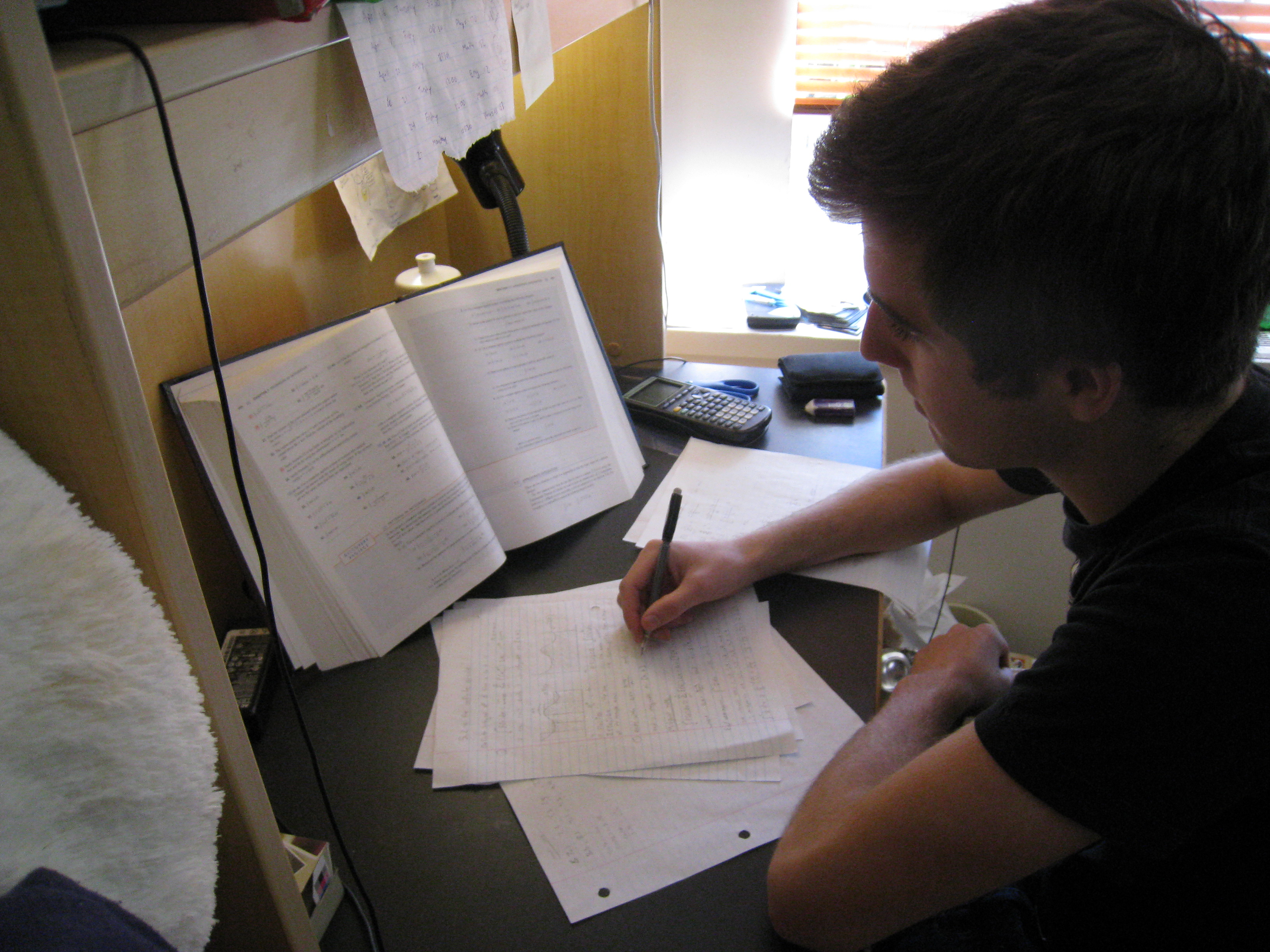
On your second reading, have a notebook and pen or pencil to take notes. You may even want to highlight or underline if that is possible. You may not want to read as fast as the first time, and of course you want to stop and take notes. Don't be too concerned with remembering everything right away. Through the power of spaced repetition, you will be able to remember and retain more each time you read through the book or your study notes. Reading a chapter two or three times in a row is a great way to remember much of what is being read. The more you read or hear something, the better chance you have of remembering it. Have you ever seen someone who looks familiar? You may have seen him once before. You may have seen him at the mall, or maybe even on television. This may be the second or third time you are seeing him. If you should see him again, he will definitely be familiar.

It is the same thing with reading. On the second reading, many things will look familiar, and you will remember some things. When you write your notes, it will strengthen the memory even more. Even if you never looked at your notes, just by writing it down on paper, it will make an impression in your mind and will help to remember it. By reviewing your notes between readings, you are strengthening the recollection. By your third reading, you will have a much better understanding of the material than the first time. The more you read and review, the stronger the memory becomes.

Many people wait until the last minute to read and study the night before a test. This is a tough way to learn. Each day, put a certain time aside for your study time. Thirty to forty-five minutes is usually a good time to focus and learn until you may want to take a break. Remember, they don't build a house in a day, and you don't become a great sports champion in a day.

Each time that you read or speed read, when you focus, study, and learn, you are developing your skills, as a reader and a speed reader. You are also helping to build a strong memory, as well as learning about the subject you are reading about. Use the power of spaced repetition to learn much more than you ever thought possible.

http://ezinearticles.com/?The-Power-of-Spaced-Repetition-to-Remember-What-You-Read&id=9216239

3 Daily Habits That Will Make You More Successful

The most important investment you will ever make is you. Follow these tips to take your career to the next level.


You are your biggest investment. Don't be cheap when it comes to education, health and self-improvement. Continuous improvement is of paramount importance when it comes to your success in business or in life in general.
The best way to invest in you is to always spend more than you think you can afford on education, including degrees, online education, books, audio books, podcasts etc (whatever it takes). You do have time to read. Yes you do; you can listen to audio books during your commute to work or at the gym.

1. Watch, Read, Listen and Learn: 

Most online lectures are free and my favorites are inspiring Ted Talks. If you have Wi-Fi and a stationary bike at home you can watch online courses on Udemy or even on YouTube.
Be a voracious reader. Read as many books as you can on successful business people and humanitarians. What are their secrets? Learn from them and watch your career take off.
Invest in a subscription to Audible.com for $15 per month and listen to biographies of successful entrepreneurs. I recently listened to audible books from Marc Benioff, Warren Buffett, Steve Jobs, Elon Musk and many more.
I have always been a voracious reader of biographies of successful people. I love learning from them. What are their recipes for success? How did they do it? Did they lead a well-balanced life on the road to their success?

2. Follow Your Heroes:

Use Twitter to follow your business heroes. They often tweet incredibly motivational quotes that resonate well with me. I love their short snippets of optimism, hope and best practices.
I find it incredibly motivating to know as much as I can about these successful people as most of them came from very uncompromising backgrounds. I love the poor, smart and hungry rags to riches stories. I feel empowered when thinking about them; there are no limits to what you can achieve. These people are no smarter than you are.

I Have Never Met a Successful Person With...

You will never meet a successful person with a negative attitude. If they didn't believe in themselves and in their goals, then they would never have been successful; the quintessential example of this is Richard Branson. I just finished his latest audio book and my goodness does he ever have an amazing positive attitude.
What I have learned from most of the audio books that I have completed on successful people is that the secret of their success is that they all believe that there are no limits to what you can achieve! Keep a journal and write down what made them successful.

3. Write Down Your Goals

The probability of you being incredibly successful rises materially if you simply write down your goals. I write mine in my calendar application on my iPhone as a 6am repeatable calendar entry. When I wake up every day, the first thing I see on my iPhone is that 6am goal calendar entry which makes me want to jump out of bed and have fun working towards achieving my goals.
Successful entrepreneurs have their partners and employees also document all of their goals. A great example of this is Jeff Bezos as he has all of his product managers write a press release that will not be published for at least a year. This way his product managers can focus on filling the gap and making the press release and their goals a reality.
There are countless other amazing examples of simple goal setting strategies from successful people; my favorite one is from Derek Jeter. My son is a huge Derek Jeter fan (I love the Blue Jays but heck Jeter is a great role model). My son read Jeter's book called "The Contract." In the book he wrote that the reason for his success was that his parents made him write a simple one page contract every year from a young age.
Jeter's Contracts with his parents included basic goals, like "I will do well in school, I will do my chores, I will practice baseball, etc." My son has his goals on his wall now. My wife was even cool with the scotch tape he used on the wall!
The most important investment you will ever make is you! Write down your goals, be a voracious reader of published works, watch online videos and follow twitter feeds written by or written on your business and humanitarian heroes. Follow their success blueprints and one day others will follow and read about you as part of the most important investment they ever make.

The Power of Spaced Repetition to Remember What You Read


In order to learn from a book, it is best to read through that book more than once. This is where speed reading will help tremendously. When first starting to read a book, look at the cover. Read what it says on the back of the book. Open up the book and read through the initial pages, then look through the table of contents. Flip through the pages, look at some pictures. Prepare the mind for what you are about to embark on. On your first reading, you can speed read, and don't worry about understanding or remembering everything. It is like when you build a house. At first you lay the foundation with the cement, but you don't expect to sleep there the first night.

On your second reading, have a notebook and pen or pencil to take notes. You may even want to highlight or underline if that is possible. You may not want to read as fast as the first time, and of course you want to stop and take notes. Don't be too concerned with remembering everything right away. Through the power of spaced repetition, you will be able to remember and retain more each time you read through the book or your study notes. Reading a chapter two or three times in a row is a great way to remember much of what is being read. The more you read or hear something, the better chance you have of remembering it. Have you ever seen someone who looks familiar? You may have seen him once before. You may have seen him at the mall, or maybe even on television. This may be the second or third time you are seeing him. If you should see him again, he will definitely be familiar.

It is the same thing with reading. On the second reading, many things will look familiar, and you will remember some things. When you write your notes, it will strengthen the memory even more. Even if you never looked at your notes, just by writing it down on paper, it will make an impression in your mind and will help to remember it. By reviewing your notes between readings, you are strengthening the recollection. By your third reading, you will have a much better understanding of the material than the first time. The more you read and review, the stronger the memory becomes.

Many people wait until the last minute to read and study the night before a test. This is a tough way to learn. Each day, put a certain time aside for your study time. Thirty to forty-five minutes is usually a good time to focus and learn until you may want to take a break. Remember, they don't build a house in a day, and you don't become a great sports champion in a day.

Each time that you read or speed read, when you focus, study, and learn, you are developing your skills, as a reader and a speed reader. You are also helping to build a strong memory, as well as learning about the subject you are reading about. Use the power of spaced repetition to learn much more than you ever thought possible.

http://ezinearticles.com/?The-Power-of-Spaced-Repetition-to-Remember-What-You-Read&id=9216239