Showing posts with label choices. Show all posts

Life Is Like A Game Of Chess

I'm not a chess player but over the years I have watched many of my friends play the game. But I can play checkers - not that it matters. Recently as I was watching a couple of friends play the thought occurred to me that chess is a lot like life - it's uncertainty, it's adventure, it's exhilaration and yes, it's a disappointment. Watching caused me to consider three life areas;

-Why do we make the moves we do?

Every day we all make decisions - some small ones, some insignificant ones and often some major ones. Do we take this move now or wait? Do we let go of this or hold on?

Do we say yes or no to this opportunity? Do I take a new route or play it safe and take the one I always do? Do I share these thoughts or keep them to myself? Hundreds of not thousands of routine choices and decisions every day. Some easy and some more difficult but in the end, we have a choice - do it or don't, make it or don't, try it or don't, say it or don't.

Every choice, action, and decision we make has a consequence - some are potentially positive and some negative, some are short term and some may take a while to come to fruition and often a few can be either a disaster or amazing.

I'm not going to dig into the weeds in this article about the best decision approaches to take as I have written several articles dedicated to this topic - all I want to do with this one is to make sure that you grasp the concept of reality and relationship between what you want, what is and how the relationship between these two approaches ultimately determines the outcomes you end up with.

In chess, every move matters, and yes some can be more crucial than others depending on how your opponent (life) reacts or responds to your moves. We can't control how our opponent chooses to pay their next move, all we can do is try and react as best we can given our options based on their (life's - starting to see the relationship here) previous move.

If their (life's) move puts us in a corner limiting our options, well, do we cave in and just let them (life) win and just quit or do we keep looking for a different or better strategy or approach to try and regain our control of the game and its potential ending?

Life will never stop sending us challenges, opportunities, options, dead ends, problems and chances and for us to - change, grow, improve or mature or to default back to what is comfortable regardless of whether it works or not or improves things or not. Life is relentless and no matter what choices we make or challenges we overcome, there are always others waiting just around the corner to keep us focused on improving vs. settling or quitting.

-In hindsight do we wish we had made different movers?

Regardless of your knowledge, experience, education, and wisdom, you can never know what is waiting in the wings that will cross your path tomorrow whether you are ready or not or how the decisions, choices, and options you have today will turn out tomorrow. I can move my chess piece, but I have no idea how you will respond, I just have to wait and see and them move accordingly.

Trying to outsmart life is stupid - what it wants us to learn to do is make the best moves possible given our resources, faith, courage, and wisdom. Plans are great if you could control life. Knowing is great if things never changed. The future is within your understanding if it always performed according to history and rules. Your life would be easy if you always made the right decisions - the problem is that the right decision or choice made today could in the future turn out to have been a wrong decision in the past and why? It's called "life" folks.

-What do we learn regardless of whether we win or lose?

Learning is an interesting concept when you think about it.

You learn a new skill, hobby or process after spending time evaluating, practicing and repeating the tactics until they are mastered. A question - have you ever learned anything in your life in the past from (parents, schools, seminars, books or just plain experience) that for any reason is not still true or relevant today? If your answer is no - it's for one of two reasons - 1) you have been living in a cabin in the mountains with no human contact of any kind for your entire life or 2) you are the smartest person who has ever lived in the history of humanity.

So, the rest of us are given new learning options every day of our lives and we can choose to embrace these opportunities or resist or reject them. But, one thing life has taught me over the years is that when I refuse to learn a lesson it wants to teach me and it believes I need to learn, it will keep coming back again and again from - a different person, different source or different situation. It will be relentless.

In the end, learning is not the end of anything it is simply the willingness and ability to let go of conventional wisdom, existing attitudes or opinions and skills or approaches that are just no longer working, effective or useful.

Think about it - do you still sell, market, read, cook, travel, garden, communicate exercise etc. today the way you did last week, last year, ten years ago or even fifty years ago? If you are - Checkmate!


https://ezinearticles.com/?Life-Is-Like-A-Game-Of-Chess&id=10079764

The Illusion Of Value

Imagine you're on a game show, and you can choose between two prizes: a diamond or bottle of water! It's an easy choice. The diamonds are clearly more valuable. Now imagine being given the same choice again, only this time, you're not on a game show, but dehydrated in the desert after wandering for days. Do you choose differently? Why? Aren't diamonds still more valuable?

This is the paradox of value, famously described by pioneering economist Adam Smith. And what it tells us is that defining value is not simple as it seems.

On the game show, you were thinking about each item's exchange value, what you could obtain for them at a later time, but in emergency, like the desert scenario, what matters far more is their use value, how helpful they are in your current situation. And because we only get to choose one of the options, we also have to consider its opportunity cost, or what we lose by giving up the other choice. After all, it doesn't matter how much you could get from selling the diamond if you never make it out of the desert.

Most modern economists ideal with the paradox of value by attempting to unify these considerations under the concept of utility, how well something satisfies a person's wants or needs.

The utility can apply to anything from the basic need for food to the pleasure of hearing a favorite song, and will naturally vary for different people and circumstances.

A market economy provides us with an easy way to track utility. Put simply, the utility something has to you is reflected by how much you'd be willing to pay for it.

Now imagine yourself back in the desert, only this time, you get offered a new diamond or a fresh bottle of water every five minutes. If you're like most people, you'll first choose enough water to last the trip, and then as many diamonds as you can carry. This is because of something called the marginal utility, and it means that when you choose between diamonds and water, you compare utility obtained from every additional bottle of water to every additional diamond. And you do this each time an offer is made.

The first bottle of water is worth more to you than any amount of diamonds, but eventually, you have all water you need. After a while, every additional bottle becomes a burden. That's when you begin to choose diamonds over water.

And it's not just necessities like water. When it comes to most things, the more of it you acquire, the less useful or enjoyable every additional bit becomes. This is the law of diminishing marginal utility.

You might gladly buy two or three helpings of your favorite food, but the fourth would make you nauseated, and the hundredth would spoil before you could even get to it. Or you could pay to see the same movie over and over until you got bored of it or spent all of your money. Either way, you'd eventually reach a point where the marginal utility of buying another movie ticket became zero.

Utility applies not just to buy things, but to all our decisions. And the intuitive way to maximize it and avoid diminishing returns is to vary the way we spend our time and resources. After our basic needs are met, we'd theoretically decide to invest in choices only to the point they're useful or enjoyable.

Of course, how effectively any of us manage to maximize utility in real life is another matter. But it helps to remember that the ultimate source of value comes from us, the needs we share, the things we enjoy, and the choices we make


https://ezinearticles.com/?The-Illusion-Of-Value&id=9867265

Next Time, Just Pause

There is so much power in the pause. We rush around from place to place doing so many things all the time. Every day, all day we are making decisions. It seems like we are on auto pilot throughout the day just to get everything done.

Making knee jerk decisions can sometimes cause pain or stress due to the results of our actions or inactions. And yes, inaction is actually a decision.

At those times when we need to make a decision, and it can be something small or not so small, taking a pause to make a more considered decision can make all the difference in the world in terms of the consequence.

The pause can help you to think about the consequences of the action or inaction short-term as well as long-term. The idea is to slow down and give careful consideration to making smart choices. There are always choices, maybe not many, or you may not like them, but there will always be choices.

When you take some time to think about the consequences of a decision, you will make smart choices and avoid overwhelm.

Take a look at the scenarios below to see if any of them ring true for you. If you have other scenarios, please leave a comment below.

Just pause when...

  • saying yes or no to a request from someone else: Make sure you understand all the facets of this request in terms of time, effort & associated costs. The consequence could be that you take on too much too fast and become overwhelmed. It could end up that something for you that is more important may not get done and your goals will not be accomplished. It really is OK to say no.
  • shopping and you come across a sale item: Ask yourself these questions - do I really want this? Do I really need this? Do I have space to store this? Do I have something similar? Is this just an impulse purchase? The consequence could result in excessive clutter. You may no longer have the space for the things you need, use and love. You could end up stressed out for all the clutter.
  • you don't feel like putting something back where it belongs: I get it, you say I'll just put this thing here for now and put it away later. Then you get distracted by any number of other things and forget. The consequence could result in not being able to find that thing or things if you do this all the time. Then, I guess you can figure out what I'm going to say next - you end up with piles of clutter. Always put things back in their homes after you finish using them.


https://ezinearticles.com/?Next-Time,-Just-Pause&id=10180006

Making Good Choices

Daily, our choices make us who we are. What, where and who we are is the sum of all those choices added together to right now. Now is such an important concept. Now is the only time that you have the chance to go out and get exactly what you are looking to achieve. There is no promise of tomorrow. To do this you must realize you have everything you need right now. Stop waiting for that something to happen because it never will until you make it happen.

Goals are meant to be achieved. This fruit that we bear because someone has dreamt. The way to achieve the goal is by going after the challenges. Decide that you are going to start today. The best way to do this is to build your mind. The best way to build your mind is to learn. Books, mentors, seminars, conferences and everyday life has a beautiful offering of ways to learn.

We are all given challenges. Those challenges are meant to be overcome. Know in your heart of hearts that you can achieve. These obstacles are the hard parts of life that become beautiful memories. Even in death. Think to someone you knew. When you think of them bring to the surface the great memories you have of them. Know those people that have come before wanting us to move forward in the best fashion. That means to live your life fully no matter what. Do not let their passing go unnoticed. You are perfect to know the lesson those people wanted to share with the world. Share their message.

Our actions will prove what direction that we want to go. Act. Think. Act again. Be the best that you can be. There are no more excuses to be sitting around. Are people calling you insane by your actions? Then you aren't succeeding unless that answer is yes. I enjoy acting. You will enjoy acting. We must put in the work together to become the person we know is inside.

Your dreams? Do you have dreams? Guess what? That dream is yours. Stop coming up with excuses. Write that book. Make that music. Build that company. Network until you make it happen. Invest everything you must become the person you want to become. Time, money and effort are only human thoughts. Do what you must to make your dream come into this life and humanity will thank you for it.


https://ezinearticles.com/?Making-Good-Choices&id=9825603

When You're on Overload, You Still Have Options


Overload.

Do you ever have one of those days when you can't see even a glimmer of light at the end of the tunnel?

You know what I mean. One of those days when your to-do list is overflowing and your phone is ringing and you are overwhelmed and discouraged. You feel like you're swimming upstream and you can barely keep your head above water.

I hit one of those times recently. Had I been able to tack on another four hours at the end of my day, I still wouldn't have come close to "getting it all done."

When I hit times like that, here's what I do...

Overload Doesn't Have to Own You
I take heart and I remind myself that I still have choices.

I picture myself standing at an emotional crossroad. Right there, I place myself at a power point, because I get to decide what direction I'll take next.

So, place yourself there with me now.

If you give in to feeling overwhelmed, you can easily sabotage your good efforts. Maybe you'll succumb to procrastination. Or perhaps with your energy dwindling, you'll lose focus and give in to debilitating worry. And, of course, self-criticism is always lurking and ready to jump in, too.

As an alternative to those self-defeating choices, I often suggest that people look at their values, the urgency of tasks, and who will be affected if tasks are not completed. Armed with that information, you then begin to prioritize.

There is yet another way...

A third option for when you're feeling overwhelmed is to simply tell yourself "I'll never get it all done."

Honest, self-nurturing relief.

The first time I said those words to myself in a factual (not a self-pitying) way it had an immediate, positive effect. I was accepting my limits and giving myself permission to stop trying to do the impossible. Getting my feet back on the ground, relaxing my shoulders, taking a breath, I let go. I returned to my tasks unburdened.

How does this resonate in your life?

What things have you found helpful when you are on overload?

Let's explore time together...


https://ezinearticles.com/?When-Youre-on-Overload,-You-Still-Have-Options&id=10130643

You Can Choose


Often, I hear individuals complain about a situation in life that they do not like. It might involve their relationships, career, finances or perhaps events occurring in various places throughout the world. They seem to think that talking about how they are suffering will make things better. It won't!

If you are struggling, there are things that you can do. Here are your choices:

  1. Protect yourself from information involving world catastrophes - If you are anxious about weather systems or traumatic events that are happening in other locations you would probably be wise to turn off the television and internet. There isn't anything that you can do about these things and filling your mind with doom and gloom with just negatively impacts your well-being.
  2. Wallow in your personal misery - If you want to just sit and commiserate without taking action, chances are that nothing will get resolved. Fretting about family conflict, finances or your career could end up causing you both physical and mental pain. I remember a children's book that I would read to my children when they were young. One of the main characters was Fred Flintstone. He was trying to help an acquaintance who was always miserable. At the end of the story Fred came to the conclusion that some people just aren't happy unless they are miserable! Hopefully that won't be you!
  3. Do nothing about the problem but change your attitude - Perhaps you are not prepared to take action but can learn to accept the problems without angst. Many people put one foot in front of the other for years and years in jobs that they do not love. They won't consider making a change but continue on without complaint because they feel that they are receiving financial benefits and don't have better options. Others stay in relationships where they aren't happy but honour the commitment they made to stay married without complaining aloud.
  4. Research and form a plan to create change - Perhaps you need to speak with someone who has expertise in the area where you are struggling. Reaching out to an objective party could be exactly the thing that will help you deal with the problems you have been experiencing. Maybe you will enroll in an education program, work with a financial planner or discuss your psychological problems with a therapist. Gathering information will give you a much broader perspective.
  5. Make change happen! The day that you begin to take action, things begin to change. That doesn't mean that everything will immediately be perfect but the chances of coming to a better place in life are optimized. One step at a time you will begin to notice things. Adopting a new menu will lead to your clothes fitting better. Spending less than you earn will quickly begin a path to financial health. Cleaning one drawer will begin a process for organizing your life!
You can choose what your future will look like. Which of the above choices will you make?


https://ezinearticles.com/?You-Can-Choose&id=10145715

Top 5 Reasons Why I Am Enough


Do you ever get sick of yourself? Do you ever feel like no matter how hard you try you'll always fail? Do you ever feel like you've made so many wrong decisions and so many bad choices that digging yourself out will never erase how disappointed you feel? Do you ever look at the crap happening in your life and think, "What am I doing wrong?" Do you ever compare yourself to others and marvel at how easy success seems to come to them? Or how happy they manage to be even when their life is a massive pile of dung?

I never do these things. I always feel like I have it all together. Really. Hahahahahahahahaha.

This morning, as my meditation crumbles into a cesspool of self-pity, I swirl around in the muck and acknowledge how true these feelings are. How real and painful they seem. I beat myself up. Then I beat myself up for beating myself up. I can't shake the feeling that I am a loser because I haven't accomplished all the dreams I had as a child. I haven't experienced all of the things I said I would do... be... have. I actually sob, letting the disappointment of what I deem to be multiple failures swallow my heart. And as always. As always, always, always. A little, teeny-tiny, pipsqueak of a voice squeaks out from the back of my mind, "Hey wait." But the big booming voice of defeat stomps it out. Triumphant. But the little guy chimes back, "I'm here and I love you." And the deep song of failure tells the little voice to shut up. And the little voice says, "You don't own me." And the big, booming voice of failure... laughs. Ah-ha! The little pipsqueak is winning. The little pipsqueak says, "I am tiny and insignificant, but I have it over you." And this little voice inspires me to pick up my lap top. To come up with the five reasons why the bully in my head won't win. Five reasons why I am not a failure. Five reasons why I am enough. I don't know what the top five reason are that I am enough. But I am gong to take a stab.

5. I take the time to explore these feeling. I listen, cajole, admonish, plead. I don't bury these feeling and thoughts. I don't let them determine who I am.

4. I realize I am not alone. As I pay attention to this voice of doubt and frustration, anger and pain... I also realize that I see it in others. It pops out of daily conversation in the oddest, most subtle, of ways. I am grateful that at least I am aware of the voice. At least I can accept that it is part of me. At least I don't pretend it's not there. Because I believe if you deny the bully a place at the table, it will crawl under your chair and stab your toes.

3. I am happy that I want to share my experience. Literally in the middle of sobbing, my little pipsqueak voice started working out how I might inspire others by sharing this experience. What I was going to post on my Morning Walk Adventure site today. How I might use these feelings of not-enough-ness to make others feel they are more.

2. I can choose gratitude. Being enough is an intangible idea. It is a slice of banana cream pie in the sky. And choosing gratitude is as the way to dive into the banana-y whipped cream. Gratitude is the pulley to a better place.

1. I have the choice to characterize my not enough-ness. I can write about it. I can laugh about it. I can give the pipsqueak voice the image of that unstoppable mouse in Tom and Jerry. I can realize why people love that cartoon. Because in this moment it represents the constant battle to be enough. I can reduce my bully into a cartoon character and give a giant hammer to the pipsqueak. My little voice can shake its fist and say, "I may be a small, squeeky wheel, but I will get the oil!"

So there you have it. Imperfect. Perhaps a bit whiny and pathetic. Look at that. There is even judgement in my summary of what I just wrote. Sigh. The bully is alive and well. But we all know that bullies are bullies because deep down they feel powerless and bullying is a way to take a step toward power. So the little pipsqueak can take the hand of the big bully and say, "It's okay. It will aaaalllll be okay. I will guide you. I've got your back. Frickin relax" And that's all there is. That's all that matters. That is enough.


https://ezinearticles.com/?Top-5-Reasons-Why-I-Am-Enough&id=9475118

Take Back the Power Of Choice and Live Life a Life of Fulfillment

Choices are there for all of us to make. Life has a way of steering us towards a direction that perhaps we don't want to go in. So where does the power of choice come into our mind, heart and soul?

Intuition remains intrinsically woven with our desires, life path and the choice we have at every second of every day to make. The best decisions come from a place of knowing thyself.

The journey of intuition begins with the connection we have to ourselves along with the choices that are made. To pursue intuition is a choice based on the need of opening the mind to greater self- awareness.

The choices we make result in a conscious decision to alter life circumstances. The results are made from the freedom to choose how we react, live and interact within the world. Knowing we have a choice will lead to greater joy and happiness. Remaining asleep, unconscious of the ability to evolve our way of being will keep us enslaved to current limitations.

Life has a wonderful way of honoring choices by manifesting the circumstances that will reinforce what we believe to be true. If we believe deep down that our life is to be a continual burden of work, financial stress and limited joy then it will be. Alter this core belief to be in line with how you want to feel, and the perception of the world and circumstances will transform with you.

Developing intuition will unleash the core beliefs, pushing the boundaries of free thinking with limited vision. Emotions, physical symptoms, thoughts and dreams can reveal the pain of past hurts. Do not let this awareness stop you from continuing with development.

There will be a logical processing of regret for past actions undertaken by you and others. Everyone has a regret of some degree, but do not hold onto this, let it go. Clear the burden of what should have been and focus on all the freedom that is with you now.

Ego will lead us to think that we have no choice, our life is locked in by responsibilities. The simple truth is, we all have the ability to choose how we think, feel and act. We have a choice to give up, be unhappy and never do anything different or we can ask for help, seek guidance and free the mind from its prison.

Tips for Making Choices

• The deeper the connection to ourselves the more conscious our ability to choose

• Core beliefs create life circumstances

• Choices we make result in a conscious decision to alter current positioning

Extract from the book "The Sentient Pathway, The #1 Guide to Developing Your Intuition, Giving You Power, Clarity and Confidence." by Kim and Ben Sowter


https://ezinearticles.com/?Take-Back-the-Power-Of-Choice-and-Live-Life-a-Life-of-Fulfillment&id=9921932

Instant Happiness and Addictions


Addiction does not have any boundaries. It can be in several forms. If a person eats too many hot dogs in a day, he or she will also be labeled as addicted to it. What is weird is when people associate addiction only with drugs, alcohol, tobacco, porn or sex. It's much to do with the fact that we only find those things harmful which are taught to us by the society. We never focus on the other things which make us weak and vulnerable from inside. Strangely isn't?

What is the connection between instant happiness and addiction?

Anything which helps us move through the difficult times can be considered as instant happiness. For an example -: if a person who just had a breakup, would surely be looking for ways and means to divert his mind from it. And the process of doing something to get a move on to achieve the temporary happy state can lead to wrong choices resulting in addiction. It all depends on an individual to what choices he or she needs to make keeping in mind the consequences attached to it.

There can be so many examples of it. We always have had people around us who shop more or probably eats more in depression. Isn't also a kind of addiction? Did we ever think why they do it? It's because we don't notice these things as long as we see them putting an effort to get through.For some reason, it is the effort which catches our attention not the path attached to it.

Food addiction is a very common example these days because it gives you a good and satisfying feeling by consuming certain food but having a constant urge to eat it when you are not even hungry brings a lot of serious consequences to it, it could be physical, social or even emotional. The result of over indulging in that particular food which brings you joy could be digestion problems, low self - esteem, depression etc.

Let's talk about relationships. We all have seen and experienced the immense pleasure of being in love. But relationships can't be taken for granted, we never know when it will get over and when it does, what can we do to get over it. I would like to mention about this friend of mine who would do anything to be in a relationship.Whenever he goes through a breakup, he would look for another person to fall in love with. This completely shows that he can't remain single for a long time. Maybe by being in a relationship, he gets his happiness. But how many times a person can fall in love, it sure looks like he is addicted to relationships. But does he know that?

We are definitely aware of the fact that not all the choices leading to the instant happiness result in the addictions but most of the times we tend to dwell in wrong choices. Isn't worth pondering about?

The question here is can we see us becoming addicted to something behind the curtains of instant happiness? It's the pain which we suffer makes us go to any depths to recover from it and thus leading to the dangerous path of unknown addictions.

Most of the times it is very difficult to foresee the consequences of efforts we put in to go for the instant happiness which we seek and desire. I am sure the circumstances play a pivotal role in the choices we make but at the end of the day, we must accept that we are strong enough to control the circumstance.

The only thing that can be done is to be more observant about the choices we make to move through the difficult times. One should never think of finding the short cuts for it, rather we should all embrace the difficult times as a challenge for better future without having to face any unexpected and oblivion ramifications of our need for instant happiness. It is difficult but absolutely a secure way of permanent happiness.


https://ezinearticles.com/?Instant-Happiness-and-Addictions&id=9786639

Importance Of Making Decisions Right


Difficult decisions are sometimes difficult to undo. We become so conscious on identifying the best option because we cannot afford to risk a wrong decision. However, we failed to realize the importance of ensuring that any decision we make turns out right. We overly emphasized on the choices we make instead on everything that follows.

By merely choosing the best option available for does not warrant that things will turn out right in the long run. We should focus on what will happen next if we select this choice. By doing so, a given decision made will be determine if it is right or wrong. Our sense of agency and ownership is diminished once we focused too much on the right decision. On the contrary, focusing on the effort that will be required after our decision not only helps us see the means by which any choice might succeed, it also restores our sense of agency and reminds us that while randomness plays a role in every outcome, our sense of control resides in our daily activities more than in our one-time decisions.

We should simply not allow our emotions to choose for us. We might regret later. Though emotions are important input into decision-making; but it will most likely lead to a negative outcome and focusing our attention on the options likely to lead to a positive outcome. That's the reason why too many people commit the same mistakes over and over again. They let their emotions rule their rational thinking. In the end, they suffer the consequence of their wrong decisions.

Some people who have difficulty in making choices. They are afraid of the risks of making the wrong decision. They have trouble making decisions because they fear of making mistakes. They do not want to be wrong but the trouble is they worry too much, they are blinded to see that it should be the other way around. When they make a decision, they should exert every effort they have to turn it right no matter what happens.

What it means to have too many choices is that it also varies. Some people are overwhelmed by choosing between two things. Others can have an almost endless options but it also depends on what the choice is. Making decisions is sometimes making a commitment to a choice and sticking with it, but often there is an opportunity to find out something new if we only allow ourselves to have a room for improvement. Having an opportunity to find out something can make decisions fun.

Just bear in mind, "We cannot always make the right decision, but we can make every decision right by being objective and rational."

Some people have trouble with making decisions because they have trouble setting priorities. The sad thing is, it's difficult to teach people how to make the right decision because of their poor judgment or lack of insight


https://ezinearticles.com/?Importance-Of-Making-Decisions-Right&id=9895213

Making Emotional Choices


Have you ever watched those television shows where individuals give up their lives to move to another country to be with a person they met online? They do all this in the name of love.

I have been thinking about some of the story lines and the common themes that lead them into bad situations. Many of the choices they make are ones that cause problems even for those who never leave their home country but end up in trouble:

1. Thinking that the unknown will make all their dreams come true. If you haven't done good research, you really don't know what the future offers. Wisdom means that you have a plan and take your time examining all the factors that might interfere with success.

2. Believing others who make promises to you. The internet means that you can have Hallowe'en every day! People often create identities that are deceiving because they think that you won't be attracted to them if you know the truth. Even in everyday life, it is amazing to think about how many people will lie to you or make unfounded claims about things that might never happen the way that they are described.

3. Entering a culture that you do not know or understand. It might seem to be an exciting adventure to move into a new country or area but unless you understand the laws, habits and traditions before you go there, you might get a very rude awakening. I have a French teacher who decided to move from Germany to Austria recently. He has had great difficulties trying to do this because he didn't realize that one of the German laws states he cannot sell his condo for ten years! He certainly didn't know that when he purchased it!

4. Ignoring advice that your loved ones offer. Those who care about you might be able to see dangers that your emotional state blocks out. When someone asks you questions or warns you about entering into a new situation make sure that you think twice before proceeding. They usually are not trying to prevent you from experiencing happiness but are just seeing signs that are troubling.

5. Giving up the secure life. Life can be boring at times but putting one foot in front of the other will usually give you a sure path to contentment as you age. There is a reason why banks offer twenty-five-year mortgages. Employment usually offers cost of living raises as well as promotion opportunities. Giving all this up with the hope of having quick riches could lead to disappointment.

6. Trusting that others love you enough to take care of you. Unfortunately, people are quite self-centered. We tend to do things that benefit our own lives and there is absolutely no guarantee that you will be looked after by another person. Healthy relationships offer mutual support and endeavor to ensure that the needs of the other person are met. Unfortunately, when tough times arrive, it can be "everyone for himself". You can be the most lovable person in the world and find yourself alone!

7. Expecting family and friends to pick up the pieces. Once you find that you are in trouble it is important to remember that you got yourself into it and will need to get yourself out of it. I am always amazed when I hear individuals being upset because they think that the very people who warned them to be careful are not always willing to come up with solutions for those who ignored and abandoned them.
When you are tempted to give up your family, income and life in order to pursue a dream, make sure that you have not only done adequate research about what you are facing but also to consider the consequences of your actions should things not turn out as you have planned.

It's all about making good, healthy choices and not just impulsive, emotional ones!


https://ezinearticles.com/?Making-Emotional-Choices&id=10202479

They Have No Choice, Still We Judge Them

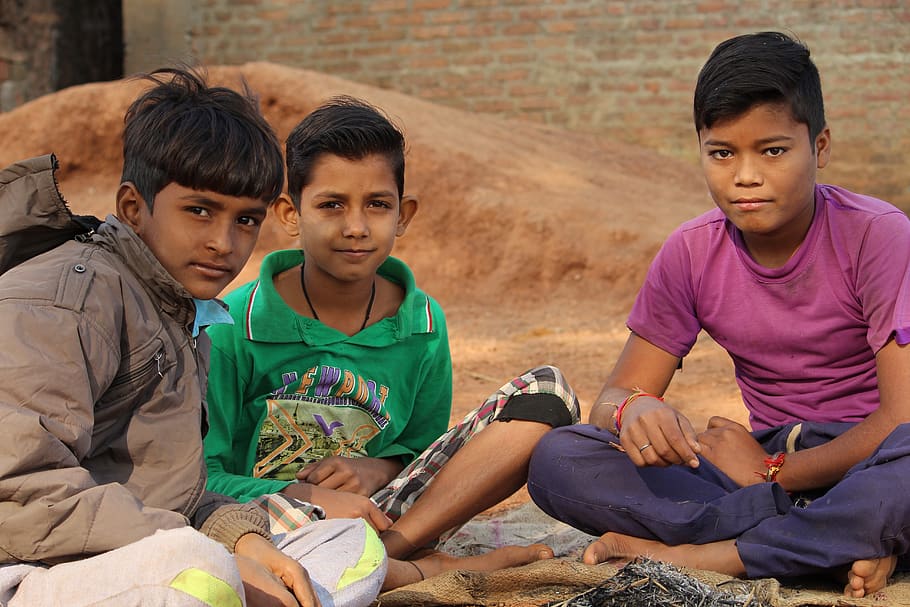
poor boy, cute, village boy, child, people, childhood, india, kid ...

Being born to a privileged family or in a certain country is no merit. You did nothing to deserve or choose it. Why, oh why, do so many feel superior just because of that!? Others are born into limiting situations such as poverty and are thus given less choices to start with. But they didn't choose to be born there, either, did they? Why, then, do we judge them? Why do we look at them as lesser beings? Why do we glare at them and feel like they deserve less than we, lucky ones, deserve?

Being born in a certain place entails being exposed to the culture and belief system of such a place. If you're born in Europe, you'll learn certain things at school; if you're born in Kazakhstan, you'll learn others, and if you happen to be born in a little village in Gambia, you'll learn something different as well. What family you're born into will also give you certain opportunities or lack of them. You'll hear or see certain things. You will know nothing else but that, in particular during your first years of life. If you're born to a wealthy family, you might have a lot of people taking care of you, so your time might be devoted to having fun or to learning to behave in society. If you are born to poverty, you might have to devote your time to learning how to find food or something as basic as that. And still, it was no choice of yours.

We feel entitled to judge others just because they happened to be born in other places, in other homes, into other cultures, into other belief systems.

Then you acquire the beliefs that you're exposed to. You learn from your elders. You see and hear whatever surrounds you. You're exposed to nothing else. You're given no choice. And still we judge you.

And equipped with your learnings, your experiences, your view of the world, you start growing into the person you are. Your luggage carries what you could take from your journey so far, what you learned, what you saw, what you were exposed to. But your luggage can only include what you found on your way. It can't include what you didn't learn. It can't include what you couldn't see. It can't include what you never heard. And still, we judge you for your luggage.

We feel entitled to judge others on the basis of their luggage and forget that they often were given no choice at all.

We judge others based on our own experiences and learning; we have no other. But we often neglect to consider what their experiences and learning might have taught them. We judge them based on our views, views that we didn't originally choose; and we judge them for theirs, which they didn't originally choose, either.

We often forget that our beliefs and the way we see the world are the direct result of our experiences and learning and feel superior to others to the point of granting ourselves the right to judge them, when the truth is that we, also, were given no choice.

Only when a person grows up and can hear or see other realities, can that person question his or her own beliefs and decide whether he or she wishes to change them. But who can tell when and how that new learning happens? It doesn't matter, does it? No matter that person's learning and experience, we still want that person to think like us, to behave like us, to accept our views NOW.

A child born in a small village in the Siberian tundra and raised in an orphanage is not equipped to judge what a child his same age born into a small, loving family in Chile says about his life. An adult who never left his hometown will have difficulties understanding some of the things a person who lived in ten different countries tells him. A woman born and raised in the slums of India will not be able to comprehend some of the ideas a Norwegian female lawyer speaks about.

And still we judge them.

Next time you judge another child, another woman, another man for their appearance, their beliefs, their life, their behavior... remind yourself that maybe that human being knows no better as a result of his or her own personal circumstances and refrain from feeling better or superior than him or her. Who would you be, had your circumstances and experiences been like those of the other person? Answer this question in honesty from the depths of your heart. And see the human being behind the circumstances.

A couple of days ago I was telling you here that life is made up of moments, one after the other. Many of those moments include human beings. Next time you find yourself judging someone, why don't you instead choose to devote that one memento to sharing some of your experiences with them, so they can understand where you come from? And, while at it, why don't you ask them to tell you about theirs, so you can also understand them a bit better? If we all had more of those moments in our lives, our worldview would be undeniably wider and deeper and we'd be able to grasp other realities and other beings better. I encourage you to try.

Enjoy life, ALL of it,


The Article Of Self-Responsibility, Not The Statue Or Statute

Freedom

We must be responsible for how we feel, respond and act in any situation. The choices we make are our choices. Listen, I sometimes would like to blame all of the good stuff on myself and all of the bad stuff on other people. But good or bad, life is ultimately a choice of "my fault" however it goes. This article is halfway "helpful physician help yourself" and halfway "what I would do with my own advice in an ideal situation". Indeed, though, this article is all reality, as you will be able to tell while you are reading it.

Sometimes, like anyone, I get frustrated with the bad happenings, and haughty about the good happenings. The only difference is, though, is that I am aware of my choices that caused or had a hand in causing both types of happenings. To be a winner is to embrace the good and the bad, and genuinely say and mean "my fault", take charge, and make the bad good and the good better without chalking things up to "it was nothing" or bad or good luck. Realistically, I can say with all honest meaning from and to myself: Ultimately, looking at things from an "I cause it" point of view however good or bad the situation is really is best. Indeed, looking at causes instead of "lucky", "unlucky", "fortunate", "unfortunate" type events brings a whole new and sometimes way better light to a situation. For acknowledging personal choice as being the causation in situations gives genuine personal power. Giving the cause to something outside yourself is the ultimate personal weakness. Take full initiative, and responsibility and all of that good stuff, and ultimately you will get where you want to go.

I know how the above sounds, and I did say and mean that this article would be unflinching and realistic. But, personal responsibility does lead to a superior, genuinely superior state of being. Good choices equal good results? You bet they do. Bad choices equal bad results? Oh, you can depend on luck to make a good outcome, but ultimately, when everything is done, the good choices are better even when you get a "luckily good result" and the way of the fool is to totally depend on luck or a turn of good fortune to make a bad choice good whatever the result may be even if it is "good". Be responsible, nothing can take the place of responsibility for yourself.


http://ezinearticles.com/?The-Article-Of-Self-Responsibility,-Not-The-Statue-Or-Statute&id=9754962

Through a Simple Twist of Faith, Part Two (By Randi G Fine)


Woman And Child Sitting On Fur Covered Bed

Part two of a three-part article written by Randi G. Fine

Some who suffer adversity have had their lives negatively altered by an identifiable, pivotal event. Others gradually lose their foothold over a period of years. Though unaware that it was happening while it was happening, I experienced the latter.

My first eighteen years were tumultuous. An insecure childhood worsened by a series of unfortunate life altering events whittled away at my self-esteem. By the time my nineteenth year rolled around and I began living on my own I was functionally depressed yet emotionally numb, hardened to life yet highly vulnerable to its assaults. Though I was in a downward spiral I saw nothing unusual about the way I felt inside, how I was functioning, or the choices I was making. I knew no other way to feel or act.

I am not implying that I experienced no happiness during those years. There were many good, joyful things that happened in my life, but the exuberance was short lived. From my vantage point life was a place of suffering and hardship. That's just how it was. And since I was naturally drawn to people with problems even worse than mine who had similar perspectives, it is no wonder I thought everyone saw things as I did.

At age nineteen I moved out of my parents' house to leave behind the chaos there that I could no longer tolerate. Believing I was ready to take on life as an adult, I dropped out of college, found a job, and moved in with a roommate.

Living on my own and supporting myself provided a joyful freedom I had never before experienced. Unfortunately it did not stop the problems. Things only got worse for me and the problems became much more serious.

Many of the problems were the result of unwise decisions I had made, but one was not-the home invasion rape that nearly cost me my life. That was beyond my control. And then, as if I wasn't far enough down, my "boyfriend" preyed on my vulnerability and swindled me out of all my money. I never saw him again. I do not claim to be a victim-I take full responsibility for allowing that to happen.

Still, after twenty-two years of living under an emotional "battering ram" it seemed as if adversity had won the fight. My spirit was weary and broken. All I had left was a glimmer of hope that a miracle would somehow save me. I envisioned a knight in shining armor coming, sweeping me off my feet, and taking me away from my life as I knew it.

Surprisingly that actually happened. A man miraculously came into my life, seemingly out of nowhere, and we fell deeply in love. My knight had everything I could have ever wanted; a great personality, stability, his own home, and a good job with a very promising future. Together we began the fairy tale romance I had dreamed of but never thought was possible. Sure that everything would be wonderful from that point on, I breathed a huge sigh of relief-the fight was finally over.

But the euphoria was short lived. It wasn't long before the mask and armor came off and my true knight was revealed. It was not a pretty picture. The perfect love of my life had relapsed into a ravaging intravenous drug addiction.

For a long time I did not want to look at what was being shown to me. I was afraid to jeopardize the relationship that I had invested everything into; the relationship that I believed had saved my life. I could not survive without him; he was my love, my life, and my savior. Severely co-dependent that I was I truly believed I could fix him. I was determined to do whatever it took to create a happy ending-even if it took my last breath.

I stuck it out with him through a few ups and a lot of downs, through a heart wrenching maze of sobriety and relapses. During one extended period of sobriety we got married. Believing (probably fantasizing) that he had remained sober a planned pregnancy followed a year later.

The first trimester of my pregnancy was horrendous. I was incapacitated and too sick to worry about his comings and goings. Free from the close monitoring and the tight leash I kept him on, he relapsed into his worst addiction ever. That still did not deter me. I was even more determined to save my marriage and preserve the ideal family unit for my unborn child.

Seven months into my pregnancy I began attending Nar-Anon meetings. It was there that I first heard about turning my problems over to a "higher power." I could not grasp that concept. I was the fixer and doer in my life. If I couldn't do it than no one else could either-certainly not some unseen "higher power." That is how someone with a co-dependency disorder thinks. I struggled for months to connect with an intangible source of strength outside of myself to hand my problems over to.

After the baby was born things got even more desperate. Staying with my husband meant risking life and limb, though in my state of mind I probably would have stuck it out if I only had me to worry about. But that was not the case. My six week old daughter was in imminent danger.

I could no longer fool myself. The dream of happily ever after had completely disintegrated. After he left for work one morning, I took my newborn baby and left with whatever belongings I could fit in my car. I did not have a nickel to my name or any way to make a living.

That was truly my emotional bottom, but like it or not staying there was not an option. More than anything I wanted my daughter's life to be better than mine. That meant one thing-I had to somehow fix my life. I had to change.


ezinearticles.com/?Through-a-Simple-Twist-of-Faith,-Part-Two&id=9992238

How to Make the 3 Most Important Choices for Your Day

Man Sitting on Grass Beside Dog

We make 100's of choices every day. Choices range from, 'what do I wear?' to "do I call in sick today?' to "what shall I watch on tv tonight?'.

But the top 3 choices that need to be made each day will create the flow of your day and possibly the flow of those that are affected by your choices. We are free to choose but we are NOT free from the results of those choices.

Choice #1
Positive or negative outlook for your day. Whether it is in the grocery store or in the workplace, we sometimes forget that our attitudes affect those around us. We cannot know what kind of day or what path others are on. It is selfish behavior to not consider how our mood affects others.

Choice #2
Mid day down time. We all need a break in our day. What do we do on that break? Is it productive? Does it strengthen our bodies? Does it motivate or replenish our spirit? Being specific on what to do or not to do would only make me guilty of robbing others of their freedom to choose. For me, my down time could include reading, listening to my favorite music, looking around and marveling at God's creation and just being thankful. To me, Facebook, surfing the internet or playing mindless games does the complete opposite of relaxing my mind and improving my outlook for my day. Only you know what is best for you. By making the right choices in your down time you are guaranteed to feel more relaxed, uplifted, stimulated to continue your day.

Choice #3
Interacting with those closest to us. There is an old proverb that says we tend to hurt those closest to us. Although this tends to be more true than not, just as a side note, I do not believe in old proverbs. What I do believe in is that we are a composite of all our choices. So no matter what we face during the day, whether positive or negative, we tend to allow those things to mold our behavior. That is what we give in return to those closest to us. We must always remember who we are and to give thanks to God for all that we have. We can then draw strength from those closest to us or give them of our strength. Putting the needs of others before your own will have the most amazing beneficial effect on our minds and bodies.


When Times Are Hard, How Do You Help Yourself? Here Are Some Ideas For You


Photography of Man in White Shirt With Round Black Analog Watch

When times are hard, it's easy to think that things will never change.

Life grinds to a halt.

Everything feels more difficult, and the everyday necessities of life may often feel like impossible tasks to accomplish.

Maybe it's a friend who is going through a difficult transition. Or maybe you or a family member have received bad news.

Whatever the specifics, when times are hard you are challenged on many fronts and tend to feel jarred and jostled off track.

What do you do when times are hard?
Hard times affect your energy, your feelings, and they also affect both the choices you make about your time ADN how you feel about time, in general.

What if you're feeling the pinch, economically? Maybe you lost your job, or business is slow. Economic constraints affect the range of time choices that feel available or accessible to you. Things like vacations, new educational pursuits, or new appliances may not even make it to your consciousness.

Instead, you pull back and pull in.

And what about feelings?
When times are hard, it's easy to allow worries to gnaw at you. This is a big, and very challenging time trap. Not only does it rob you of precious time, but it also saps your energy and creativity right when you need them most.

So, a key time choice is to recognize the debilitating effect of this and use self-talk, time boundaries, and self-discipline to turn your mind away from nagging anxieties.

Consider replacing worry-time with self-care time. Plugging in a positive where a negative had taken root shifts your energy and will do you a world of good.

Or, try picturing your worries as weeds that sprout up in hard times. Next, make a conscious choice to uproot worries by slowing down and focusing on ways to simplify and declutter your life.

Whenever you do this, you alter your experience of time. That's because simplification expands and deepens your experience of your moments, much as silence and stillness do. And in that expansive place, needless worries lose their power.

Gratitude, no matter what...
Finally, whatever challenges life brings your way, an attitude of gratitude will carry you through. Know that you have the capacity to pause in ANY moment and think of something for which you feel genuinely grateful. I guarantee that your energy and your moment will be transformed whenever you make that choice for yourself.

So, are you or a loved one facing hard times right now? Step back for a moment and consider: How does this affect your time and your self-care choices?

Would you like to be able to approach this differently?


http://ezinearticles.com/?When-Times-Are-Hard,-How-Do-You-Help-Yourself?-Here-Are-Some-Ideas-For-You&id=9918860

The Choices You Make, Make You

Woman Lying on Green Grass While Holding Pencil

This certainly seems rather obvious and hard to argue with. So why do a majority of people prefer to play the blame game for their lot in life? If I had a dollar for every time I have talked to an athlete or an athlete's parent who told me they could have been a professional athlete but, 'their coach didn't promote them,' or 'screwed them over,' I'd be retired already. Other often repeated 'reasons' people fail to achieve their goals include: "The timing was not right," "I didn't have enough time," "My circumstances changed," and "I just lost interest."

I often tell my clients that it is a lot quicker to go from failure to success than it is to go from excuses to success. You only have a limited amount of time and energy so how you choose to use both will determine who you become and where you end up. Making mistakes and failing are an inevitable part of life for all of us (except Kim Jong-un). Perfection is an attractive concept but it does not exist in reality.

If you are able to view mistakes and failure as simply part of the process, you won't feel the need to make excuses when they occur. Learning to accept this fact and take responsibility for all of your choices and actions leads to a secure feeling inside of you and eliminates the need for blame and excuses.

I also tell my clients that, 'Blame is just a way to temporarily discharge your own pain and discomfort in situations.' I suppose it is part of human nature to go for the easy short-term relief provided by blame and excuses, but the truth is it does not take as much work as you may think to create a new habit of taking responsibility. Best of all the pay-off will include relief of substantial pain and discomfort for the rest of your life as well as increased performance and success in all of your endeavors.

Creating a habit of taking responsibility will not assure your success in any of your endeavors. However, I can guarantee that until you do create this habit you will never perform anywhere near your peak levels. Think of excuses and blame the same way you (hopefully) think of heroin. It may make you feel better initially, but it won't be worth the damage it does to you over time. When was the last time you (or anyone you know) used heroin to enable themselves to perform at the highest level?

The Dalia Lama said it best: "When you think everything is someone else's fault, YOU will suffer a lot. When you realize that everything springs only from yourself, YOU will learn both peace and joy.


https://ezinearticles.com/?The-Choices-You-Make,-Make-You&id=9550780

Anger and Its Aftermath

Woman Punching Men's Face

Are you angry right now? If not, when was the last time you felt angry? How did you get angry? My guess is something happened to which you take exception. Someone or something - God, nature, someone you know, a stranger - did something which made you angry. If you can set aside your anger for a moment and think about it rather than indulging it, you will begin to realize that it is not the result of what happened or who did it. It is the result of what you tell yourself about what happened.

If someone bumps into you, listen to what happens in your mind. You may tell yourself that the person is clumsy, stupid or trying to upset you. Your anger arises when you tell yourself that the person should not have done something and that you have a right to be angry about it. So far there is an incident and what you tell yourself about it. If you tell yourself you have been wronged, you are likely to feel angry as a result.

Sometimes you have been wronged deliberately and you have a good reason to be angry. Sometimes you experience an inconvenience or worse which was not intended to harm you. In this case, you are less likely to feel anger. If you find yourself feeling angry, the next question is what to do about it. You have some choices.

You might try to discover whether you were harmed on purpose. If not, you can forgive the person who harmed you accidentally. If you decide you were harmed on purpose, you have other choices. These range from trying to ignore it to reacting in anger and seeking revenge for what was done to you.

How you react also depends on how you tend to think of others. You might see people as generally well intentioned and as a result do not make much of a fuss. You might also have had life experiences which incline you to view others as hostile making you more likely to feel angry and seek a way to even the score.

You have quite a range of choices of how to respond to anger. At the mild end, you can tell the other person you did not like what he or she did. At the other extreme, you can pull out a gun and shoot the other person. There is obviously a wide range of consequences for you and for the other person depending on how you respond. Yet many people do not stop to think about how to react to their anger or about the consequences of how they respond. Indulging angry impulses can have disastrous consequences for you as well as for the target of your anger.

Some people don't find a good way to handle their anger and instead pile one grudge upon another until the load becomes too much to bear. Then they explode in anger in a way far more severe that the immediate incident requires. Again, dire consequences await all concerned. You can avoid this by being aware of your angry feelings and how they arose, examining your options and choosing an appropriate response.

Action Steps

• Try to understand your anger before acting on it. 
• Write about your anger to clarify how you feel and what you can do. 
• Make sure someone is at fault instead of harming you accidentally. 
• Discuss the matter with the other person instead of reacting impulsively. 
• Look for common ground whenever possible.


https://ezinearticles.com/?Anger-and-Its-Aftermath&id=9982033

Making Decisive Choices for Self-Improvement

Woman Wearing Yellow Button-up Long-sleeved Dress Shirt

Are you taking action to improve your feeling of achievement in life?

Today in the area of human development, we are finding more reasons to focus on words as they apply to our lives. The word achievement is one that connects to feelings and emotions often spanning a lifetime. One can feel achieved, but be worried about offending others at the same time. On the other hand, someone may appear to feel achieved, and secretly feel deflated. The choice is yours, and the one change you can make in your life is to take action faster.

Ideas are presented to the subconscious mind and while there, they attempt to get your attention. As an idea grows inside of you, there are a few feelings you will notice. First of all, you will go "Wow that is a great idea". Or, you may just shun the idea away from you and take no action at all. To feel achieved, it is so important that you recognize the times when an idea came to you, you said YES and positive results became evident to you.

Human development and self-improvement continue to reign supreme in the world of developmental skills and new platforms for improving esteem. What chances can you take today that will speed up your feeling of achievement? I would like to share a few ways in which I use techniques in human development to improve my life.

Emotional Intelligence is one area of human development that is gaining momentum in the workplace, relationships and career choices. One of the skills you can practice is in tapping your intuition and hunches as they relate to situations or people. Your emotional intelligence level will support you in creating more balance in all you do.

Neuroscience and Self-Development is another unique area you may want to explore in feeling achievement in your life. The brain has so much to offer in the area of emotions and reactions. Knowing how and why you feel the way you do in different situations is key to totally understanding how to feel good about your life.

Emotional Freedom Technique is another skill you can master to fully expand your life experience. Using energy meridians to tap with your fingers, you can release old emotions that may have attached to the lack of feeling achieved. When you do this enough, with powerful affirmations, you start to shift the focus of your mind from defeated to empowered.


http://ezinearticles.com/?Making-Decisive-Choices-for-Self-Improvement&id=9658767